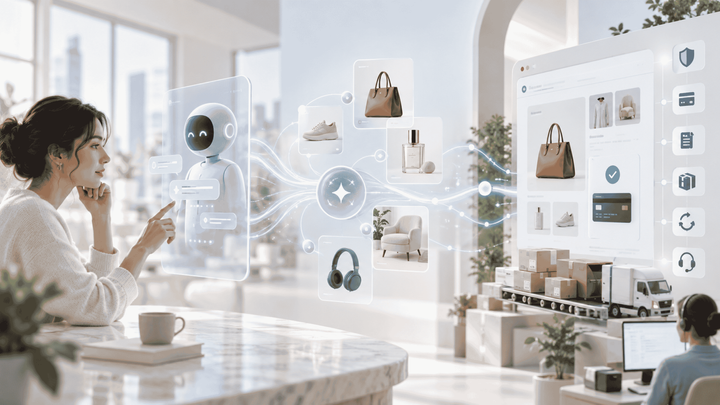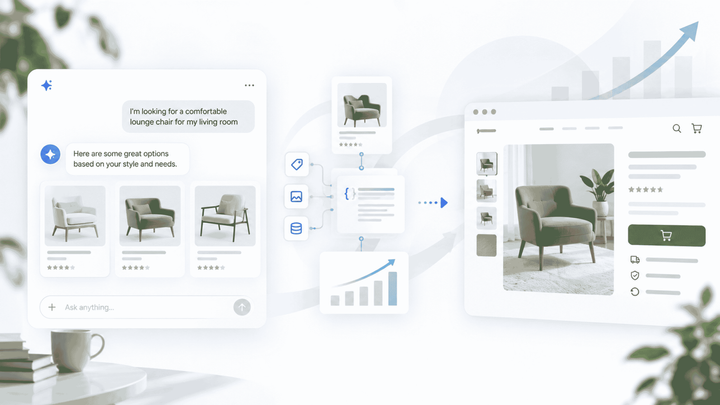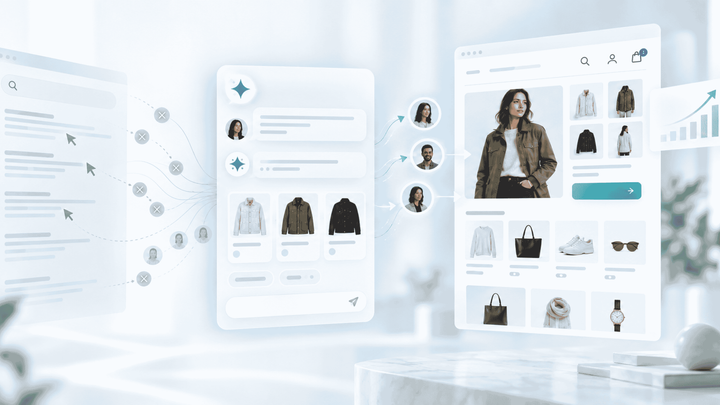
Your customers do not care whether a human or an AI agent resolved their issue. They care whether it was resolved correctly, quickly, and respectfully. That distinction is the entire ballgame when you automate customer service in e-commerce. See also our guide to AI helpdesk tools for ecommerce.
Most guides on customer service automation tell companies to focus on cost savings or which inquiries to hand off to a bot. This guide focuses on the part that actually determines success: protecting customer experience quality at every stage of the automation journey. Because the risk is not automation itself. The risk is automating customer service poorly, deploying chatbots that give wrong answers, ignore emotional context, or trap frustrated shoppers in loops. Here is how to build automated customer service that your customers will actually prefer, step by step. Not sure if your team is ready to automate? Check the 7 key signs your business is ready for AI customer service.
What Is Customer Service Automation?
Customer service automation is the use of software tools, AI agents, and automated workflows to handle customer inquiries and support interactions without requiring a human at every step. In e-commerce, that means answering order status questions, processing returns, recommending products, and routing complex customer inquiries to the right agent, all without manual effort. Customer service software handles the repetitive work so your team handles the rest.
The goal isn't to remove humans from support. It's to free your team from repetitive tasks. AI can help with order tracking, returns, and FAQs so they can focus on the conversations that actually need a human touch. Done well, automated customer service reduces cost per contact, speeds up response times, and keeps satisfaction scores high. Done poorly, it frustrates customers and erodes trust. The difference comes down to how you automate, not whether you automate.
The CX Quality Risks Nobody Talks About When You Automate Customer Service
Every vendor tells you what automation tools can do. Fewer mention the real challenges. Fewer tell you what goes wrong. Understanding these CX risks lets you design around them before they damage your CSAT and revenue.
Confidence Without Accuracy
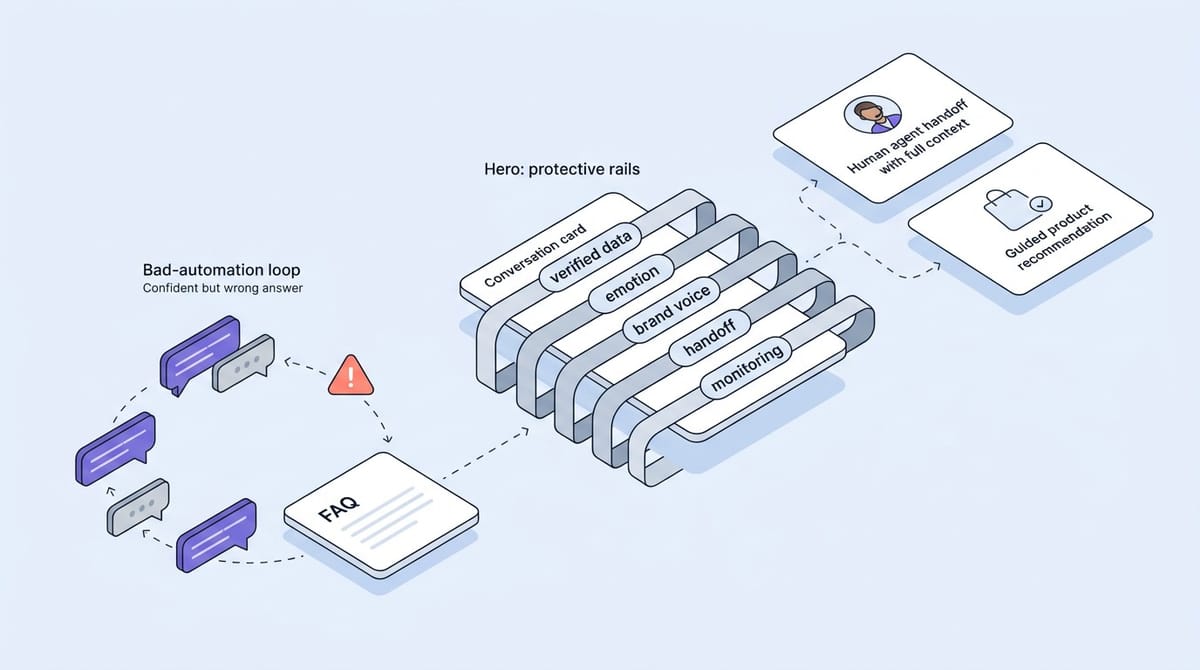
The most dangerous AI failure is a wrong answer delivered with complete confidence. When chatbots invent a return policy or promise a discount that does not exist, the damage is worse than a slow human agent response. The customer trusted the automated response and discovered it was false.
This hallucination problem is the single biggest risk when you automate customer service. Generic AI tools, including those built on the ChatGPT API or Dialogflow, fill knowledge gaps with plausible fabrications. Alhena AI addresses this architecturally. Every response is grounded exclusively in your verified knowledge base, product catalog, and help desk records. Watchdog systems block any response that cannot be traced to a verified source, with built-in auditability so your team can trace every answer.
Emotional Blindness
A customer with a broken $400 product and a customer checking order status are in fundamentally different emotional states. If your AI treats both with identical canned responses, the frustrated customer feels dismissed.
Alhena AI can help here. It uses real-time sentiment analysis powered by NLP (natural language processing) to detect emotional signals. When sentiment shifts to frustrated, the AI adjusts tone, acknowledges the frustration, and can proactively escalate to a human agent. This is contextual sentiment detection that analyzes intent and emotion together, not rule-based keyword matching.
Brand Voice Erosion
Your brand voice took years to build. Don’t hand it to a generic chatbot. The moment you deploy AI that sounds generic, you create a disconnect customers notice immediately. A luxury skincare brand whose AI assistant sounds like a telecom help desk is undermining its positioning. Pre-written canned messages make this worse when uncalibrated.
Alhena AI lets you configure tone, personality, and communication style to mirror your brand precisely, learning from your existing conversations and brand guidelines.
The Escalation Dead End
Thirty percent of customers say getting trapped in chatbot loops is their biggest frustration. The solution is intelligent escalation. Alhena AI transfers the entire conversation history, customer profile, CRM data, and a suggested resolution to the human agent. The customer never repeats themselves. Over time, the AI learns from escalation patterns and routes preemptively.
Losing Revenue Inside Support
Deflection itself can be a quality failure. When a customer asking about product fit gets redirected to a self-service portal instead of a personalized recommendation, you have lost a sale. Alhena AI's Product Expert AI agent treats support and commerce as one conversation, providing guided discovery, conversion nudges, and agentic checkout that populates carts directly. This is what separates AI agents that truly resolve issues from basic self-service tools that simply deflect.
The Quality-First Framework: 5 Layers That Protect CX
Layer 1: Data Integrity
Before you automate a single inquiry, audit your knowledge base. If it has outdated policies or contradictory information, your AI will serve bad data at scale. Alhena AI supports incremental training and updates content, and the AI adapts without full retraining. It automatically detects knowledge gaps by flagging queries it cannot answer confidently. Assign a knowledge base owner. Review monthly. Make it searchable, current, and comprehensive; it powers every AI-powered interaction.
Layer 2: Conversation Design
Design automated customer service replies around outcomes, not metrics. When a customer asks about a return, the goal is to confirm eligibility, generate a label, and confirm the refund timeline within the same conversation, not redirect to an FAQ page. Alhena AI's conversational design walks customers through multi-step processes and confirms resolution before closing. For common repetitive tasks like order tracking, password reset, and account management, build end-to-end automation that resolves issues entirely within the chat or email.
Layer 3: Channel Consistency
CX breaks when customers get different answers across channels. Many brands use a patchwork of Zendesk or Freshdesk for email, Intercom or HubSpot Service Hub for messaging, Talkdesk or Five9 for IVR (interactive voice response), and Genesys Cloud for contact center operations. Each has its own knowledge base and gaps.
Alhena AI operates across web chat, email, Instagram DMs, WhatsApp, and phone from a single platform with unified memory. Whether customers reach you through a virtual assistant, IVR system, or social media, the AI delivers consistent, multilingual answers in real time. A customer who starts on chat and follows up via automated email three days later gets seamless continuity. This is how brands maintaining consistency achieve true omnichannel customer service automation at scale.
Layer 4: Human-AI Collaboration
Design the handoff as carefully as the automation itself. Every handoff should transfer conversation context, CRM data, customer intent analysis, and a suggested resolution. Alhena AI's Agent Assist provides a real-time AI copilot for agents, suggesting responses, surfacing knowledge base articles, and helping triage complex multi-issue inquiries. This hybrid approach means transferred conversations resolve faster with higher customer satisfaction.
Layer 5: Continuous Quality Monitoring
Build monitoring beyond deflection. Track CSAT per channel, resolution completeness, sentiment trends, and customer effort score through your analytics. Alhena AI tracks these natively, including revenue attribution connecting AI conversations to sales outcomes. Set alerts when satisfaction drops or negative sentiment increases. Customer service automation only works long-term when you iterate and refine in real time based on what the data tells you.
Choosing the Right Automation Tools
The technology landscape for automating customer service includes help desk software (Zendesk, Freshdesk, Zoho Desk, Help Scout, Salesforce Service Cloud), contact center platforms (Talkdesk, Five9, Genesys Cloud), workflow automation tools (Zapier, Integromat), and conversational AI platforms from basic builders (ManyChat, Drift) to advanced AI-powered platforms using NLP.
Alhena AI is not a help desk replacement. It is an AI-powered layer that can help your team by integrating with your existing stack through native CRM integration, connecting to Shopify, WooCommerce, Salesforce Commerce Cloud, and help desks like Freshdesk (including Freshchat), HubSpot, and others. The AI can triage incoming inquiries, provide self-service resolution for routine questions, and hand off complex issues seamlessly. It works across chat, email, social, and phone as an omnichannel AI assistant that resolves issues, not just deflects them.
Quality-First Automation in Practice
Instead of repeating raw numbers (which you can find on the Alhena customer stories page), here is what the CX quality journey looked like for three brands.
Tatcha needed to protect a premium brand voice. They trained Alhena AI on their consultative tone and product philosophy. AI conversations maintained the luxury feel while driving meaningful conversion and AOV improvements. Customers preferred it for product discovery.
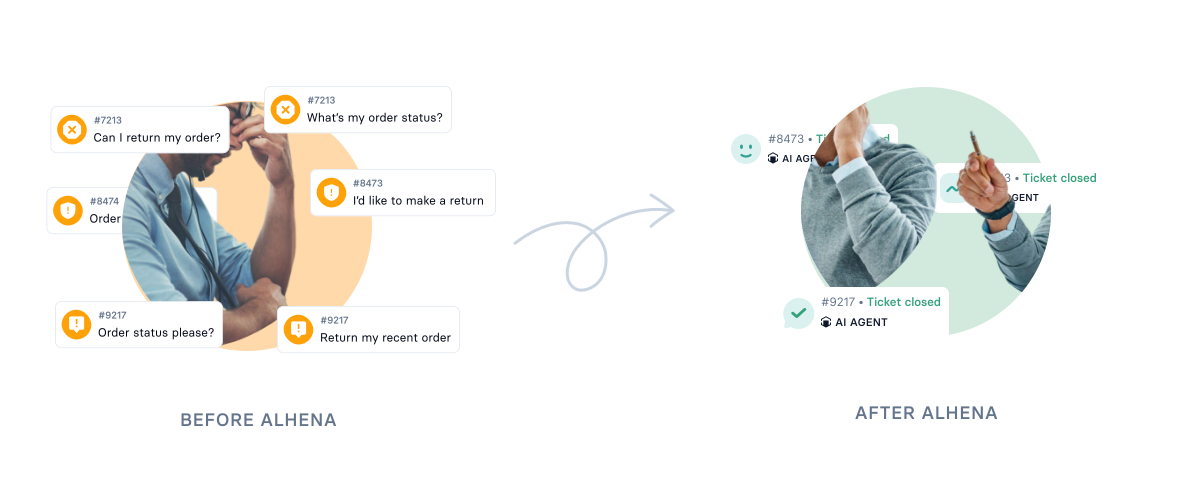
Crocus wanted AI invisible to customers. Alhena ingested their gardening expertise and past conversations. The ticket reopen rate dropped to 3.7%, meaning the AI genuinely solved problems on first contact.
Manawa needed speed. Their current support workflow produced 40-minute response times. Alhena collapsed that to under one minute while improving CSAT. Sometimes the biggest CX improvement from automation is simply real-time speed.
Pre-Launch Quality Checklist
Data readiness. Is the knowledge base current, searchable, and contradiction-free? Real-time order data accessible through CRM integration?
Brand voice. AI calibrated to your tone? Tested against real conversations? Adapts based on sentiment, no generic canned responses?
Escalation. Clear escalation rules and path to a human agent with full context transfer? Maximum exchanges before automatic escalation?
Channel parity. Consistent answers across chat, automated email, social, voice, and any customer portal?
Monitoring. CSAT tracked separately for AI vs. human? Alerts for sentiment drops and escalation spikes?
Integration. Connected to your help desk, e-commerce platform, CRM, and shipping providers?
When NOT to Automate Customer Service
Not every support interaction should be automated. Some moments need a real person, and forcing AI into those conversations will hurt your brand more than any efficiency gain is worth.
Skip automation for these scenarios:
- High-emotion complaints (damaged luxury items, billing disputes over $500, safety concerns). These need empathy that even the best AI can't fully replicate.
- VIP or loyalty-tier customers who expect white-glove treatment. Automation here signals that you don't value the relationship.
- Complex multi-order or multi-product issues that require judgment calls, like partial shipments with custom bundles.
- Legal or compliance-sensitive conversations (warranty claims, regulatory inquiries) where a wrong AI answer creates liability.
- Win-back conversations with churning customers. These are high-stakes moments where a skilled human agent can save the relationship.
The best customer service automation strategy isn't about maximizing the percentage of automated tickets. It's about automating the right tickets and routing everything else to the right human, with full context. Alhena AI's Agent Assist handles exactly this: when a conversation needs a human, the agent gets the full history, suggested responses, and customer sentiment, so they can pick up without the customer repeating themselves.
Key Takeaways
Treat CX quality as the primary design constraint when you automate customer service. Ground AI in a verified knowledge base. Use AI-powered sentiment analysis for emotional intelligence. Match your brand voice. Design the human-AI handoff carefully. Choose the right tools and integrate deeply. Measure resolution quality, not just volume. When you automate customer service the right way, it gives your agents space for the human touch where it matters, while AI handles repetitive inquiries with speed and accuracy no team could maintain manually, streamlining every interaction into a better customer experience.
Use the ROI calculator to estimate your savings before getting started.
Ready to automate customer service without sacrificing the experience your customers expect? Book a demo with Alhena AI to see how e-commerce brands are maintaining CX quality while cutting ticket volume. Or start for free with 25 conversations, no credit card required.
Related Reading
- Beyond RAG: How We Rebuilt Our AI Around Planning - How Alhena's multi-agent architecture works under the hood.
- AI Ticket Routing: How It Works and Why Ecommerce Needs It - A deeper dive into intelligent routing and triage.
- AI Order Management: Cut Ecommerce Support Costs 45% - Automating order-related inquiries specifically.
- How Alhena Uses Its Own Agentic AI to Run Customer Support - Proof that Alhena dogfoods its own product.
Frequently Asked Questions
How do you measure whether AI customer service automation is maintaining CX quality or just deflecting tickets faster?
Track three metrics: ticket reopen rate (Crocus achieved 3.7% with Alhena AI, meaning over 96% of inquiries resolved first contact), CSAT comparison between AI-resolved and human-resolved interactions, and customer effort score. Quality automation reduces effort; it does not increase it.
What CX quality signals indicate your automated customer service needs immediate adjustment?
Rising requests for human agents within two exchanges, increasing negative sentiment in AI-handled chats, repeat contacts from the same customer, social media monitoring revealing bot complaints, and dropping survey completion rates. Establish baselines before you deploy so you can detect degradation through your analytics.
How should e-commerce brands handle the transition when customers first encounter automated customer service?
Start with lowest-stakes, highest-volume interactions like order status inquiries. Let AI prove itself on repetitive tasks before expanding. Be transparent. Keep a prominent path to human support visible. Alhena AI supports phased deployment controlling which ticket types and customer segments the AI handles, a step-by-step rollout, not a big-bang launch.
What does a realistic QA workflow look like for AI customer service responses?
Three tiers: automated (watchdog systems flag low-confidence responses and knowledge gaps), sampling (weekly review of 2-5% of conversations against brand and accuracy standards), and exception-based (every escalation and negative CSAT triggers review). Iterate continuously.
How does AI customer service maintain personalization without data compliance risks?
Two layers: transactional data from your CRM accessed through secure integration with scoped controls, and conversational context retained through Alhena's unified memory without compliance exposure. All handling follows SOC 2, GDPR, PCI-DSS, ISO 27001, and HIPAA protocols.
What is the right ratio of AI-automated versus human-handled support tickets?
Most e-commerce brands using Alhena AI reach 60-85% AI-handled. The right ratio is where AI-resolved CSAT matches human-resolved CSAT. If pushing higher causes satisfaction to drop, you have gone too far. Scale based on quality metrics and customer feedback, not volume targets. Prioritize the human touch for moments that require it.
How should brands detect silent customer churn from AI interactions?
CSAT surveys miss customers who leave without complaining. Track repeat purchase rate, cart abandonment during AI conversations, and customer lifetime value, all segmented by AI-interacted versus human-interacted cohorts. Alhena AI's revenue attribution analytics surface these patterns.
What first-90-day mistakes damage long-term CX quality?
Launching without a current knowledge base, automating sensitive ticket types too early, and measuring only deflection rate. Each compounds: bad first impressions stick, your support team loses confidence, and deflection looks strong while relationships deteriorate. Treat the first 90 days as calibration. Deploy narrowly, monitor through analytics, expand when quality confirms readiness. Video tutorials and internal training on working alongside AI also make a significant difference.