Garden centers and outdoor retailers earn up to 80% of their annual revenue in a single season, according to the University of New Hampshire Extension. When spring arrives, customer service inquiries spike alongside foot traffic and online orders. A support team managing 50 tickets a day in January can face 300 or more by April. Hiring seasonal customer service agents is expensive, slow to ramp, and rarely delivers the customer experience shoppers expect from a premium brand.
Customer support automation gives gardening and outdoor brands a way to handle that surge without inflating operational costs or burning out staff. AI agents now manage routine interactions, personalize product guidance through advanced personalization, and resolve issues in real time, turning seasonal chaos into year-round CX consistency. This guide breaks down the unique challenges this vertical faces, which support tasks to automate first, and how AI-powered automation tools like Alhena AI deliver measurable results.
Why Gardening and Outdoor Brands Face Unique Support Challenges
Most ecommerce verticals deal with predictable, steady demand curves. Gardening doesn't work that way. Spring drives roughly 58% of annual sales for garden centers, compressing the majority of revenue (and support volume) into a 10 to 12 week window. That creates staffing problems no other vertical experiences at the same scale, and the customer experience suffers when unprepared teams handle the rush.
The Seasonal Staffing Crunch
During peak season, garden centers typically expand from 8 to 10 permanent support agents to 25 or 30 seasonal hires. Training those temporary customer service agents on plant care, growing zones, soil compatibility, and pest control takes weeks. According to industry data, 28% of garden retailers provide no landscape management training to seasonal staff at all. The result: inconsistent answers, frustrated customers, and returned products that eat into margins.
This is the core use case for AI-powered customer support automation. Instead of scrambling to hire and train human agents every spring, brands can deploy AI agents that already understand their product catalog, knowledge base, and customer needs from day one.

Complex, Knowledge-Heavy Questions
A customer buying a jacket doesn't usually need a 10-minute consultation. A customer buying a Japanese maple for their backyard in zone 6b absolutely does. Gardening customers ask questions about sunlight requirements, watering schedules, frost hardiness, soil pH, companion planting, and pest resistance. These aren't simple FAQ lookups. They require context about the customer's location, experience level, and existing garden setup.
Post-Purchase Anxiety Drives Returns
Unlike most retail products, plants can die. That creates a unique post-purchase support burden. Customers reach out about yellowing leaves, wilting stems, and transplant shock, often within days of receiving their order. Without fast, accurate guidance to resolve issues quickly, they return the product or simply never buy again. This "plant survival anxiety" is one of the biggest drivers of churn in the gardening vertical and a clear signal that your brand needs proactive, AI-powered post-purchase support.
What Customer Support Automation Actually Looks Like in This Vertical
Customer support automation isn't about replacing your team with a chatbot that says "I'm sorry, I didn't understand that." In gardening and outdoor retail, service automation means deploying AI that understands your product catalog, your customers' growing conditions, and the seasonal context behind every question.
Modern AI customer service platforms can handle three layers of support automation:
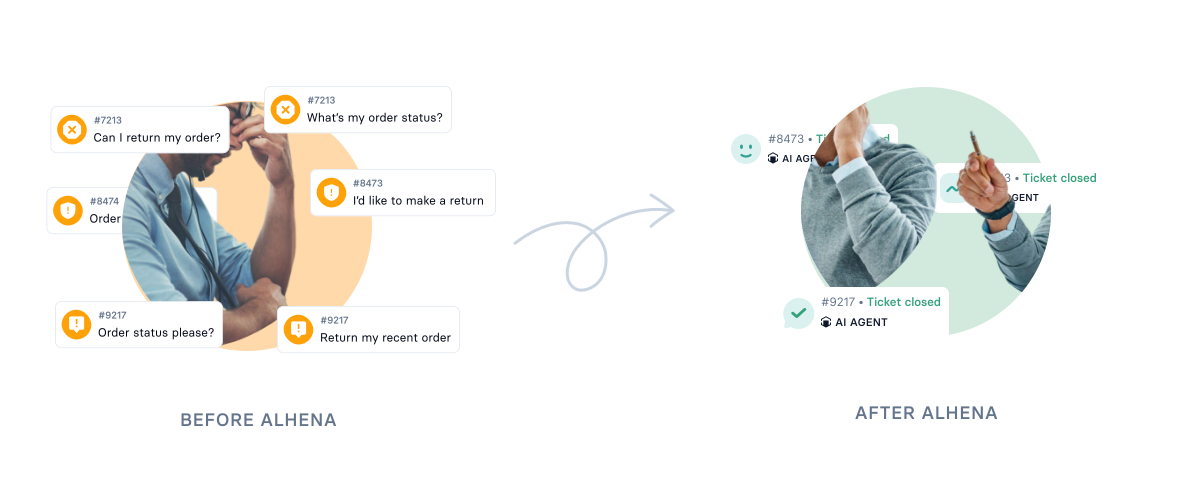
- Tier 1: Instant answers. Order tracking, shipping status, return policies, store hours. These make up 40 to 60% of all inbound tickets in ecommerce and are perfect for self-service automation with zero human involvement.
- Tier 2: Guided recommendations. "Which tomato variety grows best in zone 7?" or "What fertilizer works for clay soil?" AI trained on your product data, knowledge base, and horticultural guides can answer these accurately and instantly.
- Tier 3: Complex troubleshooting. A customer sends a photo of a sick plant. AI analyzes the image, cross-references symptoms with your knowledge base, and either resolves the issue or can escalate it to a specialist with full context.
The key difference between generic customer support chatbots and purpose-built solutions is depth. Generic AI chatbots might handle tier 1. A gardening-specific AI handles all three tiers, and it gets better over time as it learns from resolved tickets and customer feedback through machine learning, automatically improving over time.
Five Support Tasks Gardening Brands Should Automate First
Not every support task is worth automating on day one. Smart brands focus on quick wins first, targeting the highest-volume, most repetitive interactions and expanding from there. Here's the priority order for garden and outdoor retailers looking to use AI effectively:
1. Order Status and Shipping Updates
This is the easiest win. "Where's my order?" accounts for up to 30% of all customer service tickets in ecommerce. Connecting your helpdesk to your shipping provider (Narvar, ShipStation, or your platform's native tracking) lets an AI agent answer these inquiries instantly in real time. Alhena integrates with Narvar and ShipStation to pull real-time tracking data into every conversation, eliminating this repetitive workload entirely.
2. Plant Care and Product Guidance
Gardening customers don't just want to buy. They want to succeed. Automating plant care advice, watering frequency, sunlight needs, seasonal pruning schedules, keeps customers engaged post-purchase and reduces returns caused by care mistakes. An AI agent trained on your product guides and knowledge base can deliver personalized, step-by-step seasonal care instructions tailored to the customer's region. This is where customer service AI directly reduces operational costs by preventing returns before they happen.
3. Product Recommendations Based on Growing Conditions
When a shopper asks "What grows well in partial shade in the Pacific Northwest?", that question has a specific, data-driven answer. An AI agent can match the customer's climate zone, light conditions, and experience level to your catalog in seconds. This is where customer support automation crosses into sales: a well-matched recommendation converts at a much higher rate than a generic product listing. Alhena's Shopping Concierge uses conversational AI to guide these interactions, turning customer needs into revenue.
4. Returns and Refund Processing
Returns in gardening often involve perishable products with tight windows. Automating the returns workflow, eligibility check, label generation, refund initiation, speeds up resolution and frees human agents for conversations that actually need empathy and judgment. This automation also provides real-time analytics and insight into return patterns, helping brands optimize their product listings and care instructions to reduce future returns. For a deeper look at this topic, see our guide on how AI automates returns and refunds in ecommerce.
For a deeper look at reducing plant returns, see our guide on how AI plant care guides cut returns by solving survival anxiety.
5. Seasonal Campaign and Marketing Support
Spring sales, Black Friday, holiday gift guides for outdoor enthusiasts, these promotions drive traffic spikes that overwhelm support teams. Pre-building automated responses for campaign-specific FAQs ("Does the spring sale include live plants?" or "Can I use my coupon on power tools?") keeps resolution times low during your busiest periods. Brands that deploy AI agents to handle these surges report managing peak season without extra hires, significantly reducing operational costs.
For strategies beyond spring, explore our seasonal AI ecommerce playbooks for peak periods.
How Alhena AI Powers Customer Support Automation for Garden and Outdoor Retailers
Alhena AI is the agentic commerce platform for prestige brands. Our AI agents act autonomously across the shopper journey: answering product questions, guiding purchases, resolving support tickets, and optimizing brand visibility in AI search engines like ChatGPT, Perplexity, and Google AI Overviews. Alhena helps brands show up in AI search, convert more shoppers on-site, and deliver effortless support, all from one unified platform.
The platform serves ecommerce industries including Beauty & Personal Care, Luxury Fashion & Apparel, Home & Living, Health & Wellness, Sports & Outdoor, Travel & Experiences, Consumer Electronics, Custom Products & Print, Food & Beverage, and Healthcare. For gardening and outdoor brands, where every conversation involves product-specific context that generic AI tools can't handle, Alhena's depth is a decisive advantage.
Plant Matchmaker and Conversational Discovery
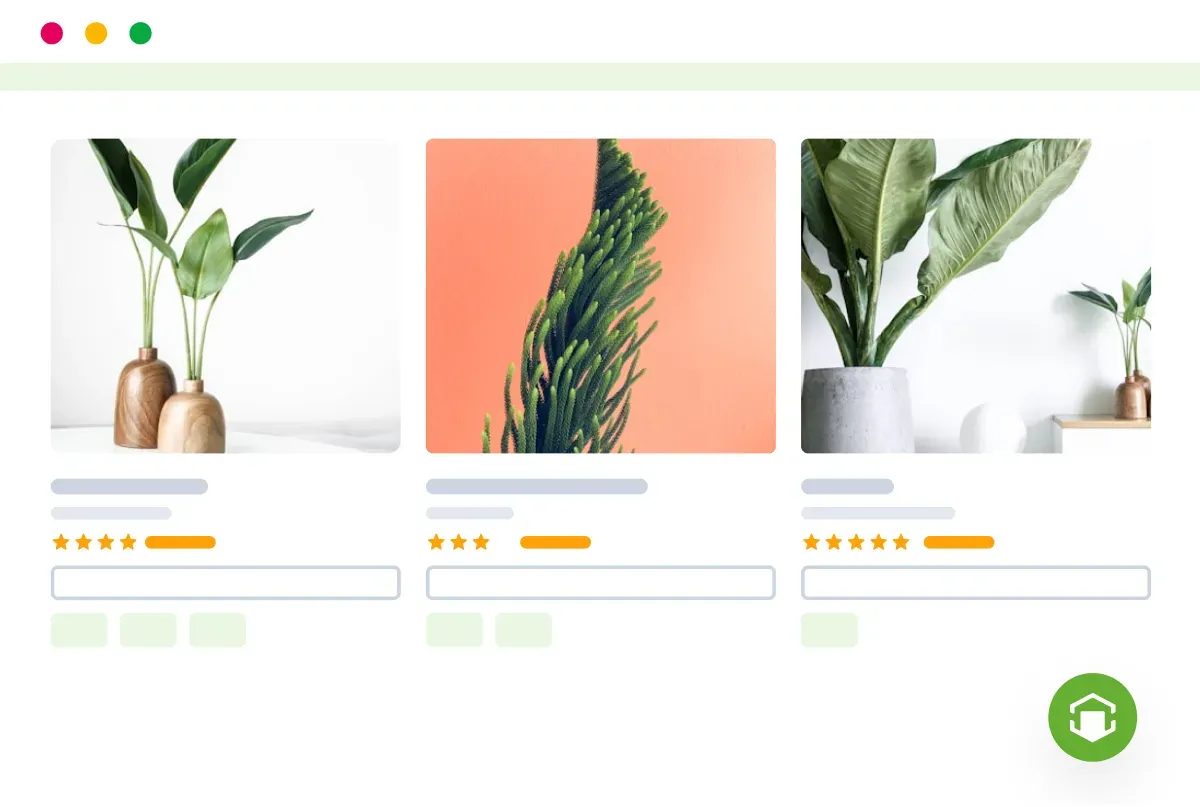
Alhena's gardening and care solution includes a Plant Matchmaker feature that recommends plants and tools based on the customer's climate and expertise level. Shoppers describe their gardening goals in plain language, and the AI agent instantly identifies suitable plants, tools, and care products from your catalog. This isn't keyword matching, it's contextual understanding powered by natural language processing that reduces buyer disappointment and lifts conversions. Every interaction becomes a personalized shopping experience.
AI Care Companion for Post-Purchase Support
After the sale, Alhena's AI agent delivers step-by-step seasonal care guidance and troubleshooting. When a customer asks why their hydrangea isn't blooming, the AI provides a specific diagnosis based on your product data and knowledge base, not a generic article pulled from the internet. This is grounded, hallucination-free customer service AI that only references verified information. By proactively resolving issues, this AI copilot approach reduces churn and lifts customer satisfaction.
It also helps manage shipping risks that drive "plant survival anxiety." Alhena's agents use live shipping status and contextual signals (for example carrier tracking updates and location-based weather) to proactively set expectations and reduce "damaged on arrival" returns. Rather than waiting for a customer to report a problem, the AI monitors deliveries and sends targeted guidance when conditions could stress live goods on transit.
Key ways the AI manages live-goods shipping risk:
- Real-time alerts: The agent sends proactive notifications when a shipment encounters delays or extreme weather in transit (e.g., heatwave, freezing temperatures), with clear next steps for customers.
- Conditional care instructions: When a delivery is imminent after hot or cold exposure, the AI provides immediate, concise handling instructions (e.g., "Open box in shaded area, mist leaves lightly, keep in sheltered spot for 24 hours") to increase plant survival on arrival.
- Delivery adjustments and holds: If weather or carrier status indicates high risk, the AI can surface options to the customer—reschedule delivery, request a hold at pickup location, or upgrade to faster/insulated shipping—reducing the chance of damage.
- Post-delivery triage workflow: If a customer reports an issue, the AI correlates time-in-transit, recent weather at origin/destination, and tracking events to offer tailored remedies (step-by-step recovery actions, expedited replacement eligibility, or returns guidance), and it attaches that context to any escalated ticket for a human agent.
- Packaging and fulfillment feedback loop: The AI aggregates incidents tied to transit conditions and flags patterns (e.g., heat-related damage from a particular route), providing actionable insights to fulfillment and logistics teams so packaging or carrier selection can be improved.
These capabilities turn shipping updates into proactive care: customers receive timely, practical guidance before and after delivery, reducing returns and increasing the chance a live product survives and thrives. The result is lower operational costs, fewer refunds, and higher post-purchase satisfaction.
Real-Time Plant Diagnostics
Customers can share photos of plant issues, and Alhena's AI agent analyzes them to identify problems and recommend solutions. This kind of visual troubleshooting, powered by generative AI and image recognition, sets your brand apart from competitors still relying on email forms and 48-hour response times. It's a use case that demonstrates the future of AI in ecommerce customer service: faster resolution, better customer experience, and lower operational costs.
Omnichannel Coverage Across Every Touchpoint
Your customers don't just contact you through your website. They message on Instagram, send emails, and increasingly reach out on WhatsApp. Alhena's social commerce and email automation work across all these channels from a single unified platform. One AI agent, consistent answers, every channel. That's what conversational AI should deliver, a seamless customer experience regardless of where the interaction starts.
Seamless Helpdesk Integration
Already using Freshdesk, Zendesk, Gorgias, or Salesforce? Alhena connects directly to your existing helpdesk and CRM without requiring you to rip and replace anything. The AI agent handles frontline conversations, and when a ticket needs a human agent, it routes to the right person with full context attached. Human agents focus on complex cases while AI handles the rest. Integrations with Freshdesk, Zendesk, Gorgias, and Salesforce are all pre-built and go live in days, not weeks. Think of it as an AI copilot for your entire support team.
AI Visibility: Getting Discovered Before the Click
Alhena isn't just a support tool, it's a visibility engine. Alhena's AI Visibility product helps brands get discovered in AI search engines like ChatGPT, Perplexity, and Google AI Overviews before shoppers even reach your site. By optimizing your content for AI-driven search, Alhena ensures your brand surfaces when customers ask AI assistants for product recommendations. This is the future of AI in ecommerce marketing: brands that aren't visible in AI search will lose share to those that are.
Explore the full AI visibility playbook for home and garden brands.
Real Results: How Crocus Cut Support Costs with AI
Crocus, a leading UK online gardening retailer with over 20 years in business and consistent 10% to 12% annual growth, faced the exact challenges described above. During peak seasons, their support team ballooned from 8 to 10 agents to 25 or 30 seasonal hires. Plant care inquiries required specialized horticultural expertise, and customer service agents relied heavily on catalogs and guides to answer questions accurately. Customer sentiment around response times was declining.
For pet-owning gardening customers, AI can also help with closing the pet-safe plant toxicity gap.
After evaluating alternatives including Freshdesk's Freddy AI, Crocus chose Alhena because it offered capabilities well beyond basic chatbot functionality. The AI agent was trained on Crocus's product guides and FAQs, integrated into their Freshdesk helpdesk instance, and gradually expanded as the team built confidence.
The results speak for themselves:
- 86% deflection rate for incoming support tickets
- 84% CSAT score, up from under 80% before implementation
- 3.7% ticket reopen rate, confirming high response quality and accuracy
- 95.59% first responder rate for resolved tickets
"We're treating Alhena like an agent. It's been a great experience because customers sometimes don't even realize they're interacting with AI," said Ben O'Donnell, Head of Customer Service at Crocus.
Crocus is now expanding to website chat integration, order tracking automation, and AI-powered review responses, building toward a future where most customer service runs through AI agents. For gardening brands watching this space, Crocus proves that customer support automation doesn't sacrifice quality. It improves customer satisfaction, lowers costs, and delivers insight into customer sentiment that informs better business decisions.
Choosing the Best AI Customer Support Automation Software in 2026
The market for customer service automation software and support automation tools is crowded, but not every AI tool fits a gardening or outdoor brand. Here's what to evaluate when choosing the best AI solution for your business:
Product Knowledge Depth
Generic chatbots work fine for "What's your return policy?" They fail at "Will this clematis survive zone 5 winters if I plant it against a south-facing wall?" Your automation platform must ingest and reason over detailed product data, including growing guides, care instructions, and compatibility information. The AI agent needs a deep, structured knowledge base, not just a search index.
Ecommerce-Native Architecture
AI tools like Zendesk AI and Intercom Fin are support-first platforms. They handle ticket deflection well, but they weren't designed to drive revenue. For gardening brands, every support interaction is a sales opportunity: recommending a companion plant, suggesting a better soil mix, or upselling a care kit. Alhena's agentic Shopping Concierge turns these moments into conversions with features like agentic checkout that populates carts directly from the conversation. This is how AI-powered customer service becomes a revenue channel, not just a cost center.
Seasonal Scalability
Your automation tool needs to handle 5x volume spikes without degradation. Ask vendors about their infrastructure during peak periods. AI that slows down or fails during your spring rush is worse than no AI at all. Gartner projects that generative AI in contact centers will cut agent labor costs by $80 billion by 2026—but only for brands that deploy AI agents capable of scaling without performance loss.
Integration with Your Existing Stack
If you run Shopify or WooCommerce, your automation tool should connect natively to your store, your helpdesk, your CRM, and your shipping providers. Look for pre-built integrations with Zendesk, Freshdesk, Gorgias, Salesforce, and Salesforce Service Cloud. Alhena deploys in under 48 hours with no dev resources required, connecting to your ecommerce platform, CRM, and helpdesk systems through pre-built integrations. A unified workflow across all systems eliminates data silos and gives agents full context on every customer interaction.
Analytics, Insights, and Revenue Attribution
You can't optimize what you can't measure. Look for built-in analytics that track deflection rate, CSAT, customer satisfaction trends, resolution time, customer sentiment, and, critically, revenue influenced by AI conversations. These insights help you identify which workflows are working and where to improve. Alhena includes revenue attribution and ROI measurement dashboards that show exactly how much each AI-assisted conversation contributes to sales. Use the ROI calculator to estimate your potential savings before committing.
Ready to see how customer support automation works for your gardening or outdoor brand? Book a demo with Alhena AI to see the platform in action, or start for free with 25 conversations to test it on your own catalog.
Frequently Asked Questions
Frequently Asked Questions
What is customer support automation for gardening brands?
Customer support automation uses AI agents to handle common customer service inquiries, like order tracking, plant care guidance, and product recommendations, without human agent involvement. For gardening brands, this includes answering questions about growing zones, watering schedules, and soil compatibility using AI trained on your product catalog, horticultural data, and knowledge base. The best AI platforms for this vertical go beyond basic chatbots: they use natural language processing to understand customer intent, personalize responses based on location and experience level, and automate repetitive workflows that would otherwise require seasonal hires. Alhena AI's Support Concierge is purpose-built for this use case.
How does AI handle plant care questions accurately?
AI chatbot platforms like Alhena ingest your product guides, care instructions, and growing data to build a knowledge base specific to your catalog. When a customer asks about a plant, the AI cross-references their location, the plant's requirements, and your documentation to deliver a grounded, accurate answer. Alhena's hallucination-free approach means it only cites verified information from your data.
Can customer support automation handle seasonal volume spikes?
Yes. AI-powered support scales instantly without additional hiring. Crocus, a UK gardening retailer, achieved an 86% deflection rate using Alhena AI, which allowed them to handle peak spring volume without expanding their seasonal team from 8 to 30 agents. AI handles the routine 40 to 60% of tickets automatically while routing escalations and complex issues to specialists.
Does customer support automation reduce CSAT scores?
No, when implemented correctly, it improves them. Crocus saw their CSAT score rise from under 80% to 84% after deploying Alhena AI. The key is using AI that provides accurate, contextual answers rather than generic responses. A 3.7% ticket reopen rate at Crocus confirms that customers get the right answer the first time.
How does AI-powered customer support personalize the gardening shopping experience?
AI agents personalize every interaction by combining data from your product catalog, the customer's location and growing zone, past purchase history (pulled from your CRM), and real-time conversation context. When a customer asks for shade-loving perennials, the AI agent doesn't just return a filtered list, it considers the customer's hardiness zone, soil type, and experience level to recommend specific plants from your catalog. This level of personalization was previously only possible with highly trained human agents. AI-powered customer service makes it scalable across every channel and every interaction, meeting customer needs before they even articulate them fully.
How do I ensure my new plant survives after it arrives?
Start with the essentials: unpack immediately, check soil moisture and pot size, and place the plant in the recommended light and temperature for 24–72 hours while it acclimates. Use the product’s contextual images, size-at-delivery specs, and care video (if provided) for exact watering, repotting, and transplant guidance to reduce return risk.
How do you ensure my plant survives the shipping process?
We protect live plants during transit using AI-driven shipping and packaging workflows that explain specialized packing, monitor conditions, and offer real-time guidance to reduce damage-related returns.
- Proactive alerts for delays or extreme weather
- Clear unpacking and short-term care steps (e.g., shaded acclimation)
- Options to reschedule, hold, or upgrade to insulated shipping
- Post-delivery triage tied to tracking and transit conditions