The average plant parent has killed seven houseplants. In general retail, from apparel and clothing to electronics, that retail failure rate leads to returns and restocking. In retail and online commerce for gardening, it leads to total loss. Dead plants can't go back on the shelf. Every "return" is really a replacement shipped at the seller's expense, and the customer often blames the product, not their care routine.
The online plant nursery market hit $14.4 billion in 2025 and is growing at 12.15% annually, but the category faces costly ecommerce returns and bleeds margin every time the logistics fail and a monstera arrives stressed or a customer orders a tropical for a Zone 4 winter. The best way to minimize returns is to prevent them entirely. AI-powered care guides are how gardening brands can implement AI to reduce that return, and this post shows how to optimize the entire process.
The Psychology of Plant Survival Anxiety
Surveys show that 67% of millennials say taking care of plants is harder than they expected, and 22% are afraid to start because they've already killed at least one. Sixty-eight percent of U.S. houseplant owners are millennials. The biggest demographic who bought online or are buying plants online is also the largest group of online shoppers the one most likely to feel anxious about keeping them alive.
That anxiety creates a predictable pattern. A first-time buyer decides to buy a plant a fiddle-leaf fig. It drops leaves during shipping adjustment (completely normal). The buyer’s expectations aren’t met, so they assume the plant is defective, snaps a photo, and files a complaint. Studies on consumer psychology show that when buyers cause a product to fail, most shift blame to the company to protect their self-image. In plant ecommerce, "I overwatered it" becomes "it arrived dying."
The cost of this blame transfer is hard to reduce. Most online plant retailers don't accept physical returns at all. Instead, they offer an exchange, store credit option, or replacements under their return policy or refund policy within 30 days. That means every "return" doubles the cost: the original plant is a total loss, plus a replacement goes through the fulfillment process, logistics at no cost to the shopper. With an average order value of $78.50, that math hurts profitability, pushes returns higher and inflates the return rate well above what most ecommerce retailers can absorb.
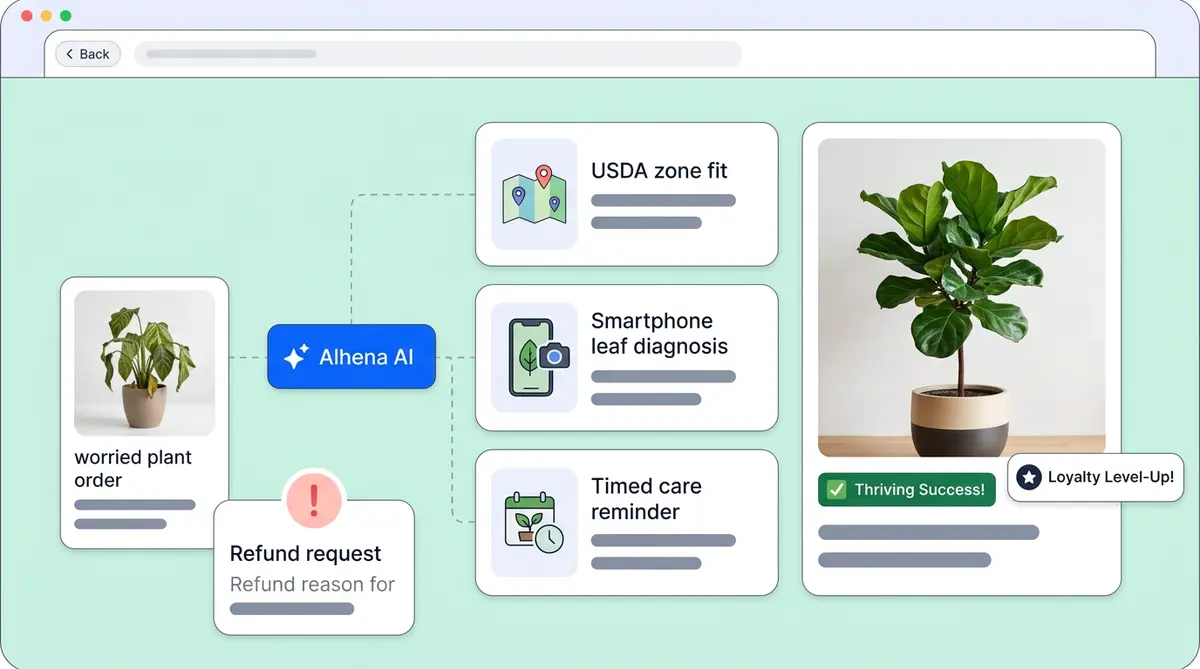
The fix isn't a better return policy. It's intervening before the customer decides the plant is dead. Proactive AI touchpoints, like a care guide sent 48 hours after delivery, improve the customer experience and reframe the ownership experience. The potential return fades as the customer thinks "oh, leaf drop is normal during adjustment." That single customer experience reframe can be the difference between an exchange or replacement request and a five-star review.
Automating Hardiness Zone Matching to Reduce Returns in Ecommerce
The USDA Plant Hardiness Zone Map divides North America into 13 zones based on average annual extreme minimum temperatures. But most ecommerce website experiences list zone data in product descriptions as a static footnote instead of detailed product guidance on product pages, if they mention it at all.
A customer in Minneapolis (Zone 4a) ordering a bougainvillea (Zone 9-11) will have a dead plant by October. That's a potential return preventable at the point of sale.
Alhena doesn't ship with a built-in horticultural database. What it does ship with is a way to surface whatever the brand already knows. Zone compatibility, sun requirements, USDA classification, and indoor/outdoor flags can all be stored as product catalog attributes in Shopify, WooCommerce, or any supported platform. Once ingested, the AI shopping assistant references those attributes when answering customer questions.
For brands that already run zone-lookup logic internally (a zone API, a "ships to your state?" rule, or an inventory-by-region check), Alhena's Custom Agents with API Tools and MCP Servers let those endpoints be exposed as tools the AI can call live during a conversation. When a Zone 5 customer asks about a tender perennial, the answer is grounded in the brand's own data, not a generic LLM guess. The net effect is the same: wrong-climate sales get flagged before checkout, and the customer feels guided rather than sold to.
Personalizing Care Across Channels with User Memory
Plant care is personal. A customer in a north-facing Seattle apartment has different needs than someone with a sun-drenched patio in Phoenix. Generic care advice fails because it ignores this context. That's where Alhena's AI shopping assistant stands apart: its User Memory feature automatically stores facts each customer shares and recalls them in future conversations, no matter which channel they use.
Here's what that looks like in practice. A customer messages your chat widget: "I just moved to a basement apartment with no direct sunlight. Which of my plants need grow lights?" Alhena answers based on the brand's care content. Three weeks later, the same customer emails about yellowing leaves on their pothos. The AI already knows they're in a low-light environment and factors that into the response, without the customer repeating themselves.
User Memory works across every channel Alhena supports: web chat, email, WhatsApp, Instagram DMs, and Facebook Messenger. For plant brands, this continuity matters more than in most categories. A customer's growing conditions don't change between conversations, but their plants do. The AI builds a persistent picture of each customer's environment, so every interaction starts from context rather than scratch.
Admins can verify exactly what the AI remembered and used. The Answer Sources panel shows which user memories were recalled for each response, so your team can audit the AI's reasoning. If a memory is wrong or outdated, the team sees it and can correct course.
Seasonal Care Triggers That Prevent Product Failure
Most plant deaths don't happen in the first week. They happen during seasonal care transitions, when watering needs shift, light conditions change, and dormancy catches owners off guard.
Generic newsletter blasts ("Winter plant care tips!") don't solve this. Alhena drives proactive, contextual engagement through three real mechanisms that gardening brands can use today.
First, AI Nudges on the website. These are contextual prompts triggered by URL, time-on-page, scroll depth, or custom SDK events the brand fires (like "viewed care guide" or "returned visitor in week 2"). Nudge text can be AI-generated from the page context, so a customer browsing ferns sees "Wondering about humidity for your new fern?" rather than a generic greeting. Second, Product FAQ Nudges on product pages automatically surface common questions ("Does this plant need direct sun?") as lightweight chat prompts, resolving doubt at the point of purchase before it becomes a post-purchase problem.
Third, Alhena's integrations with Klaviyo, HubSpot, and mParticle let the brand own the timing of outreach. When a Klaviyo flow sends a "two weeks since delivery" email, or a seasonal care reminder in October, the conversational follow-up the customer starts after clicking is handled by Alhena with full memory of who they are, what they bought, and what growing conditions they've shared. The brand controls when to reach out; Alhena handles what to say, with answers grounded in the brand's own care content.
How Alhena AI Turns Post-Purchase Care into a Revenue Channel
Alhena AI was built for knowledge-intensive ecommerce support where product fit depends on climate and care. For gardening brands, it combines capabilities that generic support tools can't match.
Alhena's Product Expert Agent uses the customer's location and growing conditions to suggest items and plants that will actually thrive for them. This happens on website product pages and during conversational discovery, where shoppers describe what they want ("something low-maintenance for a dark apartment") and helping shoppers find exactly a fit by identifying the right items. Working to minimize bad matches and preventing the wrong purchase is the first line of defense against ecommerce returns.
After the sale, Alhena delivers care guidance grounded in the brand's own knowledge. The AI's knowledge base ingests care content from any source the brand already maintains: website pages, PDFs (printed care cards scanned in), Google Drive docs, Notion pages, Confluence wikis, YouTube tutorial transcripts, helpdesk articles from Zendesk or Freshdesk, and CSV files of plant data. When a customer asks "why are my leaves turning yellow?", Alhena draws from this verified content and shows the team exactly which source document powered the answer through Answer Sources. No hallucinated plant advice, no generic LLM guesses.
For gardening brands dealing with seasonal customer service surges, this is critical. Crocus, the UK's largest online garden retailer, saw support inquiries triple during spring and expanded from 8-10 agents to 25-30 seasonal hires. After deploying Alhena AI using deep integrations with Freshdesk, Crocus achieved an 86% ticket deflection rate and 84% customer satisfaction score (CSAT), an improvement over the previous score of under 80%. Their ticket reopen rate dropped to 3.7%, meaning AI resolutions created positive outcomes that stuck. Full details are in the Crocus case study.
Alhena's Trending Topics analytics also gives gardening brands an early warning system. When a cluster of customers suddenly asks about "leaves drooping after shipping" or "brown spots on succulents," the dashboard surfaces that spike so the brand can tighten its care card, adjust packaging, or add a FAQ before the pattern becomes a returns problem. It's the difference between reacting to refund requests and preventing them.
Alhena also handles smart upsells at care-related touchpoints. When the AI helps diagnose a nutrient deficiency, it can suggest the right items like fertilizer. When it sends a repotting reminder, it can link to related items like new pots and premium soil. Brands using Alhena's AI Support Concierge have seen AOV increases of up to 38% in other verticals.
Returns Prevented Equal Lifetime Value Gained
Reducing returns isn't just about saving margin on one order. Each plant kept alive becomes a compound asset. The average lifetime spend per plant enthusiast is $566+. A customer who keeps their first monstera alive is far more likely to order a second plant, then accessory items, then gifts for friends.
A $78 order that would have been returned and replaced at roughly $156 (original loss plus replacement) instead becomes: one retained order, one five-star review, positive feedback from shoppers, one seasonal care interaction, and one accessory cross-sell. Over a customer lifetime, that single prevented return, and the lower return rate it contributes to, could represent hundreds of dollars in future purchases.
For gardening brands running on Shopify, WooCommerce, or Magento, the path to lowering your return rate in ecommerce starts with better post-purchase care, not a stricter return policy or refund guarantee. AI-powered returns management and automation handles the process when returns do happen. But the real win is preventing them from happening at all.
Ready to turn post-purchase care into a powerful customer loyalty engine? Book a demo with Alhena AI to see how gardening brands reduce returns and grow customer loyalty and lifetime value, or start free with 25 conversations.
Frequently Asked Questions
How do AI plant care guides reduce returns in ecommerce?
AI care guides help retailers reduce returns in ecommerce by intervening before shoppers decide their plant has failed. Unlike apparel or clothing returns where customers return products due to fit or sizing issues, plant product returns stem from care gaps. AI sends proactive post-delivery care instructions, diagnoses issues from photos, and matches plants to the right hardiness zone. This approach has helped retailers like Crocus achieve 86% ticket deflection and stronger customer loyalty.
What is plant survival anxiety and why does it drive returns?
Plant survival anxiety is the fear of killing a houseplant, reported by 67% of millennials in a OnePoll survey. It causes buyers to interpret normal post-shipping stress (leaf drop, wilting) as product failure, triggering refunds, exchange requests, and chargebacks. Research shows 79% of consumers blame the company rather than their own care when a product fails, making proactive guidance critical for gardening brands.
Can AI match plants to a customer's climate zone automatically?
Yes. AI shopping assistants can cross-reference USDA hardiness zone data with the customer's shipping ZIP code to flag mismatches before purchase. If a Zone 5 customer adds a tropical plant to their cart, the AI suggests a cold-hardy alternative. This prevents wrong-climate sales, which are among the most avoidable causes of plant returns.
How does Alhena handle plant care questions after purchase?
When a customer asks about yellowing leaves or drooping stems, Alhena draws from the brand's own horticultural knowledge base to provide grounded, specific advice. User Memory recalls the customer's location, growing conditions, and past purchases so the AI doesn't give generic answers. If the issue requires human expertise, Alhena escalates to a live agent with the full conversation history and recalled memories attached via Agent Assist. The AI doesn't guess or hallucinate plant advice. Every answer traces back to a verified source document the team can audit.
How do seasonal care triggers prevent plant deaths and returns?
Seasonal care triggers send timed, personalized guidance based on the species purchased, purchase date, and the customer's climate zone. For example, a Boston fern buyer gets a humidity alert when heating season starts, and a Japanese maple buyer gets a dormancy guide in fall. These interventions prevent the slow deaths that happen during seasonal transitions, when most plant failures actually occur.
What's the real cost of a plant return compared to regular ecommerce returns?
Plant returns are uniquely expensive compared to other retail categories. Unlike apparel, clothing, or merchandise that retailers can restock and resell, dead plants are a total inventory loss. Most online plant retailers don't accept physical returns. Instead they process refunds or ship free replacements through reverse logistics, meaning every return costs roughly 2x the original order. With an average order value of $78.50, that hurts profitability at over $150 lost per incident. A clear refund policy helps set customer expectations, but preventing returns through care guides is far more cost-effective.