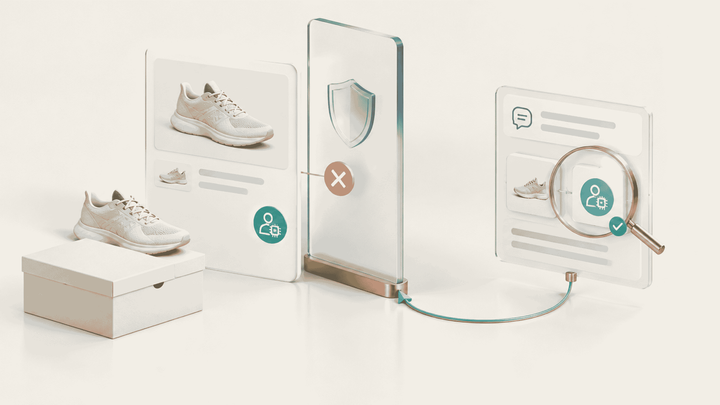
The agentic commerce conversation has been almost entirely about the front of the funnel: getting cited by ChatGPT, surviving Gemini's product comparison, and winning the checkout friction test. Fair enough. Visibility matters. But when a generative AI agent completes a checkout on a shopper's behalf, a quieter problem starts: a stranger now owns one of your products. They didn't visit your site. They didn't read your retailer story. They may not even remember which online retailer the agent picked.
This post covers what happens after the generative AI agent disappears: the five agentic commerce handoff gaps that turn a converted sale into a customer service headache and how to close them before they cost your business the relationship.
The Hand-Off Moment Nobody Plans For
In a traditional e-commerce flow, before agentic commerce changed the model, shoppers build a mental map of your brand before they buy. They browse your homepage, scan your size chart, read a few reviews, and absorb your return policy. By the time they check out, they know who you are.
Agentic commerce orders skip all of that. The shopper asks ChatGPT for "the best lightweight moisturizer under $40," the model’s agents can surface three product recommendations, and the buyer taps "buy" without ever leaving the chat. The order lands in your system. But the buyer's first real interaction with your brand? That's the delivery on their doorstep, or the moment something goes wrong.
We've covered how to sell inside ChatGPT and Gemini and how to make your catalog visible to AI agents. Those posts solve the front-door challenge with proven solutions for agentic commerce. This one is about what happens once the customer walks through it.
Five Post-Purchase Gaps in Agent-Mediated Orders
1. The Identity Gap
Your CRM technology expects a recognizable customer profile: a name, an email, maybe a browsing history. Agent-mediated orders often arrive with a tokenised or relay email address and no prior session data. The buyer is real, but to your merchant systems, they're a ghost. Matching them to a structured customer record takes extra work that most retailers haven't accounted for.
2. The Brand Memory Gap
The buyer never saw your homepage, your unboxing video, or your brand voice. Their first impression is the product itself and whatever packaging surrounds it. Generative AI brought shoppers to your door, but it won’t introduce them. If that first touch doesn't include a clear support services entry point and a reason to come back, you've lost the window.
3. The Support Recognition Gap
When agentic commerce buyers reach out, they often can't identify which online retailer. "ChatGPT bought me a navy crewneck, and it doesn't fit" is a real support ticket pattern. Your team needs to triage by order ID and SKU, not by asking, "What's your account email?" A buyer who arrived through an AI agent likely doesn't have one.
4. The Attribution Gap
Agent-mediated orders don't always pass through your online analytics. No UTM parameters. No delivery tracking flows or pixel fire. No last-click attribution. Your marketing team sees revenue they can't explain, and lifetime-value models skew because the acquisition channel is invisible. The two front doors problem doesn't stop at conversion; it distorts measurement too.
5. The Retention Gap
No cookies on your domain. No Klaviyo integration from a sign-up form. No retargeting pixel. The buyer exists in your merchant order management system but nowhere in your lifecycle e-commerce marketing technology stack. If you can't pull them into a direct relationship during the post-purchase window, they'll return to the AI agent for their next purchase, and the agent has no loyalty to your brand.
A Short Readiness Checklist
These are concrete steps you can take this quarter in 2025 to close the gaps above:
- Treat agentic commerce orders as a distinct acquisition channel. Tag them in your merchant OMS. Map relay or tokenised emails into structured profiles to a structured, persistent, secure customer record at first contact. If your CDP can't handle this today, flag it as a gap.
- Design a first-touch brand moment. A physical insert card or a well-crafted transactional email that introduces your brand, sets expectations, and gives a single clear support entry point (chat, email, phone) that works regardless of how the order was placed.
- Switch to order-first support triage. Train your team (and your AI) to lead with structured order ID and SKU verification instead of "What's your account email?" This is faster for every customer, but it's essential for agentic-commerce-acquired ones.
- Run a monthly attribution audit. Compare multiple platforms’ order counts (Shopify and Stripe) against your on-site analytics. The gap between them is growing, and agentic commerce orders are one reason why.
- Use post-purchase touches to pull buyers into owned channels. Packaging, transactional email, and the returns flow are your three best shots at converting an agent-acquired buyer into a direct relationship.
Where AI Support Closes the Hand-Off
The agentic commerce checklist above is operational. But the support layer is where most of these gaps become visible and where AI capabilities can close them fastest.
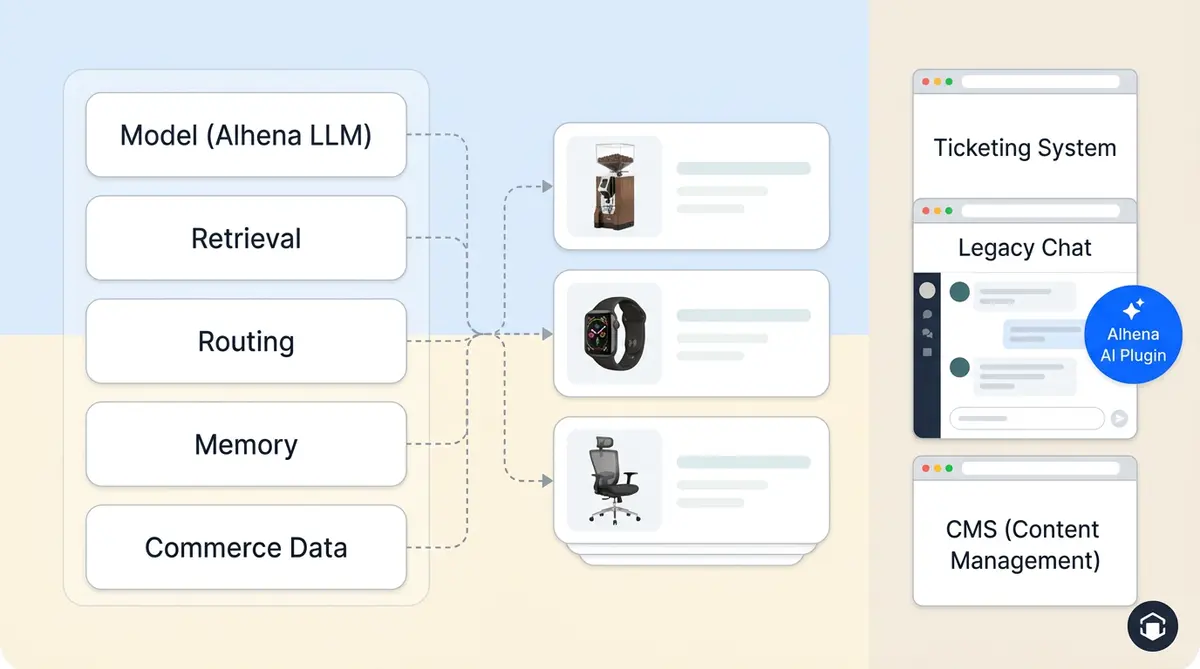
Alhena's Support Concierge resolves queries by order context, not account identity. When a buyer shows up saying, "I got a package, but I'm not sure who sent it," the AI agents can pull up the order by tracking number, SKU, or shipping address and handle the interaction from there. It works across multiple channels, including chat, email, voice, and social, with automation across 90+ languages, which matters when a global AI agent routes a buyer to a retailer they've never heard of.
Alhena's Unified Memory builds a single customer profile that persists across every channel. So when that same buyer contacts you directly through Instagram next month, the AI already knows their order history, preferences, and prior support services interactions, adding value. That's how you start converting agent-acquired buyers into repeat customers.
And because Alhena's responses are with capabilities grounded in live store data (not generated from generic training), the answers are accurate on return windows, shipping cutoffs, and inventory, exactly the questions a cold buyer asks first. Brands like Tatcha and Manawa already use this approach across thousands of monthly interactions, with Manawa cutting response times from 40 minutes to under 1 minute.
The Bigger Picture
The first wave of agentic commerce advice focused on visibility: get cited by LLMs. The second wave focused on structured, machine-readable product data: make your catalog parseable. The third wave of agentic commerce readiness, the one most businesses haven't started on, is operational readiness. Can you serve a customer who arrived without ever meeting you?
Retailers that close the post-purchase gap turn one-time agent sales into direct relationships. Brands that don't will see agent-channel revenue grow while repeat-purchase economics stall. The agent doesn't care which retailer it picks next time. Your post-purchase experience is what makes the buyer care.
Ready to close the hand-off gap? Book a demo with Alhena AI or start free with 25 conversations.
Frequently Asked Questions
What is AI-mediated commerce?
AI-mediated commerce is when AI agents like ChatGPT, Gemini, or Copilot handle part or all of a purchase on a shopper's behalf. The buyer may never visit the retailer's website. The agent discovers products, compares options, and completes checkout inside its own interface.
What are the biggest post-purchase challenges with agent-mediated orders?
The five main gaps are identity (no recognizable customer profile), brand memory (the buyer never saw your site), support recognition (they can't identify your store), attribution (orders don't show in site analytics), and retention (no cookies or marketing profiles to re-engage them).
How do I identify customers who bought through an AI agent?
Look for orders with tokenized or relay email addresses, no prior browsing session, and no UTM protocols or parameters. Tag these as a distinct acquisition channel in your OMS and reconcile platform-side order counts against on-site analytics monthly to measure the gap.
How does Alhena AI help with agent-acquired customers?
Alhena's Support Concierge resolves queries by order context (tracking number, SKU, shipping address) instead of requiring account identity. Unified Memory builds a persistent customer profile across channels, so even a first-time buyer gets personalized support from their second interaction onward.
Can I track revenue from AI agent referrals?
Standard pixel-based attribution misses most agent-mediated orders. Run a monthly attribution audit comparing platform-side order counts (Shopify, Stripe) with on-site analytics. Alhena's revenue attribution insights dashboard can flag cross-channel orders that don't match traditional tracking sources.
How do I convert agent-acquired buyers into repeat customers?
Use the post-purchase window: transactional emails, packaging inserts, and the returns flow. These three touchpoints are your best chance to introduce your brand and pull the buyer into owned channels like email lists or loyalty programs before they return to the AI agent for their next purchase.