The AI in fashion market hit $2.9 billion in 2025 and is growing at over 40% per year, according to Research and Markets. That's not hype. It's a reflection of how AI is reshaping how fashion brands are moving from "should we try AI?" to "which AI tools do we actually need?" McKinsey's State of Fashion 2026 report puts it plainly: artificial intelligence across the fashion industry has shifted from a competitive edge to a business necessity. This guide breaks down the 10 best AI powered tools for fashion ecommerce in 2026, organized by use case, so you can build a stack that drives real revenue.
Why Fashion Brands Are Going All-In on AI
Fashion ecommerce is a $957 billion global market heading toward $1.5 trillion by 2029. But margins are thin, return rates hover around 25%, and consumer acquisition costs keep climbing. AI powered technology is reshaping how brands solve these challenges at scale.
The numbers back it up. According to industry data, shoppers who interact with AI convert 31% higher than those who don't. Revenue per visit from AI-referred traffic jumped 254% year over year during the 2025 holiday season. And 85% of consumers using AI for shopping say the experience is better than traditional browsing, per Business of Fashion and McKinsey.
For fashion specifically, AI tackles the industry's biggest pain points: size-related returns (which cost clothing and apparel brands $45 billion annually), product discovery bottlenecks, and the gap between the personalized in-store experience and the flat online catalog. The businesses winning right now are the ones stacking 3 to 5 specialized AI powered tools across their ecommerce operations.
10 Best AI Tools for the Fashion Industry in 2026
Not every AI tool does the same thing. The best fashion industry stacks combine tools for conversational shopping, personalization, sizing, visual search, and operations. Here's what's worth your investment.
1. Alhena AI: Best for Conversational Shopping and Sales
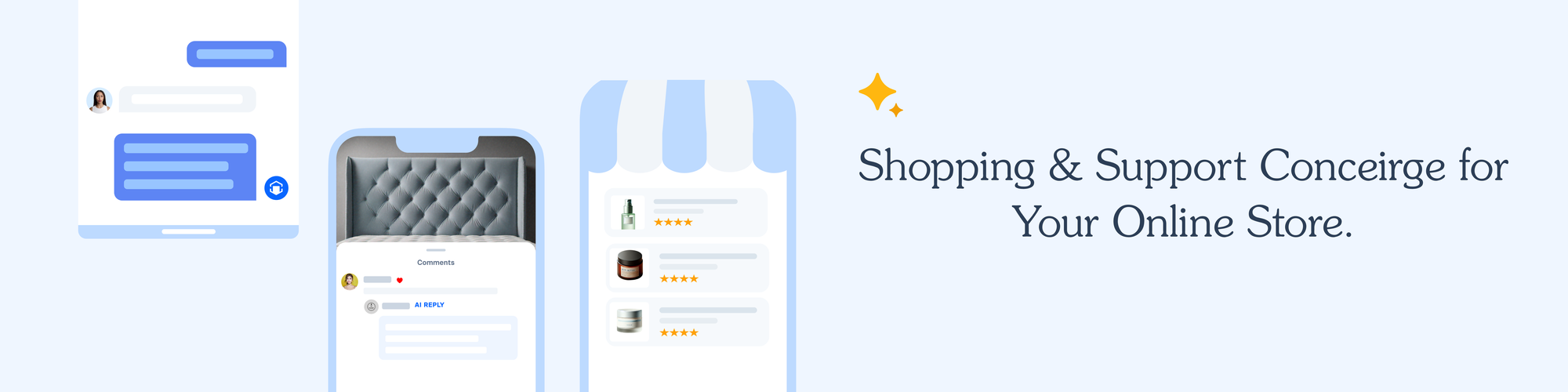
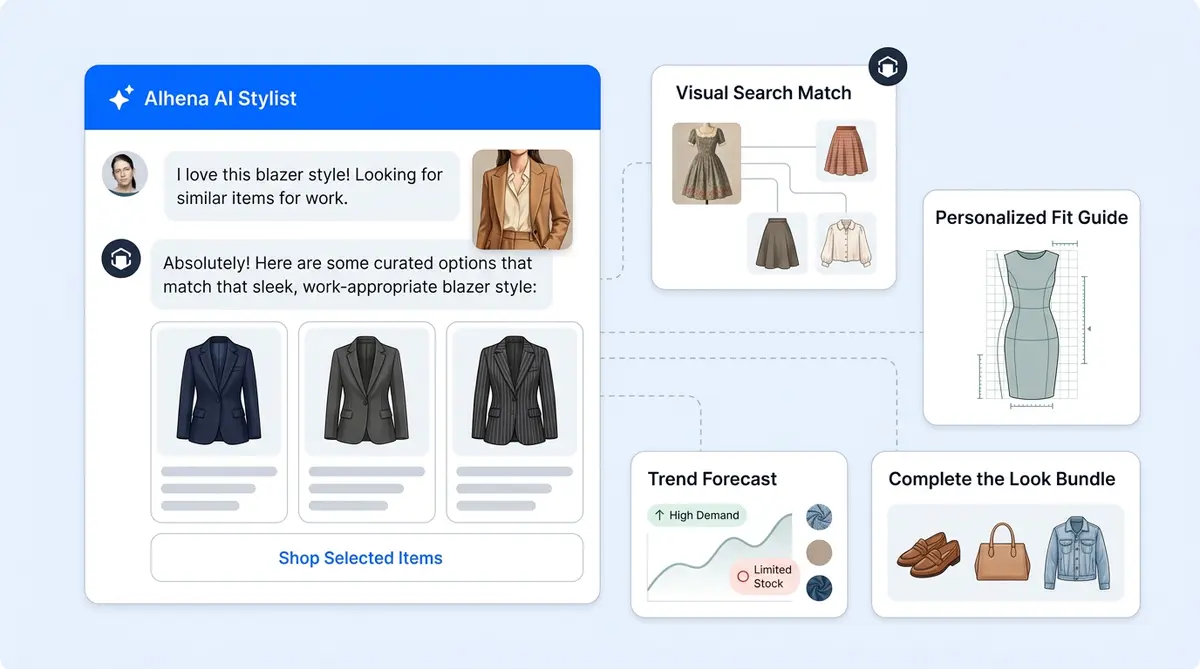
Alhena AI is artificial intelligence generative AI purpose-built for ecommerce revenue, not just support ticket deflection. Its AI Shopping Assistant acts as a virtual stylist that understands fashion industry context: fit preferences, color matching, occasion-based recommendations, and complete-the-look suggestions. What separates Alhena from generic chatbots is its hallucination-free architecture. Every product recommendation is grounded in your verified catalog data, so customers never get pointed toward items that are out of stock or don't exist.
The platform includes a built-in Outfit Builder Agent that creates curated looks from your inventory, plus a Fit Analyzer that cross-references body data with garment-level fabric and fit measurements and Alhena's virtual try on feature. It handles agentic checkout automations too, populating carts and pre-filling checkout fields directly in the chat window.
Real case study results from fashion brands tell the story. Victoria Beckham saw a 20% AOV increase after deploying Alhena's AI stylist. Tatcha reported a 3x conversion rate and 11.4% of total site revenue attributed directly to AI-assisted conversations. Alhena works across web chat, email, Instagram DMs, WhatsApp, and voice, and deploys in under 48 hours with no dev resources needed.
Best for: Fashion brands that want AI to drive sales, not just answer questions the way a human agent would.
Integrations: Shopify, WooCommerce, Magento, Salesforce Commerce Cloud, Zendesk, Gorgias, Intercom
2. Nosto: Best for AI Personalization
Nosto is a personalized recommendation engine that earned back-to-back spots in Gartner's Magic Quadrant for 2024 and 2025. It uses analyzing algorithms and behavioral data and AI powered visual intelligence to deliver product recommendations, personalized search results, dynamic content, and curated products across your store. Marc Jacobs reported +137% average revenue per session and 9% of online GMV coming from Nosto-powered recommendations.
For the fashion industry, Nosto's visual search integration is a standout. Shoppers can find visually similar items without knowing the exact product name, which is how most fashion discovery actually works. It also has a Klaviyo plan integration that works for cross-channel personalization.
Best for: Mid-market and enterprise fashion brands focused on product discovery and cross-sell.
Pricing: Quote-based, typically tied to GMV.
3. Syte: Best for Visual Search
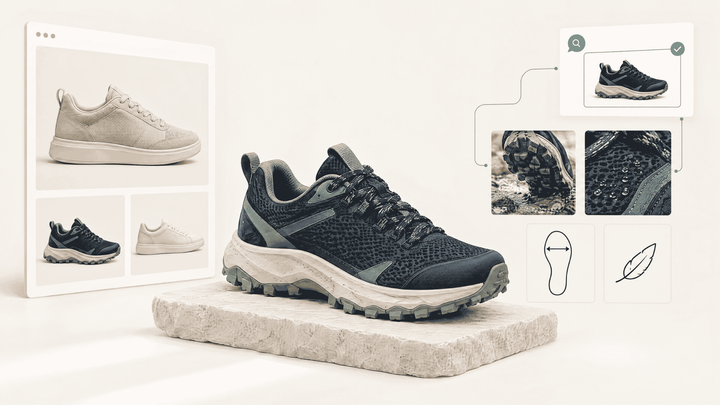
Syte specializes in AI powered camera-first product discovery. Shoppers snap a photo or upload an inspiration image, and Syte's computer vision finds matching products from your catalog. Visual search queries grew 85% year over year in 2025, outpacing every other discovery channel. For fashion brands, where "I want something like this" is the most common shopping intent, visual search is a conversion multiplier.
Syte also bundles merchandising and personalization features, so it's more than a single-function add-on.
Best for: Fashion brands with large catalogs where visual discovery drives purchases.
Pricing: Quote-based (traffic and SKU dependent).
4. Bold Metrics: Best for AI Sizing and Fit
Sizing is fashion's most expensive supply chain problem. 52% of all apparel supply chain returns are size-related, and that adds up to $45 billion in annual losses industry-wide. Bold Metrics uses machine learning and digital twin technology to predict 50+ body measurements from just a shopper's height and weight, then matches those measurements against garment and fabric-specific data.
Gap recently partnered with Bold Metrics for its agentic commerce initiative, making it the first major fashion retailer to allow in-chat size recommendations powered by AI. Bold Metrics also introduced an Agentic Sizing Protocol, an API that lets AI shopping agents query fit data in real time.
Best for: Clothing brands with high return rates driven by sizing issues.
Pricing: Enterprise.
5. FindMine: Best for Outfit Completion
FindMine's AI powered "complete the look" technology automatically generates outfit recommendations from your existing catalog. Instead of designers and merchandising teams manually pairing products, FindMine does it using algorithms across your entire SKU set. The results are strong: John Varvatos saw a 70% AOV increase and 2x conversion rate during a three-month pilot. Adidas uses it at scale.
FindMine claims to reduce merchandiser workload by 95%, freeing human teams to focus on creativity rather than manual product pairing. For fashion industry brands looking to improve outfit discovery, it's one of the strongest options available.
Best for: Fashion brands that want automated cross-sell through curated looks.
Pricing: Enterprise.
6. Heuritech: Best for Trend Forecasting
Heuritech uses generative AI computer vision to analyze millions of social media images and predict fashion trends and in-demand designs up to 24 months ahead with 90% accuracy. Instead of relying on buyer intuition or lagging sales data, you get a generative AI data-driven view of which colors, silhouettes, fabric choices, and fashion trends and designs are gaining traction or losing trends.
For fashion brands, supply chain forecasting errors directly translate into deadstock and markdowns. Heuritech helps you buy smarter, produce less waste, and run a more sustainable operation focused on sustainability. H&M and Zara used AI powered inventory intelligence to reduce overstock by 30% and stockouts by 40%.
Best for: Fashion brands with fashion designers making fashion design, buy, and production decisions.
Pricing: Enterprise.
7. Google Virtual Try-On: Best for Free Virtual Fitting
Google's Virtual Try-On feature is free and works through Google Shopping. It uses generative AI diffusion models to show how clothing items look on a range of body types and skin tones. Partners include Anthropologie, Everlane, H&M, Levi's, and Adidas. The virtual try-on market is projected to grow from $5.8 billion in 2024 to $27.7 billion by 2031, and Google is making it accessible to brands of all sizes.
The catch: it works within Google's ecosystem, so you don't control the experience on your own site. For that, you'd need a dedicated try-on tool or a platform like Alhena AI that bundles fit analysis directly into the shopping conversation.
Best for: Brands already active on Google Shopping that want free try-on visibility.
Pricing: Free (via Google Shopping integration).
8. Shopify Sidekick: Best for Native Shopify AI
If you're on Shopify, Sidekick is already included in your plan. It handles product descriptions, email marketing drafts, image editing, and proactive alerts through Sidekick Pulse. It won't replace a dedicated AI powered shopping assistant for customer-facing conversations, but for back-office automations and creative content production, it's a strong free tool.
Shopify Magic also produces generative AI product photos and creates AI generated backgrounds, which saves fashion brands time on catalog management. For customer-facing automations that drive sales, you'll want a specialized tool like Alhena AI's Shopify integration.
Best for: Shopify merchants who want built-in AI for content and operations.
Pricing: Included with all Shopify plans.
9. WearView: Best for AI Product Photography
WearView creates AI generated AI generated on-model product photography in under 15 seconds. Traditional fashion photoshoots cost $2,000 to $10,000 per session. WearView subscriptions start around $29 to $50 per month, cutting photography costs by 80 to 90%. For fashion brands launching new collections frequently, the speed, cost benefits, and innovation are significant.
Best for: DTC fashion brands that need high-volume product imagery on a budget.
Pricing: Subscription (starts ~$29/month).
10. Prediko: Best for Shopify Demand Planning
Prediko is the top-rated AI demand planning tool built specifically for Shopify brands. Trained on 25 million+ SKUs, it predicts supply chain inventory needs at the SKU level so you can avoid both stockouts and overproduction. For fast-moving companies with seasonal supply chain collections, accurate demand planning protects your profit plan.
Best for: Shopify fashion brands that need smarter inventory forecasting.
Pricing: Shopify-native (subscription).
What Sets Artificial Intelligence Shopping Assistants Apart from the Rest
Most AI tools for fashion handle one slice of the business: photography, sizing, forecasting, or personalization. AI shopping assistants sit at the intersection of all of them because they interact directly with the customer at the moment of purchase.
According to Alhena's 329-brand study, AI-assisted checkout completion rates hit 49.3%, compared to 26.3% without AI. That's nearly double. Shoppers who engage with artificial intelligence and a fashion AI chatbot show 25% higher average order values and are 4x more likely to convert.
The difference between a generic chatbot and a fashion-specific AI assistant comes down to product understanding. A general-purpose bot can answer "where is my order?" But it can't say "this dress runs a full size small, so I'd recommend going up" or "here's a belt and bag that complete this look in the same color family." That's what purpose-built tools like Alhena's Support Concierge and Product Expert Agent deliver.
For fashion brands evaluating AI in fashion retail solutions, artificial intelligence shopping assistants should be the first investment because it directly touches revenue. Everything else in the stack supports and amplifies that core conversion engine.
How to Build Your Fashion AI Stack
You don't need all 10 tools. Start with the ones that address your biggest revenue leaks, then plan to layer on from there. Here's a practical framework:
- If your biggest problem is low conversion: Start with an AI shopping assistant (Alhena AI) and personalization engine (Nosto). These two features directly influence purchase decisions.
- If returns are killing your margins: Add a sizing tool (Bold Metrics or Alhena's Fit Analyzer) and consider virtual try-on.
- If you need better product discovery: Visual search (Syte) and outfit completion (FindMine) help shoppers find what they didn't know they wanted.
- If inventory waste is the issue: Demand forecasting (Heuritech or Prediko) prevents supply chain overproduction and stockouts.
- If content creation is a bottleneck: AI photography (WearView) and Shopify Sidekick speed up catalog production.
Most successful fashion ecommerce teams run 3 to 5 specialized tools. The key is choosing tools that integrate well together. Alhena AI powered integrations, for example, connects to Shopify, Zendesk, Gorgias, and 10+ other integrations, so it fits into your existing stack without requiring a rebuild.
Key Takeaways
- AI in fashion is a $2.9 billion market growing at 40%+ annually. It's no longer optional for ecommerce brands.
- AI shopping assistants drive the highest direct revenue impact, with 4x conversion lifts and 25% higher AOV for engaged shoppers.
- Sizing AI addresses fashion's most expensive problem: $45 billion in size-related returns every year.
- Visual search and outfit completion improve discovery and cross-sell, two areas where the fashion industry traditionally underperforms.
- Start with revenue-facing tools (shopping assistant, personalization) before adding operational AI (forecasting, photography).
- Alhena AI is the strongest option for fashion brands that want conversational AI that sells, not just supports, with hallucination-free recommendations, omnichannel reach, and 48-hour deployment.
Ready to see how AI can drive revenue for your fashion brand? Book a demo with Alhena AI or start for free with 25 conversations.