Shopping-related searches on generative AI platforms grew 4,700 percent between 2024 and 2025, according to the McKinsey and BoF State of Fashion 2026 report. For fashion brands, that shift isn't a footnote. It's a signal that the way people discover, evaluate, and buy clothing is changing at a pace the industry hasn't seen since mobile commerce took off a decade ago.
Agentic commerce sits at the center of this shift. Instead of browsing static product grids and filtering by size, shoppers are starting to tell AI agents what they want and letting those agents do the rest: finding the right pieces, matching sizes, suggesting complete outfits, and even completing checkout. For fashion and apparel brands, this isn't a distant concept. It's already reshaping how top retailers and merchants operate.
This post breaks down what agentic commerce means for fashion specifically, helping you learn, which brands are leading the way, and how your store can put these capabilities to work today.
What Agentic Commerce Actually Means for Fashion Retail
Agentic commerce is an approach to buying and selling where AI agents act on behalf of shoppers and businesses to research, compare, and complete purchases, often with minimal human input. IBM defines it as transactions initiated, negotiated, and completed by autonomous software agents rather than humans directly.
In fashion, that plays out in very specific ways. A shopper might tell an AI agent, "I need a cocktail dress under $200 that works for a summer wedding." The agent interprets that request, searches the catalog for dresses that match the occasion and price point, considers the shopper's past purchases and size history, and presents a curated shortlist. If the shopper likes an option, the agent can add it to the cart, apply any available discount codes, process the payment, and move straight to checkout.
This is different from a basic chatbot or a recommendation engine. Those tools react to clicks and browsing behavior. An agentic system reasons through multi-step requests, accesses real-time inventory, and takes autonomous action. It can break a complex styling request into structured steps: identify the occasion, filter by budget, cross-reference fit data, suggest complementary accessories, and close the sale.
For fashion brands, the stakes are high. McKinsey projects that agentic commerce could drive up to $1 trillion in U.S. B2C revenue by 2030, with global projections reaching $3 to $5 trillion. Fashion, where product discovery is inherently complex and personal, stands to capture a large slice of that value.
Why Fashion Is Uniquely Positioned for Agentic AI
Not every product category benefits equally from agentic commerce. Buying toilet paper doesn't require a conversation. Buying a new fall wardrobe does. Fashion and apparel sit at the intersection of personal taste, body-specific fit, occasion-based needs, and trend awareness. That complexity makes it one of the best use cases for agentic AI in ecommerce.
The Discovery Problem
Fashion catalogs are massive. A mid-size apparel brand might carry 5,000 or more SKUs across sizes, colors, and seasonal collections. Traditional search and filter tools force shoppers to do all the narrowing themselves. An AI agent flips this: the shopper describes what they need, and the agent does the searching.
The Fit and Returns Problem
Seven in ten online apparel returns stem from size or fit issues, according to industry data. That's a massive drain on margins. Agentic AI can integrate body measurements with product-specific sizing data to recommend the right fit before purchase, cutting return rates and boosting buyer confidence.
The Styling Gap
In a physical store, a sales associate can pull together a complete look: the blazer, the trousers, the belt, the shoes. Online, that styling guidance barely exists. AI agents fill this gap, making outfit recommendations, suggesting pieces that pair well together, and building complete looks that increase average order value.
Brands that sell fashion and apparel online already know these pain points. Agentic commerce addresses all three at once.
How Leading Fashion Brands Are Putting Agentic Commerce to Work
The shift from experimental to operational is happening fast. Several major fashion players are already using agentic AI to change how customers shop.
Zalando's AI Shopping Assistant
Zalando, Europe's largest online fashion platform, built an AI-powered assistant using generative AI that provides personalized fashion advice through natural conversation. Instead of browsing category pages, shoppers describe what they're looking for, and the assistant surfaces relevant options to create a personalized selection from Zalando's massive catalog. The tool was built in a five-week sprint, showing how quickly fashion brands can deploy agentic capabilities.
Kering's Madeline for Luxury Shoppers
Kering, parent company of Gucci and Saint Laurent, launched KNXT with an AI assistant called Madeline. She delivers tailored luxury shopping experiences, helping customers select pieces from across Kering's brand portfolio. For high-consideration purchases where shoppers need guidance and reassurance, agentic AI acts like a personal shopper who knows the full collection.
H&M and Zara: AI-Driven Traffic
ChatGPT accounted for 16 percent of Zara's and 8 percent of H&M's inbound web traffic between June and August 2025. That means AI platforms are already sending significant volumes of fashion shoppers to brand sites. Brands that aren't optimized for agentic commerce protocols risk losing visibility in this new discovery channel.
DressX Agent: Virtual Try-On Meets Agentic Checkout
DressX launched an AI-powered platform where users upload a selfie, generate a digital twin, virtually try on outfits from over 200 luxury brands, and buy directly. It's the full agentic loop: discovery, visualization, and purchase, all within a single conversational experience.
These aren't pilots or press releases. They're production systems driving real revenue. And the common thread is clear: fashion brands that give AI agents the ability to act on behalf of shoppers see stronger engagement, higher conversion, and bigger baskets.
Five Agentic Commerce Use Cases Every Fashion Brand Should Know
If you're running an apparel or fashion ecommerce store, here are the agentic capabilities delivering the biggest impact right now.
1. Conversational Product Discovery
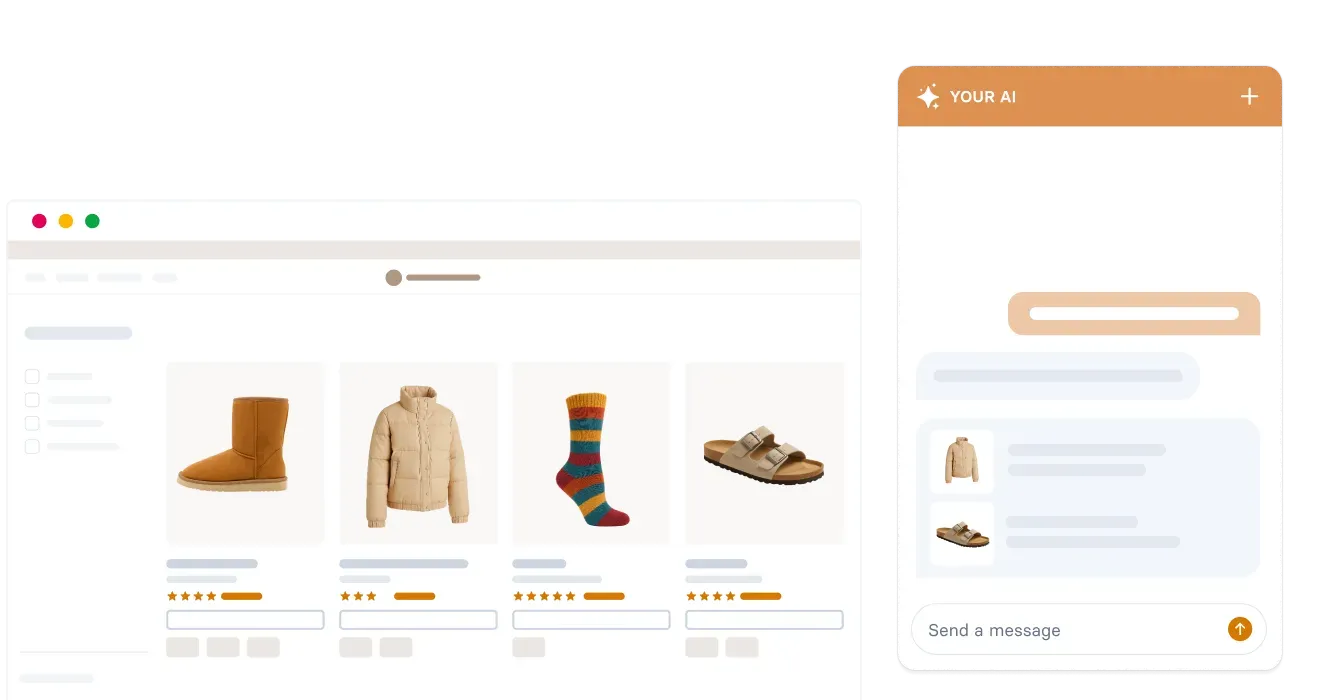
Instead of filters and keyword search, shoppers describe what they want in natural language. "Show me lightweight linen pants for a beach vacation" or "I need a formal outfit for a winter gala." The AI agent interprets the intent, considers context (weather, occasion, style preference), and returns a curated set of products. Brands using AI shopping assistants for conversational search see conversion rates climb by 300% or more compared to traditional browse-and-filter flows.
For a broader look at the AI tools powering this shift, see our ranked guide to the best AI tools for fashion ecommerce.
2. Personalized Styling and Outfit Building
Agentic AI doesn't just recommend individual products. It builds complete outfits. An agent can look at a customer's purchase history, understand their style preferences, and suggest a full look with accessories. Outfit builder agents for apparel brands increase average order value by cross-selling pieces that naturally go together. Victoria Beckham, for example, saw a 20% increase in AOV after deploying AI-powered product recommendations through Alhena AI.
3. AI-Powered Fit and Size Guidance
Getting the size right is the single biggest lever for reducing fashion returns. Agentic AI integrates body measurements, brand-specific sizing charts, and purchase history to recommend the correct size before checkout. When the AI tells a shopper, "Based on your measurements and this brand's fit profile, we recommend a size M in this dress," the shopper buys with confidence. Returns drop. CSAT goes up.
4. Social Commerce Through AI Agents
Fashion lives on Instagram, TikTok, and WhatsApp. Agentic commerce extends beyond the website into social commerce channels where shoppers already spend their time. An AI agent can respond to Instagram DMs with product recommendations, answer sizing questions on WhatsApp, and guide the shopper to checkout without ever leaving the platform. For fashion brands, where visual discovery on social media drives a huge share of traffic, this is a direct revenue channel. For more on this topic, read Rich Product Cards in AI Chat: Why Visual Commerce Beats Text-Only.
5. Autonomous Post-Purchase Support
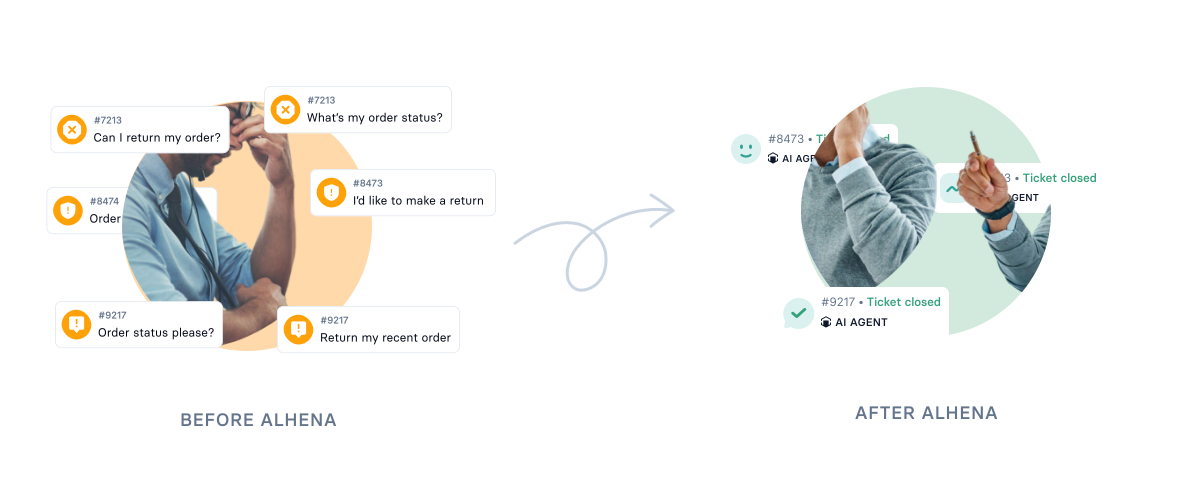
Agentic commerce doesn't stop at the sale. AI agents handle order tracking, exchange requests, and return processing through automated workflows. For fashion brands dealing with high return volumes, an AI support concierge can process a size exchange in under a minute, suggest an alternative item if the original is out of stock, and handle fulfillment questions, keeping the customer engaged instead of frustrated. Manawa, an outdoor experience platform, cut its response time from 40 minutes to 1 minute and automated 80% of inquiries using Alhena AI.
What Separates Real Agentic Commerce from Basic Chatbots
The term "AI agent" gets thrown around loosely. Not every chatbot qualifies. Here's what separates genuine agentic commerce from the older generation of rule-based bots that fashion brands may already have in place.
Autonomous action vs. scripted responses. A traditional chatbot follows a decision tree. An agentic system plans intelligent multi-step actions: it searches inventory, cross-references sizing data, checks promotions, and populates the cart, all from a single natural language request.
Memory and context. Agentic AI remembers. If a returning customer bought a navy blazer last month, the agent knows that and can suggest matching trousers without the shopper repeating their preferences. This continuity across sessions is what makes AI agents feel like a personal stylist rather than a search box.
Hallucination-free product data. In fashion, accuracy is non-negotiable. If an AI recommends a dress that's out of stock or quotes the wrong price, trust evaporates. The best agentic commerce platforms ground every response in verified, real-time product data, eliminating the hallucination problem that plagues generic AI tools.
Agentic checkout. The ability to populate carts, pre-fill shipping details, and move the shopper to a completed purchase, all within the conversation, is what makes agentic commerce a sales channel rather than just a support tool. Agentic storefronts turn every conversation into a potential transaction.
How Alhena AI Powers Agentic Commerce for Fashion Brands
Alhena AI is purpose-built for ecommerce, and its feature set aligns directly with what fashion brands need from agentic commerce. Here's how it works in practice.
Product Expert Agent for Fashion Discovery
Alhena's Product Expert Agent understands natural language shopping queries like "Show me cocktail dresses under $150 in dark green." It searches your full product catalog in real time, considers availability, and returns a curated set of results. For fashion brands, this replaces the broken browse-and-filter experience with a conversational flow that feels like talking to a knowledgeable sales associate.
Style Assistant, Fit Analyzer, and Outfit Builder
Alhena's fashion-specific capabilities include a Style Assistant that interprets shopper intent and makes personalized recommendations, a Fit and Size Advisor that cross-references measurements with product-specific dimensions, a Color Analyzer for complementary palettes, and a Complete the Look feature that bundles outfits to increase basket size. These aren't generic features bolted on. They're built for how people actually shop for clothes.
Omnichannel Presence Across Chat, Social, and Voice
Fashion shoppers don't stick to one channel. They discover on Instagram, research on the website, and ask questions on WhatsApp. Alhena operates across web chat, email, Instagram DMs, WhatsApp, and voice, to enable full conversation context as the shopper moves between channels. A shopper who asks about a dress on Instagram and returns to the website the next day gets a seamless continuation of that conversation.
Agentic Checkout That Closes the Sale
Alhena doesn't just recommend products. It populates carts, pre-fills checkout details, and nudges shoppers toward completing the purchase. This agentic checkout capability is what turns a conversation into revenue. Tatcha, a premium beauty brand, achieved a 3x conversion rate and 38% AOV uplift with Alhena, with 11.4% of total site revenue attributed to AI-assisted interactions through Alhena AI.
Deploys in 48 Hours on Your Existing Stack
Alhena integrates with Shopify, WooCommerce, Magento, and Salesforce Commerce Cloud. It also connects to helpdesks like Zendesk, Gorgias, and Intercom. Setup takes under 48 hours with no developer resources required. Your product catalog, sizing data, and brand voice are ingested automatically, and the AI agent starts handling conversations from day one.
Getting Your Fashion Brand Ready for Agentic Commerce
You don't need to rebuild your tech stack to adopt agentic commerce. But you do need to prepare a few things.
Clean Up Your Product Data
Agentic AI is only as good as the data it works with. Make sure your product catalog includes detailed information and attributes: fabric, fit type, occasion, care instructions, and accurate sizing charts. The richer your product data, the better the AI can match shoppers with the right items. Semantically rich, structured data is what allows agents to reason about your products rather than just keyword-match.
Map Your Customer Journey for AI Touchpoints
Identify where in the shopping journey an AI agent adds the most value. For most fashion brands, that's product discovery (homepage and category pages), the product detail page (sizing and styling questions), and post-purchase (order tracking and returns). Deploy your AI agent at these high-impact touchpoints first.
Start with a Focused Use Case
Don't try to automate everything at once. Pick one high-value use case, like AI-powered outfit discovery or automated size guidance, and prove the ROI before expanding. Crocus achieved an 86% deflection rate and 84% CSAT by starting with focused AI deployment through Alhena and scaling from there.
Measure Revenue, Not Just Deflection
Too many brands measure AI success by how many support tickets it deflects. That matters, but agentic commerce should be measured on revenue contribution. Track conversion rates from AI-assisted sessions, average order value uplift, and direct revenue attributed to AI interactions. Alhena's built-in revenue attribution analytics make this straightforward.
The Fashion Brands That Move First Will Win the Most
The data is clear: 53% of U.S. consumers who use generative AI for search also use it to shop. AI-driven revenue per visit on retail sites grew 84% between January and July 2025. And executives across the fashion industry cite AI as their biggest opportunity for the year ahead.
But there's a gap between intention and execution. While 92% of fashion companies plan to increase AI investment, only 1% say their AI deployment has reached maturity. That gap is the business opportunity. Fashion brands that move from planning to implementation now will capture the early-mover advantage in agentic commerce, building customer relationships and revenue attribution capabilities that late adopters will struggle to replicate.
The brands that treat agentic AI as a sales channel, not just a support tool, will be the ones that pull ahead. Luxury and DTC brands are already proving this out with measurable results.
Ready to bring agentic commerce to your fashion brand? Book a demo with Alhena AI to see how it works with your catalog and stack, or start for free with 25 conversations to test the experience firsthand.