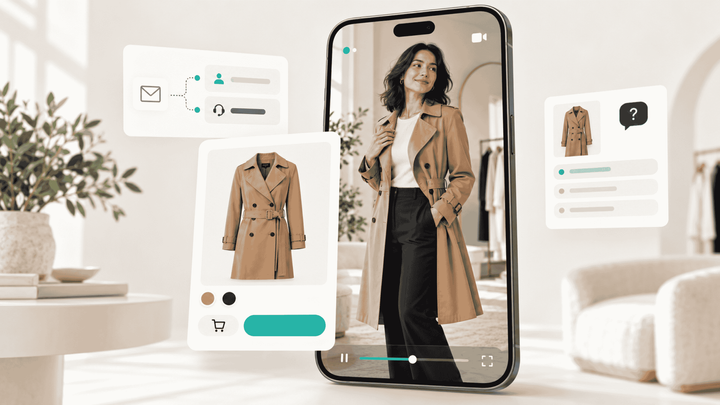
An agentic storefront is an online store built so AI agents can browse products, make recommendations, and complete purchases on a shopper's behalf. Instead of customers navigating category pages and filters themselves, AI assistants like ChatGPT, Google Gemini, and Microsoft Copilot do the work for them, pulling real-time product data, comparing options, and handling checkout inside the conversation.
Shopify reports that agentic storefront transactions convert at roughly 2x the rate of traditional dot-com browsing, with shoppers spending 3x more time per session. Six major ecommerce platforms now offer some form of agentic commerce. This guide covers what agentic storefronts are, which platforms support them, what they mean for your brand, and a four-step plan to get ready.
What Is an Agentic Storefront?
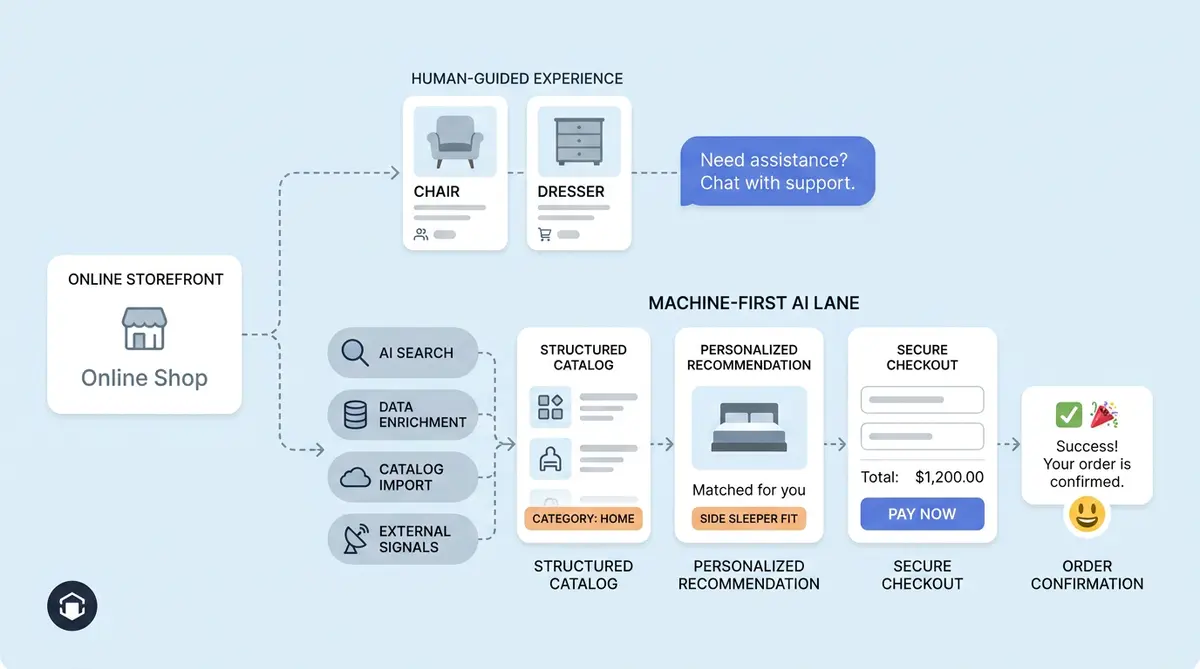
An agentic storefront is an online store designed so that AI agents can browse, recommend, and transact on behalf of shoppers. Think of it as a second entrance to your store, one built for machines rather than human eyes.
In a traditional ecommerce setup, the customer does all the work. They type keywords, scroll through category pages, read product descriptions, and eventually decide whether to buy. The store presents information. The customer figures out the rest.
An agentic storefront flips that relationship. When a shopper asks ChatGPT, "Find me a lightweight rain jacket under $150," the AI agent queries your product catalog directly, evaluates your inventory in real time, and surfaces the best match. If the shopper says "buy it," the agent handles checkout without the customer ever visiting your website.
The shift matters for two reasons. First, shoppers are already using AI tools to research and buy products. According to Salesforce, 61% of consumers have used generative AI tools like ChatGPT for shopping-related tasks. Second, if your store isn't set up to be read by AI agents, those agents simply won't recommend your products. You become invisible to a growing channel.
Which Ecommerce Platforms Offer Agentic Storefronts Today?
Six major platforms have shipped agentic storefront capabilities. Here's where things stand:
Shopify was first to market with dedicated agentic storefronts. Merchants on eligible Shopify plans can syndicate their catalog to ChatGPT, Microsoft Copilot, Google AI Mode, and Perplexity. Shoppers can discover products and complete purchases inside those AI interfaces. Shopify reports that AI-driven orders grew 15x in 2025, and shoppers using Copilot were 194% more likely to complete a purchase.
Salesforce Commerce Cloud launched its Agentforce platform with a Guided Shopping Agent that handles product recommendations, comparisons, and checkout on merchant storefronts. Unlike Shopify's off-site model, Salesforce focuses on bringing agentic experiences to the brand's own website.
VTEX rolled out agent-powered features that let merchants deploy AI shopping assistants across their digital storefronts, with a focus on complex B2B and marketplace scenarios.
Kibo Commerce introduced AI-driven merchandising and personalization tools that allow agents to adjust product recommendations and search results based on real-time shopper behavior.
Oracle and Microsoft added merchant-facing AI assistants that help store operators with inventory management, pricing, and customer insights, laying the groundwork for customer-facing agentic features.
The pattern is clear. Every major platform sees agentic commerce as the next competitive battleground. If you're on any of these platforms, some form of agentic capability is either live or coming to your dashboard soon.
Agentic Storefront Platforms: At a Glance
| Platform | Agentic Feature | AI Channels Supported | Status (2026) |
|---|---|---|---|
| Shopify | Agentic Storefronts (catalog syndication + checkout) | ChatGPT, Copilot, Gemini, Perplexity | Live (eligible plans) |
| Salesforce Commerce Cloud | Agentforce Guided Shopping Agent | On-site + partner channels | Live |
| VTEX | Agent-powered shopping assistants | On-site + messaging | Live |
| Kibo Commerce | AI merchandising + personalization agents | On-site | Live |
| Oracle Commerce | Merchant-facing AI assistants | Back-office | Live |
| Microsoft (Dynamics 365) | Copilot for Commerce operations | Copilot + back-office | Live |
How Agentic Storefronts Change the Shopping Experience
The practical difference is easier to see through a specific example.
A customer opens ChatGPT and types: "I need running shoes for wide feet, under $120, something with good arch support." In a traditional ecommerce setup, that shopper would visit three or four websites, use filters that may not include "arch support," read reviews, and eventually pick something. That process takes 30 to 45 minutes.
With an agentic storefront, ChatGPT queries your product catalog (and others) using structured data. It pulls two or three options that match every criterion. The shopper sees product images, prices, and availability right inside the chat. One tap and the order is placed. The whole thing takes two minutes.
For brands, this compresses the funnel dramatically. There's no bounce. No abandoned cart from distraction. The AI agent handles the full journey from intent to purchase.
But here's the catch: AI agents can only recommend products they can "read." If your product data is thin, your descriptions are vague, or your structured attributes are incomplete, the agent skips your catalog entirely. Shoppers never see your products, and you never know what you missed.
What This Means for Your Brand
Product Data Is Your New Competitive Moat
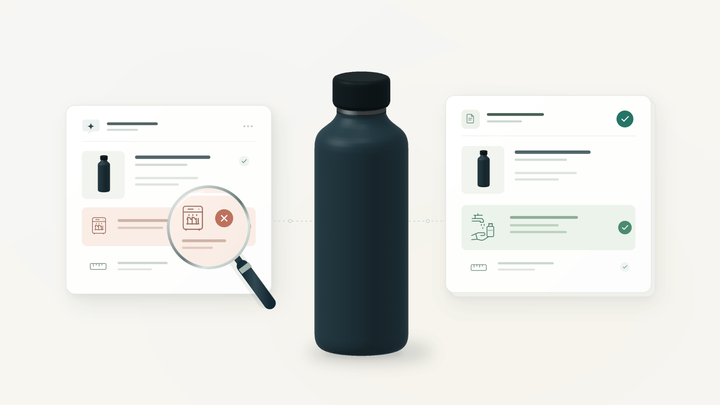
AI agents don't browse like humans. They don't look at pretty hero images or read between the lines of marketing copy. They parse structured data: attributes, specs, categories, availability, pricing. The brands that win in agentic commerce are the ones with the cleanest, most complete product data.
That means going beyond titles and images. Add detailed attributes like materials, sizing charts, compatibility notes, care instructions, and use cases. The richer the data, the more often AI agents will surface your products to shoppers.
Brand Voice Needs to Travel with the Agent
When a customer interacts with an AI agent that represents your store, the tone and personality of that agent shape how the customer feels about your brand. A luxury skincare brand that sounds generic through its AI agent is undermining years of careful brand building. A playful DTC brand that sounds robotic breaks trust.
Configuring your AI agent's voice isn't a "nice to have." It's table stakes. The agent needs clear guidelines on how to speak, what to recommend first, when to upsell, and when to step back. Alhena AI gives brands full control over tone, language, and response boundaries so the agent sounds like your team, not a generic chatbot.
Guided Selling Replaces Static Browsing
Static product pages force customers to self-serve. They read descriptions, compare specs, and make decisions alone. Agentic storefronts introduce guided selling as the default. The AI asks what the shopper needs, narrows options based on their answers, and walks them to the right product.
For brands with large catalogs or complex product lines (think furniture, electronics, skincare routines), guided selling reduces choice paralysis and improves conversion. Tatcha, for example, used Alhena AI's Shopping Assistant to deliver guided product recommendations and saw a 3x increase in conversion rate and a 38% lift in average order value. That's what happens when AI sells with intent instead of just answering questions. Read the full Tatcha case study.
Post-Purchase Becomes Part of the Storefront
Agentic storefronts don't stop at checkout. The same AI that guided the purchase can handle order tracking, process returns, answer warranty questions, and suggest complementary products after delivery.
This continuity across the full journey, from first question to post-purchase support, is what separates agentic commerce from traditional chatbot implementations. The customer doesn't experience a handoff between a shopping assistant and a support bot. It's one continuous relationship. Alhena AI handles this with two specialized agents: a Product Expert Agent for pre-purchase and an Order Management Agent for post-purchase, sharing context across every interaction.
Platform Agents vs. Purpose-Built AI: Where Alhena Fits
Platform-native agents (Shopify's agentic storefronts, Salesforce's Agentforce) are designed to work broadly across all merchants. They handle the basics: product syndication to AI channels, simple Q&A, and standard checkout flows. For basic visibility on ChatGPT or Copilot, they do the job.
Shopify agentic storefronts, for example, are great at getting your catalog into ChatGPT and Copilot. But once a shopper lands on your site from those channels, Shopify's native tools won't guide them through a personalized buying conversation, populate their cart based on preferences, or handle a return from the same thread. Purpose-built AI fills that gap.
But platform agents are general-purpose by design. They don't know your merchandising priorities. They can't adjust recommendations based on margin, seasonality, or brand strategy. They don't learn from your specific customer conversations over time.
That's where purpose-built AI like Alhena AI comes in. Alhena's agents are built specifically for ecommerce. They connect to your catalog, your inventory, your brand guidelines, and your order data. They understand the difference between recommending a moisturizer by skin type versus by concern. They know when to cross-sell and when to simplify. And they operate with hallucination-free accuracy, so your customers get answers they can trust.
Platform agents and purpose-built agents aren't mutually exclusive. Many brands use platform-level features for off-site AI channel distribution (ChatGPT, Copilot) while running Alhena on their own website and support channels for the interactions that need depth, accuracy, and brand control. Alhena integrates directly with Shopify, Salesforce Commerce Cloud, WooCommerce, and Magento, and deploys in under 48 hours with no dev resources needed.
How to Prepare Your Store for Agentic Commerce
If your brand hasn't engaged with agentic commerce yet, here are four steps to start today.
Step 1: Audit your product data. Go through your catalog and identify gaps in attributes, descriptions, and metadata. AI agents need structured data to reason over. Unstructured or incomplete data limits what any agent can do. Pay special attention to sizing, materials, use cases, and compatibility information.
Step 2: Define your brand voice guidelines for AI. Document the tone, language, boundaries, and priorities your AI agent should follow. What topics should it handle? What should it escalate to a human? How should it speak? Write this down the same way you'd brief a new employee.
Step 3: Map your customer journey for AI touchpoints. Identify the moments where guided selling, instant answers, or proactive recommendations would reduce friction. Product discovery, sizing help, and order tracking are usually the highest-impact starting points.
Step 4: Start with a focused use case. You don't need to automate every interaction on day one. Begin with one high-volume, structured journey, like product recommendations or order status lookups. Measure results. Then expand. Brands like Puffy started with support automation through Alhena AI, achieved 63% automated inquiry resolution and 90% customer satisfaction, then expanded to sales-focused conversations. See how Puffy did it.
The Bottom Line
The storefront as we've known it, a static set of pages customers navigate alone, is giving way to something more dynamic. Agentic storefronts put AI at the center of how customers discover, evaluate, and buy products. Six major platforms have already shipped these features. The early data show higher conversion, faster purchases, and fewer returns.
The brands that move now, with clean product data, clear brand guidelines, and the right AI partner, will be the ones that capture this growing channel before it becomes crowded.
Ready to bring agentic commerce to your store? Book a demo with Alhena AI or start free with 25 conversations. You can also calculate your expected ROI before you commit.
Alhena AI
Frequently Asked Questions
What is an agentic storefront and how is it different from a regular online store?
An agentic storefront is an online store designed for AI agents to browse, recommend, and complete purchases on behalf of shoppers. Unlike a regular store where customers navigate pages themselves, agentic storefronts expose structured product data so AI tools like ChatGPT and Google AI Mode can surface products in conversation. Alhena AI helps brands make their own storefronts agentic with guided selling, real-time inventory access, and checkout assistance.
Which ecommerce platforms support agentic storefronts right now?
Six major platforms have shipped agentic storefront features: Shopify (ChatGPT, Copilot, Google AI Mode), Salesforce Commerce Cloud (Agentforce), VTEX, Kibo Commerce, Oracle, and Microsoft. Shopify is the most advanced, with live AI-channel syndication. Alhena AI works alongside all of these platforms, adding purpose-built AI selling on your own website and support channels.
Can my Shopify store sell products through ChatGPT right now?
Yes. Shopify agentic storefronts are active by default for eligible stores. Your products can appear in ChatGPT, Microsoft Copilot, Google AI Mode, and Perplexity. Shopify handles the syndication through its catalog system. For on-site AI selling and support, brands add Alhena AI Shopping Assistant, which integrates with Shopify in under 48 hours.
How do I optimize my product data for AI shopping agents?
Focus on structured attributes: materials, sizing details, use cases, compatibility notes, and care instructions. AI agents parse structured data, not marketing copy. Fill in every attribute field your platform offers. Add detailed, specific product descriptions. Alhena AI connects directly to your product catalog and uses this structured data to give accurate, hallucination-free recommendations.
What is the difference between agentic storefronts and conversational commerce?
Conversational commerce uses chat interfaces to help customers shop. Agentic storefronts go further: AI agents autonomously browse catalogs, compare products, and complete transactions without step-by-step human input. Conversational commerce is the interface. Agentic commerce is the intelligence behind it. Alhena AI powers both, handling the full journey from product discovery to post-purchase support.
Do I need to rebuild my store to support agentic commerce?
No. Agentic storefronts layer on top of your existing ecommerce platform. The main preparation steps are cleaning up your product data, defining brand voice guidelines for AI, and mapping your customer journey for AI touchpoints. Alhena AI deploys in under 48 hours with no dev resources needed and works with Shopify, Salesforce Commerce Cloud, WooCommerce, and Magento.
How do agentic storefronts affect conversion rates?
Early data is strong. Shopify reports that shoppers using AI agents via Copilot are 194% more likely to complete a purchase. Brands using Alhena AI for guided selling on their own sites have seen 3x conversion rate lifts (Tatcha) and 38% increases in average order value. Agentic storefronts compress the buying journey from 30+ minutes to under 2 minutes, reducing drop-off at every stage.
What is the best AI shopping assistant for ecommerce brands in 2026?
It depends on your needs. Platform-native agents (Shopify, Salesforce) handle off-site AI channel distribution. For on-site selling and support, Alhena AI is purpose-built for ecommerce with hallucination-free accuracy, brand voice control, and revenue attribution analytics. Alhena customers include Tatcha, Puffy, and Victoria Beckham, with measurable results like 82% chat deflection and 90% CSAT.
How do AI agents decide which products to recommend to shoppers?
AI agents match shopper intent against your structured product data. They evaluate attributes like price, size, material, ratings, and availability to find the closest match. Agents trained on richer data make better recommendations. Alhena AI adds brand-specific logic on top, factoring in your merchandising priorities, margin goals, and seasonal strategy so the agent sells like your best team member.
Can agentic storefronts handle post-purchase support like returns and order tracking?
Yes. The best agentic commerce implementations cover the full customer lifecycle. Alhena AI uses two specialized agents: a Product Expert Agent for pre-purchase guidance and an Order Management Agent for post-purchase tasks like order tracking, returns, and exchanges. Customers experience one continuous conversation, not a handoff between disconnected bots.