The 7 best AI brand visibility tracking tools for 2026
Compare tools for monitoring brand mentions, sentiment, citation sources, and product recommendations across AI search.
Your next customer might meet your brand in a paragraph you did not write. An assistant could recommend the wrong product, repeat outdated pricing, or describe a competitor more convincingly. Your website analytics alone will not tell you which of those happened.
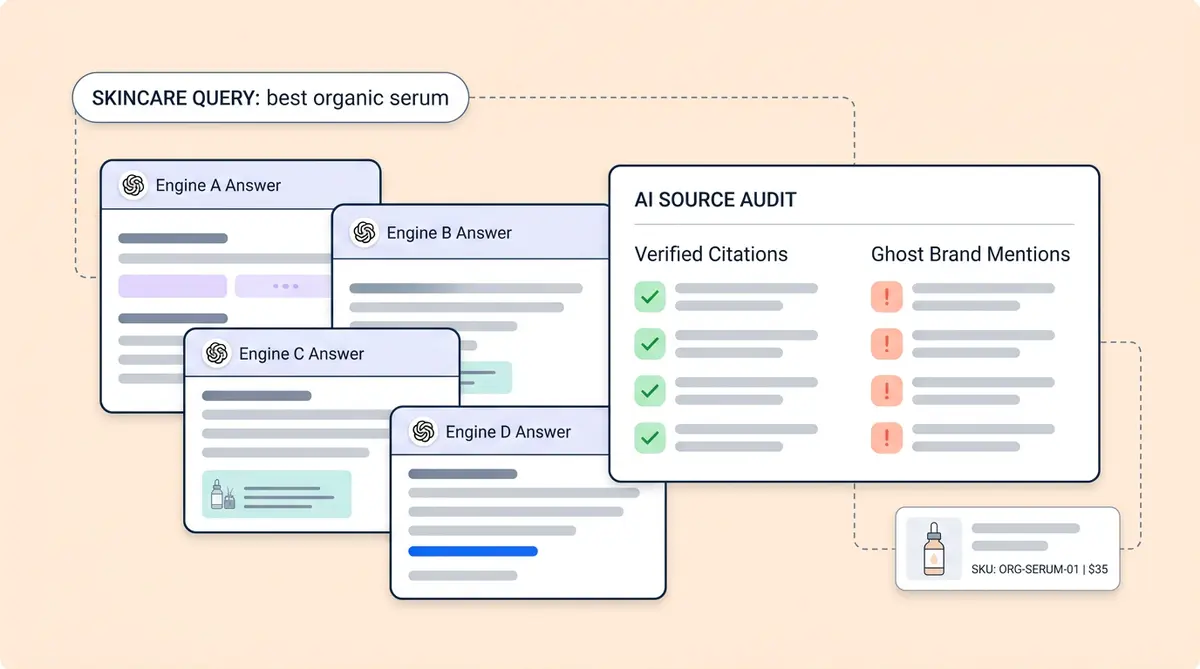
An AI brand visibility tracking tool records whether your brand appears in sampled answers, how it is described, and which sources are cited. It helps you inspect the recommendation before a shopper reaches your website. Coverage and collection methods differ by provider.
This guide compares seven options by their intended use: Profound, Otterly, Peec AI, Nightwatch, SE Visible by SE Ranking, Ahrefs Brand Radar, and Alhena AI. The best AI search monitoring tool for your business depends on what you need to learn—not just how many engines appear on its homepage.
Tracking or optimization? They are different purchases
Tracking tells you where you stand. A monitoring tool can collect brand mentions, sentiment, answer position, and citation sources. Optimization is the work you do afterward: correcting product information, improving useful pages, and addressing gaps in external coverage.
The distinction matters for budgeting. Buying a dashboard does not buy better recommendations. Someone still has to investigate the findings, decide what needs changing, and check the result.
Traditional SEO and AI search monitoring should work together. Use keyword research to understand demand, then write the fuller questions a buyer might ask an assistant. Keep your SEO tool for the organic-search work it supports; add answer-level monitoring for the questions a conventional position report does not resolve.
Do not abandon the basics. Established SEO practices remain relevant to Google AI Overviews and AI Mode; Google says there is no special optimization requirement for inclusion. [3]
Start with a baseline you can maintain. Expand the program when the findings create decisions, rather than buying coverage nobody has time to use. For the next stage, read our guide to choosing and optimizing an AI visibility tool.
How to evaluate the tools
Use the same test questions for every vendor you trial. We recommend a starting set of 40 prompts across five categories: direct brand questions, category recommendations, comparisons, pricing, and factual accuracy.
For example, an ecommerce team could test “Which fragrance-free moisturizers suit dry skin?” alongside questions about its own products. A software company would use different buying criteria. Neither should rely entirely on prompts containing its brand name.
Check four things: which AI platforms the tool queries, whether its reported appearances match its saved responses, whether it exposes source URLs, and whether its summary calculations are explained. Keep the prompt, date, location, and collected answer together so another person can review the evidence.
The tools compared
The recommendations below reflect workflow fit, not a measured league table. Confirm the exact subscription before purchasing.
| Tool | Recommended use case | Published capabilities to examine | Important purchase check |
|---|---|---|---|
| Profound | Dedicated research and enterprise programs | Answer-level reporting and citation research | Entry pricing does not include its widest engine coverage. |
| Otterly | A small, repeatable monitoring baseline | Daily prompt checks and URL citation reporting | Additional engines can require add-ons. |
| Peec AI | Brand positioning and source research | Visibility, sentiment, and source reporting | Check model, project, and integration allowances. |
| Nightwatch | Organic-search and answer tracking together | Keyword positions and assistant responses | Compare both prompt and keyword allowances. |
| SE Visible, by SE Ranking | Teams handling several brands or clients | Brand comparisons, sources, and shared reporting | Distinguish the brand-monitoring product from the broader SEO suite. |
| Ahrefs Brand Radar | Research alongside an established search workflow | Broad prompt research and custom questions | Database access and custom checks are different allowances. |
| Alhena AI | Ecommerce catalog and product discovery | SKU-level tracking and product presentation | A free snapshot is different from recurring monitoring. [12] [13] |
Profound: For dedicated research and enterprise programs
Profound combines answer research, citation reporting, and sentiment analysis. It also offers a separate prompt-volume capability for understanding demand. Do not confuse that research dataset with the questions included in your own monitoring subscription.
Its published plans distinguish a ChatGPT-only entry tier from broader multi-engine coverage. Ask for the price of the setup you actually need, including regions and response volume, rather than treating the lowest headline price as the cost of the whole platform.
Best for: A team with an owner for research and follow-through. Limitation: Broad coverage and organizational requirements can move you beyond the entry package.
Otterly: For a low-cost monitoring baseline
Otterly advertises a $29 monthly Lite plan with 15 prompts and daily checks. It includes ChatGPT, Google AI Overviews, Perplexity, and Microsoft Copilot; Claude, Gemini, and AI Mode are listed as add-ons. Citation reports show which URLs appear in collected responses.
Start with a narrow set of commercially useful questions. Fifteen well-chosen prompts can be a sensible pilot; they should not be presented as a complete picture of an entire market.
Best for: Establishing a repeatable baseline on a limited budget. Limitation: Calculate the total with the extra engines and prompt capacity you need.
Peec AI: For sentiment and brand positioning
Peec AI reports visibility, answer position, sentiment, and cited sources. Its paid plans advertise daily tracking, with model choices and project allowances depending on the package. It is not a sentiment-only product: source research is part of the offering.
The useful insight here goes beyond visibility: “Are we being described correctly?” Read the underlying answer before accepting an automated positive or negative label. A recommendation can sound flattering while still getting an important product detail wrong.
Best for: Teams reviewing brand descriptions alongside source evidence. Limitation: Test its interpretation of your category's language instead of assuming every label is correct.
Nightwatch: For SEO and assistant responses together
Nightwatch combines traditional rank tracking with AI tracking. Its product documentation describes response context, sentiment labels, and comparisons with other brands. Current packages combine daily prompt checks with organic keyword allowances.
This makes it worth evaluating when one person owns both reporting workflows. Keep the outputs distinct: an organic position and inclusion in an assistant's recommendation answer different questions.
Best for: Teams that want SEO reporting and answer monitoring in one place. Limitation: Check the prompt allowance as carefully as the search allowance; one does not substitute for the other.
SE Visible, by SE Ranking: For multiple brands and client reporting
SE Visible is a brand-monitoring product from SE Ranking. It supports multiple brands, shared access, exports, and source-level investigation across several answer surfaces. Its coverage includes ChatGPT, Perplexity, Gemini, Google AI Overviews, and AI Mode.
SE Ranking also offers an AI Search add-on within its broader SEO platform. Treat those as separate purchase paths, not interchangeable names for an identical subscription.
Best for: Agencies and internal teams responsible for several accounts. Limitation: Confirm the product, permissions, report formats, and allowances demonstrated in your trial are included in the quote.
Ahrefs Brand Radar: For search research in an existing workflow
Ahrefs Brand Radar combines a large search-backed prompt database with custom prompt options. Ahrefs also exposes citation opportunities and comparisons across brands. That makes it relevant when answer research needs to sit alongside backlink and SEO work.
Separate two questions during evaluation: “What does the broader database reveal?” and “How will my chosen questions be checked repeatedly?” Ahrefs packages database access and custom checks differently, so compare both before deciding that an existing subscription covers the job.
Best for: Teams that already use Ahrefs for research. Limitation: Confirm the included datasets, refresh settings, and custom-query capacity rather than assuming one allowance covers everything.
Alhena AI: For ecommerce product visibility
Alhena AI Visibility focuses on which specific products appear in shopping recommendations and how they are presented. Its published capabilities include SKU-level tracking, product rendering analysis, product-page Q&A generation, and citation strategy. [12]
That distinction matters when an assistant recognizes your brand but overlooks the product a shopper actually needs. A brand appearance is not the same as a useful product recommendation.
The free plan lists a snapshot across one engine and five questions. Recurring checks depend on the paid tier: the pricing page lists monthly refreshes for Essentials and weekly refreshes for Growth and Scale. [13]
Best for: Ecommerce teams connecting product discovery with catalog improvements. Limitation: A catalog-centered workflow may be unnecessary for a company that only needs company-level reporting. For a closer look, see our guide to SKU-level AI visibility.
How a brand visibility score is built
Before you compare vendors, establish what each number means. For your own reporting, use this starting definition:
Mention rate = collected responses naming your brand ÷ total eligible responses collected × 100.
For an illustrative sample, 24 qualifying responses out of 100 produce a 24% rate. Count an answer once for this calculation even when it repeats the name. A different metric can count total appearances, but it needs a different label.
Share of voice adds a competitive denominator. Decide whether you are comparing total appearances, responses containing each brand, or position-weighted recommendations. Document that choice before using the result in competitor benchmarking.
A composite visibility score may also weight engines or answer positions. Do not compare two vendors' totals without comparing their inputs. Keep the same prompt set, market, and time window when evaluating movement.
Your dashboard should offer a simple overview without hiding the evidence. Ask for the formula, sample counts, missing-response treatment, and exports. A score is most useful when the people reading it can explain why it changed.
Mentions, sentiment, and citation sources
Mention tracking: Did the brand appear?
A mention establishes that a name appeared in a collected response. It does not, by itself, establish endorsement. Ask your vendor to distinguish a recommendation from a passing reference, comparison, or warning.
For a product business, also distinguish the company name from the exact item. Alhena's product-level approach is designed around that distinction.
Sentiment analysis: How was the brand described?
Sentiment analysis evaluates the tone or framing of a response. Peec and Profound advertise this capability, while Nightwatch documents positive, neutral, and negative classifications.
Use the label as a review cue. “Expensive but durable” might support your positioning; “cheap but unreliable” might not. Neither statement should be judged by counting positive words alone.
Keep a separate accuracy check. Sentiment and factual correctness are different review questions, and a positive description should still be checked against product facts.
Citation attribution: What supporting pages were shown?
Citation reporting identifies the URLs an assistant visibly references. These could include your pages, a review, or a publisher's comparison. Products such as Otterly and Peec expose source information for investigation.
Do not treat a visible citation list as a complete account of a model's reasoning or training data. For your workflow, record the source, read the claim, and decide whether the correction belongs on your site or elsewhere.
The practical sequence is to track the appearance, inspect the description, and investigate the evidence.
How accurate is any of this?
Separate collection coverage from extraction accuracy. The first asks whether a sample represents the questions you care about. The second asks whether the tool correctly read the responses it actually collected.
During a trial, select five useful prompts and run repeated checks with consistent location and session settings. Save the answers. Compare the tool's extracted results with those saved texts—not only with a fresh query that may produce different wording.
Manually check brand aliases, product names, citations, and sentiment labels. Ask whether the vendor captures the consumer interface, an API response, or another dataset. Then ask how it handles failed requests and answers with no sources.
For a proposed test, five prompts checked five times give you 25 responses to inspect. That is a debugging exercise, not proof that you have sampled the entire market.
Do not report a small shift as a breakthrough without checking the underlying sample. Consistency makes monitoring useful; false precision makes it harder to trust.
How to build an AI search monitoring workflow
A useful AI search visibility program should end with a decision, not another report. Use this workflow to connect monitoring with SEO, product content, and commercial priorities.
Start with buyer questions, not a longer keyword list
Build your prompt library around actual decisions: product suitability, alternatives, price, materials, ingredients, delivery, and use cases. Separate branded questions from discovery questions so you can see whether people must already know you to find you.
Choose the AI search engine coverage your audience needs. Treat Google AI Overviews and Google AI Mode as separate surfaces. Ask explicitly about Claude, Copilot, and Grok rather than assuming they are included in a provider's “all engines” claim.
Decide what the monitoring tool should track
Ask a simple question: What should this tool track that will change our next action? Start with your brand, priority products, relevant rivals, and the pages cited in their recommendations.
Use a fixed comparison set for each AI engine. When you add a competitor, note the date; otherwise a change in the denominator can look like a change in performance.
Build a dashboard that shows the response, source, market, date, and next action. Track recommendation quality separately from simple presence. A marketing team should be able to tell whether the problem is missing coverage, incorrect information, or weak differentiation.
Add competitor context without losing the question
For each priority prompt, inspect what the recommended alternative does better in the answer. Does the response explain a feature, cite a comparison, or repeat a claim absent from your own pages?
Scrunch is an additional option to evaluate when you also need site-crawl diagnostics. Alongside response monitoring, Scrunch advertises citation research and tools for investigating how automated systems access your content.
It is outside this guide's seven main profiles. Add it to a shortlist when those diagnostics address a specific need, not simply to make the list longer.
Turn findings into content fixes
Assign one owner to each finding. Correct an outdated product detail at its authoritative source. Clarify a use case on the relevant product page. Where an independent publisher has the facts wrong, request a documented correction rather than demanding favorable coverage.
For Alhena users, the product-level question is practical: which item should this buyer have discovered, and what information was missing? Use the answer to prioritize the next page review.
Keep important information accessible as text and ensure structured data matches what a visitor sees. Google explicitly includes those checks in its guidance. Generative engine optimization should not become a reason to neglect sound SEO or write for machines instead of customers. [3]
Connect the work to outcomes
Track completed fixes against the original questions, then review the next comparable sample. Put observable referral visits and purchases beside the monitoring report in your analytics—not inside the same metric.
As a reporting rule, do not claim a sale from an appearance you cannot connect to a visit or transaction. Use separate labels for observed referrals, assisted outcomes, and hypotheses. This gives the marketing team an insight it can defend, rather than a bigger number it cannot explain.
Frequently asked questions
What solutions provide a brand visibility score across multiple answer engines?
Peec AI and Profound offer multi-engine reporting; Alhena provides product-level visibility across major engines. Their definitions and plan coverage differ. Ask for both an engine-level view and the calculation behind any combined score; a single total should not conceal where your brand is absent.
What are the best AI search monitoring tools for a small team?
Begin with the smallest paid setup that covers your essential questions. Otterly offers a $29 monthly entry plan with daily checks; Alhena offers a limited free snapshot for an initial look. Those are different services, so compare recurring coverage, not just the starting price. [13]
What criteria matter when selecting AI brand monitoring software?
Prioritize relevant engine coverage, collection methods, source URLs, exports, and a manageable review workflow. Test sentiment labels and brand-name matching using saved responses. Ask how often your selected plan refreshes and what happens when requests fail. A useful brand monitor should make its evidence inspectable, not merely display a percentage.
How do I evaluate platforms for tracking visibility with AI agents?
An AI agent can help organize prompts or summarize findings, but automation does not replace validation. Require a saved response, source URL, timestamp, and collection context wherever applicable. Test the same questions across trial accounts and inspect missing results. Judge the tracker by evidence you can reproduce, not the volume of summaries it produces.
Which tools combine AI search visibility with sentiment analysis?
Peec AI, Profound, Nightwatch, and SE Visible advertise sentiment-related reporting. During evaluation, read the underlying response alongside each label. Ask whether the system distinguishes tone about your brand from tone about the wider category and whether a human can correct misclassifications.
What are the best tools for measuring ChatGPT brand visibility?
Choose a tool that preserves responses and explains its sampling method. Profound's entry plan focuses on ChatGPT, while Nightwatch includes assistant-response tracking alongside organic-search work. Before purchasing, test the questions your customers ask and confirm the number of repeated checks included.
How can I check whether an AI answer represents my brand accurately?
Compare its factual claims with current product pages, policies, and documentation. Check pricing, availability, features, and intended use. Record errors separately from tone, because a complimentary answer can still be wrong. When an AI-generated response cites a page, inspect that page before deciding where the correction belongs.
How do I measure brand mentions in AI search?
Choose a fixed question set and collect comparable responses over a defined period. Record whether each answer names the brand, then divide qualifying responses by eligible responses collected. Track changes using the same settings. Keep raw mention counts separate from percentages and retain the sample size beside each result.
Which platforms send alerts when visibility changes?
Scrunch advertises alerts and scheduled reporting. For any vendor, confirm the specific triggers, delivery channels, thresholds, and plan requirements before buying. Scrunch's broader workflow also includes source and crawl investigation, but an alert is only useful when someone owns the response.
How often should I check the data?
Use a weekly review as a starting routine, with faster checks during an important launch or a known accuracy issue. Match the review to the collection schedule: opening a monthly-updated dashboard every day will not create new evidence. Reserve time to act on the findings, not just monitor them.
Can an SEO platform replace a dedicated AI visibility tracker?
Only when its answer-monitoring capabilities cover your actual requirements. Ahrefs Brand Radar and SE Ranking's AI Search add-on provide options alongside broader search workflows. Test the prompt controls, sources, and exports independently of the familiar SEO features. Traditional rank tracking alone does not answer whether an assistant recommended the right product.
How does Alhena help ecommerce brands track AI search visibility?
Alhena tracks product-level presence and analyzes how items appear in shopping responses, including details such as pricing, ratings, and positioning. It also offers product-page Q&A and citation-strategy capabilities. That helps a retailer investigate why the brand is recognized but a commercially important item is overlooked. [12]
Will adding keywords make AI search engines cite my brand?
No keyword count guarantees a citation. Use relevant terms where they clarify the answer, support claims with evidence, and keep product information consistent. Google says its AI features require no special optimization beyond established search practices. A clearer page can still go uncited; measure outcomes rather than assuming an editing score predicts them. [3]
What the data will tell you—and what to do about it
Choose one recurring problem, fix it, and monitor the same question again. Perhaps a comparison misses your strongest use case. Perhaps an AI-generated description carries an old price. Perhaps an assistant recognizes the company but never recommends the item that fits the buyer.
The useful insight is not merely that your visibility moved. It is that you can explain the change and choose the next action.
See how your products appear in AI search
Explore Alhena AI Visibility to inspect product discovery and presentation. Start with the available snapshot, then choose an ongoing monitoring plan that fits the questions and review schedule your team can support. [13]