The cost of inaccurate inventory is staggering. Retailers lose $1.2 trillion globally every year to out-of-stock problems. Overstock ties up warehouse space and cash flow. Understock creates the opposite issue: missed revenue from demand you could have captured. But here's what most e-commerce inventory management challenges and conversations miss: the issue isn't just knowing whether a product is available. It's knowing whether a specific variant is available. The black hoodie in medium. The vanilla candle in the 8 oz jar. The running shoe is wide, size 11. Alhena built Variant Stock Refresh as the solution to exactly that problem, keeping every variant's stock status synced with the merchant's live store so the AI never recommends something a shopper can't actually buy. In this post, you’ll learn how it works, why it matters, and what it means for your customers.
Product-Level Availability Is Not Enough
Most AI shopping assistants treat inventory as a binary question: is this product available? Yes or no? It’s fine when you sell product variants of a single type. It falls apart the moment your catalog includes sizes, colours, scents, shades, pack sizes, or any other variant.
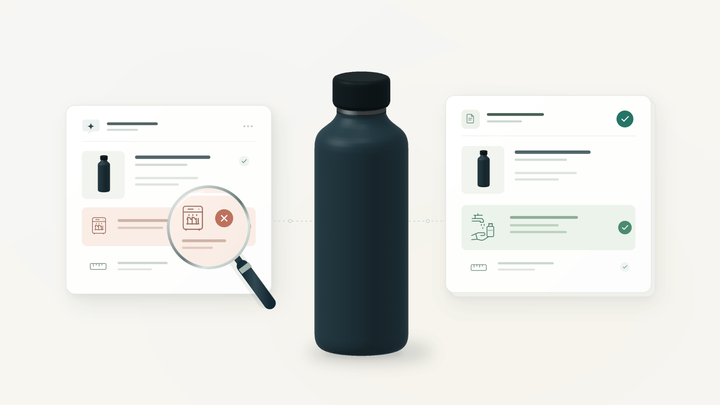
Consider a simple example. A fashion brand sells a jacket in four colours and five sizes. That's 20 purchasable variants. The product itself might show as "in stock" because 18 of those 20 variants are available. But if a shopper asks for red in medium and that specific combination is sold out, "in stock" is the wrong answer.
It’s this mismatch that creates real problems. Research from Opensend shows that stockouts account for 40% of lost sales, with customers switching to competitors immediately. When an AI assistant confidently says, "Yes, we have that," and the shopper clicks through to a sold-out product page, trust breaks instantly, and the cost of recovery is high. A 2025 consumer behavior study found that 55% of shoppers won't return to a site after experiencing multiple stock-out situations.
That’s a direct hit to profitability and long-term demand. That's a direct hit to profitability. The gap between product-level and variant-level awareness is where Alhena's AI Shopping Assistant separates itself from generic inventory management software or chatbot solutions. Alhena doesn't just know that a product exists. It knows which exact options a shopper can buy right now.
What Variant Stock Refresh Does
Variant Stock Refresh is Alhena's inventory freshness layer. It keeps each product variant's stock status synced with the merchant's e-commerce platform and e-commerce store, so the AI can recommend, render product cards, and answer stock questions using fresh data instead of stale catalog information.
A "variant" in this context means any specific buyable e-commerce goods option: a size, colour, scent, shade, pack size, or SKU. For a single product with 8 colours and 6 sizes, that's 48 individual stock states Alhena monitors.
At the heart of e-commerce inventory accuracy, the core data point is simple: is_in_stock. For every variant Alhena tracks, that field reflects whether the item is orderable right now. Alhena uses that stock state every time it:
- Recommends products to a shopper
- Renders interactive product cards in the chat
- Answers direct availability questions ("Do you have this in size 9?")
- Chooses the best matching variant for a natural language request
- Decides whether to show an item as available, unavailable, or on preorder
- Steers shoppers away from variants they can't buy toward ones they can across every sale channel
If you've read our post on why product data quality sets the accuracy ceiling for AI shopping assistants, Variant Stock Refresh is the runtime companion to that catalog foundation. Clean product data gets you accuracy. Live stock data keeps that accuracy current. Together, they help you manage inventory at a level that no demand forecast alone can match. Together, they let you manage inventory intelligence at a level most forecast models never reach.
How Alhena Tracks Stock at the Variant Level
Alhena uses advanced layers working together to keep variant availability fresh. No single mechanism handles everything, because ecommerce inventory management and fulfilment require different approaches depending on the platform, catalog size, and how fast stock changes across your supplier network.
Initial Catalog Ingestion
When a merchant first connects their store or inventory system, Alhena ingests every product and its variants from the warehouse or order fulfilment centre. Each variant record includes the internal variant ID, the external platform variant ID, the parent product ID, attributes like size and colour, price, image, active catalog status, and stock status. This creates the baseline that all future updates build on.
Scheduled Stock Checks
Alhena runs periodic checks against the merchant's e-commerce platform to pull current status for every variant. The automation refresh frequency is configurable, acting like a rolling forecast check: merchants can choose intervals of 1, 2, 3, 6, 12, or 24 hours, weekly, or monthly. A fashion brand with high demand during flash sales might refresh hourly to track restock and replenishment cycles. A furniture retailer with stable warehouse inventory might choose daily.
Shopify Webhook Updates
For Shopify stores, Alhena also listens to real-time stock webhooks. When a variant goes out of stock or comes back in stock on Shopify, the webhook fires, and Alhena’s automation updates its records immediately, without waiting for the next scheduled refresh. This helps automate inventory control and order management during high-demand events like flash sales or product drops, where demand spikes cause inventory to change by the minute.
AI Server Refresh
The app server triggers Alhena's AI server to refresh variants for the bot profile. The AI server technology examines current product knowledge documents and order management data, finds their associated variants, checks the live platform stock through the e-commerce API, and updates every stock field. This ensures the data the AI actually reasons over stays aligned with what the store shows.
Recommendation Behavior
When Alhena retrieves product data to answer a shopper's question, the response includes ProductCardRenderingInformation for each relevant item. That rendering payload contains the valid variant IDs and their is_in_stock values. Alhena's AI is instructed to prefer in-stock variants and avoid rendering out-of-stock options when better alternatives exist. The result: ecommerce shoppers see what they can actually buy, not a catalog of possibilities.
For a closer look at how this integrates with Shopify specifically, our Shopify Plus integration deep dive covers the full data flow.
Active vs. In-Stock: A Distinction That Matters
Alhena separates two concepts that most e-commerce inventory management systems treat as one:
- is_active: whether the merchant still offers this variant in their catalog
- is_in_stock: whether the variant is currently available to buy
This important separation changes how the AI communicates with shoppers. A sold-out variant on Shopify still exists as a real catalog option. It’s not dead stock or discontinued inventory. It’s simply below the safety stock threshold. Removing it from the AI's awareness entirely would be wrong, because the shopper might specifically ask about it.
With the active/in-stock distinction, Alhena can respond with precision. Instead of pretending a variant doesn't exist, the AI says something like, "The Ocean Blue shade exists in our catalog, but it's currently out of stock. The Midnight Blue and Slate shades are available and have a similar tone." That response delivers value. It’s honest, helpful, and keeps the shopper engaged rather than confused.
Compare that to what happens in e-commerce without this distinction. A generic chatbot either says "yes, we have it" (wrong, because the shopper can't buy it) or removes the variant entirely and says "we don't carry that" (also wrong, because the product exists). Both responses erode inventory control and trust. Alhena's approach preserves trust by being specific about the difference between "we sell this" and "you can buy this right now".
This is one of the common AI shopping assistant mistakes that quietly kills conversions: treating availability as binary when it's actually a spectrum.
What Happens During a Shopper Conversation
Here's a concrete walkthrough of Variant Stock Refresh in action. A shopper visits a fashion retailer's site and opens the Alhena chat widget.
Shopper: "Do you have the red jacket in medium?"
Alhena retrieves the product and all its variants. The red/medium variant is present in the catalog (is_active: true), but is_in_stock is false. Instead of showing a product card that leads to a dead end, Alhena responds:
Alhena: "The red jacket in medium is currently out of stock. Red is available in large, and black and navy are available in medium. Want me to show you those options?"
It’s a single interaction that avoids three problems at once. The shopper doesn't click through to an unavailable item. They don't leave the site frustrated. And they get a relevant alternative that might actually convert.
Now scale that across an e-commerce catalog with thousands of SKUs. A digital-first beauty brand with 200 products and an average of 6 variants each has 1,200 stock states to track. A home furnishing retailer with configurable furniture (size, fabric, colour) might have 10,000+. Without variant-level tracking, every AI-assisted conversation risks sending shoppers toward items they can't buy. No demand forecast or inventory management system can fix that at the point of conversation. Alhena handles it efficiently and in real time.
Alhena's Support Concierge uses the same variant data when handling post-purchase questions about exchanges and delivery, making sure replacement suggestions are actually purchasable.
Preorders, Backorders, and Edge Cases
E-commerce inventory management faces seasonal challenges when "out of stock" doesn't mean "unavailable". Some merchants, especially those using purchase order workflows with suppliers, allow purchases on items with zero quantity, treating them as preorders or backorders that ship later.
Alhena handles these e-commerce challenges for Shopify stores through the "continue selling when out of stock" flag. If a variant has zero quantity but the merchant has enabled continued selling, Alhena treats it as purchasable with a preorder or backorder qualifier. The AI can then explain the situation clearly: "This item is available to order, but it's on back order and may take 2 to 3 weeks for fulfilment."
That transparency improves the customer experience. A shopper who knows they're preordering makes an informed decision. An ecommerce shopper who discovers the delay after checkout files a costly support ticket, or worse, a chargeback that costs even more. Alhena's pre-order support integration with Purple Dot goes even deeper for brands with dedicated preorder workflows.
Other ecommerce challenges and edge cases Alhena handles include:
- Variants that become active mid-campaign: New colourways or sizes added during a product launch appear in Alhena's recommendations as soon as the next sync runs or the webhook fires.
- Deactivated variants: When a merchant discontinues a specific option, Alhena marks it inactive and stops recommending it entirely, not just as out of stock but as removed from the catalog.
- Flash sale stock swings: During seasonal events like Black Friday, e-commerce inventory can fluctuate by the minute. Hourly scheduled refreshes combined with Shopify webhooks and supplier feed updates keep Alhena close to real time even under heavy transaction volume.
For brands managing high-velocity inventory across digital channels, Alhena's Social Commerce agent applies the same variant-level accuracy to Instagram DMs and WhatsApp conversations, so it’s important that stock data stays consistent whether a shopper is on your website or in a DM thread.
The Business Case for Variant-Level Accuracy
Every time an AI assistant recommends a sold-out variant, three things happen: profit takes a hit, the shopper's trust drops, the chance of conversion drops, cash flow suffers, and the likelihood of a support ticket rises. Variant Stock Refresh delivers value by addressing all three.
Fewer dead-end recommendations. When Alhena knows that size 8 is out of stock, it doesn't show size 8. It shows sizes 7 and 9 instead or suggests a similar product in size 8. That saves the shopper from frustration and keeps them moving toward a purchase instead of bouncing.
Higher shopper trust. Accuracy builds confidence. When the AI consistently shows items that are actually available, shoppers learn to trust its suggestions and learn to rely on the AI. Brands like Tatcha have seen a 3x conversion rate with Alhena's AI, and inventory accuracy is a foundational part of that performance. Victoria Beckham saw a 20% increase in average order value, partly because shoppers trust the AI's product guidance enough to add more to their carts.
Lower support volume. Inventory mismatch, storage cost for returned items, and shipping dead-end orders are some of the most costly drivers of avoidable support contacts. "The website said you had it" is a ticket category that shouldn't exist. Crocus achieved an 86% deflection rate with Alhena, and reducing false availability signals is part of what makes that e-commerce inventory deflection sustainable.
Reliable product cards. Alhena's conversational product discovery renders interactive product cards in the chat. Those cards link to specific variants. It's important to note: if the linked variant is sold out, the card becomes a friction point. Variant Stock Refresh ensures every card points to something the shopper can add to their cart.
Better conversion across large catalogs. The impact compounds with catalog size. A store with 50 products might get away with manual checks. A store with 5,000 products and 30,000 variants needs automated e-commerce inventory tracking and automation to keep its AI from becoming a liability. Alhena handles catalogs at scale as part of any best inventory management approach, refreshing variant data across the entire product set on the merchant's chosen schedule. Unlike a warehouse management system or economic order quantity formula that handles procurement, Alhena handles what matters most: the shopper's experience at the moment of purchase intent.
Getting Started With Variant Stock Refresh
Variant Stock Refresh is built into every Alhena e-commerce deployment. There's no separate module to enable or additional integration to configure. When you connect your e-commerce platform, whether that's Shopify, WooCommerce, Salesforce Commerce Cloud and other e-commerce partners, Alhena automatically ingests your product variants and begins tracking their stock status.
Included in all pricing tiers, you can configure the refresh frequency based on your business needs. Brands with fast-moving inventory typically choose hourly or every-two-hour intervals. Merchants with stable stock can use daily or weekly refreshes. Shopify merchants get the additional benefit of webhook-driven updates for near-instant sync.
The setup process takes minutes, not days, so you can start improving profitability efficiently without months of abc analysis or storage cost calculations. Alhena deploys in under 48 hours with no developer resources or professional services required, and variant stock syncing is part of those out-of-the-box features. You can verify that stock data is flowing correctly through the Alhena dashboard, and our recent platform updates added advanced features and even more visibility into real-time inventory sync status.
Ready to see how variant-level inventory accuracy changes your AI shopping experience? Book a demo with Alhena AI to see Variant Stock Refresh in action with your own catalog, or start for free with 25 conversations to test it yourself.

Frequently Asked Questions
What is Variant Stock Refresh in Alhena AI?
Variant Stock Refresh is Alhena's inventory management system that syncs each product variant's stock status with your ecommerce platform. Unlike generic inventory management software that only works at the product level, Alhena provides variant-level accuracy across every size, color, and SKU. The system supports configurable refresh intervals from hourly to monthly, plus real-time Shopify webhooks, so you can manage inventory accuracy without manual effort.
How does Alhena handle out-of-stock variants during a conversation?
When a shopper asks about a variant affected by stockouts, Alhena doesn't just say "unavailable." It acknowledges the variant exists, explains the current situation, and suggests in-stock alternatives that match the shopper's demand. If the item is expected to restock soon, Alhena can mention replenishment timelines or offer a backorder option. This approach reduces the revenue loss that stockouts typically cause and keeps shoppers moving toward a purchase instead of bouncing.
How often does Alhena refresh inventory data?
Merchants can configure automated refresh intervals of 1, 2, 3, 6, 12, or 24 hours, weekly, or monthly. For Shopify stores, Alhena also listens to real-time stock webhooks, so changes are reflected within seconds. Brands dealing with seasonal demand spikes or high demand periods like flash sales typically choose hourly inventory monitoring to stay accurate. The system can automate inventory sync across every sale channel, whether your warehouse ships direct or you use a third-party fulfillment provider.
Does Variant Stock Refresh work with platforms other than Shopify?
Yes. Alhena supports Shopify, WooCommerce, Magento, and Salesforce Commerce Cloud for variant-level stock syncing. Each commerce platform connects through its own inventory management software integration, with Shopify merchants getting the added benefit of webhook-driven instant updates. All platforms support scheduled API-based refreshes. Alhena also syncs with order management systems so updates from any sale channel are reflected in the AI's recommendations.
What is the difference between is_active and is_in_stock in Alhena?
is_active indicates whether a merchant still offers a variant in their inventory system. is_in_stock indicates whether that variant is currently buyable right now. A sold-out variant can be active but not in stock, similar to how safety stock thresholds work in traditional inventory control. This lets Alhena say "that shade exists but is currently unavailable" instead of pretending the option is dead stock. The distinction preserves product context and keeps the shopper informed.
How does Alhena handle preorders and backorders?
For Shopify stores with "continue selling when out of stock" enabled, Alhena recognizes that sold-out variants are still buyable. The AI marks these as preorder or backorder items and tells shoppers the product is orderable but may arrive later, similar to placing a purchase order with a supplier that triggers reorder and replenishment. This transparency prevents confusion and reduces post-checkout support tickets and order fulfillment delays that drive up storage cost and operational overhead.
Can Variant Stock Refresh handle large catalogs with thousands of SKUs?
Yes. Alhena's inventory management is built for enterprise-scale operations. Whether you offer 500 variants or 50,000, the scheduled refresh and webhook system keeps every variant's stock state current. Brands with large catalogs use hourly inventory syncing combined with webhooks to maintain forecast-level accuracy across their entire product set. Reliable stock data helps you move items that are actually in demand, protecting margins and profitability long-term.
How does real-time inventory tracking improve ecommerce conversion rates?
Accurate variant-level inventory monitoring prevents dead-end recommendations, which are a top cause of drop-offs in ecommerce. When shoppers see only buyable options, trust builds and sale conversion follows. Alhena customers like Tatcha have achieved 3x conversion rates, with inventory accuracy as a foundational driver. Fewer returns and misdirected orders also improve cash flow and help brands operate more efficiently across every channel.
How is Variant Stock Refresh different from a warehouse management system?
A warehouse management system handles physical storage, picking, packing, and logistics. Variant Stock Refresh sits on the customer-facing side: it feeds live stock data into Alhena's AI so shoppers get accurate answers. Think of it as the bridge between your inventory management system and your AI shopping assistant. While your warehouse software handles abc analysis, economic order quantity, and storage optimization, Alhena uses the resulting stock data to control what the AI recommends in real time.
Can Alhena help reduce overstock and understock problems?
Alhena's conversation analytics reveal which variants shoppers ask about most, giving your team a demand signal that complements traditional demand forecast models. If customers repeatedly ask for a size or color that's out of stock, that's a clear restock signal. If certain variants rarely come up in conversations, you may be sitting on overstock. While Alhena isn't an order fulfillment or forecasting tool, its data helps brands make smarter inventory decisions, making it part of the best inventory management stack for ecommerce.