Escalating to a human is not the failure. Escalating empty-handed is.
A handoff cliff is when an AI agent escalates a conversation to a human without transferring context, forcing the customer to explain everything again. It appeared in 4 of 15 live deployments in Alhena's 2026 stress test, and it is worse than deploying no AI at all, because the customer pays the explanation cost twice.
What does the handoff cliff look like?
The customer has spent six minutes with your assistant. They have explained the order, the problem, the two things they already tried, and why they are frustrated.
The agent decides, correctly, that this needs a person. Then: “Let me connect you with a member of our team.” And the human opens with “Hi! How can I help you today?”
Why does this failure compound the others?
The handoff cliff rarely travels alone. It tends to appear alongside two other modes:
- Answer-only fallback (10 of 15). The agent could not complete the task, so escalation was inevitable, and then the escalation was also poor.
- Memory reset (5 of 15): if the agent already dropped the customer's constraint, there was never a coherent context to transfer.
A weak agent generates more escalations and handles each one worse. The economics run backwards: you have added a layer that increases handle time on your most expensive conversations.
What should a clean handoff transfer?
Five things the customer should never have to supply twice.
- Verified identity and the order in question: not “a customer has a question” but “Priya, order #48211, merino crew, delivered 3rd.”
- The intent as understood: what the customer is trying to achieve, distinct from the words they used.
- What has already been tried: by the customer before arriving, and by the agent during the conversation.
- Every constraint stated: budget, allergy, size, deadline, the fact that they travel Thursday.
- The emotional register. A customer on their third contact needs a different opening than a first-time enquiry.
How do you build a five-step clean handoff?
- Decide early, not after four failed attempts. Escalating after six turns of failure wastes time and poisons the human interaction before it starts.
- Tell the customer what is happening and why. “This needs someone who can access your warranty record: I'm bringing in Sam, and I've sent them everything we've discussed.”
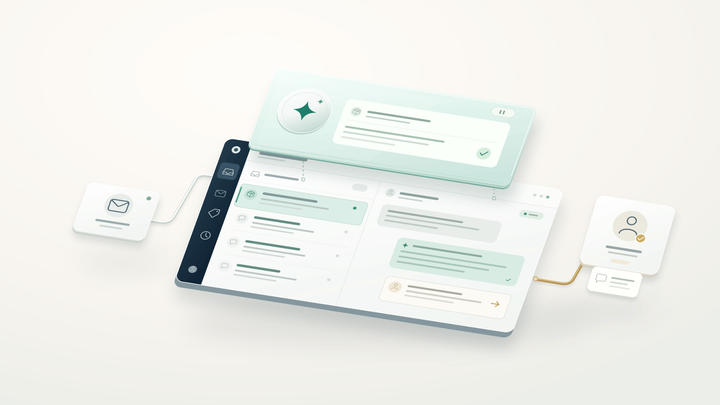
- Package the context automatically: a structured summary into the agent desk, not a raw transcript nobody reads under queue pressure.
- Open the human's reply with proof of continuity. “Hi Priya, I can see the charcoal crew arrived on the 3rd and the label didn't generate. Let me sort that now.”
- Bring the context back. The resolution should return to the agent's memory so the next conversation starts informed.
Step five is where the study's memory finding bites: only 1 of 15 deployments retained anything across sessions, so most handoffs are a one-way door.
Why is this an architecture problem?
Context transfer requires a structured representation of the conversation, an integration that carries it into the agent desk, a persistence layer, and identity continuity.
None of that is prompting. All of it is plumbing, which is why Agentic Experience scored 2.0 of 3.0 and Agentic Capabilities 1.6, against a perfect 3.0 on Context.
The test: trigger an escalation after giving the agent three specific details. When the human replies, count how many they already have. If the answer is zero, your AI layer is adding time to your most expensive conversations.
Key takeaways
- Handoff cliff appeared in 4 of 15 live deployments in Alhena's 2026 agentic CX benchmark.
- Escalation is a strength; empty escalation is the failure.
- It compounds with answer-only fallback and memory reset, producing more escalations handled worse.
- A clean handoff transfers five things: identity, intent, attempts, constraints and emotional register.
- Only 1 of 15 agents wrote the resolution back, making most handoffs a one-way door.
Frequently asked questions
The AI needs to pass a structured context package into your agent desk, not a raw transcript nobody reads under queue pressure. Alhena found escalation without context in 4 of 15 deployments, and it costs more than having no AI at all.
Five things: verified identity and the order in question, the intent as understood, what has already been tried, every constraint the customer stated, and the emotional register. The customer should not supply any of them twice.
It can be, and the test takes minutes. Give the agent three specific details, trigger an escalation, then count how many the human already has when they reply. Zero means you have added a step rather than removed one.
Early, on recognising an out-of-scope intent, rather than after four failed attempts. Late escalation wastes the customer's time and poisons the human conversation before it starts. Knowing when to hand off is a strength, not a limitation.
Technically it works with most desks, provided the agent produces a structured summary and the integration carries it into the ticket. The constraint is usually the AI vendor's context model rather than the helpdesk.
Say it, and say why. Naming the reason and confirming the context has been passed converts a dead end into a step forward. Silent transfers read as the agent giving up rather than routing to the right person.
Because a weak agent generates more escalations and handles each one worse. If it already dropped the customer's constraint, there was never coherent context to transfer. The economics run backwards on your most expensive conversations.
That requires a persistence layer, which is why most handoffs are a one-way door. Only 1 of 15 deployments Alhena tested retained anything across sessions, so the next conversation typically starts uninformed.
Proof of continuity. Something like referencing the specific order, the delivery date and the failed step, before offering to fix it. One sentence demonstrating they already know the situation resets the customer's frustration.
No. Escalation is a designed behaviour and often the correct one, especially in regulated or high-emotion conversations. The failure is escalating empty-handed, which is a context transfer problem rather than an AI capability problem.
See how the field handled escalation under pressure
Every deployment was tested with an emotional moment and an escalation trigger. The results are inside.