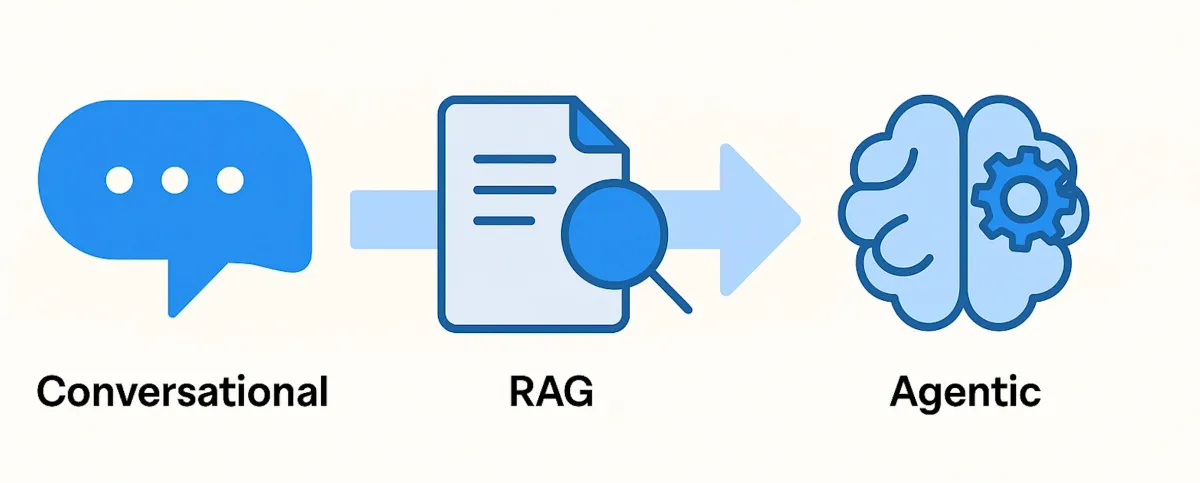
For AI-savvy Customer leaders, the next 18 months will feel like upgrading from manual to a self-driving car.
Our ecommerce AI maturity model maps this progression across five distinct technology stages, from scripted chatbots to autonomous commerce.
Retrieval-Augmented Generation (RAG) bots - today’s default for knowledge-based chat, are great at answering questions, but they stop there. Agentic AI - layers planning, tool use, and memory on top, so the AI Support Solutions can resolve complex multipart tickets, smartly offer upsells before triggering replacements or refunds without a human ever touching the case.
Below is a deep-dive that (1) demystifies the tech, (2) shows where RAG tops out, (3) explains how Agents and qualitatively better, and (4) some questions you need to think if planning a move from RAG to Agentic
To understand the underlying technologies, read the key differences between conversational AI and generative AI.
How Customer Service AI Evolved: Chatbots, RAG, and Agentic AI
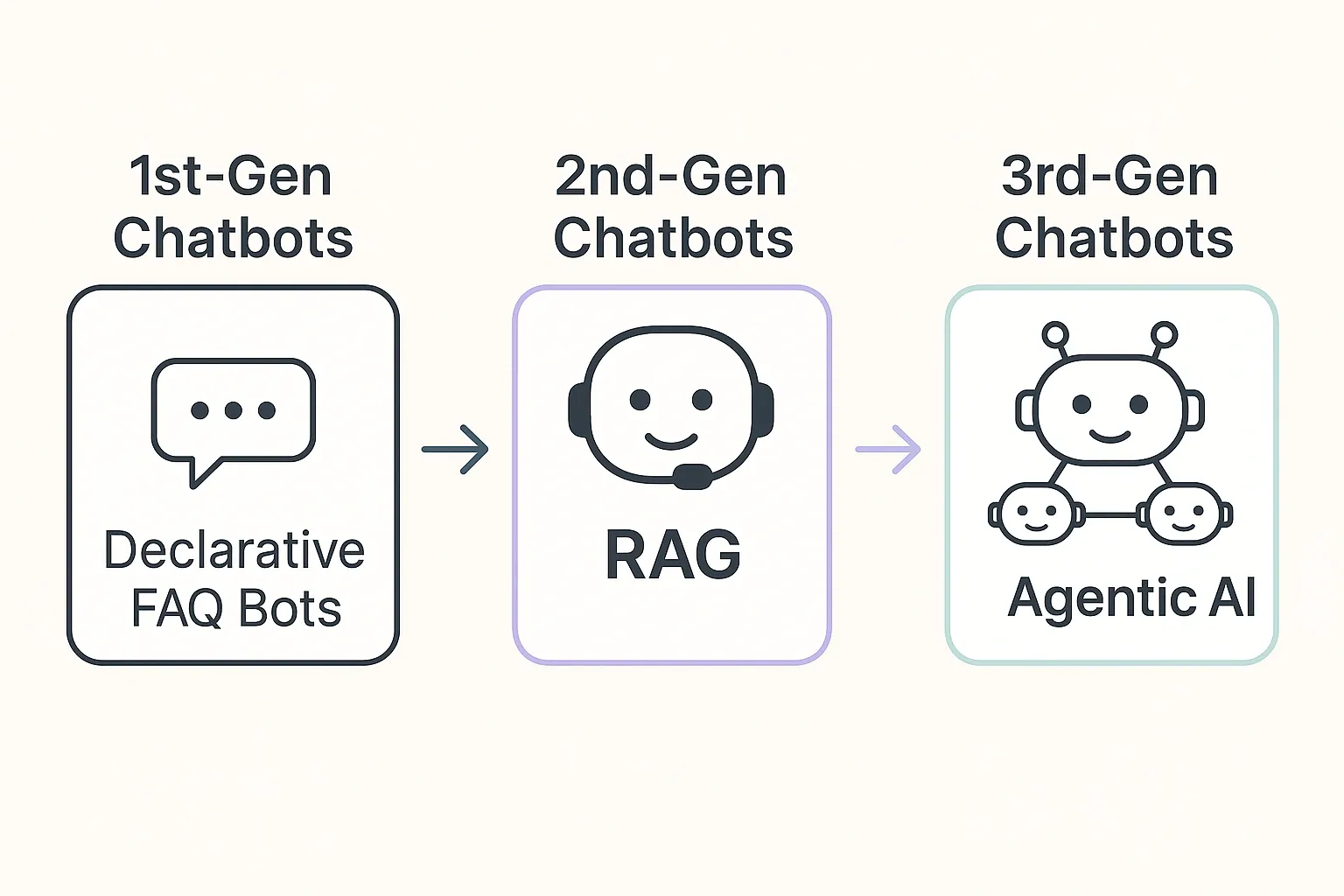
Chatbots that followed rigid flows were “Gen 1 - declarative chatbots.” RAG bots are “Gen 2” - they ground an LLM’s answers in your help-center snippets to cut hallucination. We’re now entering “Gen 3,” where an agent loop (observe → plan → act → reflect) lets the system decide the next best action until the customer’s goal, not just their question is met.
What Are RAG, Tools, and AI Agents?
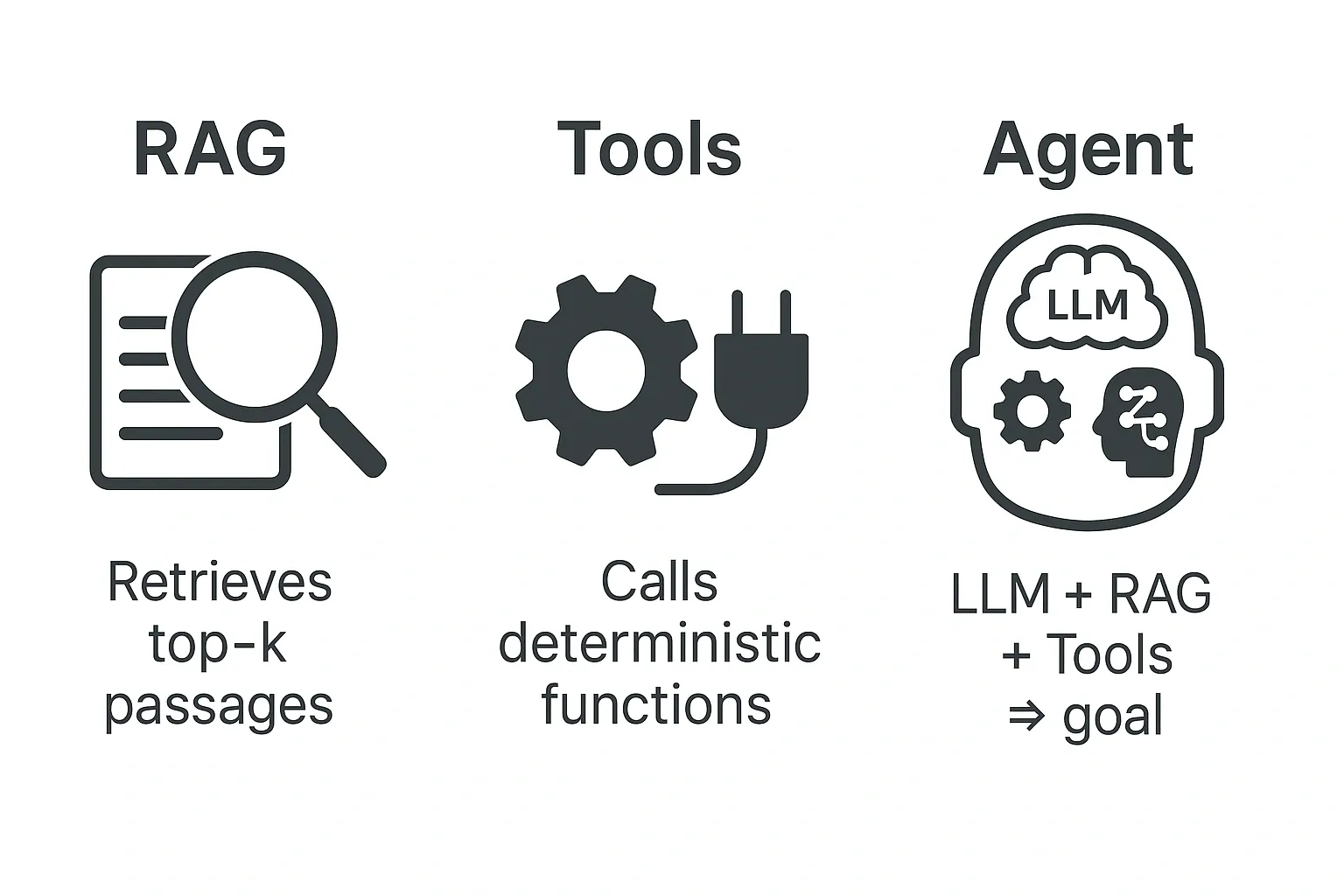
There are three important concepts to be familiar with:
| Concept | What it is | Why buyers care |
|---|---|---|
| RAG | LLM + vector search that retrieves the top‑k passages before answering (Medium) | Fast to launch; cuts wrong answers vs. raw LLMs. |
| Tool |
Any deterministic function the model can call via JSON—e.g.,
getOrderStatus(id)
(OpenAI Platform)
|
Unlocks live data & actions (refunds, ticket updates). |
| Agent | A reasoning loop that can chain RAG + tools + memory until a goal is done (Medium, NVIDIA Docs) | Automates whole workflows, not just Q&A. |
Why RAG is Popular Now?
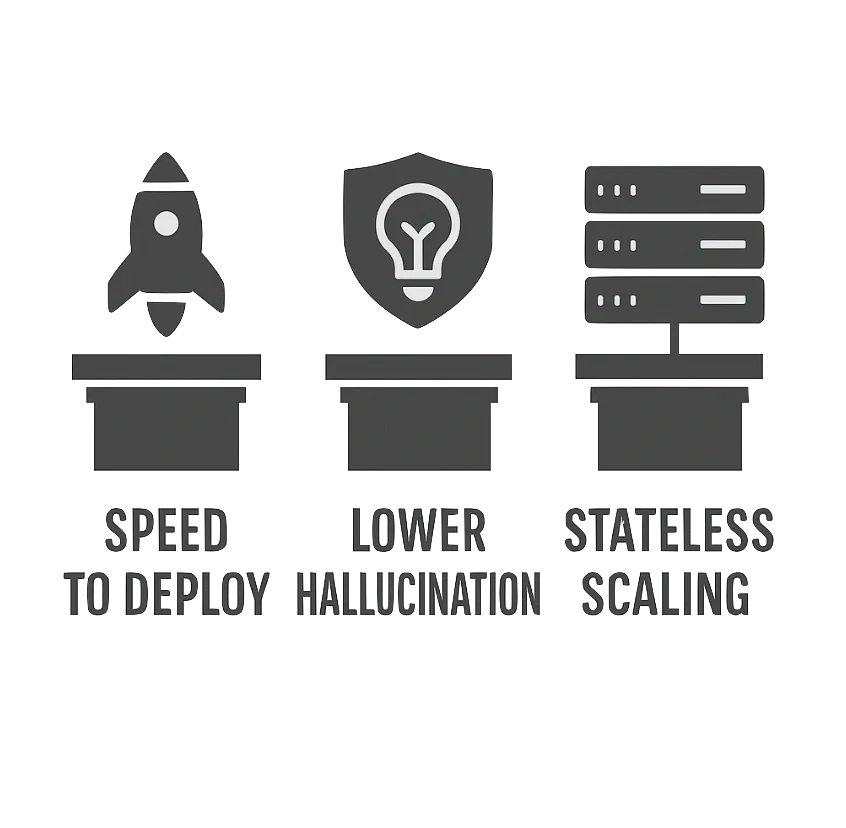
Speed to Deployment:
A simple RAG is relatively easier to build and deploy. For example, Intercom shipped Fin in eight weeks by scraping its help center and tuning prompts. At Alhena, we can build our first RAG in 2 Days (Dec'22)
Lower hallucination risk:
At Alhena, we have been able to completely stop hallucination. Even others, while not so good, have been able to make some progress. For example, Zendesk reports a double-digit drop in wrong answers when grounding responses in docs
Stateless scaling:
Most 2025 support bots still run pure RAG because latency is a single LLM call
Where RAG Chatbots Hit Their Limits in Customer Service
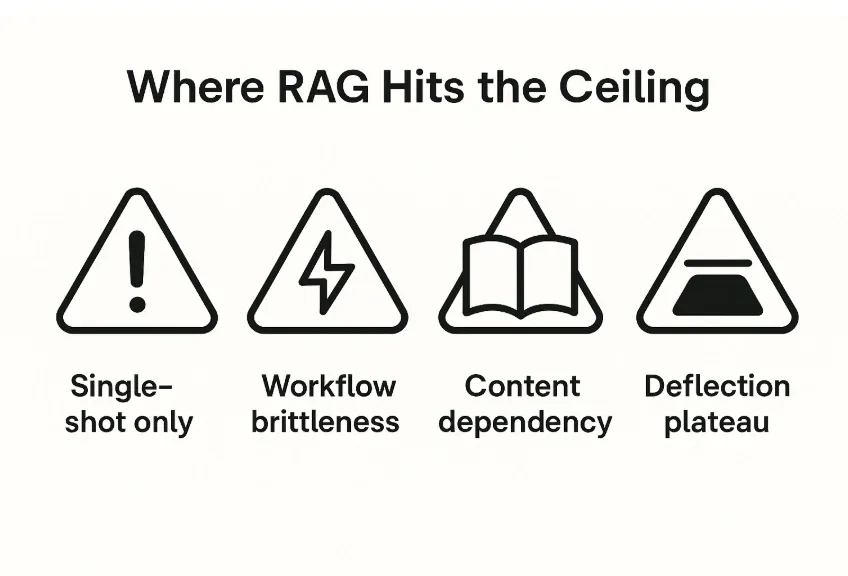
- Single-Shot Only: In RAG, each query is treated in isolation; no plan spans steps.
- Workflow brittleness. Stitching multiple tools together by prompt engineering quickly becomes unmaintainable.
- Content dependency. If the doc is missing, or stale, the bot stalls. Updating knowledge base weekly is tedious and nobody’s idea of fun.
- Deflection plateau. You can only deflect so much with answering informational queries. Industry benchmarks show containment flattening at ~30-40 % with answer-only bots. With some high-quality AI solutions that can take actions, this can go as high as 70%, but that's it.
Why Agentic AI Is Not Just RAG With Tools
Solution providers confuse customers by saying they have agentic AI. Actually, all they have is RAG that has ability to call some tools.
Most vendors shouting “Agentic AI” are really shipping classic Retrieval‑Augmented Generation with a few API calls bolted on.
That’s not an agent - it’s still a single‑shot LLM response dressed up with tool access.
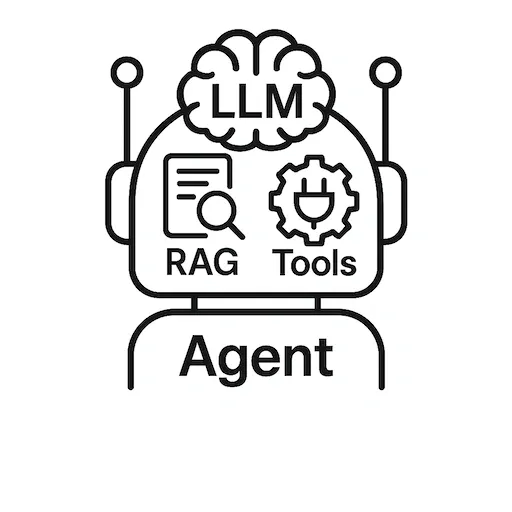
A True Agentic AI:
- Plans: decomposes the user’s goal into multi‑step actions.
- Acts: selects and sequences tools autonomously.
- Checks: evaluates intermediate results and self‑corrects.
- Learns: updates its strategy from feedback and new data.
RAG, no matter how many plugins you attach, does none of the above. It retrieves context, drafts an answer, and stops.
In the next section we’ll unpack Agentic AI’s architecture and show exactly how it diverges from RAG (and RAG + Tools) in both design and outcomes.
What a True Agentic RAG Chatbot Can Do
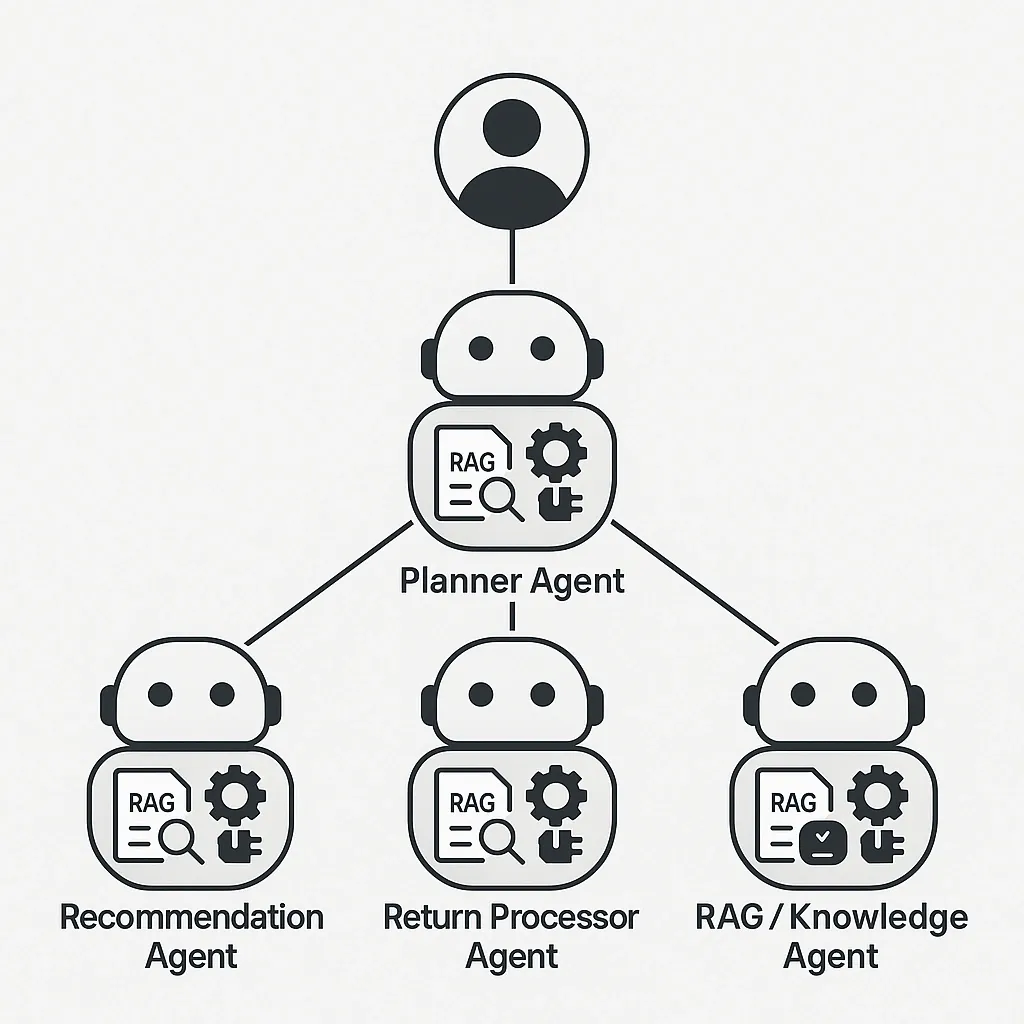
Resolve multi-step tickets.
Agents can handle way more complex, multi-turn queries that requires reasoning. For example, in some telecom pilots, agent loops cut RMA handling time by over 50 % because the bot could file return labels, generate RMAs, and send status updates autonomously
Ask clarifying questions—then act:
In RAG, the AI has a tendency to simply answer. Agentic AI solutions can ask follow-up questions before answering. For example, in E-Commerce Shopping Solutions, AI asks questions to understand user's requirement before recommending a product.
Human-like UX tweaks in minutes:
Changing the behavior of Agents should be as easy as tweaking the guideline, rather than changing hard to find/understand settings in traditional softwares
Future-proof for agentic commerce:
As we move to agentic commerce, or social commerce - changing agents/adding new agents to enable new functionalities is a lot easier. This is because while RAG can use tools to accomplish a workflow. Those tools are stitched together traditionally. This means that RAG is not made to solve for new workflows. For a walkthrough of this in practice, see our guide to configuring agentic workflows without code.
With Agentic solutions, you can truly solve novel workflows without having to have thought about them at the onset. These Agents will orchestrate and collaborate with each other to surprise and delight you/your users.
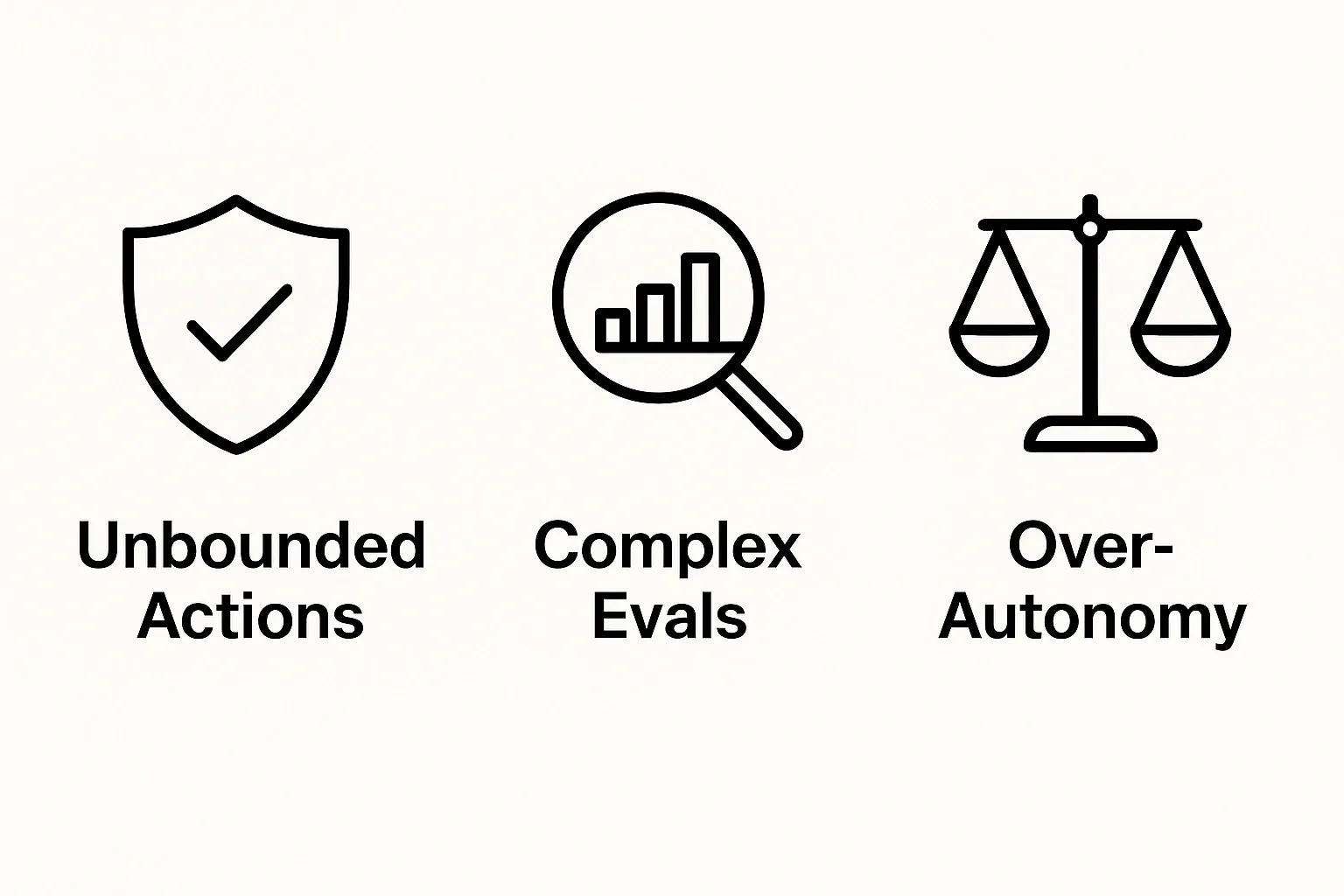
Guardrails and Governance for Agentic RAG Systems
Agentic RAG Use Cases in Ecommerce
Most RAG examples focus on IT helpdesks or internal knowledge bases. Ecommerce is where agentic RAG really earns its keep, because shoppers don't just ask questions. They want action: find the right product, track a package, start a return, or finish a checkout.
Product Discovery and Guided Shopping
A standard RAG chatbot pulls product descriptions from a catalog and reads them back. An agentic RAG shopping assistant goes further. It asks about skin type, budget, or occasion, then cross-references inventory, reviews, and compatibility data before narrowing down a shortlist. Tatcha saw a 3x conversion rate and 38% higher average order value after deploying this kind of guided, multi-step product recommendation.
Order Tracking, Returns, and Post-Purchase Workflows
"Where's my order?" accounts for up to 40% of support tickets in online retail. A RAG bot can surface a tracking FAQ. An agentic system calls the shipping API, checks the carrier status, cross-references warehouse logs, and replies with a real-time update, all in one turn. If the customer wants a return, the same agent initiates the RMA, generates a label, and confirms the refund timeline without handing off to a human. Puffy resolved 63% of inquiries automatically with this approach while maintaining 90% CSAT.
Agentic Checkout and Cart Recovery
This is the use case that separates customer service AI from customer sales AI. Alhena's Product Expert Agent doesn't just answer questions about a product. It populates the cart, pre-fills checkout fields, and applies discount codes, all inside the chat window. That's agentic commerce: the AI closes the sale instead of pointing the shopper somewhere else.
Social Commerce and Omnichannel Support
Shoppers ask about products on Instagram DMs, WhatsApp, and live chat, often in the same week. An agentic RAG system with social commerce capabilities carries context across all those channels. Manawa cut agent workload by 43% and dropped response times from 40 minutes to under 1 minute by deploying Alhena across web and social channels.
Best Agentic RAG Tools and Platforms for Customer Service
If you're evaluating agentic RAG tools for your support team, the landscape breaks into two categories: open-source frameworks for engineering teams that want to build from scratch, and turnkey platforms that deploy a finished agent on your store or helpdesk.
Open-Source Frameworks (Build Your Own)
LangChain and LangGraph are the most widely adopted agentic RAG frameworks. LangGraph adds stateful, multi-step agent loops on top of LangChain's retrieval chains, so you can build plan-execute-verify workflows. LlamaIndex takes a data-first approach and is strong for connecting multiple knowledge sources (PDFs, databases, APIs) into a single retrieval pipeline. CrewAI focuses on multi-agent collaboration, letting you assign roles (researcher, writer, reviewer) to separate agents that coordinate on complex tasks.
The tradeoff: these frameworks give you full control, but you'll need ML engineers, ongoing prompt tuning, and months of iteration before you have a production-ready customer service agent.
Turnkey Agentic Platforms (Deploy in Days)
Alhena AI is purpose-built for ecommerce and customer service. It ships two specialized agents out of the box: a Product Expert Agent that handles shopping guidance, recommendations, and agentic checkout, and an Order Management Agent that resolves WISMO, returns, exchanges, and refund workflows end-to-end. Alhena deploys in under 48 hours, integrates natively with Shopify, WooCommerce, Salesforce Commerce Cloud, and helpdesks like Zendesk and Gorgias, and includes built-in revenue attribution so you can measure exactly how much the AI sells.
Other platforms in this space include Intercom Fin (strong for SaaS support, weaker on ecommerce workflows), Zendesk AI (good ticket deflection, but no sales or checkout capabilities), and Tidio (affordable for small stores, limited agentic reasoning). If your primary goal is reducing customer service costs while also driving revenue, the platform needs both support and sales DNA. That's where most general-purpose tools fall short.
How to Choose Between RAG and Agentic AI for Your Team
Not every team needs a full agentic system on day one. Here's a simple decision framework:
Start with RAG if your support volume is under 500 tickets per month, most questions are answered in your help center, and you don't need the AI to take actions (process refunds, modify orders, etc.). RAG will cover 30-40% of your inquiries cleanly.
Move to agentic AI if you're hitting the deflection plateau (stuck around 35-40% automation), your agents spend most of their time on repetitive multi-step workflows (WISMO, returns, exchanges), or you want AI to contribute directly to revenue through product recommendations and checkout assistance.
The good news: you don't have to choose one or the other permanently. Alhena's Support Concierge uses RAG for knowledge retrieval and layers agentic capabilities on top for action execution. Crocus reached an 86% deflection rate and 84% CSAT by combining both approaches in a single deployment. You can explore the ROI calculator to estimate the impact for your specific ticket volume and team size.
Where Agentic RAG Customer Service Is Headed
Agentic solutions won’t replace RAG, rather they’ll encompass it. A well-designed agent calls:
- A RAG tool when it needs trusted knowledge.
- Domain tools to act (refund, reship, escalate).
- Fellow agents for planning and collaborating on workflows.
Customer teams and e-commerce brands that invest in this stack early will own the next decade of customer experience, while pure-Q&A chatbots will look as dated as the IVR trees.
Technical Deep-dive into Multi-Agent Architecture
For technical folks, we have also published a detailed architecture of multi-agent AI systems. It shows how a planner-led multi-agent LLM: Planner, Orchestrator, shared ChatState & specialist agents - outperforms single-agent chatbots for e-commerce CX, eliminating prompt bloat, tool confusion and goal clashes to deliver instant support, smart recommendations and automated order care. You can also read about how we moved beyond RAG to build a plan-execute-verify system that dramatically improved accuracy.
Ready to See Agentic AI Live?
Book a 15-minute demo, and we’ll put an Alhena agent on one of your real tickets. Watch as it magically retrieves, plans, and resolves in front of you.
At Alhena, we are leading the industry in transforming the customer support using an Agentic AI architecture. If you enjoyed reading this, you will also reading this detailed and practical primer on Agentic Chunking.
- Learn More: Alhena AI For ECommerce
- Create and Test Your Own AI Agent for Free: Sign Up
- Read Customer Success Stories: Customer Success stories
Frequently Asked Questions
What is an agentic RAG chatbot?
An agentic RAG chatbot combines retrieval-augmented generation (pulling answers from verified knowledge bases) with an agent loop that can plan, execute multi-step actions, and call external tools like shipping APIs or order management systems. Unlike a standard RAG bot that only answers questions, an agentic RAG chatbot can resolve entire workflows, such as processing a return or recommending products based on a guided conversation.
How is agentic AI different from RAG for customer service?
RAG retrieves relevant documents and generates a grounded answer in a single pass. Agentic AI wraps that retrieval step inside a reasoning loop: it observes the request, plans the steps needed, acts (calling tools or APIs), and checks its own output before responding. In customer service, this means an agentic system can track an order, issue a refund, and send a confirmation email in one conversation, while RAG alone would only surface a help article.
What are the best agentic RAG tools for customer support?
Open-source options include LangChain, LangGraph, LlamaIndex, and CrewAI for teams that want to build custom agents. For turnkey deployment, Alhena AI is purpose-built for ecommerce support and ships with pre-built Product Expert and Order Management agents that deploy in under 48 hours. Other platforms like Intercom Fin and Zendesk AI handle ticket deflection but lack ecommerce-specific sales and checkout capabilities.
Can agentic RAG chatbots work with Shopify and WooCommerce?
Yes. Platforms like Alhena AI integrate natively with Shopify, WooCommerce, Magento, and Salesforce Commerce Cloud. The AI agent connects to your product catalog, order system, and helpdesk (Zendesk, Gorgias, Freshdesk) to pull real-time data and take actions like modifying orders or populating carts directly from the chat.
How much does it cost to deploy an agentic RAG system?
Costs vary widely. Building a custom agentic RAG pipeline with LangChain or CrewAI requires ML engineers and months of development, easily reaching six figures annually. Turnkey platforms like Alhena AI start with 25 free conversations and scale based on usage, with most ecommerce brands seeing positive ROI within the first month through reduced support costs and AI-attributed revenue. Use the Alhena ROI calculator at alhena.ai/roi-calculator to estimate your specific numbers.
What ecommerce use cases does agentic RAG handle best?
The highest-impact use cases are guided product recommendations (ask-then-suggest flows that lift conversion rates), order tracking and WISMO resolution, returns and exchange automation, agentic checkout (populating carts and pre-filling forms inside chat), and omnichannel support across web, email, Instagram DMs, and WhatsApp. Tatcha saw a 3x conversion rate and 38% AOV uplift from AI-powered product discovery alone.
How does agentic RAG reduce customer service costs?
Agentic RAG automates multi-step workflows that previously required human agents: processing refunds, generating return labels, updating order details, and answering complex product questions. Crocus achieved an 86% deflection rate while maintaining 84% CSAT. Manawa cut agent workload by 43% and dropped response times from 40 minutes to 1 minute. The cost reduction compounds because agentic systems handle not just FAQ-level questions but the action-heavy tickets that consume the most agent time.
Is agentic RAG better than a traditional chatbot for support?
For simple FAQ deflection, a traditional RAG chatbot works fine and is cheaper to run. But if your team is stuck at 30-40% automation, handling high volumes of repetitive action-based tickets (WISMO, returns, exchanges), or wants AI to contribute to revenue through product recommendations and checkout, agentic RAG delivers measurably better results. Puffy resolved 63% of inquiries automatically with agentic AI while maintaining 90% CSAT, well above what a standard chatbot achieves.