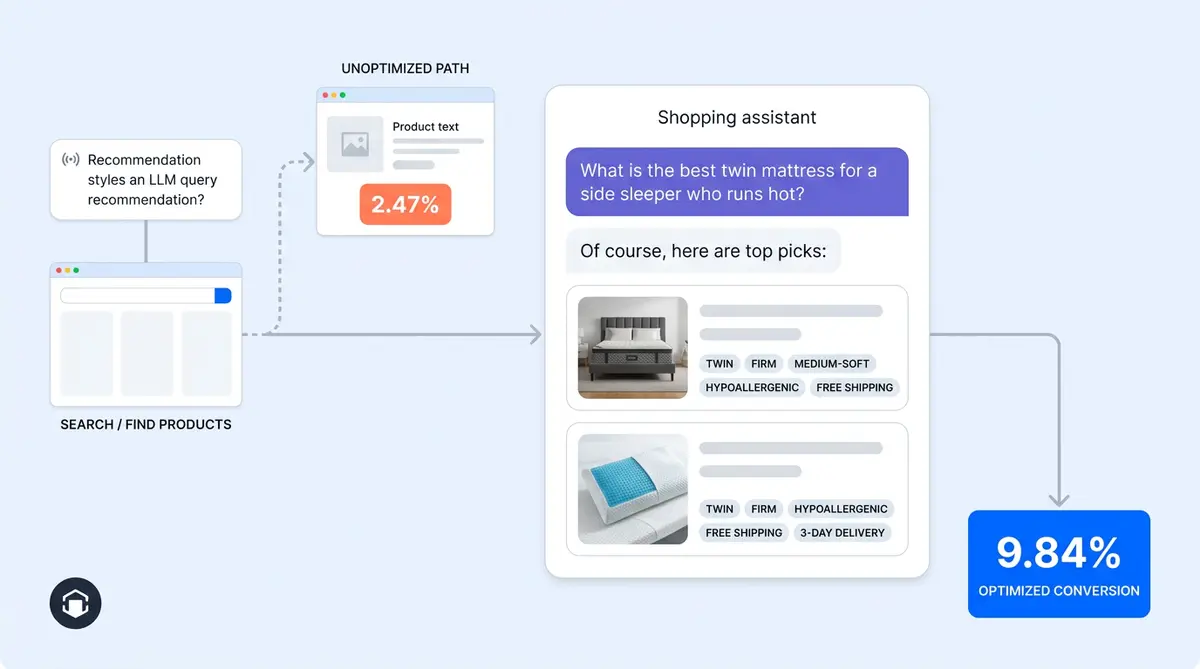
LLM-referred visitors who engage with on-site AI shopping assistance convert at 9.84%. That's roughly 4x the LLM channel average of 2.47% and more than 5x the overall ecommerce conversion benchmark of ~2%. No other channel and tactic combination in ecommerce can convert at rates this high consistently. LLM referral traffic is outperforming organic traffic, direct traffic, and paid search by a wide margin on a per-session basis. For SEO teams tracking organic search traffic performance alongside LLM traffic, this is the most significant conversion opportunity available today. The percentage of total sessions coming from LLM referral sources is small, but the conversion data tells a different story than raw volume suggests.
The explanation comes down to a concept we call the double-qualified shopper. These buyers arrive already pre qualified through an AI conversation. They've asked questions, compared options, and filtered down to a shortlist before they ever hit your site. When they then encounter an on-site AI shopping assistant that continues that conversational journey, it’s a compounding effect on conversion unlike anything traditional traffic sources produce.
Why the Compounding Effect Works
LLM visitors are mentally primed for dialogue. They just came from a conversational AI platform like ChatGPT or Gemini where they asked questions and received structured answers. It’s the same dynamic that makes phone sessions with a knowledgeable sales associate convert higher than self-service browsing. Landing on your site, they're already conditioned to interact with AI. They expect to keep talking, keep asking, keep narrowing. That behavioral momentum in LLM referral traffic is measurable.
Across 329 e-commerce stores, LLM shoppers show the 2nd highest AI engagement rate of any channel at 2.69%, behind only SMS for LLM referral sessions. Compare that to paid social traffic or direct traffic, where AI engagement hovers below 1%. The volume of ChatGPT referrals is still small relative to organic search traffic volume, but the conversion data shows these sessions are outperforming every major paid channel. The conversational mindset carries over from the LLM to your shopping assistant, and that carryover is what drives the conversion multiplier.
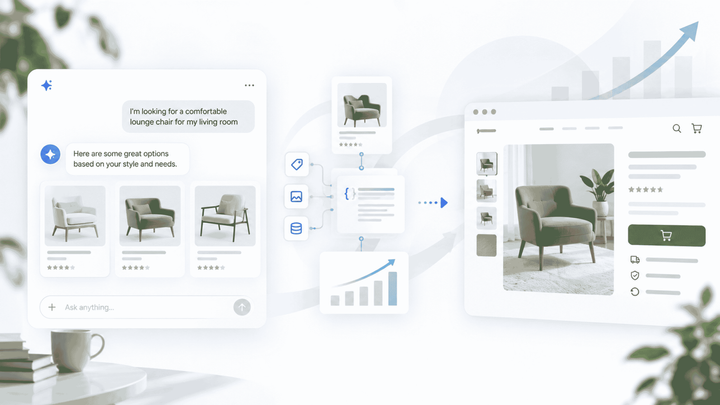
The on-site AI interaction doesn't feel like a new experience to these shoppers. It feels like a continuation of the research journey they started in the LLM. They've already done the broad comparison. Now they want product-specific answers. Your AI shopping assistant picks up exactly where the LLM left off, something traditional search engines and traditional search results pages can’t replicate, turning general research into a confirmed purchase decision.
The Funnel Mechanics Behind 9.84%
LLM referral traffic sessions are filled with qualified, high-intent shoppers. Whether the referral source is ChatGPT, Gemini, or Perplexity, these pre qualified shoppers arrive. ChatGPT sends the highest volume of LLM referrals today, and shoppers who arrive from it often need one final layer of product-specific confirmation before they buy. They know roughly what they’re looking for. What they don't know is whether your specific product fits their exact situation.
That last layer of confirmation typically involves questions about sizing, compatibility, shipping timelines, or comparison validation. "Does this moisturizer work for combination skin?" "Will this fit a queen bed frame?" "How does the 500ml compare to the 250ml?" These aren't browsing questions. They're buying questions.
An on-site AI shopping assistant delivers those answers at the moment of decision, grounded in your actual product catalog, customer policies, and inventory data. Users get direct answers. Cart-to-checkout completion nearly doubles when this happens, jumping from 26.3% to 49.3%. AOV increases by up to 38% because the assistant can recommend complementary products within the same conversation, matching what the shopper already told the LLM they were looking for.
What Happens Without On-Site AI
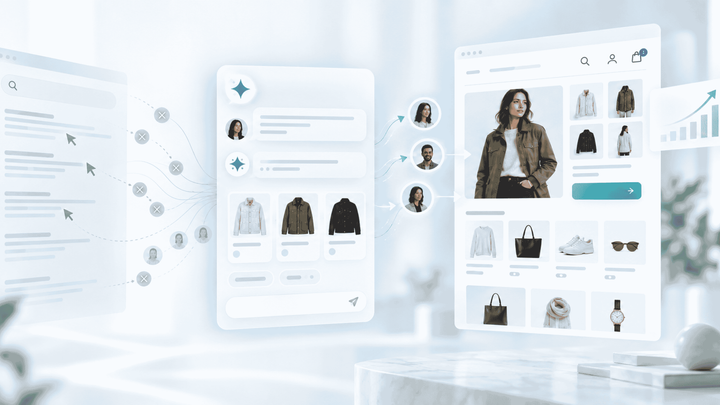
When LLM referral shoppers land on a static product page with no conversational assistance, the momentum from their AI research journey breaks. They go from an interactive, question-and-answer flow to a flat page of bullet points and stock photos. The cognitive shift is jarring.
These shoppers don't browse the way organic search visitors do. They don't want to click through five tabs, read a spec sheet, and hunt for a sizing chart. They want to ask one more question and get a direct answer. Without that, even pre qualified visitors see conversion drop back toward channel averages. The pre-qualification from the LLM still helps, keeping these visitors more qualified than average, but the compounding effect disappears entirely. You get the 2.47%. You don't get the 9.84%.
Static pages also can't personalize at the speed these shoppers expect. A buyer who spent three minutes in an LLM conversation refining their needs won't tolerate starting over on your site. They’re expecting a conversation. The friction cost is higher for this audience than for any other channel because the expectation gap is wider.
Connecting AI Visibility With On-Site AI Shopping Assistance
Most e-commerce businesses treat AI visibility and on-site conversion as separate workstreams. The SEO team and marketing team work on getting products cited in LLM recommendations and AI Overviews. Companies assign separate teams to monitor AI Overviews performance. The CX team manages the on-site chatbot. These two functions rarely coordinate, and the impact is a broken handoff at the most valuable point in the funnel. Marketing leaders and SEO teams miss the connection between LLM citation volume and on-site conversion metrics. When a ChatGPT citation sends a shopper to your commerce site, that shopper is ready to convert. But without attribution connecting the citation to the purchase, the entire referral source shows low ROI in dashboards. The data shows low attribution accuracy. The attribution gap means no one tracks how a ChatGPT product citation turns into a qualified purchase.
Businesses investing in LLM citation strategies and optimization to drive AI-referred traffic but not deploying an on-site AI assistant to receive that traffic are leaving the highest-converting interaction in ecommerce on the table. The data is clear: 1% of total site visitors who engage with an AI shopping assistant drive roughly 10% of total store revenue. When LLM referral traffic feeds that 1%, it’s a test of whether your conversion infrastructure matches the quality of your inbound search traffic. The revenue concentration from this traffic accelerates.
The strategic move is treating AI visibility and on-site AI shopping assistance as a unified system. One side drives qualified referral traffic through citation placement that outperforms organic search traffic by a wide percentage on conversion. The other converts it. Your product data, customer journey context, and catalog intelligence feed both. The businesses running this as an integrated loop consistently outperform those running each side independently.
How Alhena AI Closes the Loop
Alhena AI is the platform that connects both sides of this equation. On the visibility side, Alhena's AI visibility tracking helps businesses understand where and how their products appear in LLM recommendations, giving marketing leaders and SEO teams the conversion data and attribution they need to improve AI Overviews presence, track each referral source, measure citation impact, and grow AI-referred traffic volume.
On the conversion side, Alhena's AI shopping assistant receives those visitors with a conversational experience that matches what they just left. Product Expert and Order Management agents answer sizing, compatibility, and shipping questions from your verified product catalog. The assistant populates carts, pre-fills checkout, and recommends add-ons based on the shopper's stated needs.
The result is an AI-to-AI purchase journey that consistently delivers a higher rate of conversion than organic search traffic or any other referral source. The shopper starts in an LLM, gets a recommendation, clicks through, and immediately continues that conversation with Alhena's on-site AI. No momentum loss. No expectation gap. No friction from switching between conversational AI and static content. That's how you get the 9.84%, and that's a conversion loop no other platform delivers end to end.
9.84% Is the Benchmark, Not the Ceiling
This conversion rate proves the compounding model works. Two layers of AI qualification, one on the discovery side and one on the conversion side, produce results that neither layer achieves alone. The percentage lift is consistent across store sizes. The 2.47% LLM referral baseline is strong, delivering conversion rates that already outperform most paid channels. When conversion metrics and attribution data confirm this pattern across 329 brands, the sample size removes doubt. The 9.84% with on-site AI engagement is category-defining.
E-commerce businesses that connect both sides of the AI commerce equation will structurally outconvert competitors who treat AI visibility and on-site conversion as separate problems. As LLM referral volume continues to grow, the gap between connected and disconnected strategies will only widen. SEO teams watching organic search traffic plateau while LLM referral conversion data keeps climbing will have to adapt.
The question for e-commerce companies, SEO teams, CRO leaders, and content marketing professionals who monitor LLM traffic isn't whether LLM traffic matters. It already converts above most paid channels. The question is whether you're set up to capture the compounding effect when those shoppers arrive. Book a demo with Alhena AI to see how the AI-to-AI purchase journey works for your catalog, or start free with 25 conversations and measure the lift yourself. Start free and see the data in your own dashboard.
The Conversion Data Across Channels
The conversion rates tell a clear story when you compare LLM referral traffic to other channels. Organic traffic from traditional search engines converts at roughly 2% on most commerce sites. Direct traffic performs slightly better in some verticals. Paid social and ad traffic often shows low single-digit conversion rates. ChatGPT referral traffic, by contrast, delivers a higher rate at 2.47% before any on-site AI engagement, outperforming organic search traffic and most paid channels on a per-session basis.
When you layer on-site AI shopping assistance into this conversion data, the gap becomes even wider. The 9.84% conversion rate for pre qualified LLM shoppers who interact with an AI assistant is outperforming every referral source by a significant percentage. Commerce sites running this dual-layer approach see higher conversion rates than sites relying on SEO and organic traffic alone. These conversion rates hold across beauty, fashion, home, and fitness verticals, regardless of how visitors are referred. The attribution data confirms that ChatGPT and other LLM referral sources produce a higher rate of qualified, purchase-ready sessions. For marketing leaders, SEO teams, and growth operators measuring conversion metrics, this is the highest-value referral source in ecommerce today. These high value sessions justify dedicated resources. Traditional SEO still matters, but LLM referral conversion rates are rewriting the playbook. Each citation that drives a visitor to your commerce site carries more conversion potential than dozens of organic search traffic sessions. For more on this topic, read ChatGPT Revenue Grew 130% While Visitors Rose 40%: Why Conversion Quality Is Accelerating.
Measuring the LLM Visitor Conversion Advantage
When you aggregate the conversion data across all LLM referral traffic, the average conversion rate sits at 2.47% before on-site AI engagement. That number alone beats most ad traffic channels. Paid social ad campaigns on Meta convert at 0.52%. TikTok ad traffic converts at 0.09%. Even Google ad clicks convert at just 1.82%. LLM visitors convert at a higher rate without a single dollar of ad budget behind them. The sample of 329 commerce brands in this dataset is large enough to confirm the pattern holds at scale.
The gap widens when pre qualified LLM visitors interact with an AI shopping assistant. These visitors convert at 9.84%, a figure that no aggregate of ad traffic, organic traffic, or direct traffic can match. The average ecommerce site struggles to convert above 2% from any single traffic source. Pre qualified shoppers from ChatGPT, Perplexity, and Gemini change that equation entirely. Their volume is still growing, but every visitor in this sample who engaged with on-site AI produced higher revenue per session than the site average across all other channels.
For commerce teams allocating budget toward LLM visibility, this data validates the investment. Every citation that sends a pre qualified visitor to your site feeds a conversion loop that no ad channel replicates. The total volume of LLM traffic is small today, but the per-session value is higher than any traffic source requiring media budget. Brands that convert these visitors with on-site AI see results the aggregate benchmarks can't explain, because the double-qualification effect sits outside what average channel metrics capture.
Frequently Asked Questions
What is the AI-to-AI purchase journey and how does it increase ecommerce conversion?
The AI-to-AI purchase journey describes a shopper who starts research in an LLM, receives a product recommendation, clicks through to a store, and continues that conversation with an on-site AI shopping assistant. Alhena AI connects both sides of this journey, producing a 9.84% conversion rate across sessions because the shopper never leaves the conversational flow that drove their intent.
How do you optimize an ecommerce store for LLM visitor conversion?
Start by ensuring your products appear in LLM recommendations through structured product data and authoritative content. Then deploy an AI shopping assistant like Alhena AI that continues the conversational experience LLM visitors expect. Brands running both AI visibility and on-site AI conversion as a unified system see 4x higher conversion from LLM traffic compared to static product pages alone.
Why do LLM visitors engage with on-site AI shopping assistants more than other traffic sources?
LLM visitors arrive already conditioned for conversational interaction. They just spent time asking an AI questions and receiving structured answers. Alhena AI data shows these visitors have the 2nd highest AI engagement rate of any channel at 2.69%, behind only SMS. The on-site assistant feels like a continuation of their research rather than a disruption.
Can vertical AI agents improve conversion rates for specific ecommerce categories?
Yes. Vertical AI agents trained on category-specific product knowledge (sizing for apparel, compatibility for electronics, ingredients for beauty) answer the exact questions that block conversion in each vertical. Alhena AI deploys Product Expert and Order Management agents grounded in your catalog data, which is why AI-assisted shoppers complete checkout at 49.3% compared to 26.3% without assistance.
What revenue impact does connecting AI visibility to on-site AI conversion have for DTC brands?
Brands running AI visibility and on-site AI conversion as a connected system see roughly 1% of total visitors who engage with the AI assistant drive 10% of total store revenue. Alhena AI closes this loop by tracking how products appear in LLM recommendations and converting that traffic with an on-site shopping assistant, producing measurable customer revenue attribution across the full LLM referral traffic journey.