The ecommerce personalization stack has split into two architectures. Behavioral personalization uses machine learning, browsing history, and customer segmentation to swap dynamic content across your ecommerce store. Conversational personalization is ai powered product discovery where shoppers express purchase intent and the system creates personalized recommendations, answers questions, and takes action. Both personalization approaches improve the customer experience. The question is which to add first to optimize conversion, reduce cart abandonment, and build loyalty at scale.
This guide gives you a measurable framework based on your catalog and where shoppers struggle with product discovery.
Two Architectures in the Ecommerce Personalization Stack
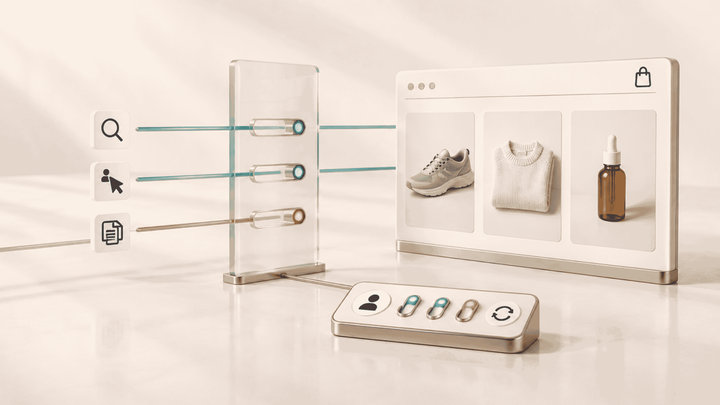
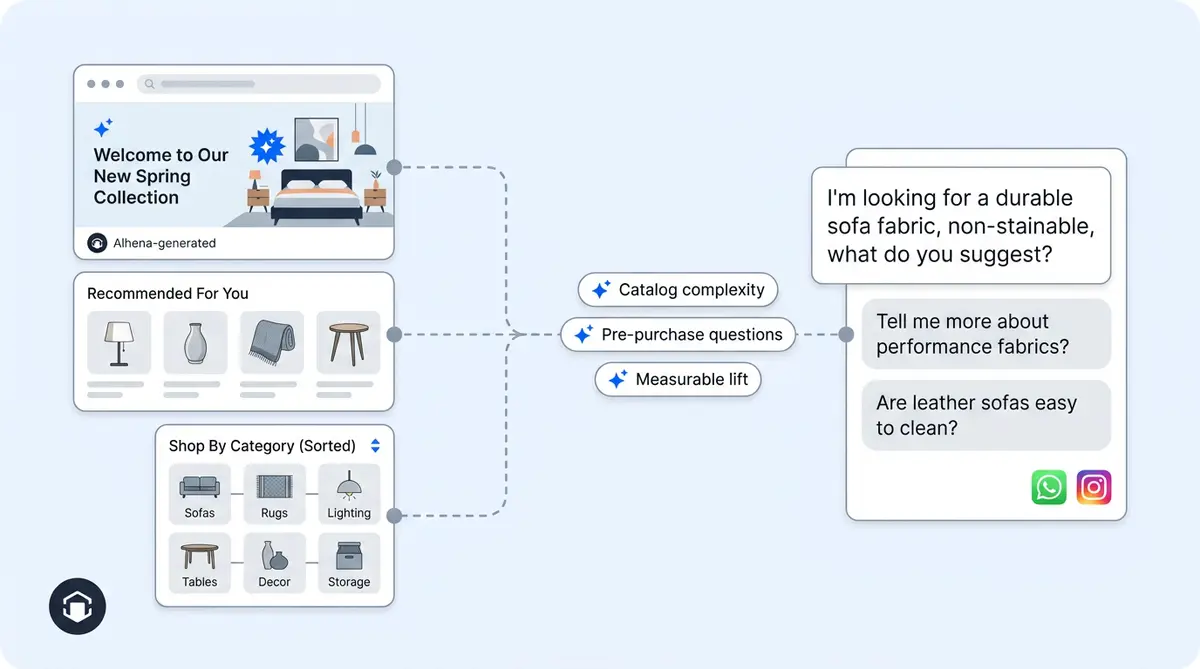
Behavioral personalization tools in your ecommerce personalization stack change what shoppers see across your ecommerce store. Think tailored hero banners, personalized recommendation engines, retargeting ad campaigns, targeted discounts, and merchandising optimization based on purchase history, browsing behavior, preferences, and customer profiles. The system uses predictive segmentation, machine learning, and first party data to decide which dynamic content variant to render. This works well for high-traffic ecommerce platforms and ecommerce brands where small conversion lifts across millions of shopping interactions add up at scale.
Conversational personalization works differently in your stack. Shoppers express purchase intent in natural language, and the ai powered system handles product discovery, creates personalized recommendations for each shopper, answers questions, and takes action. The customer experience surfaces include a chat widget, conversational site search, ai powered nudges, push notifications, email, or messages on WhatsApp and Instagram. Instead of guessing from implicit browsing behavior, the AI asks shoppers what they need across omnichannel touchpoints during their shopping journey.
A page-level personalization tool won't help shoppers who type "I need a moisturizer for dry skin." A conversational agent won't swap your homepage hero for retargeting. Pick the personalization stack surface that matches your biggest customer journey gap.
For a comparison, see our conversational AI vs. page-level personalization breakdown.
How to Choose Your Ecommerce Personalization Stack
1. How complex is your product discovery?
If you sell 50 SKUs, behavioral personalization with customer segmentation and targeted discounts handles product discovery fine. Shoppers can browse, filter, and purchase. But ecommerce brands with hundreds of SKUs need ai powered, hyper-personalized recommendation engines and tailored product discovery guidance. Static filters can't optimize the personalized recommendations that complex catalogs on ecommerce platforms like Shopify demand.
Conversational ai powered product discovery shines here. Tatcha saw a 3x conversion rate and 38% higher AOV after deploying Alhena's AI Shopping Assistant, which delivers tailored personalized recommendations through each customer journey. (Case study.) The roi was measurable within weeks.
2. How much pre-purchase support volume do you have?
Check your helpdesk and CRM analytics. If "which size should I get?" dominates shopping interactions, those are commerce conversations. Behavioral personalization won't address them. Shoppers need dynamic, tailored content in a two-way exchange, not a swapped banner or ad.
Alhena's Support Concierge and Product Expert Agent handle shopper queries across chat, email, social media, and WhatsApp. They convert shopping interactions into purchase orders through upselling, cross selling, and personalized recommendations that build loyalty. Victoria Beckham saw 20% increase in AOV from ai powered product guidance and customer retention optimization. (Case study.)
3. Can you measure the roi?
Any ecommerce personalization stack investment needs analytics to justify spend. Behavioral personalization measures conversion through A/B tests on personalized page slots, predictive machine learning models, and retargeting ad performance. Conversational personalization measures conversion through engaged-session attribution and revenue tracking.
Alhena tracks Total Add-to-Cart GMV, average cart value per shopper, and daily revenue, making roi measurable. Run holdout tests to isolate conversion from personalized shopping interactions. See our holdout test guide.
What Conversational Ecommerce Personalization Looks Like
Ai powered product discovery. Specialized agents handle product discovery, order management, merchandising, and customer support. Each shopper's customer journey gets tailored, hyper-personalized experiences with the right content at every touchpoint across your ecommerce personalization stack.
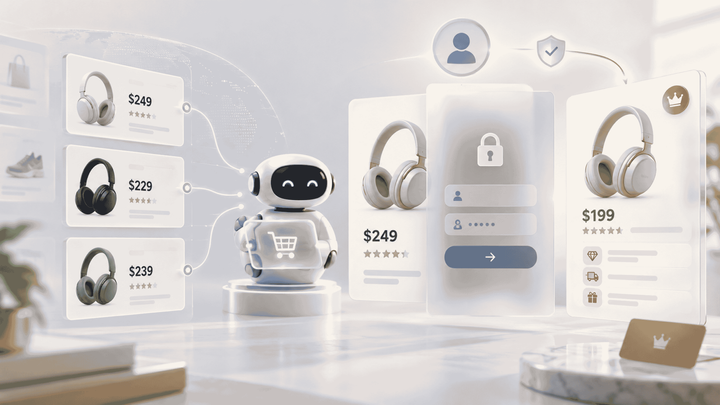
Unified Memory for loyalty. Alhena persists unified customer profiles and customer segments across sessions: shopper preferences, purchase history, browsing history, and behavior patterns. Each shopping journey picks up where the last ended, building brand loyalty and customer lifetime value through your CRM integration. (How Unified Memory works.)
Ai powered nudges and push notifications for cart abandonment. Dynamic, targeted prompts and push notifications fire based on shopper behavior across your ecommerce store. On product pages, Alhena auto-generates personalized FAQ nudges to engage shoppers, reducing cart abandonment and optimizing the online shopping customer experience at scale.
Agentic checkout. The AI adds items to cart, pre-fills checkout. Zero friction between intent and conversion.
For Shopify and enterprise ecommerce platforms, install is a single snippet. Enterprise teams connect through integrations that sync first party data and purchase history from your ecommerce store.
ROI Framework for Your Ecommerce Personalization Stack
- High-traffic ecommerce brands: Behavioral personalization with predictive segmentation, machine learning, retargeting campaigns, and targeted discounts delivers more total revenue at scale through recommendation engines and merchandising optimization.
- High-consideration commerce (beauty, electronics, home): Conversational personalization delivers higher per-session revenue through ai powered product discovery, personalized recommendations, and customer retention optimization.
- Mid-market Shopify merchants: Conversational ecommerce personalization is the faster first move. One snippet, measurable conversion roi in weeks.
Puffy hit 63% automated resolution at 90% CSAT. (Case study.) Crocus reached 86% deflection, 84% CSAT, boosting customer retention and loyalty. (Case study.)
Use the Alhena ROI Calculator to model what personalized ecommerce shopping experiences deliver for your ecommerce store.
Start Building Your Ecommerce Personalization Stack
Don't pick the personalization stack your loudest vendor sells. If shoppers bounce during product discovery in complex catalogs, start with conversational ai powered personalization and recommendation engines. If conversion stalls on the right pages, start with behavioral personalization, retargeting, and targeted discounts. Many ecommerce brands run both stack approaches within 18 months.
Ready to see how conversational ecommerce personalization optimizes product discovery and revenue for your commerce stack? Book a demo with Alhena AI or start free with 25 conversations.
Alhena AI
Frequently Asked Questions
What is an ecommerce personalization stack?
An ecommerce personalization stack is the combination of tools and platforms ecommerce brands use to deliver personalized shopping experiences. It typically includes behavioral personalization (recommendation engines, merchandising optimization, retargeting), conversational ai powered product discovery, analytics, CRM integration, and customer segmentation. The stack connects to your ecommerce platforms like Shopify to optimize conversion and revenue across every customer journey touchpoint.
What is the difference between behavioral and conversational personalization in an ecommerce stack?
Behavioral personalization uses machine learning, browsing history, customer segments, and predictive segmentation to swap dynamic content on your ecommerce store, like tailored recommendation engines, merchandising, retargeting ads, and targeted discounts. Conversational personalization is ai powered product discovery that responds to explicit shopper intent through chat, site search, push notifications, and email. Both optimize different touchpoints in the customer journey. Most ecommerce brands run both in their personalization stack.
Which ecommerce personalization approach is better for product discovery?
For complex catalogs on ecommerce platforms like Shopify, conversational ai powered personalization typically delivers stronger product discovery and higher conversion. Shoppers with specific needs get hyper-personalized, tailored recommendations through dialogue rather than browsing static filters. Tatcha saw 3x conversion from ai powered product discovery. For simpler catalogs, behavioral personalization with recommendation engines and merchandising optimization handles product discovery well at scale.
How does Alhena AI fit into an ecommerce personalization stack?
Alhena adds ai powered conversational personalization to your existing ecommerce personalization stack. It handles product discovery, personalized recommendations, site search, cart actions, and customer support through chat, email, push notifications, and social commerce. It integrates with ecommerce platforms like Shopify and enterprise commerce systems, plus CRM and helpdesk tools. Alhena's analytics make roi measurable from day one, tracking revenue, conversion, and cart value per shopper.
How do I measure roi from my ecommerce personalization stack?
Measure roi through engaged-session analytics: track conversion, cart value, and revenue from personalized shopping interactions versus a holdout control group. Alhena's Revenue Impact dashboard provides measurable roi data including Total Add-to-Cart GMV, average cart value per shopper, and daily revenue trends. For behavioral personalization, measure conversion lift through A/B tests on recommendation engines, merchandising, and retargeting campaigns across your ecommerce store.
Can I add conversational ai powered personalization to my Shopify ecommerce store?
Yes. Shopify ecommerce brands can deploy Alhena's ai powered product discovery with a single JavaScript snippet. Catalog ingestion syncs products from your ecommerce store, helpdesk connections integrate customer segmentation data, and cart actions work natively. Most Shopify stores go live within 48 hours. The AI immediately starts delivering personalized recommendations, site search, and push notification nudges to shoppers based on preferences, purchase history, and browsing behavior.
What should ecommerce brands prioritize when building their personalization stack?
Start with the personalization approach that addresses your biggest customer journey gap. If shoppers struggle with product discovery in complex catalogs, prioritize ai powered conversational personalization and recommendation engines. If conversion stalls after product discovery, prioritize behavioral personalization, retargeting, merchandising optimization, and targeted discounts. Build loyalty through unified customer profiles and customer segmentation across your ecommerce personalization stack. Most ecommerce brands add both within 18 months.
How does unified memory improve an ecommerce personalization stack?
Unified Memory persists customer profiles and customer segments across sessions, including shopper preferences, purchase history, and browsing history. Unlike cookie-based segmentation, it creates a persistent personalization profile across channels including chat, email, WhatsApp, and push notifications. This builds loyalty and customer lifetime value by giving each shopper hyper-personalized product discovery and tailored recommendations throughout their customer journey on your ecommerce platforms.