Garden centers and outdoor retailers make up to 80% of their annual revenue in a single season, according to the University of New Hampshire Extension. When spring hits, customer inquiries spike alongside foot traffic and online orders. Support teams that handle 50 tickets a day in January suddenly face 300 or more by April. Hiring seasonal agents is expensive, slow, and rarely produces the quality your customers expect.
Customer support automation gives gardening and outdoor brands a way to handle that surge without burning through budget or burning out staff. This guide breaks down the specific challenges this vertical faces, which support tasks to automate first, and how AI-powered automation tools turn seasonal chaos into year-round consistency.
Why Gardening and Outdoor Brands Face Unique Support Challenges
Most ecommerce verticals deal with predictable, steady demand curves. Gardening doesn't work that way. Spring drives roughly 58% of annual sales for garden centers, compressing the majority of revenue (and support volume) into a 10 to 12 week window. That creates staffing problems no other vertical experiences at the same scale, and the customer experience suffers when unprepared teams handle the rush.
The Seasonal Staffing Crunch
During peak season, garden centers typically expand from 8 to 10 permanent support agents to 25 or 30 seasonal hires. Training those temporary agents on plant care, growing zones, soil compatibility, and pest control takes weeks. According to industry data, 28% of garden retailers provide no landscape management training to seasonal staff at all. The result: inconsistent answers, frustrated customers, and returned products.
Complex, Knowledge-Heavy Questions
A customer buying a jacket doesn't usually need a 10-minute consultation. A customer buying a Japanese maple for their backyard in zone 6b absolutely does. Gardening customers ask questions about sunlight requirements, watering schedules, frost hardiness, soil pH, companion planting, and pest resistance. These aren't simple FAQ lookups. They require context about the customer's location, experience level, and existing garden setup.
Post-Purchase Anxiety Drives Returns
Unlike most retail products, plants can die. That creates a unique post-purchase support burden. Customers reach out about yellowing leaves, wilting stems, and transplant shock, often within days of receiving their order. Without fast, accurate guidance, they return the product or simply never buy again. This "plant survival anxiety" is one of the biggest drivers of churn in the gardening vertical.
What Customer Support Automation Actually Looks Like in This Vertical
Customer support automation isn't about replacing your team with a chatbot that says "I'm sorry, I didn't understand that." In gardening and outdoor retail, service automation means deploying AI that understands your product catalog, your customers' growing conditions, and the seasonal context behind every question.
Modern AI customer service platforms can handle three layers of support automation:
- Tier 1: Instant answers. Order tracking, shipping status, return policies, store hours. These make up 40 to 60% of all inbound tickets in ecommerce and are perfect for self-service automation with zero human involvement.
- Tier 2: Guided recommendations. "Which tomato variety grows best in zone 7?" or "What fertilizer works for clay soil?" AI trained on your product data, knowledge base, and horticultural guides can answer these accurately and instantly.
- Tier 3: Complex troubleshooting. A customer sends a photo of a sick plant. AI analyzes the image, cross-references symptoms with your knowledge base, and either resolves the issue or can escalate it to a specialist with full context.
The key difference between generic customer support chatbots and purpose-built solutions is depth. Generic AI chatbots might handle tier 1. A gardening-specific AI handles all three tiers, and it gets better over time as it learns from resolved tickets and customer feedback through machine learning, automatically improving over time.
Five Support Tasks Gardening Brands Should Automate First
Not every support task is worth automating on day one. Smart businesses focus on quick wins first, starting with the most common inquiries. Start with the highest-volume, most repetitive interactions and expand from there. Here's the priority order for garden and outdoor retailers:
1. Order Status and Shipping Updates
This is the easiest win. "Where's my order?" accounts for up to 30% of all support tickets in ecommerce. Connecting your helpdesk to your shipping provider (Narvar, ShipStation, or your platform's native tracking) lets AI answer these instantly. Alhena integrates with Narvar and ShipStation to pull real-time tracking data into every conversation.
2. Plant Care and Product Guidance
Gardening customers don't just want to buy. They want to succeed. Automating plant care advice (watering frequency, sunlight needs, seasonal pruning schedules) keeps customers engaged post-purchase and reduces returns caused by care mistakes. AI trained on your product guides can deliver personalized, step-by-step seasonal care instructions tailored to the customer's region.
3. Product Recommendations Based on Growing Conditions
When a shopper asks "What grows well in partial shade in the Pacific Northwest?", that question has a specific, data-driven answer. AI can match the customer's climate zone, light conditions, and experience level to your catalog in seconds. This is where customer support automation crosses into sales: a well-matched recommendation converts at a much higher rate than a generic product listing.
4. Returns and Refund Processing
Returns in gardening often involve perishable products with tight windows. Automating the returns workflow (eligibility check, label generation, refund initiation) speeds up resolution and frees agents for conversations that actually need human judgment. For a deeper look at this topic, see our guide on how AI automates returns and refunds in ecommerce.
5. Seasonal Campaign Support
Spring sales, Black Friday, holiday gift guides for outdoor enthusiasts: these promotions drive traffic spikes that overwhelm support teams. Pre-building automated responses for campaign-specific FAQs ("Does the spring sale include live plants?" or "Can I use my coupon on power tools?") keeps resolution times low during your busiest periods. Brands that prepare for these surges with AI report handling peak season without extra hires.
How Alhena AI Powers Customer Support Automation for Garden and Outdoor Retailers
Alhena AI's Support Concierge was built for ecommerce verticals where product knowledge matters. That makes it a natural fit for gardening and outdoor brands, where every conversation involves product-specific context that generic support tools can't handle.
Plant Matchmaker and Conversational Discovery
Alhena's gardening and care solution includes a Plant Matchmaker feature that recommends plants and tools based on the customer's climate and expertise level. Shoppers describe their gardening goals in plain language, and the AI instantly identifies suitable plants, tools, and care products from your catalog. This isn't keyword matching. It's contextual understanding that reduces buyer disappointment and lifts conversions.
AI Care Companion for Post-Purchase Support
After the sale, Alhena delivers step-by-step seasonal care guidance and troubleshooting. When a customer asks why their hydrangea isn't blooming, the AI provides a specific diagnosis based on your product data, not a generic article pulled from the internet. This is grounded, hallucination-free AI that only references verified information from your knowledge base.
Real-Time Plant Diagnostics
Customers can share photos of plant issues, and Alhena analyzes them to identify problems and recommend solutions. This kind of visual troubleshooting sets your brand apart from competitors still relying on email forms and 48-hour response times.
Omnichannel Coverage Across Every Touchpoint
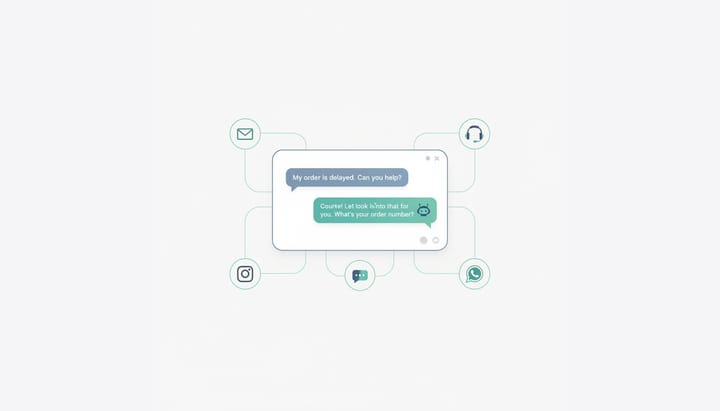
Your customers don't just contact you through your website. They message on Instagram, send emails, and increasingly reach out on WhatsApp. Alhena's social commerce and email automation work across all these channels from a single platform. One AI, consistent answers, every channel. That's what conversational AI should deliver.
Seamless Helpdesk Integration
Already using Freshdesk, Zendesk, or Gorgias? Alhena connects directly to your existing helpdesk without requiring you to rip and replace anything. The AI handles frontline conversations, and when a ticket needs a human, it routes to the right live agent with full context attached. Human agents focus on complex cases while AI handles the rest. Integrations with Freshdesk, Zendesk, and Gorgias are all pre-built and go live in days, not weeks.
Real Results: How Crocus Cut Support Costs with AI
Crocus, a leading UK online gardening retailer with over 20 years in business and consistent 10 to 12% annual growth, faced the exact challenges described above. During peak seasons, their support team ballooned from 8 to 10 agents to 25 or 30 seasonal hires. Plant care inquiries required specialized horticultural expertise, and agents relied heavily on catalogs and guides to answer questions accurately.
After evaluating alternatives including Freshdesk's Freddy AI, Crocus chose Alhena because it offered capabilities well beyond basic chatbot functionality. The implementation started with plant care email tickets. Alhena was trained on Crocus's product guides and FAQs, integrated into their Freshdesk instance, and gradually expanded as the team built confidence.
The results speak for themselves:
- 86% deflection rate for incoming support tickets
- 84% CSAT score, up from under 80% before implementation
- 3.7% ticket reopen rate, confirming response quality
- 95.59% first responder rate for resolved tickets
"We're treating Alhena like an agent. It's been a great experience because customers sometimes don't even realize they're interacting with AI," said Ben O'Donnell, Head of Customer Service at Crocus.
Crocus is now expanding to website chat integration, order tracking automation, and AI-powered review responses, building toward a future where most support runs through AI. For gardening brands watching this space, Crocus proves that customer support automation doesn't sacrifice quality. It improves it.
Choosing the Right Customer Support Automation Software
The market for customer support automation software is crowded, but not every tool fits a gardening or outdoor brand. Here's what to look for when evaluating options in 2026:
Product Knowledge Depth
Generic chatbots work fine for "What's your return policy?" They fail at "Will this clematis survive zone 5 winters if I plant it against a south-facing wall?" Your automation platform must ingest and reason over detailed product data, including growing guides, care instructions, and compatibility information.
Ecommerce-Native Architecture
Tools like Zendesk AI and Intercom Fin are support-first platforms. They handle ticket deflection well, but they weren't designed to drive revenue. For gardening brands, every support interaction is a sales opportunity: recommending a companion plant, suggesting a better soil mix, or upselling a care kit. Alhena's Shopping Assistant turns these moments into conversions with features like agentic checkout that populates carts directly from the conversation.
Seasonal Scalability
Your automation tool needs to handle 5x volume spikes without degradation. Ask vendors about their infrastructure during peak periods. AI that slows down or fails during your spring rush is worse than no AI at all. Gartner projects that generative AI in contact centers will cut agent labor costs by $80 billion by 2026.
Integration with Your Existing Stack
If you run Shopify or WooCommerce, your automation tool should connect natively to your store, your helpdesk, and your shipping providers. Alhena deploys in under 48 hours with no dev resources required, connecting to your ecommerce platform, CRM, and helpdesk systems through pre-built integrations.
Analytics and Revenue Attribution
You can't improve what you can't measure. Look for built-in analytics that track deflection rate, CSAT, resolution time, performance metrics, and (critically) revenue influenced by AI conversations. These insights help you identify which workflows are working and where to improve. Alhena includes revenue attribution dashboards that show exactly how much each AI-assisted conversation contributes to sales. Use the ROI calculator to estimate your potential savings before committing.
Key Takeaways
- Gardening and outdoor brands face extreme seasonal support swings that make traditional staffing models expensive and inefficient.
- Customer support automation handles 40 to 60% of routine inquiries instantly, freeing agents for complex, high-value conversations.
- AI trained on horticultural product data can answer plant care, growing zone, and compatibility questions with accuracy that matches (or exceeds) seasonal hires.
- Crocus achieved 86% deflection and 84% CSAT using Alhena AI, while reducing seasonal hiring costs.
- The right automation software is ecommerce-native, not a repurposed IT help desk. It should integrate with your store, your helpdesk, and your shipping stack.
- Every support conversation in gardening is a sales opportunity. Choose a platform that converts, not just deflects.
Ready to see how customer support automation works for your gardening or outdoor brand? Book a demo with Alhena AI to see the platform in action, or start for free with 25 conversations to test it on your own catalog.
Frequently Asked Questions
What is customer support automation for gardening brands?
Customer support automation is a technology system that uses AI to handle common customer inquiries. Automated customer service tools manage these interactions like order tracking, plant care guidance, and product recommendations without human agent involvement. For gardening brands, this includes answering questions about growing zones, watering schedules, and soil compatibility using AI trained on your product catalog and horticultural data.
How does AI handle plant care questions accurately?
AI chatbot platforms like Alhena ingest your product guides, care instructions, and growing data to build a knowledge base specific to your catalog. When a customer asks about a plant, the AI cross-references their location, the plant's requirements, and your documentation to deliver a grounded, accurate answer. Alhena's hallucination-free approach means it only cites verified information from your data.
Can customer support automation handle seasonal volume spikes?
Yes. AI-powered support scales instantly without additional hiring. Crocus, a UK gardening retailer, achieved an 86% deflection rate using Alhena AI, which allowed them to handle peak spring volume without expanding their seasonal team from 8 to 30 agents. AI handles the routine 40 to 60% of tickets automatically while routing complex issues to specialists.
What customer support tasks should gardening brands automate first?
Start with order status and shipping updates (up to 30% of all tickets), then plant care and product guidance, product recommendations based on growing conditions, returns processing, and seasonal campaign FAQs. These five categories cover the highest-volume, lowest-complexity interactions that deliver the fastest ROI.
How does Alhena AI compare to Zendesk AI or Gorgias for garden centers?
Zendesk AI and Gorgias are support-first platforms that handle ticket deflection well but weren't built to drive revenue. Alhena is purpose-built for ecommerce with a focus on sales, offering features like a Plant Matchmaker, agentic checkout, and revenue attribution analytics. For gardening brands, Alhena's product knowledge depth and conversational discovery outperform generic helpdesk AI.
How long does it take to set up Alhena AI for a gardening store?
Alhena deploys in under 48 hours with no dev resources required. The platform connects to your Shopify, WooCommerce, or Magento store and your helpdesk (Freshdesk, Zendesk, Gorgias) through pre-built integrations. Crocus started with plant care email tickets and gradually expanded as their team built confidence in the AI's accuracy.
Does customer support automation reduce CSAT scores?
No, when implemented correctly, it improves them. Crocus saw their CSAT score rise from under 80% to 84% after deploying Alhena AI. The key is using AI that provides accurate, contextual answers rather than generic responses. A 3.7% ticket reopen rate at Crocus confirms that customers get the right answer the first time.
What ROI can gardening brands expect from support automation?
ROI depends on your ticket volume and seasonal staffing costs, but the numbers are significant. Reduced seasonal hiring, faster resolution times, and higher CSAT all contribute. Gardening brands typically see 50 to 70% of routine tickets automated within the first month. Use Alhena's ROI calculator at alhena.ai/roi-calculator to estimate savings based on your specific volume.