Intercom's Fin AI agent handles support automation well, but its $0.99-per-resolution pricing and limited e-commerce sales features push many online brands to look elsewhere. If your monthly AI spend keeps climbing while your conversion rate stays flat, you're not alone. A growing number of e-commerce teams are searching for intercom alternatives that balance customer service automation, sales, and cost control.
This customer support guide compares nine of the best Intercom Fin AI alternative options for 2026 across pricing, key features, integrations, and ideal use cases. Whether you run a Shopify store or manage enterprise support across multiple channels, you'll find a better option that fits your stack and budget.
Why E-commerce Brands Are Switching from Intercom Fin AI
Intercom built Fin as a general-purpose support AI, and it does that job respectably. The problem? Most e-commerce brands using a help desk don't just need ticket deflection. A basic ticketing system is not enough. They need an AI that drives revenue, handles order inquiries, and guides shoppers toward checkout.
Three pain points keep coming up in conversations with brands moving away from Fin:
- Unpredictable costs at scale. At $0.99 per resolution with a 50-resolution monthly minimum and no volume discounts, a store handling 10,000 AI resolutions per month pays nearly $10,000 just for the AI layer, on top of seat-based plans starting at $29/month.
- No native sales capabilities. Fin can answer questions and close tickets, but it can't recommend products based on browsing behavior, populate carts, or pre-fill checkout. For online retailers, that's a missed opportunity on every conversation.
- Complex setup for e-commerce workflows. Connecting Fin to Shopify order data, returns policies, or inventory feeds requires custom API work. Many mid-market brands don't have the engineering resources to maintain those integrations.
According to Gartner Peer Insights, e-commerce-specific AI tools now outperform general-purpose bots on customer satisfaction and revenue per conversation. That shift is driving the demand for AI chatbots built specifically for online retail.
What to Look for in an Intercom Alternative
Before diving into specific platforms, here's a quick checklist. The right alternative should cover most of these:
- AI accuracy and grounding. Does the AI provide answers from verified product data, or rely on basic self-service FAQs that hallucinate? For e-commerce, wrong product info means lost sales and returns.
- E-commerce integrations. Native ability to integrate with Shopify, WooCommerce, Magento, and helpdesks like Zendesk or Freshdesk matter more than a long list of generic integrations.
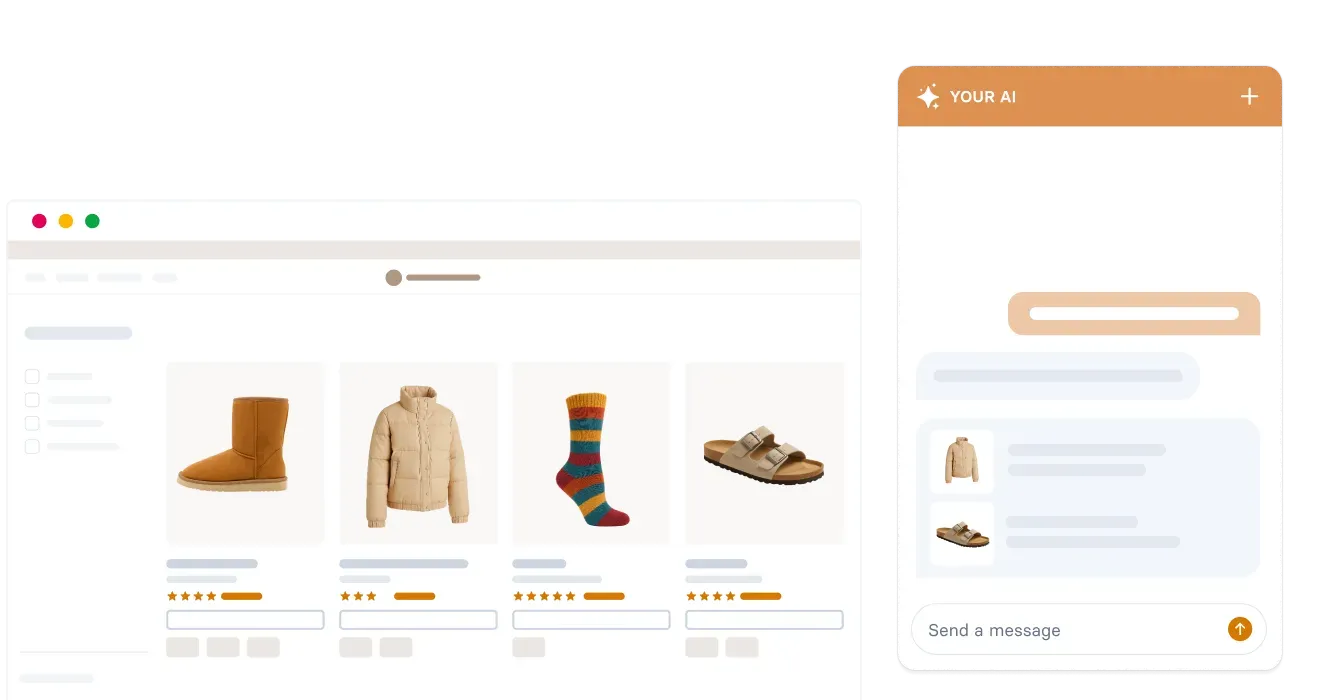
- Revenue-driving features. Product recommendations, cart actions, checkout nudges, and upselling within conversations separate sales-focused AI from support-only tools.
- Omnichannel coverage. Customers reach out via live chat, email, Instagram DMs, WhatsApp, and phone. Your AI should meet them everywhere.
- Transparent pricing. Per-resolution fees can spiral. Look for models that give cost predictability as you scale.
- Speed of deployment. Some platforms take weeks of engineering time and cross-team collaboration. Others go live in days.
9 Best Intercom Alternatives in 2026
1. Alhena AI: Best for E-commerce Sales and Support
Alhena AI is purpose-built for e-commerce, and that focus shows in every feature. While Intercom Fin treats product questions like support tickets, Alhena's Product Expert Agent guides shoppers through personalized product discovery, compares different options, and pushes them toward purchase. The Order Management Agent handles post-purchase inquiries like tracking, returns, and exchanges without human intervention.
What sets Alhena apart from every other platform on this list is agentic checkout. The AI can populate carts, apply discount codes, and pre-fill checkout fields directly within the conversation. Tatcha, the luxury skincare brand, saw a 3x conversion rate and 38% AOV uplift after deploying Alhena, with 11.4% of total site revenue attributed to AI conversations.
Alhena is also hallucination-free, grounding every response in verified product catalogs, help center content across multiple channels, and order data. It deploys in under 48 hours with no developer resources needed.
Pricing: Free plan with 25 conversations. Pro and Enterprise tiers with volume-based pricing. See current pricing.
Key features:
- Two specialized agents (Product Expert + Order Management)
- Agentic checkout with cart population and discount application
- Hallucination-free responses grounded in verified data
- Omnichannel: web chat, email, Instagram DMs, WhatsApp, voice AI
- Built-in revenue attribution analytics
- 48-hour deployment, no dev resources needed
Integrations: Shopify, WooCommerce, Salesforce Commerce Cloud, Magento, Zendesk, Freshdesk, Gorgias, Intercom, HubSpot, Klaviyo, and more.
Best for: E-commerce brands that want AI to drive revenue, not just deflect tickets. Especially strong for beauty, fashion, and home furnishing brands on Shopify or WooCommerce.
2. Zendesk AI: Best for Enterprise Ticket Workflows
Zendesk is the largest name in customer support software, and its AI agents have improved significantly. The platform shines for enterprises that already live inside the Zendesk ecosystem and need advanced ticketing workflows, ticket management, SLA management, and compliance features.
Zendesk AI's automated resolutions cost $1.50 per resolution on committed plans or $2.00 on pay-as-you-go. That's 50% to 100% more expensive than Intercom Fin per resolution, though Zendesk includes a small number of free automated resolutions per agent. The Advanced AI add-on costs an additional $50 per agent per month.
Pricing: Suite plans start at $55/agent/month. AI resolutions at $1.50-$2.00 each. Advanced AI add-on at $50/agent/month.
Key features: AI agent for ticket deflection, intelligent triage, agent copilot, knowledge base integration, advanced performance reporting and deep ticketing functionality.
Integrations: 1,500+ apps including Shopify, Salesforce, Slack, Jira.
Best for: Large enterprises with complex ticketing needs and existing Zendesk investments. Not ideal for e-commerce brands that need sales-driven AI. For a deeper comparison, see our Zendesk AI alternatives guide.
3. Freshdesk (Freddy AI): Best Budget-Friendly Option
Freshdesk offers the most accessible entry point on this list. Its free plan supports up to 10 agents, and the Freddy AI chatbot uses session-based pricing at $100 per 1,000 sessions, a model that tends to be cheaper than per-resolution billing at moderate volumes.
Freddy AI handles routine inquiries and can draft responses for agents, but it lacks e-commerce-specific features like product recommendations or cart actions. The AI copilot costs $29 per agent per month, and Pro/Enterprise plans include 500 free AI sessions to get started.
Pricing: Free plan for up to 10 agents. Paid plans from $15/agent/month. Freddy AI sessions at $100/1,000 sessions. AI Copilot at $29/agent/month.
Key features: Freddy AI chatbot, agent copilot, automated ticket routing, canned responses, SLA management.
Integrations: Shopify, WooCommerce, Slack, Salesforce, Jira, WhatsApp.
Best for: Small to mid-size teams that need affordable help desk software with basic AI automation. Read our Alhena AI vs Freddy AI comparison for a detailed breakdown.
4. Tidio (Lyro AI): Best for Small Stores on a Budget
Tidio is popular among small Shopify and WooCommerce stores for its easy setup and visual chatbot builder with customizable templates. Its AI agent, Lyro, can handle common customer questions and learn from your FAQ content. The interface is clean, and you can get started without technical knowledge.
The catch is that Lyro and Flows (automation builder) are billed separately from the base plan, often doubling your total cost. Lyro starts at $39/month for 50 conversations, which means costs ramp up fast for stores with higher traffic. Lyro also doesn't do product recommendations or cart actions.
Pricing: Free plan available. Starter at $29/month. Lyro AI add-on from $39/month for 50 conversations. Growth plans from $59/month.
Key features: Lyro AI chatbot, visual flow builder, live chat, visitor tracking, email marketing.
Integrations: Shopify, WooCommerce, WordPress, Instagram, Messenger, WhatsApp.
Best for: Small e-commerce stores with low conversation volume that need a simple chatbot without heavy configuration.
5. Gorgias: Best Helpdesk for Shopify Support
Gorgias built its name as the go-to helpdesk for Shopify merchants, and it delivers on that promise. The platform pulls in Shopify order data natively, so agents (and the AI) can see purchase history, process refunds, and edit orders right from the ticket view.
Gorgias AI Agent interactions cost $0.90-$1.00 each, and each AI interaction also counts as a helpdesk ticket toward your volume limit. That double-billing structure can make costs unpredictable. The AI handles common questions well but doesn't guide shoppers through product discovery or drive upsells the way a purpose-built AI shopping assistant would.
Pricing: Starts at $10/month for 50 tickets. AI interactions at $0.90-$1.00 each (also count as tickets).
Key features: Deep Shopify integration, macros, rules engine, AI automate, revenue statistics.
Integrations: Shopify, BigCommerce, Magento, Instagram, Facebook, Klaviyo, Yotpo, Recharge.
Best for: Shopify-first brands focused on support efficiency. For a head-to-head comparison, see our Alhena vs Gorgias Automate breakdown.
6. Help Scout: Best for Small Teams That Value Simplicity
Help Scout recently moved to contact-based pricing, which means you pay based on the number of unique customers you help each month rather than per agent seat. This model rewards efficiency and makes it affordable for growing teams.
Help Scout's AI features include AI Assist (included in paid plans), AI Summarize, and AI Answers at $0.75 per resolution. The platform is clean, approachable, and well-suited for teams that don't want the complexity of Zendesk or Intercom. It lacks e-commerce-specific features, though, so product recommendations and cart actions aren't part of the package.
Pricing: Free plan for 50 contacts/month. Standard at $50/month for 100 contacts. Plus at $75/month. AI Answers at $0.75/resolution.
Key features: Shared inbox with chat widget, Docs knowledge base, AI drafts, AI answers, Beacon chat widget, customer surveys.
Integrations: Shopify, HubSpot, Salesforce, Jira, Slack, Zapier.
Best for: Small teams (under 20 agents) that prioritize simplicity and don't need deep e-commerce AI capabilities.
7. Ada: Best for Enterprise-Scale Automation
Ada targets large enterprises with high ticket volumes. The platform can automate a significant percentage of customer conversations across channels, and it supports complex branching logic for resolution workflows.
The trade-off is accessibility. Ada doesn't publish pricing publicly, and contracts typically start around $30,000 per year, with median enterprise deals landing around $70,000. There's no free trial, and getting started requires a sales process. For enterprise teams with the budget, Ada delivers strong automation, but it's overkill for most mid-market e-commerce brands.
Pricing: Custom pricing starting around $30,000/year. Per-resolution fees range from $1.00-$3.50.
Key features: AI agent with multi-step reasoning, proactive messaging, multilingual support, advanced analytics.
Integrations: Salesforce, Zendesk, Shopify, Oracle, SAP, custom APIs.
Best for: Large enterprises handling 100,000+ monthly conversations that need high automation rates and can commit to annual contracts.
8. Kustomer: Best for Unified Customer Timeline
Kustomer's standout feature is its customer timeline view, which stitches together every interaction across email, live chat, SMS, WhatsApp, Instagram, Facebook, and voice into one continuous thread. For brands that deal with repeat customers across multiple channels, this context makes support faster and more personal.
The platform's AI features include automated responses, intent detection, and suggested replies. Pricing isn't public, but plans reportedly start around $89/agent/month. Kustomer was acquired by Meta and later went independent again, which created some uncertainty in the market. Read our guide on AI chatbots with Kustomer for e-commerce for more context.
Pricing: Enterprise pricing starting around $89/agent/month. Contact sales for quotes.
Key features: Unified customer timeline, omnichannel inbox, AI-powered responses, CRM-like customer profiles, customer experience workflows, workflow automation.
Integrations: Shopify, Magento, Salesforce, Slack, Jira, Facebook, Instagram, WhatsApp.
Best for: Mid-market to enterprise brands that need a unified view of customers across many channels and want CRM-style customer data alongside support.
9. HubSpot Service Hub: Best for HubSpot CRM Users
If your marketing and sales teams already run on HubSpot, Service Hub keeps everything under one roof. The AI assistant handles basic support messages and allows teams to manage queries, and the platform's strength lies in connecting service data with marketing and sales pipelines.
Service Hub's AI capabilities are still maturing compared to dedicated support platforms. The chatbot builder works for simple FAQ scenarios, but it can't match the depth of AI agents on platforms like Alhena or Zendesk. That said, the unified CRM view and native connection to HubSpot Marketing and Sales Hubs create real value for teams already invested in the ecosystem.
Pricing: Free tools available. Starter at $15/seat/month. Professional at $90/seat/month. Enterprise at $150/seat/month.
Key features: Breeze AI assistant, ticketing, knowledge base, customer portal, feedback surveys, service analytics.
Integrations: Native connection to HubSpot CRM, Marketing Hub, and Sales Hub. Plus Shopify, Slack, Jira, Salesforce.
Best for: Teams already using HubSpot CRM that want a single platform for marketing, sales, and service. Other options like HelpCrunch and Olark provide simpler live chat alternatives but with limited AI. Not ideal as a standalone AI customer service solution.
Intercom Alternatives at a Glance: Feature and Pricing Comparison
Here's how the nine intercom alternatives stack up across the criteria that matter most for e-commerce brands:
| Platform | Best For | Starting Price | AI Cost Model | E-commerce Sales AI |
|---|---|---|---|---|
| Alhena AI | E-commerce sales + support | Free (25 conversations) | Volume-based tiers | Yes (agentic checkout, recs) |
| Zendesk AI | Enterprise ticketing | $55/agent/mo | $1.50-$2.00/resolution | No |
| Freshdesk | Budget-friendly helpdesk | Free (10 agents) | $100/1,000 sessions | No |
| Tidio (Lyro) | Small stores | Free plan | $39/mo for 50 chats | No |
| Gorgias | Shopify support | $10/mo (50 tickets) | $0.90-$1.00/interaction | No |
| Help Scout | Small teams | Free (50 contacts/mo) | $0.75/resolution | No |
| Ada | Enterprise automation | ~$30,000/year | $1.00-$3.50/resolution | No |
| Kustomer | Unified timeline | ~$89/agent/mo | Included in plans | No |
| HubSpot Service Hub | HubSpot CRM users | Free tools | Included in plans | No |
Which Intercom Alternative Is Right for You?
The best choice depends on your stack, team size, and what you need AI to do. Tools like Drift (now Salesloft) focus on B2B sales conversations but lack e-commerce depth. Here's a quick decision framework:
- You want AI that drives revenue, not just deflects tickets. Alhena AI is the only platform on this list with agentic checkout, product recommendations, and revenue attribution built in. It's the strongest pick for e-commerce brands on Shopify, WooCommerce, or Magento.
- You need enterprise-grade ticketing with compliance features. Zendesk is your safest bet, especially if you're already in that ecosystem.
- You're a small team watching every dollar. Freshdesk's free plan and session-based AI pricing give you room to grow without surprises.
- You run a Shopify store and mainly need support automation. Gorgias or Tidio will get you started fast, though they won't help with sales.
- You want simplicity above everything else. Help Scout's clean interface and contact-based pricing keep things straightforward.
- Your whole company runs on HubSpot. Service Hub makes sense to keep everything connected, even if the AI isn't best-in-class.
For most e-commerce brands looking to replace Intercom Fin, the key question is whether you need a support tool that handles tickets or an AI platform that sells, supports, and grows revenue. If it's the latter, Alhena AI is the clear winner, with Puffy achieving 63% automated inquiry resolution and 90% CSAT and Victoria Beckham Beauty seeing a 20% AOV increase.
Key Takeaways
- Intercom Fin AI's per-resolution pricing ($0.99/resolution) gets expensive fast, and it lacks native e-commerce sales features like cart population or product recommendations.
- Most intercom alternatives focus on support automation. Only Alhena AI combines support with revenue-driving AI (agentic checkout, product recommendations, revenue attribution).
- Zendesk AI costs even more per resolution ($1.50-$2.00) but excels at enterprise compliance and complex ticket workflows.
- Budget options like Freshdesk and Tidio work for small teams but lack the AI depth for serious e-commerce automation.
- Gorgias is strong for Shopify support but doesn't drive sales through conversations.
- The right choice depends on whether you need ticket deflection (most platforms) or AI-powered revenue growth (Alhena AI).
Ready to see how AI can drive revenue through every customer conversation? Book a demo with Alhena AI or start free with 25 conversations. You can also use the ROI calculator to estimate your savings before committing.
Frequently Asked Questions
Can I use Alhena AI with my existing Intercom setup?
Yes. Alhena AI integrates directly with Intercom's inbox, so you can layer Alhena's e-commerce AI platform on top of your existing workspace. Many brands use Alhena for conversational customer engagement while keeping Intercom for internal workflows and knowledge base management.
How does Alhena AI prevent chatbot hallucinations?
Alhena AI grounds every response in verified product catalogs, help center content, and real-time order data. Unlike general-purpose AI chatbots that rely on unverified knowledge base sources, Alhena ensures customer experience remains accurate across omnichannel touchpoints, from email marketing and WhatsApp to Messenger and SM.
What AI agent metrics should e-commerce leaders track when switching from Intercom?
Focus on cost per automated resolution, customer engagement rate within chat, conversation-to-conversion ratio, and average order value influenced by AI. Beyond ticket system deflection rates, track revenue attribution from AI-powered conversations. Platforms like Alhena AI offer built-in analytics for these, while Zendesk and Freshdesk require custom reporting or third-party integration.
Do Alhena support omnichannel customer service with a single inbox?
Most platforms consolidate email, live chat, and SM into one inbox, but depth varies. Kustomer and Alhena AI unify WhatsApp, Instagram, Messenger, voice, and email into a single customer timeline with full conversation context. Zoho Desk and Help Scout cover core channels but lack native widget customization for social platforms. For e-commerce brands managing customer engagement across multiple channels, verify that the platform supports automated message routing per channel.
What knowledge base and self-service features should e-commerce brands prioritize?
Look for AI-grounded knowledge base functionality that pulls verified product data rather than generic FAQ content. Alhena AI references live catalog and help center data to eliminate hallucinations. Zendesk and Freshdesk offer robust self-service portals with customizable help desk software, but their AI chatbots aren't natively connected to e-commerce product feeds. HubSpot Service Hub provides a basic knowledge base tied to its CRM, suitable for teams already within that ecosystem.
What should e-commerce decision makers look for in an AI-powered chat widget?
The chat widget is your storefront's first conversational touchpoint, so prioritize customizable design, fast load times, and AI chatbot depth. The best Intercom alternatives embed an AI agent that can access product catalogs, knowledge base articles, and CRM order data in real time. Look for widget functionality that supports proactive messaging, self-service deflection, and seamless live chat handoff. Platforms like Alhena AI and Tidio offer no-code widget setup, while Zendesk and Zoho Desk require more configuration to match brand engagement standards.
How dooes Alhena AI support multilingual customer service at scale?
For global e-commerce brands, evaluate whether the AI chatbot handles real-time translation or requires separate knowledge base articles per language. Intercom Fin supports multiple languages but accuracy drops on product-specific queries. Ada and Zendesk AI offer strong multilingual automation across help desk workflows. Alhena AI delivers multilingual conversational capability grounded in your actual catalog data, so product names, sizing, and specifications translate accurately. LiveAgent and Zoho Desk support multilingual help center content but rely on human agents for live chat translation across SM and Messenger channels.