The shopper of 2026 isn't browsing. They're briefing. They tell ChatGPT, "Find me a quiet humidifier under $80 that won't leak on hardwood," review three vetted options, and pick one without ever visiting a website or product page. It's outsourced commerce deliberation.
And it's happening at scale. Industry projections suggest 87% of consumers will use AI for product research by late 2026. The brands scrambling to show up in ChatGPT's product recommendations are asking the right question. But they're missing a prior one: what does the person on the other side of that AI actually want, and when do they let the agent decide?
This post profiles the AI-native shopper in AI-native commerce as a behavioral shift that changes what product attributes matter, which trust signals count, and where brands lose deals they never knew existed.
The Delegation Threshold: When Shoppers Hand Over the Decision
Users develop a delegation threshold based on two factors: how much they care about the outcome and how much effort the research takes.
Low-stakes, high-effort purchases get delegated first. Replenishable household goods, commodity electronics, and routine reorders are the sweet spot. A shopper who needs a new HDMI cable or laundry detergent has no emotional attachment to the brand. The research is tedious. An AI agent handles it in seconds.
High-stakes, identity-driven purchases stay human-led longer. A wedding dress, a first luxury watch, a nursery crib. These carry emotional weight that shoppers aren't ready to outsource. The AI might help with initial research, but the final decision stays with the buyer.
The middle ground is considered purchases: skincare routines, home furniture, and fitness equipment. Shoppers narrow 200 options to 3, then decide. This three-layer model is becoming the future buying behavior for the AI-native shopper.
The Three-Layer Buyer: Intent, Vetting, Confirmation
The AI-native shopper splits the traditional purchase funnel across two actors.
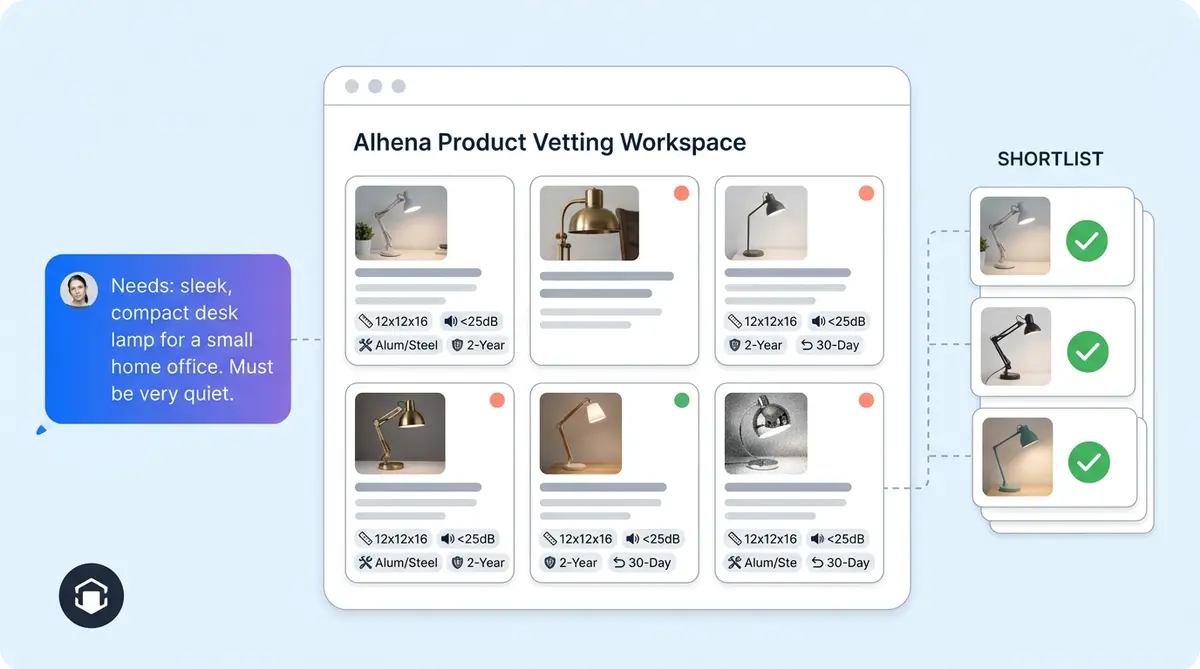
- Layer 1: Intent (human). The shopper defines what they want in natural language. "I need a moisturizer for dry, sensitive skin that doesn't contain fragrance." The brief is specific, loaded with expectations and constraints the shopper might never have typed into a search bar.
- Layer 2: Vetting (agent). The AI scans reviews, ingredient lists, return policies, and pricing across dozens of sources, eliminating options that don't meet the brief.
- Layer 3: Confirmation (human). The shopper reviews a shortlist of 2 to 4 options, often with a summary explaining why each one fits. They pick one or ask the agent to refine further.
The implication for businesses is clear: your product needs to survive Layer 2, where the agent decides. Marketing copy written to persuade humans at Layer 3 is useless if the agent already filtered you out at Layer 2. Brands operating across ChatGPT, Perplexity, and Gemini need to think about this vetting layer as the new gatekeeper.
What the Agent Asks That the Shopper Never Did
Here's where things get uncomfortable for most product teams. AI shopping agents query attributes that human shoppers rarely typed into search boxes.
An AI agent probes tank capacity, decibel rating, materials in contact with water, warranty length, return window, and exact shelf dimensions.
Missing or inconsistent data becomes a silent disqualifier. The agent simply drops you from the shortlist. You never see the lost demand. This is the invisibility tax of poor catalog quality, and most businesses don't even know they're paying it.
The fix starts with understanding what real shoppers actually ask about your products. Alhena's AI Shopping Assistant captures these conversational insights from live customer interactions, surfacing the exact customer attributes and questions that drive (or block) purchases. That data tells you which execution gaps to close, based on actual customer intent.
The Trust Stack: What AI Agents Believe
AI agents don't trust all sources equally. A rough hierarchy is emerging:
- Structured product feeds with complete, machine-readable attributes rank highest for factual claims.
- Independent third-party reviews from verified buyers carry more weight than editorial content.
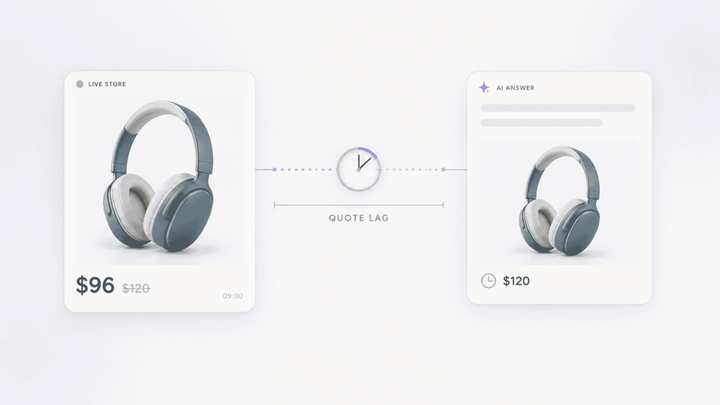
- Consistent data across retailers matters. If your price, specs, or availability differ between your site and Amazon, the agent flags the inconsistency or picks the more authoritative source.
- Community mentions in forums, Reddit threads, and social media add a layer of real-world validation.
- Brand-owned marketing copy sits at the bottom. Agents treat it as inherently biased.
We've covered how brands can monitor and improve their AI visibility across these signals in depth. The short version: consistency across sources matters more than any single optimization. If your product feed says one thing and your PDP says another, agents notice.
What This Means for Merchants
Two steps stand out.
First, audit how your catalog appears to AI agents today. Check whether ChatGPT, Gemini, and Perplexity surface accurate attributes, correct pricing, and current availability for your products. If they don't, you're losing deals at Layer 2. Alhena's AI Visibility tooling automates this, tracking how each SKU renders across AI platforms and flagging attribute gaps that cause silent disqualification.
Second, close the post-purchase loop on your own surface. When a shopper discovers you through an AI agent, the first experience might be a delivery notification. That's your chance to build a direct relationship. Brands using Alhena's e-commerce AI across chat, email, and social channels turn that post-purchase touchpoint into repeat customer revenue because brand familiarity tips the scale next time.
Tatcha saw a 3x conversion rate and 38% AOV uplift when AI-powered conversations connected product discovery to post-purchase engagement.
The Shopper You Can't See
The AI-native shopper doesn't see your homepage or your hero banner. They see the answer their agent gives them, built from structured data and attribute completeness, not from your brand story.
The work is to make sure that when the agent vets your product, the answer is accurate, complete, and on your terms. For a deeper look at how agentic commerce is changing the future of e-commerce, start with our complete guide.
Ready to see how your products appear to AI shoppers? Book a demo with Alhena AI or start free with 25 conversations.
Frequently Asked Questions
What is an AI-native shopper?
An AI-native shopper is a consumer who routinely delegates product research, comparison, and vetting to AI agents like ChatGPT, Gemini, or Perplexity. They define what they want in natural language, let the agent filter options, and confirm from a shortlist of 2 to 4 products.
Which product categories do AI-native shoppers delegate first?
Low-stakes, high-effort purchases get delegated first: household replenishables, commodity electronics, and routine reorders. Considered purchases like skincare and furniture sit in the middle, where shoppers delegate the vetting but keep the final decision. High-emotional-stakes items like luxury goods stay human-led the longest.
How does an AI agent decide which products to recommend?
AI agents evaluate structured product feeds, independent reviews, data consistency across retailers, community mentions, and brand-owned copy, roughly in that order of trust. Products with missing or inconsistent attributes get silently dropped from the shortlist without any notification to the merchant.
What is the invisibility tax in AI-powered shopping?
The invisibility tax is the revenue merchants lose when AI agents silently exclude their products due to incomplete or inconsistent product data. Unlike a low search ranking, there is no signal in analytics. The shopper never sees the product, and the brand never knows the demand existed.
How can merchants check if their products appear in AI shopping results?
Start by searching for your own products in ChatGPT, Gemini, and Perplexity. Check whether the agent surfaces accurate attributes, pricing, and availability. Alhena AI Visibility automates this process, tracking how each SKU renders across AI platforms and flagging gaps that cause silent disqualification.
Does marketing copy still matter for AI-native shoppers?
Brand-owned copy sits at the bottom of the AI agent trust hierarchy. Agents treat it as inherently biased and weight structured data, third-party reviews, and cross-retailer consistency higher. Marketing copy still matters for the human confirmation step, but it won't help you survive the agent's vetting pass.