Pet returns cost ecommerce retailers and consumers more than most realize. The U.S. pet industry hit $158 billion in 2025. Every pet store with an online presence faces this challenge, with ecommerce products bought online driving nearly all of that growth. Even at an estimated 10% return rate, that translates to billions in lost margin and wasted fulfillment spend, lost profit, and wasted margin, regardless of how generous the return policy is or how easily your policies accept refunds or cash returns. Opened food can't be restocked or reshelved, chewed toys can't be resold as merchandise, and a harness that doesn't fit a Bulldog's barrel chest goes straight to landfill.
Unlike apparel, where the buyer knows their own body and can buy with confidence, pet consumers are buying for a living animal that can't say "this collar is too tight." That gap between buyer expectations, product knowledge, and actual product fit is where ecommerce returns originate, and where AI personalization helps minimize returns by closing the loop before the package gets shipped and delivery happens, turning a risky online purchase into a confident one.
Why Pet Product Returns Are Different
Clothing and apparel carry a 25-30% return rate. Pet products land near 10%. That lower number masks the real problem: pet ecommerce returns are disproportionately costly and wasteful. Most involve opened, used, or partially consumed items that can't go back on the shelf. Each returned item items. Returned pet merchandise and supplies like a bag of dog food that triggered GI issues sits in inventory but can't be restocked. For retailers, processing a single return costs $10 to $65 per item in shipping and handling costs plus reverse logistics fees and paid labor plus, labor, fulfillment handling, and restocking.
Pet shoppers aren't returning jeans they didn't like. They're returning a product that failed their animal or arrived damaged or defective, which erodes brand trust fast, ruins the shopping experience, and damages your service reputation, and no return policy can fix that. Reducing ecommerce returns in online pet retail and improving customer satisfaction isn't just a logistics win. It's a customer loyalty, customer experience, and retention strategy.
Four Types of Buyer Uncertainty That Drive Pet Retail Returns
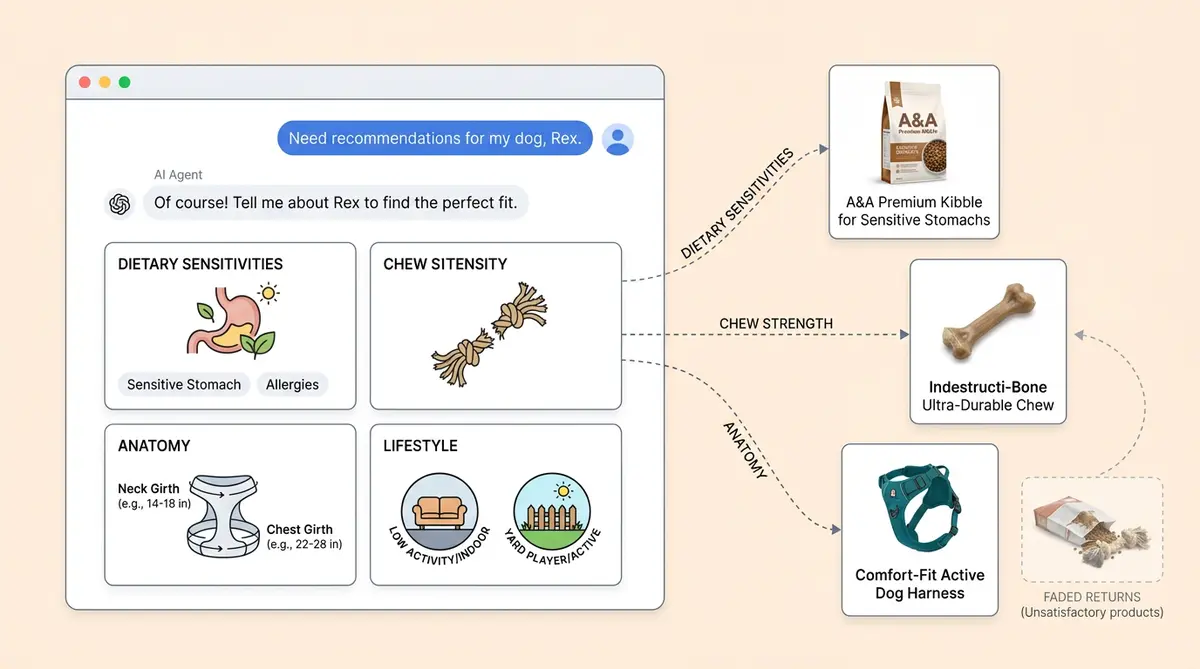
Pet retail product returns are driven by four distinct uncertainty types, each tied to the fact that the buyer and the end user are different beings. This makes online shopping for pets uniquely risky.
Biological Uncertainty
Will my dog tolerate this protein? Will this supplement interact with her medication? Food intolerances and palatability rejection are surprisingly common. Up to 24% of dogs seen at specialty practices for skin conditions have food-related issues. These adverse reactions trigger food and supplement returns that are impossible to resell.
Behavioral Uncertainty
Will my chewer destroy this toy in minutes? Will my anxious cat shred this bed overnight? Behavioral mismatches between product durability and animal temperament are a top return driver for pet products for pet toys, beds, and enrichment products. A plush toy rated for "gentle play" doesn't survive five minutes with a strong-jawed terrier.
Anatomical Uncertainty
A 60-pound Labrador and a 60-pound English Bulldog need completely different harness dimensions despite weighing the same. There's no standardized sizing across pet product brands, and breed alone isn't enough to predict fit. Actual measurements must include chest girth, neck circumference, and snout length matter far more than breed labels on a size chart.
Lifestyle Uncertainty
Is this safe for a multi-cat household? Will this work in my small apartment? An automatic feeder designed for one cat causes resource guarding in a multi-cat home. A large dog bed marketed for "all breeds" doesn't fit in a studio. These lifestyle mismatches are invisible in standard product descriptions on any website, but they're entirely predictable when AI asks the right questions.
How AI Solves Breed-Specific Sizing
Asking "What breed is your dog?" is a start, but individual variation within breeds is enormous. A personalized shopping assistant runs a conversational sizing flow that captures what shoppers actually need to know:
- Harnesses: Chest girth, neck circumference, weight, and body type
- Collars: Neck size plus head shape (brachycephalic breeds need wider, flatter collars)
- Apparel: Back length, chest girth, clothing length, and leg length for unusual proportions
A customer types: "I need a harness for my French Bulldog, 28 pounds." A basic engine shows "size small." An AI assistant asks about chest girth (Frenchies range from 18 to 26 inches) and flags that brachycephalic breeds benefit from front-clip designs. The result: a specific SKU, not a size range. For a deeper comparison, see our analysis of fit analyzers vs. size charts for return reduction.
Over time, when return reason codes map back to breed and SKU combinations, the AI keeps building a fit model that improves with every customer interaction. Alhena AI's Shopping Assistant handles exactly this type of guided product matching, capturing breed, weight, and body measurements through natural conversation, then cross-referencing those inputs against product specs. No dev resources needed to implement and deploy. It deploys in under 48 hours.
Managing Dietary Returns Before They Happen
Pet food is the largest category in online shopping for pets, and pet food returns are nearly impossible to resell, and where buyer uncertainty hits hardest. A pet parent switching from one protein to another is essentially running a biology experiment on their animal. If it fails, the product comes back. Instead of showing 200 dog food SKUs on your website, a conversational AI asks targeted questions about current dog food or pet food diet, adverse reactions, vet recommendations, and activity level, then helps shoppers find the right match by narrowing the catalog to 3-5 relevant options with clear explanations for each.
One overlooked return driver is transition shock. Switching food abruptly is a leading cause of digestive upset in most animals. An AI assistant can recommend a transition protocol at checkout: "Mix 25% new food with 75% current food for the first three days, then gradually increase." This single piece of proactive customer service can prevent a GI-driven return or order cancel entirely.
For first-time buyers, AI can route toward a trial size instead of a full bag, and then offers subscription routing after a successful trial. To minimize waste, a $12 trial bag returned costs far less in shipping and handling than a $65 full bag. Return risk goes down while customer loyalty, profitability, and lifetime value go up.
Matching Durability to Pet Behavior
Pet toys like a plush squeaky toy and a rubber chew toy serve the same category but exist for completely different animals. AI solves this with behavioral profiling, segmenting by chew behavior rather than dog size:
- Power chewers: Need rubber, nylon, or rope-based toys
- Gentle seniors: Prefer soft, lightweight options
- Anxious shredders: Need indestructible enrichment toys
An AI shopping assistant captures this behavioral profile through a few additional quick questions during the pre-purchase shopping journey. "Does your dog tend to destroy toys quickly?" "Does your dog prefer chewing, fetching, or tugging?" These inputs, combined with breed tendencies and past purchase data, let the AI minimize high-return-risk pairings before checkout.
When a customer adds a plush toy for a Pit Bull, the AI helps shoppers by suggesting a more durable alternative that lasts 5x longer. That helpful nudge prevents a return and builds customer loyalty. For more on how AI product recommendations improve revenue, see our guide on turning every interaction into revenue.
Post-purchase follow-ups add another layer. An AI-powered support concierge can check in within days after delivery: "How is Max enjoying his new toy?" If the customer reports they are not satisfied, the brand can offer an exchange, store credit, gift card, or card refund, or a quick transaction before frustration turns into a formal return request with receipt in hand covered by the return policy. Working to minimize problems at day 7 is far less costly than processing a full return at day 25.
Turning Pet Retail Returns into Training Data
Most pet companies treat returns as a cost center. The smarter ones treat them as a data asset. The pet retail feedback loop works like this:
- Capture structured return reasons: Product category, breed, weight, and reason code instead of free text
- Map patterns: Learn that Harness X gets returned 40% of the time by Frenchie owners and Bulldog owners, while Harness Y, on the other hand, has a 3% return rate
- Adjust in real time: Stop recommending high-return products for specific breeds
- Flag for review: Alert retailers and merchandising when a SKU crosses return thresholds
Each customer return makes the next recommendation smarter. The profitability goes up as the return rate trends downward over time as the automation improves. Alhena AI is built for this kind of feedback-driven personalization. Its Product Expert Agent grounds every recommendation in verified product data, so breed-specific suggestions are accurate from day one. Our complete guide on how AI automates ecommerce returns, refunds, exchanges, and order issues covers the full process.
How Alhena AI Reduces Pet Product Returns
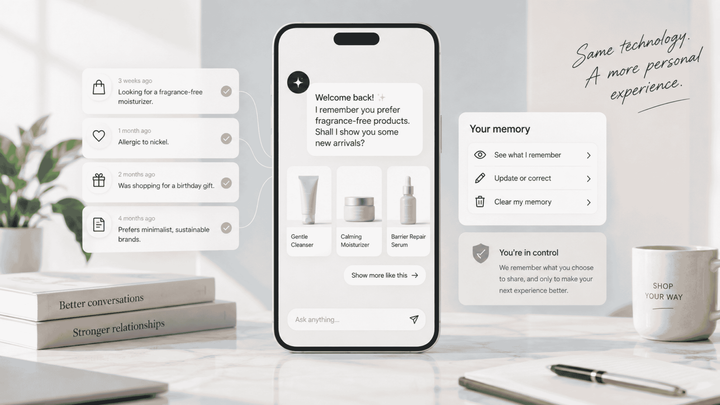
Generic chatbots and basic product filters can't capture the context that pet shoppers require. A breed dropdown and a weight slider won't tell you that a customer's Greyhound has chicken allergies and a history of slipping out of step-in harnesses. Alhena AI's Shopping Assistant builds detailed pet profiles for online shoppers through natural conversation across every channel: Instagram DMs, WhatsApp, web chat, email, and voice.
Retailers using Alhena AI have seen 3x higher conversion rates (Tatcha), 38% higher AOV, and 82% chat deflection. Puffy achieved 63% automation maintaining 90% customer satisfaction scores. Manawa cut response times from 40 minutes to 1 minute.
For pet retail brands, Alhena offers three advantages:
- Hallucination-free recommendations: Every suggestion is grounded in your actual catalog data and verified fit specs.
- Agentic checkout: Alhena populates carts, pre-fills checkout, and tracks orders and fulfillment status, turning every online purchases and the shopping experience into a confident recommendation and the purchase decision to buy.
- Revenue analytics: Built-in analytics and attribution show how much revenue and sales the AI drives. Try the ROI Calculator to estimate your impact.
Deployment is available in under 48 hours with no dev resources. Alhena connects to Shopify, WooCommerce, and helpdesks like Zendesk, Gorgias, Freshdesk, and Intercom. For a deeper look at how AI serves pet brands, see our guide on AI for pet brands.
Ready to reduce pet product returns and turn every shopping conversation into a confident purchase with fewer refund requests? Book a demo with Alhena AI or start for free with 25 conversations.