AI for Sports Ecommerce: How Personalized Product Recommendations Turn Browsers into Buyers

AI-powered personalized product recommendations for sports ecommerce brands showing activity-based gear bundling
How AI product recommendation engines match sports shoppers with the right gear based on activity, skill level, and season.

Sports shoppers don't browse casually. They're hunting for running shoes that match their gait, compression gear for their recovery routine, or a hydration vest that fits mid-race. The gap between what they need and what a generic "you may also like" suggestion offers is costing sports e-commerce brands real revenue.

AI-powered product recommendations close that gap. When a recommendation engine can analyze a shopper's activity type, skill level, body data, and purchase history, it stops guessing and starts selling, delivering faster product discovery, fewer returns, and higher cart values. This is the shift Alhena AI was built for.

Why Generic Recommendation Engines Fail Sports Brands

Most e-commerce recommendation systems rely on collaborative filtering or basic content-based filtering. Collaborative filtering looks at what similar shoppers bought, if a group of customers purchased trail shoes, it suggests those shoes to the next visitor with a similar browse history. Content-based filtering matches product attributes to stated preferences, surfacing items with similar fabric weights, cushioning types, or waterproof ratings.

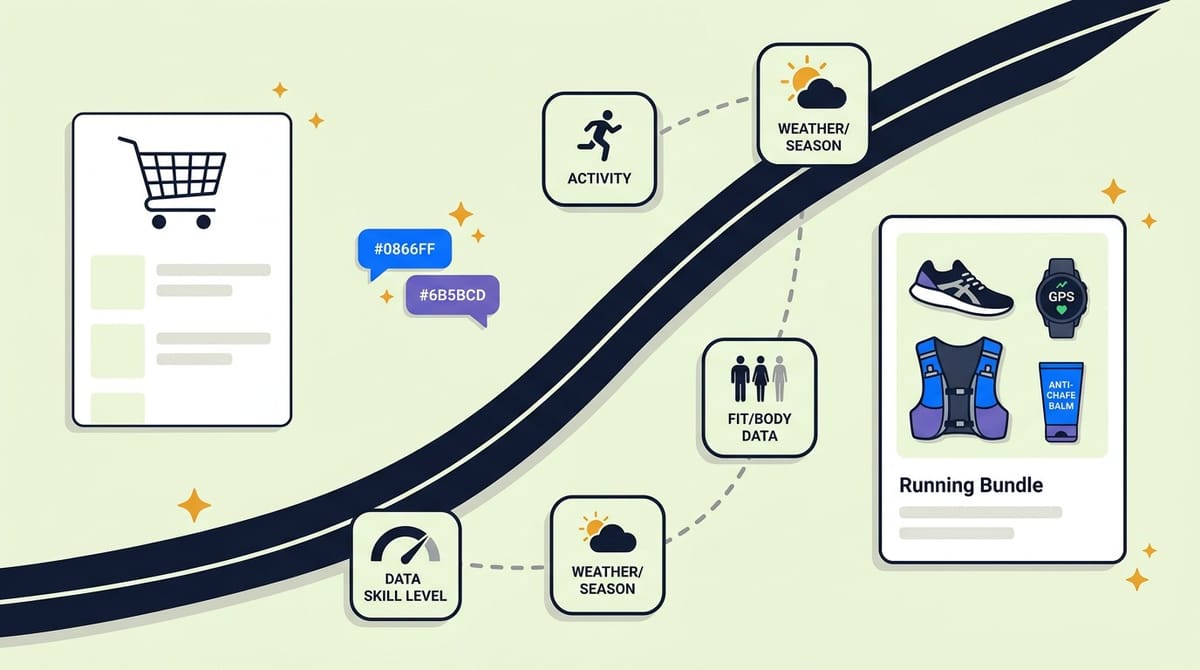
Both approaches have value. But in sports e-commerce, they miss the mark when used alone. A runner training for a half marathon doesn't just need more shoes; they need a GPS watch, electrolyte supplements, and anti-chafe balm. A beginner cyclist and an experienced triathlete browsing the same page have completely different needs. Machine learning algorithms that don't account for activity intent, skill progression, and seasonality leave massive cross-selling and upselling opportunities untouched.

Sports brands sit on some of the richest personalization signals in all of ecommerce, sport type, training frequency, body measurements, local weather, competition calendars, yet most use AI tools that treat a yoga mat the same as a pair of ski goggles.

How Alhena AI Delivers Sport-Specific Personalized Recommendations

Alhena AI is purpose-built for ecommerce, not adapted from a generic support chatbot. Its recommendation system uses two specialized agents, a Product Expert Agent and an Order Management Agent, that work together to personalize every interaction using your actual product catalog, real-time inventory, and verified pricing data.

Here's what that looks like for sports brands:

Performance Fit Finder Alhena analyzes each athlete's profile, sport, body type, and preferences to recommend the right size, fit, and product. For brands carrying hundreds of SKUs across multiple size runs, this directly reduces returns and builds purchase confidence. The AI doesn't suggest a size 11 shoe if it's out of stock. Every recommendation is grounded in verified catalog data, making hallucination-free accuracy a baseline, not a bonus.

Dynamic Personalization by Activity and Skill Level Whether a shopper is a weekend jogger or a competitive CrossFit athlete, Alhena adapts suggestions in real time. It reads browsing behavior, interaction history, and product specs viewed to predict skill level. Beginners see stability-focused, forgiving gear. Advanced athletes get lightweight, performance-optimized equipment. This personalization doesn't just boost conversion, it builds loyalty because shoppers feel understood.

Season-Ready Merchandising Alhena automatically highlights relevant gear based on athletic seasons without requiring manual merchandising rules. Marathon training season surfaces hydration packs and anti-blister socks. Ski season pushes base layers, goggles, and thermal accessories. The AI learns seasonal demand patterns from your sales data so your catalog always feels timely and relevant to every shopper who lands on your store. These sport-specific signals are why vertical-specific AI outperforms generic personalization tools.

Conversational Product Discovery Static recommendation widgets show suggestions, Alhena has conversations. A shopper can type "I need trail running shoes for rocky terrain, size 10, under $150" and the AI asks intelligent follow-up questions about cushioning preference, arch support, and weekly mileage before surfacing accurate, catalog-verified options. This guided selling approach replicates the experience of talking to an expert in-store associate, which is why shoppers who engage with Alhena's AI shopping assistant convert at dramatically higher rates than those who browse alone.

Agentic Checkout That Closes the Sale Most recommendation engines stop at "here's what we suggest." Alhena goes further. Once a shopper agrees with a recommendation, the AI populates their cart, pre-fills shipping details, and applies relevant discount codes, all within the conversation. This agentic checkout capability shrinks the path from product discovery to purchase confirmation to seconds, driving measurable lifts in average order value.

Omnichannel Recommendations That Follow the Shopper

Sports communities live on Instagram, WhatsApp, and email, not just your website. Alhena delivers consistent, context-aware personalized recommendations across web chat, email, Instagram DMs, WhatsApp, and voice. If a customer browses running shoes on your site Monday evening and messages your Instagram Tuesday morning about sizing, Alhena picks up where the conversation left off, collecting data from each interaction to make every subsequent suggestion smarter.

This omnichannel approach improves the customer experience by meeting shoppers where they already spend time, rather than forcing them to search your website again.

AI Support Concierge

Learn More

Why AI Recommendation Systems Outperform Rule-Based Personalization in Sports

Traditional rule-based systems rely on static logic, a merchandiser manually programs "if a visitor views product A, show product B." This approach can't scale across thousands of SKUs, and it completely ignores real-time behavior that signals buying intent.

Modern recommendation systems work differently. They use algorithms trained on collaborative filtering, past behavior, and transaction patterns to predict which product results will resonate with each individual. In sports ecommerce, this matters because the relationship between products is complex. A system built on collaborative filtering doesn't just know that trail runners buy hydration packs, it learns that visitors who search for trail shoes in spring and view GPS watches in the same session are likely training for an ultramarathon, and it adapts recommendations accordingly.

Alhena takes this further with generative AI capabilities layered on top of its recommendation engine. Rather than serving silent suggestions, Alhena opens a real-time conversational interaction where it asks about training goals, analyzes preferences, and tailors every product recommendation to the visitor's specific context. This personalization goes beyond what collaborative filtering alone can deliver. The algorithm accounts for sport type, skill level, body data, shopping behavior, and seasonal patterns simultaneously, creating a recommendation experience that drives discovery, builds loyalty, and turns a single transaction into a long-term customer relationship.

For brands that use AI to personalize their shopping experience, the payoff compounds. Every interaction feeds back into the platform, making each subsequent suggestion more relevant and each cross-sell or upselling opportunity more precisely timed. Visitors who receive personalized AI product recommendations don't just convert at higher rates, they return more frequently, shop across more categories, and spend more per cart. That's the difference between a system that fills a widget and one that drives sales across your entire operation.

Built-In Revenue Attribution: Know Exactly What AI Drives

One of the biggest frustrations for ecommerce leaders is measuring whether recommendations actually drive sales or just generate clicks. Alhena solves this with built-in revenue attribution analytics that track which AI conversations led to purchases, down to the individual interaction. No guesswork, no complex multi-touch models. You see exactly how much revenue your recommendation engine generates, giving you actionable insights to optimize continuously.

Getting Started Takes Less Than 48 Hours

Alhena deploys in under 48 hours with no developer resources required. It integrates directly with Shopify, WooCommerce, Magento, Salesforce Commerce Cloud, and major helpdesks like Zendesk, Gorgias, and Intercom. Your product catalog, inventory, and store policies sync automatically. Most brands see initial improvements within 30 days as the AI adapts by learning from real customer interactions and search patterns. Start free with 25 conversations, or use Alhena's ROI calculator to estimate revenue impact before committing.

Alhena AI

Schedule a Demo

Frequently Asked Questions

How does Alhena AI use machine learning to personalize recommendations for different sports?

Alhena AI's recommendation system uses machine learning algorithms that analyze each shopper's behavior, browsing history, stated preferences, and product interactions in real time. For sports ecommerce, this means the AI distinguishes between a trail runner and a road runner, a beginner yogi and a competitive gymnast, and adapts every suggestion accordingly. The system learns from each interaction, so recommendations become more accurate over time as Alhena collects data from your store's unique customer base.

Can Alhena AI's recommendation engine handle cross-selling across multiple sport categories in one session?

Yes. Alhena AI's Product Expert Agent is designed to suggest complementary products across categories based on activity intent, not just product similarity. If a shopper adds a pair of hiking boots to their cart, Alhena can recommend moisture-wicking socks, trekking poles, and a hydration pack in the same conversation. This cross-sell and upselling capability is powered by real-time catalog intelligence, so every suggestion reflects current inventory and accurate pricing.

What data does Alhena AI analyze to reduce sizing-related returns for sports apparel and footwear?

Alhena's Performance Fit Finder analyzes athlete profiles including sport type, body measurements, and fit preferences to predict the right size across different product lines. The AI cross-references this data with your product catalog specs, not generic size charts, so recommendations account for brand-specific fit variations. This approach helps sports ecommerce brands significantly reduce returns caused by incorrect sizing, one of the highest-cost pain points in online athletic retail.

How does Alhena AI adapt product recommendations when athletic seasons or weather patterns shift?

Alhena's season-ready merchandising automatically adjusts which products are prioritized in AI recommendations based on athletic calendar patterns and historical sales data from your store. When marathon season begins, the AI surfaces training shoes, hydration gear, and recovery products without any manual rule-setting. This means your product catalog always feels relevant and timely to each shopper, driving higher engagement and boosting conversion rates during peak shopping windows.

Is Alhena AI's shopping assistant accurate enough for high-consideration sports purchases where wrong recommendations erode trust?

Absolutely. Every recommendation Alhena delivers is grounded in verified data pulled directly from your product catalog, inventory system, and store policies. Alhena's hallucination-free architecture ensures the AI never suggests out-of-stock items, fabricates product specs, or invents promotions. For sports brands where a single bad recommendation can trigger an expensive return or permanent loss of customer trust, this accuracy layer is essential, and it's what separates Alhena from generative AI tools that prioritize fluency over factual correctness.

Power Up Your Store with Revenue-Driven AI