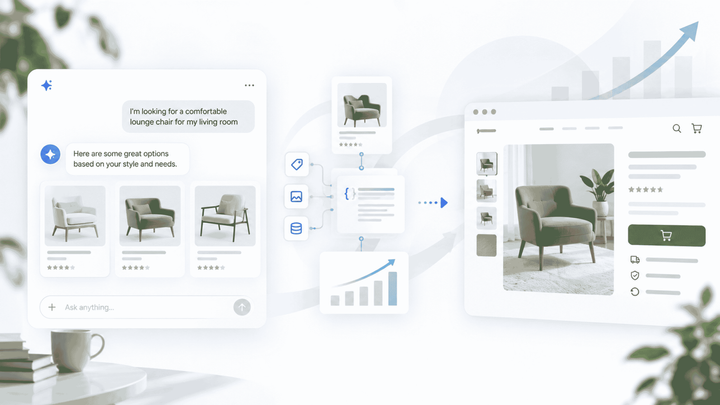
Seventy-three percent of e-commerce traffic comes from mobile devices in 2026. A growing slice of those online shoppers would rather talk than type. Voice assistants and smart speakers have trained retail buyers to expect instant, AI-powered voice interactions everywhere. Voice assistants and voice commerce are no longer a bet. Real-time AI conversations are here. It's a channel decision with real math behind it.
This post covers when voice agents make sense for e-commerce and commerce professionals, what changes for customer service operationally, and how to tell if you're ready.
When Voice Makes Sense for Online Stores
Voice isn't universally better than chat. It earns its place in specific scenarios.
Voice adds clear value when:
- Your products need explanation: supplements with dosage questions, furniture with dimension checks, and skincare with ingredient concerns. These are high-cost, high-conversion categories where personalized voice recommendations reduce returns.
- Your customers skew older or less comfortable typing on small screens
- You handle high-value orders where a conversational customer experience reduces hesitation
- Your support queue includes repeat callers who already have a phone number saved
- After-hours service calls become missed calls (85% of missed calls that hit voicemail never convert). These are among the top use cases for voice AI
Voice may not be worth the effort when
- Most interactions are simple status checks that a chat bot handles in seconds. You can automate those without voice
- Your catalog is small enough that browsing works fine without guidance
What Changes When Your AI Picks Up the Phone
The same AI agent powers both channels, but the output layer changes everything about how answers land.
Conversation Flow Needs a Different Register
Your chat agent can use bullet points, links, and product images. Voice agents can't. Answers need to be shorter, conversational, and structured for the ear. Confirmations become explicit: "I found the navy blue ottoman in size large. Should I add it to your cart?"
With Alhena Voice AI, you configure a separate voice personality and answering guidelines, independent from your text channels. Same knowledge base, same NLP pipeline, same AI, different voice delivery style.
Handoff Gets Harder
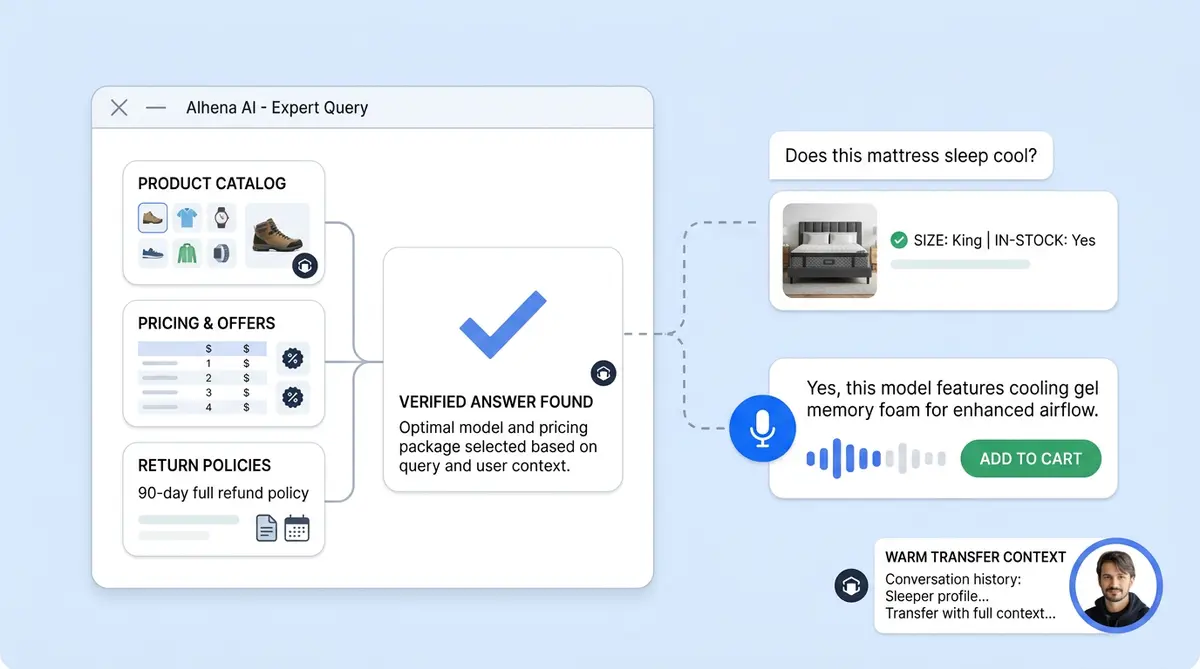
In chat, escalating to a human means passing a transcript. On a phone call, whether the caller needs tracking info, order details, or Shopify product info, they expect a warm transfer, not "Please call back and explain everything again." The AI needs to pipe the full conversation context into the helpdesk ticket before the human picks up.
Alhena handles this through structured callback tickets when agents aren't available and live transfers with transcripts attached when they are. The human agent sees what the AI already covered.
Mistakes Get Louder
A wrong price in a chat bubble is easy to correct. A wrong price spoken on a phone call erodes trust fast. Across all voice use cases, accuracy stakes are higher, which is why hallucination-free grounding matters more on this channel than any other. Every response Alhena speaks is grounded in your verified product data, the same sub-second retrieval architecture that powers chat.
The Operational Readiness Checklist
Before you turn the voice on, run through these five questions:
- Do you have a phone number to route? You can bring your own number via SIP trunking (Twilio, Telnyx, Bandwidth) or start with a vendor-issued number for pilots. This works with any e-commerce platform, including Shopify, WooCommerce, and Magento.
- Are your product descriptions voice-friendly? If your catalog reads like SEO keyword salads, it'll sound terrible when spoken. Clean product copy with accurate info improves both chat and voice accuracy.
- Is your helpdesk ready for transfers? Voice escalations need a queue to land in. If you're on Freshdesk with Freshcaller, Alhena has a native integration that routes transfers back to your queue with the AI transcript attached.
- Have you defined after-hours behavior? Service calls don't stop at 6 PM. Online shoppers expect 24/7 instant answers. Your smart AI needs clear rules: provide instant answers, create a callback ticket, answer shipping questions, or provide self-service options.
- Can you measure it separately? Voice calls should have their own CSAT tracking, resolution rates, and revenue attribution distinct from chat. Blending channels into one dashboard hides what's working.
Voice as a Retail Revenue Channel, Not a Call Center Cost
Most e-commerce retailers think of phone calls as a call center cost. That framing misses the voice commerce opportunity.
A caller asking, "Do you have this in a size 10?" is a buying signal. Smart AI tools can check inventory, confirm availability, and move the shopper through the full checkout flow during the call, turning inbound service calls into sales conversations. Unlike outbound calls from a traditional call center, these are high-intent shoppers reaching out on their own.
Alhena's Product Expert Agent handles exactly this: personalized, real-time product discovery, comparison, and cart actions across voice and text. You can automate the full flow from question to checkout.
Brands using Alhena across multiple channels see the compounding effect. Tatcha achieved a 3x conversion rate and 38% AOV uplift with AI-assisted shopping. Puffy hit 90% CSAT while automating 63% of inquiries. Voice extends that same engine to callers who prefer to speak.
Start Small, Measure, Then Scale
Week 1: Enable voice on your website widget. Let visitors tap the mic icon instead of typing. Zero telephony changes needed.
Week 2-3: Add a pilot phone number (Alhena can issue one for free) and route a subset of calls: after-hours only or a specific product line.
Week 4+: Review voice-specific analytics. Check voice conversation flow resolution rates, CSAT, and attributed revenue. If the numbers work, port your main support number via SIP trunking.
Alhena deploys in under 48 hours with no dev resources needed. No bot builder, no code. Just AI that works. Voice AI tools give you full info control, including persona, answering guidelines, and integration rules, live in the same dashboard you use for chat and email.
The Bottom Line
Voice AI for e-commerce isn't about replacing your call center or building a low-latency stack from scratch. It's about giving your existing AI agent one more way to reach online shoppers on the voice commerce channel they already prefer.
The best online stores and retail commerce brands treat voice as a renderer, not a separate product. One agent, one knowledge base, one set of guardrails, multiple ways to deliver better AI conversations and customer experience.
Ready to add voice to your AI agent? Book a demo with Alhena AI or start for free with 25 conversations.
Frequently Asked Questions
When should an e-commerce brand add voice AI?
Voice adds the most value when your products need explanation (sizing, ingredients, compatibility), your customers prefer phone calls, or you lose after-hours callers to voicemail. Brands with high-value orders or older demographics see the strongest returns from adding voice.
Does Alhena Voice AI use the same knowledge base as chat?
Yes. Alhena runs one agent across all channels: web chat, email, social DMs, and voice. The knowledge base, product catalog, and guardrails are shared. Only the delivery style differs, with voice getting its own persona and answering guidelines tuned for spoken conversation.
How does voice handoff to a human agent work?
When the AI detects a query that needs human attention, it transfers the call with the full conversation transcript attached. On Freshcaller, the transfer routes to a configured queue so the human sees what was already discussed. After hours, Alhena creates a structured callback ticket instead.
Do I need to change my phone system to use Alhena Voice AI?
Not necessarily. You can start by enabling voice on your website chat widget with zero telephony changes. For phone calls, you can bring your own number via SIP trunking (Twilio, Telnyx, Bandwidth) or use a free Alhena-issued number for pilots.
How long does it take to set up voice AI with Alhena?
Alhena deploys in under 48 hours with no dev resources. Voice configuration, including persona, answering style, and transfer rules, lives in the same dashboard you use for chat and email. Most brands start with the website mic button and add a phone number in week two.
Can voice AI actually drive revenue or is it just for support?
Voice drives revenue when the AI can check inventory, recommend products, and add items to cart during the call. Alhena's Product Expert Agent handles product discovery and cart actions on voice calls, turning inbound support calls into sales conversations.