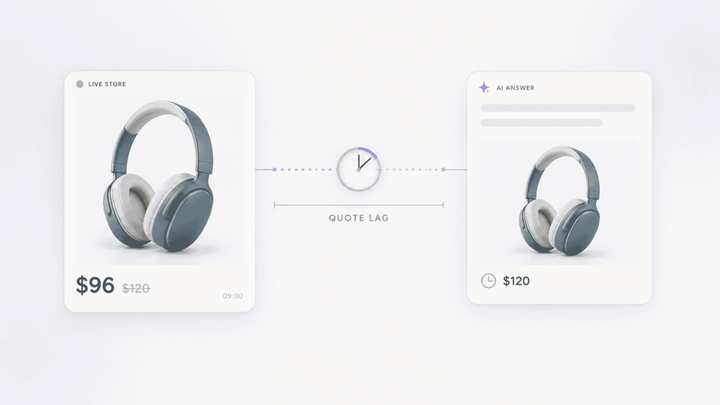
Why Ecommerce Site Search Is a Revenue Channel, Not Just a Feature
Consumers who use e-commerce site search convert at 4 to 6 times the rate of those who browse. They make up only 10 to 15 per cent of total site traffic, yet they account for up to 30 per cent of online revenue, according to Baymard Institute research. That gap between traffic share and revenue share tells you everything: your search box is your highest-intent conversion tool.
But most stores still run on basic keyword matching. A common problem: about 10 to 15 per cent of site searches return zero results, and 68 per cent of consumers leave after a failed search. The cost of a bad e-commerce site search isn't theoretical. It's lost revenue you can measure.
The good news: the e-commerce site search market has exploded in 2026. Options range from lightweight plugins to enterprise AI platforms. Below, we break down the 10 best ecommerce site search solutions, what makes each one stand out, and how to pick the right fit for your store.
What to Look for in an Ecommerce Site Search Solution
Before comparing tools, it helps to know what separates a great e-commerce site search engine from a mediocre one. Here are the six best practices and features that matter most.
- Semantic understanding: Can the search engine interpret intent, not just match keywords? A shopper typing "lightweight summer dress under $50" needs semantic search, not a keyword filter.
- Typo tolerance and synonym handling: Shoppers misspell product names constantly. Good site search auto-corrects "running shoes" and knows that "sneakers" means "trainers" in the UK.
- Product controls: Marketing teams need the ability to boost, bury, or pin products in search results without calling a developer and support testing different layouts.
- Personalization: The best tools tailor results based on browsing history, past purchases, and real-time behavior.
- Analytics and revenue attribution: You should be able to see which search queries drive revenue and which ones return zero results.
- Speed: Search results need to load in under 200 milliseconds. Anything slower loses shoppers on mobile.
Keep these best practices in mind as you read through each tool below. We scored every solution against them.
The 10 Best Ecommerce Site Search Solutions in 2026
1. Alhena AI
Best for: Stores that want an ecommerce search to actively sell, not just return results.
Alhena AI takes a fundamentally different approach to site search. Instead of a traditional search bar that returns a grid of products to show shoppers, Alhena's AI Shopping Assistant uses conversational search to understand what shoppers actually need. A customer can type "I need a moisturizer for oily skin under $30" and get a curated, specific answer grounded in your real product catalogue.
What sets Alhena apart from every other tool on this list is that it doesn't just find products. It sells them. The Product Expert Agent asks follow-up questions, compares options, and can populate carts and pre-fill checkout through agentic checkout. Tatcha saw a 3x conversion rate and 38 per cent average order value uplift after deploying Alhena. Victoria Beckham reported a 20 percent AOV increase.
Alhena is also hallucination-free. Every product answer is grounded in your verified catalog data, so shoppers never get recommendations for items you don't carry. It deploys across web chat, email, Instagram DMs, WhatsApp, and voice, and goes live in under 48 hours with no dev resources needed.
- Key strength: Conversational AI search that drives revenue, not just product discovery
- Integrations: Shopify, WooCommerce, Magento, Salesforce Commerce Cloud
- Pricing: Free tier with 25 conversations; paid plans on alhena.ai/pricing
- Best for: Mid-market to enterprise e-commerce brands in beauty, fashion, home, and wellness
2. Algolia
Best for: Developer teams that want granular control over search relevance and speed.
Algolia is the most well-known name in ecommerce site search, and for good reason. Its API-first architecture lets developers fine-tune every aspect of search ranking, from typo tolerance to custom relevance rules. Search results load in single-digit milliseconds, which makes the user experience feel instant.
The platform includes AI-powered features like predictive dynamic re-ranking and recommendations, though these require significant configuration. Algolia shines when you have a dedicated engineering team that can invest weeks in setup and ongoing optimization. For stores that don’t have dev resources, the learning curve is steep.
- Key strength: Speed and developer flexibility with deep API access
- Integrations: Shopify, Magento, WooCommerce, custom builds via REST API
- Pricing: Free tier up to 10,000 requests/month; paid plans start around $1/1,000 requests
- Best for: Tech-forward brands with in-house engineering teams
3. Bloomreach
Best for: Enterprise brands that need search, merchandising, and content personalization in one platform.
Bloomreach offers a full commerce experience cloud, and its advanced Discovery module handles site search with strong AI-driven personalization. The platform uses real-time behavioural data to reorder search results for each shopper, and its dashboard gives marketing teams direct control over product placement.
Bloomreach consistently ranks high for enterprise use cases, with brands reporting 15 to 25 per cent revenue increases from AI-driven product discovery. The downside: it's complex to implement and priced for large operations. Expect a multi-month onboarding timeline and six-figure annual contracts.
- Key strength: Full-stack commerce personalization (search + content + recommendations)
- Integrations: Salesforce Commerce Cloud, SAP, commercetools, Shopify Plus
- Pricing: Custom enterprise pricing; typically $50,000 to $200,000+/year
- Best for: Enterprise retailers with large catalogs and dedicated ecommerce teams
4. Constructor.io
Best for: Data-driven retailers focused on search-driven revenue optimization.
Constructor takes a unique approach by treating site search as a revenue optimization problem, not just a relevance problem. Its predictive AI uses real-time clickstream data, add-to-cart signals, and purchase history to rank products by commercial intent, not just keyword match.
The platform powers searches for major brands like Sephora, Petco, and Target Australia. Constructor's big differentiator is its focus on business metrics: it reports directly on revenue per search query and lets merchandisers run A/B testing on search result layouts. Setup typically takes 4 to 8 weeks with dedicated support.
- Key strength: Revenue-focused AI ranking based on real purchase data
- Integrations: Custom API, Shopify, commercetools, SFCC
- Pricing: Custom pricing; mid-market to enterprise range
- Best for: High-volume retailers with strong data infrastructure
5. Klevu
Best for: Mid-market Shopify and Magento stores that need AI search without enterprise complexity.
Klevu (now part of Athos Commerce) delivers AI-powered semantic search with native multi-language support, making it a strong pick for international e-commerce brands. The platform handles natural language product search queries well, offers smart product tools, and integrates natively with Shopify and Magento.
Klevu sits in a sweet spot between the simplicity of plugins and the power of enterprise platforms. Its pricing is more accessible than advanced platforms like Bloomreach or Constructor, and setup takes days rather than months. The trade-off is fewer advanced personalization features compared to the enterprise tools above.
- Key strength: AI semantic search with multi-language support at mid-market pricing
- Integrations: Shopify, Magento, BigCommerce, custom via API
- Pricing: Starts around $449/month for smaller catalogs
- Best for: International mid-market brands on Shopify or Magento
6. Coveo
Best for: Enterprise brands that need unified search across e-commerce, support, and content.
Coveo is an enterprise AI platform that connects site search with customer support search, knowledge base search, and content search into a single relevance engine. It uses machine learning algorithms to personalize results and provides advanced analytics on search behavior.
Coveo's strength is its ability to unify search across every customer touchpoint, not just the storefront. If your organization runs Salesforce, SAP, or ServiceNow alongside your e-commerce platform, Coveo can tie them together. The complexity and cost match: this is a platform for companies with dedicated search teams and six-figure budgets.
- Key strength: Unified AI search across commerce, support, and content
- Integrations: Salesforce, SAP, ServiceNow, Sitecore, Adobe Commerce
- Pricing: Enterprise custom pricing; typically $60,000+/year
- Best for: Large enterprises with complex multi-platform tech stacks
7. Luigi's Box
Best for: European ecommerce brands that need fast AI search deployment without heavy engineering.
Luigi's Box is a European site search solution that focuses on AI-driven autocomplete, product recommendations, and search analytics. The platform is popular with mid-market retailers across Europe and offers a no-code setup that gets stores live in days.
Its analytics dashboard stands out. Luigi's Box shows you exactly which searches convert, which return zero results, and where shoppers drop off. The platform handles synonyms, typos, and multi-language queries well. It's less known in North America, but it has strong traction in the EU market.
- Key strength: Fast no-code deployment with strong search analytics
- Integrations: Shopify, Magento, PrestaShop, custom via API and JS snippet
- Pricing: Starts around $99/month; scales with traffic
- Best for: European mid-market e-commerce stores
8. Clerk.io
Best for: Small to mid-size stores that want search, recommendations, and email personalization bundled together.
Clerk.io bundles e-commerce product search with recommendations, audience segmentation, and email personalization in a single platform. Its search engine uses AI to understand natural language and automatically learns from your store's sales data to improve relevance over time.
Clerk.io positions itself as a conversion-focused platform rather than a pure search tool. The bundled approach means you get search plus cross-sell recommendations without integrating separate tools. Pricing is transparent and based on usage, making it accessible for growing stores.
- Key strength: Bundled search + recommendations + email at transparent pricing
- Integrations: Shopify, Magento, WooCommerce, BigCommerce, PrestaShop
- Pricing: Pay-per-use model starting around $99/month
- Best for: SMB e-commerce brands wanting an all-in-one conversion toolkit
9. Doofinder
Best for: Small stores that want an affordable, plug-and-play site search with no technical setup.
Doofinder is the simplest tool on this list. It drops into your store with a single script tag, indexes your catalogue automatically, and delivers AI-powered search results with autocomplete, typo correction, and faceted filtering. Setup takes minutes, not days.
The platform is especially popular with smaller Shopify and WooCommerce stores that don't need enterprise features but want a significant upgrade over native platform search. Doofinder also includes basic merchandising tools and search analytics. The most common trade-off is limited customization compared to Algolia or Constructor.
- Key strength: Simplest setup on the market with solid AI search out of the box
- Integrations: Shopify, WooCommerce, Magento, PrestaShop, BigCommerce
- Pricing: Free up to 1,000 requests/month; paid plans from $35/month
- Best for: Small e-commerce stores with limited technical resources
10. Searchspring
Best for: Mid-market brands that need strong merchandising controls alongside AI-powered search.
Searchspring (now part of Athos Commerce alongside Klevu) focuses on giving product teams direct control over search results, category pages, and product recommendations. Its visual product placement editor lets non-technical users drag-and-drop product placements and set up boost/bury rules without code.
The platform pairs well with Shopify and BigCommerce and offers solid search analytics. Searchspring's sweet spot is brands where the merchandising team, not the engineering team, owns the search experience. Its AI handles relevance, while humans handle strategy.
- Key strength: Visual merchandising tools with no-code search configuration
- Integrations: Shopify, BigCommerce, Magento, custom via API
- Pricing: Custom pricing; typically $500 to $2,000+/month
- Best for: Product-led mid-market e-commerce brands
Ecommerce Site Search Solutions: Quick Comparison
Here's how all 10 solutions stack up across the criteria that matter most. Use this table to narrow your shortlist before diving deeper.
10 Best Ecommerce Site Search Solutions: At a Glance
| Solution | Best For | Search Type | Setup Time | Starting Price |
|---|---|---|---|---|
| Alhena AI | Revenue-driven conversational search | Conversational AI + agentic checkout | Under 48 hours | Free (25 conversations) |
| Algolia | Developer-first customization | API-based keyword + AI re-ranking | 2 to 4 weeks | Free (10K requests/mo) |
| Bloomreach | Enterprise full-stack personalization | AI semantic + behavioral | 2 to 4 months | $50,000+/year |
| Constructor.io | Revenue optimization at scale | AI revenue-ranked results | 4 to 8 weeks | Custom pricing |
| Klevu | Mid-market multi-language stores | AI semantic + NLP | Days | ~$449/month |
| Coveo | Unified enterprise search | AI + ML personalization | Months | $60,000+/year |
| Luigi's Box | European mid-market stores | AI autocomplete + analytics | Days | ~$99/month |
| Clerk.io | SMB all-in-one conversion | AI search + recommendations | Days | ~$99/month |
| Doofinder | Small stores, fast plug-and-play | AI autocomplete + facets | Minutes | Free (1K requests/mo) |
| Searchspring | Merchandising-led teams | AI + visual merchandising | 1 to 2 weeks | ~$500+/month |
How to Choose the Right Ecommerce Site Search for Your Store
With 10 strong options, the right pick depends on your store's size, technical resources, and what you need to search to accomplish. Here's a simple decision framework.
If you have no dev resources and need fast setup: Doofinder or Luigi's Box gets you live in minutes to days with minimal configuration. They're solid upgrades over native platform search at an affordable price.
If you're a startup or solo founder with a budget under $100/month for AI visibility monitoring: Otterly.AI (around $29/month) tracks brand citations across ChatGPT, Google AI Overviews, and Perplexity with minimal setup. Peec.AI offers deeper multi-region monitoring starting near $95/month. Neither replaces your on-site search engine, but both give early warning when AI discovery shifts affect your traffic. Our AEO guide for e-commerce covers setup step by step.
If you have a dev team and want full control: Algolia gives you the most flexibility. You can customize relevance, ranking, and UI components down to the pixel. Elastic (self-hosted) is an option if you want zero vendor lock-in, but expect significant engineering investment.
If you're mid-market and want AI without enterprise complexity: Klevu, Clerk.io, and Searchspring hit the sweet spot. They offer AI-powered semantic search with merchandising controls at price points that work for growing brands.
On-site search is only half the visibility equation. Mid-market brands should also monitor how their products appear in AI search engines like ChatGPT, Perplexity, and Google AI Overviews. Tools like Goodie AI (ecommerce-focused AEO monitoring with GA4 integration) and Writesonic GEO (query mapping and share-of-voice tracking) help you catch regressions in AI-driven product discovery on a weekly cadence. For a full breakdown of options, see our 12 Best AI Visibility Tools for Ecommerce guide.
If you're an enterprise and need full-stack personalization: Bloomreach, Constructor, and Coveo deliver the deepest AI personalization and analytics. Budget accordingly: you're looking at six-figure annual contracts and multi-month implementations.
If you want to search for that which actively drives sales and works across channels: Alhena AI is the only solution on this list that turns search into a revenue channel through conversational AI, agentic checkout, and omnichannel deployment. It's purpose-built for e-commerce sales, not just product discovery.
What about off-site AI search visibility?
Your on-site search engine controls what shoppers find inside your store. But a growing share of product discovery now starts in AI engines (ChatGPT, Gemini, and Perplexity), where shoppers ask questions and get direct product recommendations. Monitoring both surfaces is the new baseline.
AEO (Answer Engine Optimization) tools like Goodie AI and Otterly.AI track your product visibility across these AI surfaces. GEO (Generative Engine Optimization) tools like Writesonic GEO measure your share of voice in AI-generated answers. Pair your on-site search solution with one of these tools to cover the full discovery funnel. For detailed comparisons, see AEO vs GEO vs SEO: The New Search Trifecta and our GEO guide for e-commerce.
What if you run a headless or composable commerce stack?
Headless platforms like commercetools, Shopify Plus (Hydrogen), and BigCommerce decouple your storefront from your commerce backend. That gives you flexibility, but it also means your site search tool needs to connect through APIs rather than native plugins.
- Real-time catalogue sync: Does the search engine pull product, price, and inventory data through webhooks or incremental syncs? Stale data means wrong prices and ghost products in results.
- Cart and checkout handoff: Can the search tool trigger add-to-cart or checkout actions through your platform's APIs? Alhena AI's agentic checkout works across headless stacks, populating carts and pre-filling checkout without custom middleware.
- Personalization hooks: Confirm the integration can consume session and customer identity signals from your composable stack so search results stay personalized across channels.
- Native connectors vs. custom builds: Algolia, Bloomreach, Constructor, and Coveo all offer commercetools integrations. Alhena AI connects to Shopify, WooCommerce, Magento, and Salesforce Commerce Cloud with no dev resources needed.
For a deeper look at how AI search fits into MACH and composable architectures, see our MACH Architecture for Ecommerce guide and headless commerce AI architecture walkthrough.
The ROI of Better Ecommerce Site Search
Upgrading your e-commerce site search isn't just a UX improvement. It's a revenue decision. Here's what the numbers show.
Stores that move from native keyword search to AI-powered site search typically see 3 to 4x higher conversion rates among search users. Average order values climb 25 to 50 percent because better search surfaces relevant product search cross-sells and upsells in real time.
Tatcha's results illustrate the impact (see the full case study): after deploying Alhena AI's conversational search, they saw a 3x conversion rate, a 38 per cent AOV uplift, and 11.4 per cent of total site revenue attributed to AI-assisted interactions. In another case study, Puffy achieved 63 per cent automated inquiry resolution with 90 per cent customer satisfaction.
Zero-result searches are the silent revenue killer. Every search that returns "no results found" is a shopper ready to buy who you just turned away. AI-powered search engines reduce zero-result rates by 70 to 90 per cent through semantic understanding, synonym expansion, and natural language processing (NLP).
To estimate your own potential return, try the Alhena ROI Calculator. Plug in your traffic and conversion numbers, and see what a better e-commerce site search could add to your bottom line.
The Bottom Line
The best site search solution depends on your store's size, budget, and ambition. If you need a quick, affordable upgrade, tools like Doofinder and Luigi's Box deliver fast results. If you're a mid-market brand ready for AI search, Klevu and Clerk.io offer strong value. Enterprise retailers with complex needs should evaluate Bloomreach, Constructor, and Coveo.
But if you want your site search to go beyond finding products and start selling them, Alhena AI is the only tool on this list built from the ground up for e-commerce revenue. Conversational search, agentic checkout, omnichannel coverage, and hallucination-free product answers set it apart from traditional search engines. Brands like Tatcha and Victoria Beckham are already proving the results.
Ready to turn your site search into a revenue engine? Book a demo with Alhena AI or start free with 25 conversations.

Alhena AI
Frequently Asked Questions
What is ecommerce site search and why does it matter?
Ecommerce site search is the search functionality built into an online store that helps shoppers find products by typing queries into a search box. It matters because site search users convert 4 to 6 times higher than browsers and drive up to 30 percent of total revenue. A poor search experience with zero-result queries or irrelevant matches pushes high-intent buyers to competitors.
What are the best ecommerce site search solutions in 2026?
The top 10 ecommerce site search solutions in 2026 include Alhena AI, Algolia, Bloomreach, Constructor.io, Klevu, Coveo, Luigi's Box, Clerk.io, Doofinder, and Searchspring. Each serves a different store size and use case, from plug-and-play tools for small stores to enterprise AI platforms for large retailers.
How does AI-powered ecommerce site search differ from keyword-based search?
Keyword-based search only returns results when product titles or descriptions contain the exact words a shopper types. AI-powered ecommerce site search uses semantic understanding to interpret intent, handle synonyms, correct typos, apply NLP, and process natural language queries like "gift for my mom who likes hiking." AI search reduces zero-result rates by 70 to 90 percent and can personalize results based on shopper behavior.
How does Alhena AI compare to Algolia for ecommerce site search?
Algolia is a developer-first API platform that gives engineering teams granular control over search relevance and speed. Alhena AI takes a different approach with conversational AI search that understands multi-turn queries and can populate carts through agentic checkout. Algolia excels at traditional search bar experiences, while Alhena turns product discovery into guided selling across web chat, email, WhatsApp, and Instagram.
How much do ecommerce site search solutions cost?
Pricing varies widely. Free tiers are available from Doofinder (1,000 requests/month), Algolia (10,000 requests/month), and Alhena AI (25 conversations). Mid-market tools like Klevu and Searchspring range from $449 to $2,000+ per month. Enterprise platforms like Bloomreach and Coveo typically start at $50,000 to $60,000 per year with custom contracts.
Can I use an ecommerce site search solution on Shopify?
Yes. Most tools on this list integrate with Shopify, including Alhena AI, Algolia, Klevu, Doofinder, Clerk.io, Searchspring, and Luigi's Box. Alhena AI's Shopify integration deploys in under 48 hours with no developer resources needed and syncs directly with your product catalog.
What is a good conversion rate for ecommerce site search?
The average site search conversion rate is 4 to 6 percent, which is 4 to 6 times higher than the typical browse-only conversion rate of 1 to 2 percent. Stores using AI-powered search see even higher numbers. Tatcha, for example, achieved a 3x conversion rate after deploying Alhena AI's conversational search.
How long does it take to set up an ecommerce site search solution?
Setup time ranges from minutes to months depending on the platform. Doofinder installs with a single script tag in minutes. Alhena AI, Klevu, and Luigi's Box deploy in days. Algolia typically takes 2 to 4 weeks with developer involvement. Enterprise platforms like Bloomreach and Coveo can take 2 to 4 months for full implementation.
Does site search work on mobile?
Yes, and mobile is where it matters most. Over 60 percent of ecommerce traffic comes from mobile devices, and mobile shoppers rely heavily on search because browsing on small screens is harder. All 10 solutions on this list are mobile-responsive, with Alhena AI also covering mobile-native channels like WhatsApp and Instagram DMs.
How do I measure the ROI of ecommerce site search?
Track three core metrics: search conversion rate (percentage of search users who buy), revenue per search (total search-attributed revenue divided by total searches), and zero-result rate (percentage of searches returning no products). Alhena AI includes built-in revenue attribution analytics that connects search interactions directly to purchases. You can also estimate your potential return using the Alhena ROI Calculator at alhena.ai/roi-calculator.
What is AEO and how does it relate to ecommerce site search?
AEO (Answer Engine Optimization) focuses on making your products visible in AI search engines like ChatGPT, Perplexity, and Google AI Overviews. On-site search tools handle product discovery inside your store, while AEO tools monitor how AI engines recommend your products to shoppers externally. The two work together: strong on-site search data (structured catalogs, rich product attributes) feeds the signals AI engines use to cite your brand.
Which budget AEO tools work best for small ecommerce stores?
Otterly.AI (around $29/month) is the most affordable option for small stores, offering citation tracking across ChatGPT, Google AI Overviews, and Perplexity. Peec.AI starts near $95/month with more advanced multi-region and multi-engine monitoring. Both are monitoring tools, not replacements for your on-site search engine. Start with Otterly for basic visibility tracking and upgrade to Peec only if you need deeper engine coverage.
Do I need both an ecommerce site search tool and an AEO monitoring tool?
It depends on your growth stage. Every store needs a strong on-site search engine. AEO monitoring becomes important once AI search engines drive measurable traffic to your site. Mid-market and enterprise brands should run both: an on-site search solution (like Alhena AI, Klevu, or Algolia) for conversions, plus an AEO tool (like Goodie AI or Otterly.AI) to track and protect off-site AI visibility.
Which ecommerce site search tools work with headless commerce platforms like commercetools?
Algolia, Bloomreach, Constructor.io, and Coveo all offer commercetools integrations for headless commerce setups. Alhena AI connects to Shopify, WooCommerce, Magento, and Salesforce Commerce Cloud and works across headless architectures through API-based catalog sync. When evaluating any search tool for a headless stack, confirm it supports real-time inventory sync, cart/checkout API handoffs, and session-based personalization.