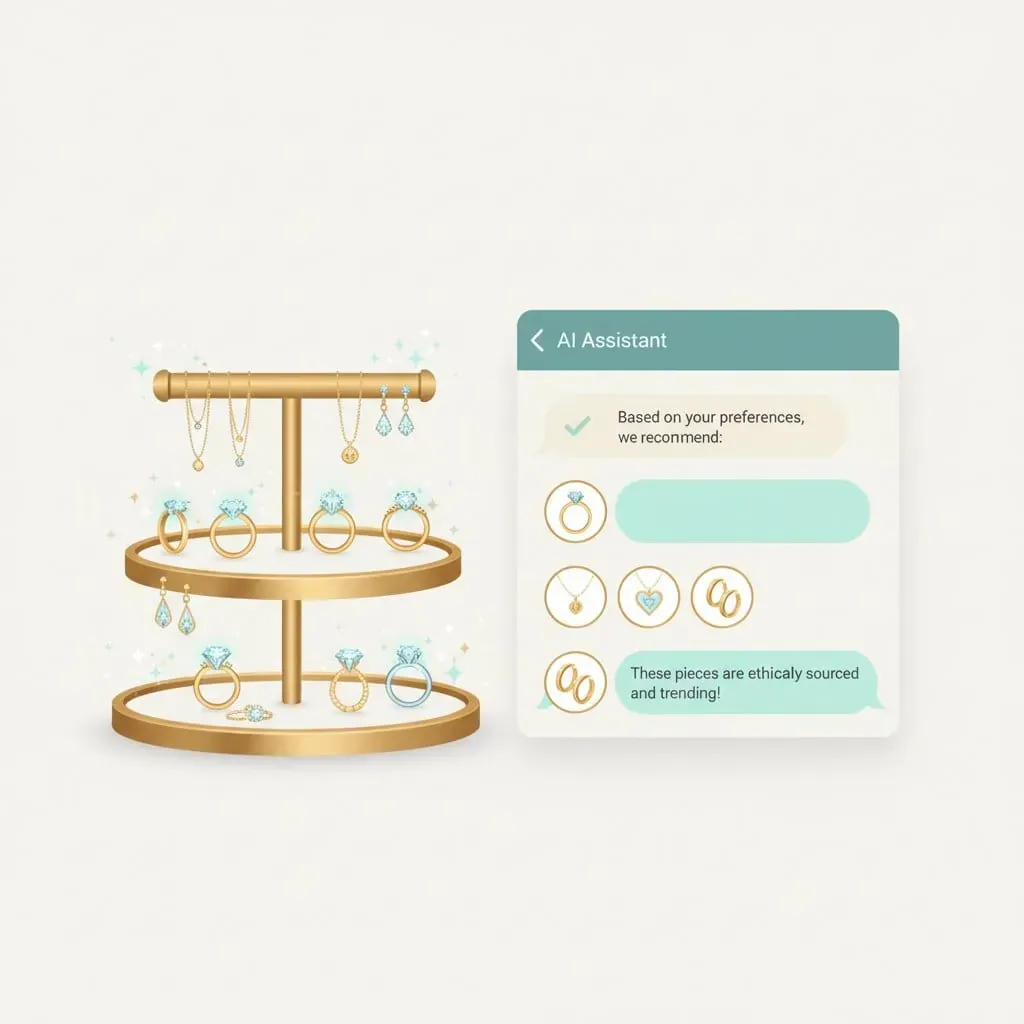
Jewelry ecommerce has the highest average order value among online retail categories at $436 per order. It also has the lowest conversion rate: just 0.9% to 1.35%. That gap between what buyers spend and how rarely they convert represents billions in lost revenue every year.
U.S. online jewelry revenue hit $16.8 billion in 2025, up 185% from pre-pandemic levels. The problem isn't demand. It's that most jewelry websites still force visitors to browse with filters and grids that don't match how people actually shop for a necklace, bracelet, or ring. AI shopping assistants are closing that gap by guiding buyers through high-stakes purchases the way an expert jeweler would in a physical jewelry store.
This guide breaks down why every jewelry business faces a conversion problem, how AI-powered personalization solves it, and what to look for in an AI shopping assistant built for jewelry brands.
Why Jewelry Ecommerce Has a Conversion Problem
Jewelry and ecommerce in the high-end category convert at less than half the rate of general retail, and cart abandonment sits between 81.7% and 84.5%, the highest among industries, per SellersCommerce. Three factors drive this.
High Price Points Create Decision Paralysis
When someone is spending $400 or more, they evaluate risk differently. Jewelry purchases are often tied to milestones, such as an engagement ring, an anniversary, or a birthday. The emotional stakes are high, the financial commitment demands confidence, and buyers struggle to choose when they can't touch or try on the piece. Even luxury jewelry buyers with clear intent abandon their bag because the online store experience can't replicate the in-store confidence.
Large Catalogs Overwhelm Browsers
A typical online jewelry store carries thousands of SKUs across metals (gold, silver, platinum, rose gold), gemstones (diamond, sapphire, emerald, moissanite), styles (classic, vintage, modern, minimalist), and price ranges. Standard filter-and-sort navigation wasn't designed for this level of complexity in jewelry design. Buyers who don't know the difference between a princess cut and an emerald cut get stuck fast. Without guided discovery, they leave.
Gift Buyers Don't Know What They Want
A significant portion of online jewelry purchases are gifts. These buyers can't articulate what they're looking for because they shop for someone else's taste. "Something nice for my wife's birthday under $500" doesn't translate into dropdown filters. Research from Immerss found that 80% of jewelry website visitors don't ask questions even when they have them, not because they don't need help, but because there's no easy way to get it at an online jewelry store.
How AI Shopping Assistants Solve the Discovery Gap
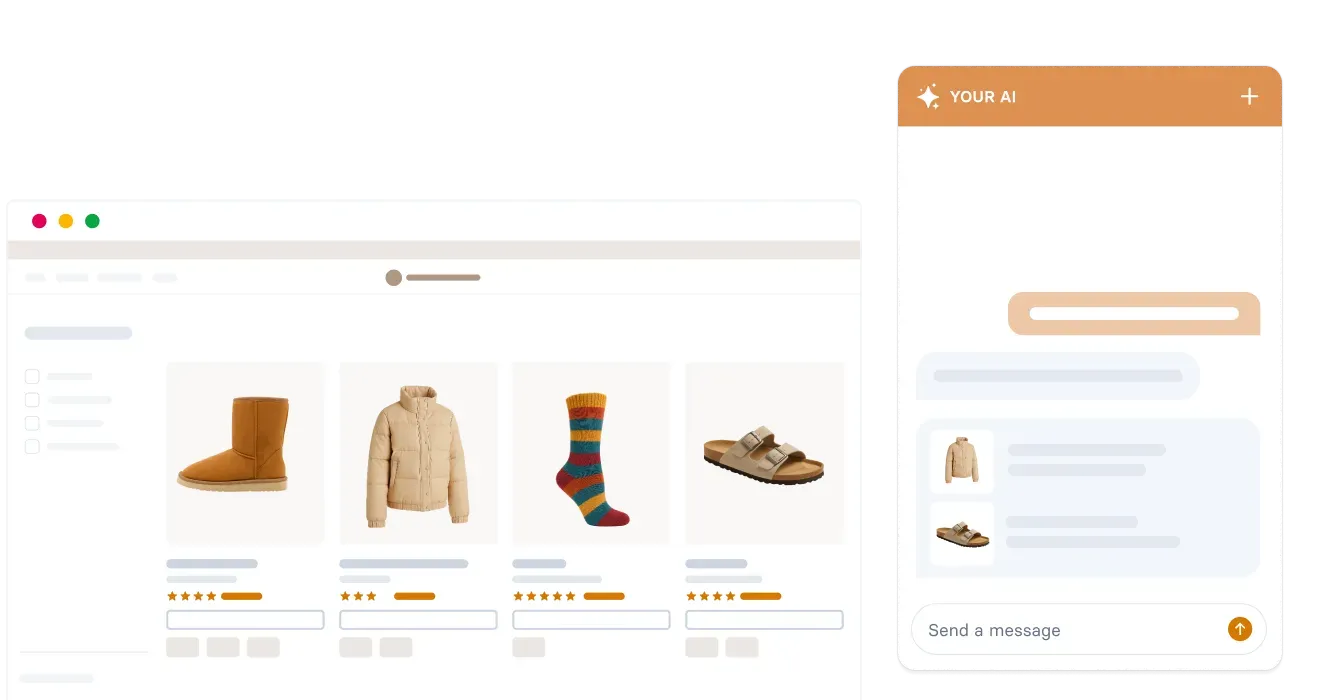
AI shopping assistants replace the rigid filter-and-browse experience with a conversation. Instead of forcing buyers to know the right terminology, the AI asks the right questions: Who is this for? What's the occasion? Do they prefer gold or silver? What's your budget? The result is a curated shortlist, not a 200-item grid.
Natural Language Replaces Clunky Filters
When a visitor types "I need a gold necklace with a small pendant for under $300," an AI assistant understands intent and surfaces matching products instantly. This is especially powerful for AI-driven product discovery, where conversational search outperforms traditional keyword search and SEO-driven navigation by matching meaning, not just metadata. For any jewelry website, this is the difference between a jewelry sale and a bounce.
Proactive Engagement Captures Silent Visitors
Most jewelry buyers browse quietly and leave. Proactive AI changes that. When the assistant detects hesitation, long dwell time, back-and-forth between two items, it can offer help: "Deciding between the sapphire and the diamond? Here's how they compare." Research shows proactive AI bots engage 45% of visitors who would otherwise leave silently and recover up to 35% of abandoned shopping sessions. Brands have demonstrated how proactive digital engagement transforms the customer experience for online shop visitors who browse but never ask for help.
Personalized Recommendations That Match How People Shop for Jewelry
Generic product recommendations don't work for fine jewelry or fashion pieces. "Customers who viewed this diamond pendant also viewed..." isn't helpful when every purchase is deeply personal. Effective AI personalization for jewelry understands context: the occasion, the recipient, style preferences, budget constraints, and even metal sensitivities.
Personalization drives 5% to 15% revenue increases and improves marketing efficiency by 10% to 30%. For jewelry brands with high AOVs, even a 5% lift translates to significant revenue. And 60% of consumers become repeat buyers after a personalized shopping experience, building customer loyalty over time.
Occasion-Based Selling
The best AI assistants don't just match product attributes; they personalize the journey based on context. A buyer shopping for an engagement present needs education on the 4Cs, setting styles, and sizing. An anniversary gift buyer wants something meaningful within a budget. A self-purchase customer browsing online jewelry is looking for everyday wearability. Each journey requires a different conversation, and AI can adapt in real time.
Style Profiling Through Conversation
Rather than relying on past purchase data, conversational AI builds a style profile through questions. "Does she prefer minimalist or statement pieces?" "Everyday wear or a special occasion?" "Gold, silver, or rose gold?" This approach works even for first-time visitors with zero browsing history, making it far more effective than behavioral-only recommendation engines. This kind of customization is what separates a basic chatbot from a true AI shopping assistant for any jeweler.
Cross-Selling That Feels Natural
When a buyer adds a pendant to their cart, a smart AI assistant suggests matching earrings or a bracelet from the same collection. This isn't pushy upselling, it's completing a look, the same way an in-store jeweler would lay out complementary pieces. Showcasing coordinated sets through guided selling drives conversion rate lifts of 197%. It's a powerful ecommerce trend reshaping how brands sell jewelry online.
AI-Guided Selling: From Browsing to Buying
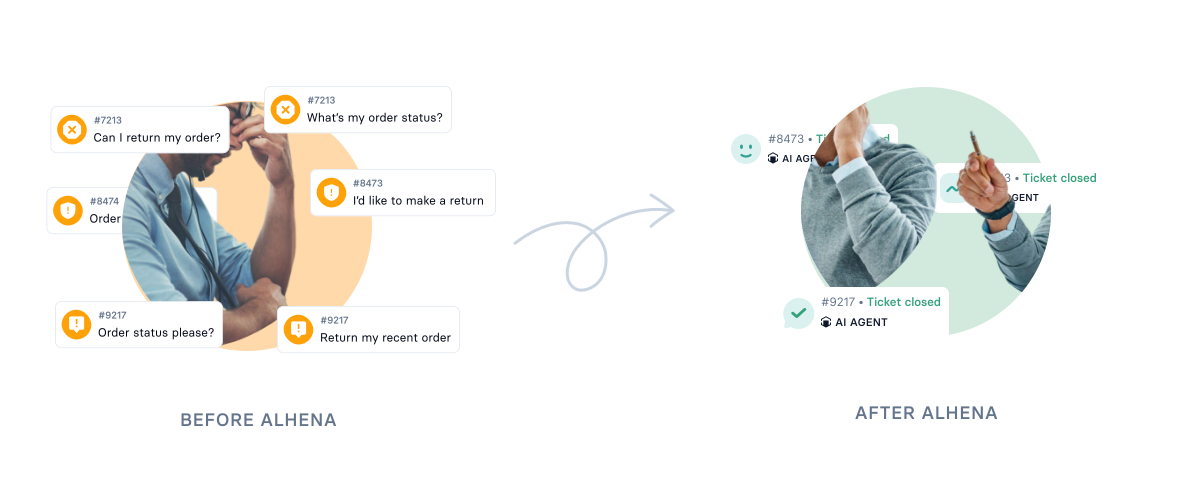
The traditional jewelry ecommerce funnel loses customers at every step. AI-guided selling compresses that funnel by answering questions, removing doubts, and building confidence before the buyer ever reaches checkout.
Education builds confidence. Customers who understand the difference between VS1 and SI1 clarity, or who learn that 14K gold is more durable for daily wear than 18K, buy with more confidence and fewer returns. An AI assistant trained on your product catalog, including every product description and product image, becomes a gemologist, stylist, and sales associate in one, available 24/7.
Sizing guidance reduces returns. Sizing is a top reason for jewelry returns. AI assistants walk customers through sizing guides and flag when a style runs small. For any jewelry business using ecommerce AI solutions, this pre-purchase guidance cuts return rates while improving inventory management.
Real-time answers prevent drop-off. "Is this necklace adjustable?" "Does this come in size 4?" "What's your return policy on bespoke pieces?" Every unanswered question is a potential lost sale. AI handles these instantly. When the average chatbot interaction costs $0.50 versus $6.00 for a human agent, the economics scale beautifully for high-ticket ecommerce.
How Alhena AI Powers Jewelry Ecommerce
Alhena AI is purpose-built for ecommerce sales, not just support ticket deflection. That distinction matters for every jeweler, where each conversation is a revenue opportunity. Here's a closer look at the platform's capabilities, informed by how real brands use it.
Hallucination-free product recommendations. Alhena's AI is grounded in your verified product data with watchdog systems that prevent inaccurate responses. For high-value purchases where trust is everything, accuracy isn't optional. High-quality images and verified inventory data ensure customers see exactly what's available.
Conversational search built for complex catalogs. Alhena processes natural language queries like "rose gold stud earrings with real diamonds under $250," delivering 2.6x conversion improvements. For jewelry websites with thousands of variations across metals, stones, and styles, this customization in search is the difference between a jewelry sale and a bounce.
Guided discovery and smart nudges. Alhena asks qualifying questions to narrow down the right piece, just like an in-store consultant. When it detects hesitation, smart conversion nudges offer contextual prompts: a limited-time discount, free engraving, or complimentary gift wrapping. This level of customization in the customer experience is what drives results.
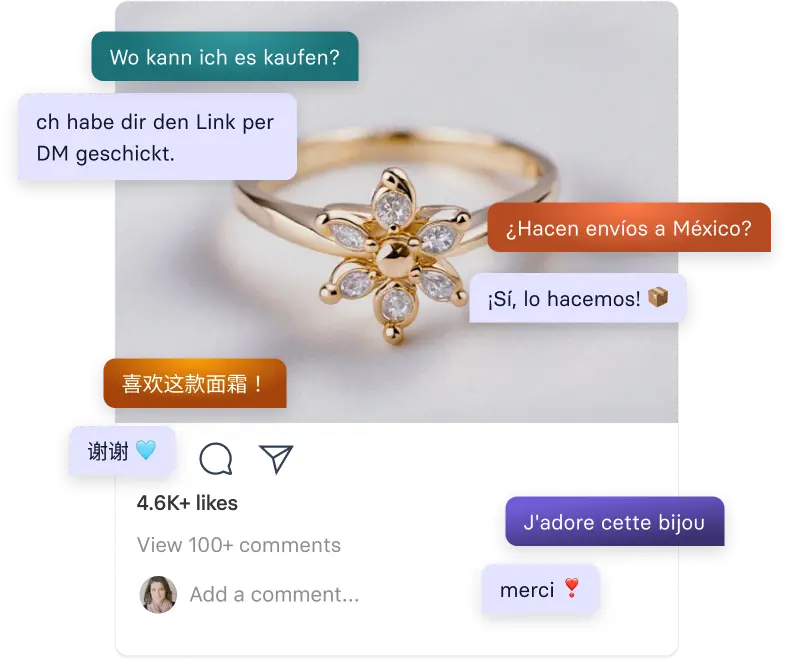
Omnichannel Presence Across Every Touchpoint. Jewelry buyers research across channels. They might discover a piece on Instagram, ask questions via WhatsApp, and complete the purchase on your ecommerce website. Alhena operates across web chat, email, Instagram DMs, WhatsApp, SMS, Facebook, Telegram, Discord, and voice, with consistent, contextual experiences on each. The conversation carries over, so a customer who started on social media doesn't have to repeat preferences on your website. For brands looking to sell jewelry online across multiple channels, this omnichannel presence is a game-changer.
Agentic checkout that closes sales. Alhena populates carts, pre-fills fields, and walks buyers through the final steps. For a $500+ purchase, reducing friction directly protects revenue.
Revenue attribution you can measure. Alhena includes built-in revenue attribution analytics so you can see exactly which conversations led to sales. You'll track AI-assisted conversion rate, average order value lift, total revenue influenced, and which product queries drive the most engagement. Unlike generic chatbot analytics that measure only deflection rates, Alhena's dashboards connect every interaction to your bottom line.
Real Results: Brands Winning with AI-Powered Personalization
The case for AI in jewelry ecommerce isn't theoretical. Brands across luxury and ecommerce verticals are seeing measurable results.
At Alhena, brands using the platform report results that mirror the jewelry opportunity. Tatcha achieved a 3x conversion rate with a 38% AOV uplift, with 11.4% of total site revenue attributed to AI. Victoria Beckham saw a 20% AOV increase. And Manawa cut its support workload by 43% while dropping response times from 40 minutes to just 1 minute. These results span beauty, luxury, and similar lifestyle brands, exactly the categories where the buying journey mirrors jewelry.
Getting Started with AI for Your Jewelry Brand
Adding an AI shopping assistant to your ecommerce website doesn't require a six-month IT project. Alhena is designed for fast deployment, and most brands go live in under 48 hours with no developer resources needed.
The jewelry ecommerce opportunity is clear: a $93.3 billion global market growing at 13.8% annually, with conversion rates that have massive room to improve. Whether you run an online jewelry store on Shopify selling fine diamonds or fashion accessories, the brands that personalize the shop experience now will capture the revenue that filter-and-browse retailers leave on the table.
Ready to see how AI can grow your jewelry ecommerce revenue? Book a demo with Alhena AI or start for free with 25 conversations to experience personalized jewelry shopping assistance in action. Use the ROI calculator to estimate your revenue lift before you commit.
Frequently Asked Questions
How does Alhena AI help jewelry brands increase conversions specifically?
Alhena's AI Shopping Assistant guides buyers through personalized conversations instead of making them navigate filters. It asks about the occasion, budget, style preferences, and recipient to surface the right products from your catalog. The platform's conversational search delivers 2.6x conversion improvements by understanding shopper intent, not just keywords. For jewelry's sub-1.5% baseline conversion rate, Alhena clients typically see over 300% conversion increases and 50%+ AOV lifts.
Can AI shopping assistants handle gift shoppers who don't know jewelry terminology?
Yes, that's one of their strongest use cases. Gift shoppers can say something like "anniversary gift for my wife under $300, she likes simple gold jewelry" and the AI translates that into specific product recommendations. No need to know the difference between a bezel setting and a prong setting. The AI handles the terminology gap through guided questions.
What ecommerce platforms does Alhena AI integrate with?
Alhena integrates natively with Shopify, WooCommerce, BigCommerce, Adobe Commerce (Magento), and Salesforce CC. For Shopify retailers, the integration syncs your catalog, pricing, and knowledge base in real time. WooCommerce and BigCommerce retailers get the same automatic catalog sync. If you run a custom or headless ecommerce platform, Alhena can also plug in securely. No complex engineering lift is required; most jewelers go live in under 48 hours.
How long does it take to set up an AI shopping assistant for a jewelry store?
Alhena AI deploys in under 48 hours with no developer resources needed. It integrates directly with Shopify, WooCommerce, Magento, and Salesforce Commerce Cloud, syncing your product catalog automatically. You can customize the brand voice, add knowledge about your materials and craftsmanship, and go live across web chat, email, Instagram, and WhatsApp.
Does AI work for both fine jewelry and fashion jewelry brands?
Yes, but the conversations differ. Fine jewelry AI needs deeper education capabilities (4Cs, certification, precious metals) and handles higher price sensitivity. Fashion jewelry AI focuses more on trend matching, collection browsing, and style pairing. Alhena's guided discovery adapts its questioning based on your catalog and price points.
Is Alhena AI secure enough for high-value jewelry transactions?
Alhena holds SOC 2 Type II, GDPR, PCI-DSS, ISO 27001, and HIPAA compliance certifications. For jewelry brands handling high-value transactions and sensitive customer data, this level of security is non-negotiable. All responses are grounded in brand-safe, verified content, and the platform's policy guardrails ensure every interaction stays compliant with your brand standards.