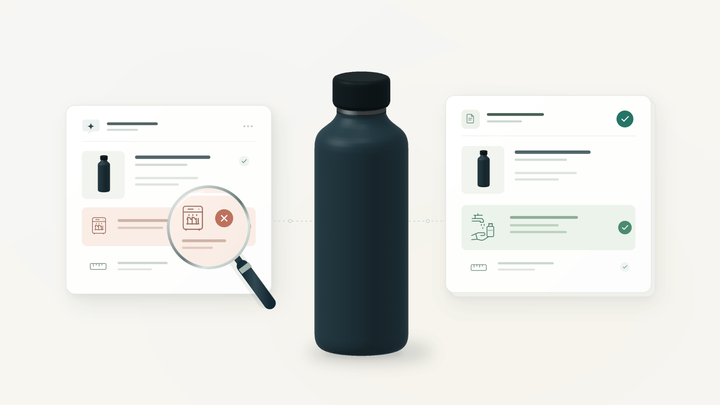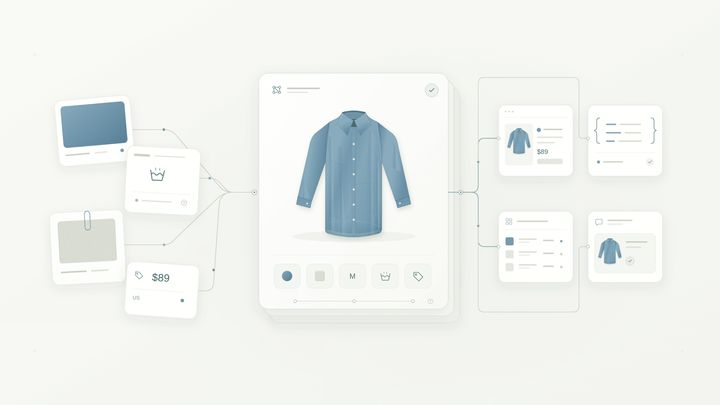
Shopify powers more than four million online stores worldwide. Klaviyo sends billions of personalized messages every month through email and SMS. Together, these two platforms already form a strong e-commerce foundation. But there is a gap between the moment a shopper lands on your site and the moment your retention marketing can start nurturing them: the live conversation. That gap is where Alhena fits in.
This guide explains how Shopify, Klaviyo, and Alhena work together as a unified commerce stack. You will learn about the data sync processes that connect them, the integration architecture that keeps everything aligned, and the specific strategies you can deploy to increase conversions, average order value, and customer lifetime value.
Why the Shopify and Klaviyo Foundation Matters
Shopify handles the core commerce layer: product catalog, inventory, checkout, payments, and order fulfillment. Klaviyo handles the retention and lifecycle marketing layer: automated sequences, SMS campaigns, segmentation, and predictive analytics. The integration between them is tight. Once you connect your Shopify account, your commerce data syncs in sub-200 milliseconds, creating a single customer profile that powers personalization across every channel.
What Shopify Brings to the Stack
Shopify provides the commerce infrastructure. Your product catalog, real time inventory, pricing rules, discount codes, and checkout processing all live here. Every Shopify store also captures referral source data, which matters because AI-driven traffic to online stores grew 7x in 2025, with attributed orders up 11x. Every visitor action, from product view to order completion, generates an event that feeds downstream systems.
The app ecosystem is another advantage. When you install an app like Alhena from the Shopify App Store, it plugs directly into your catalog layer. There is no complex setup required to sync your catalog and order history. The storefront also supports embed options for chat widgets and sign up forms that capture subscribers directly on the page.
What Klaviyo Brings to the Stack
Klaviyo transforms Shopify commerce events into segmented, targeted marketing. Abandoned cart sequences, welcome series, post-purchase follow-ups, win-back campaigns, and SMS marketing reminders all run on its event-driven architecture. As an email marketing platform, it offers pre-built options and automation tools that make it easy to set up and launch messaging sequences.
It's predictive analytics forecast next purchase date, expected spend, and churn risk. The system processes more than two billion events daily across seven billion profiles to power these predictions. You can customize segments based on contact behavior, purchase history, and dozens of other attributes. The platform also provides sign-up form builders that help you grow your list directly from your store.
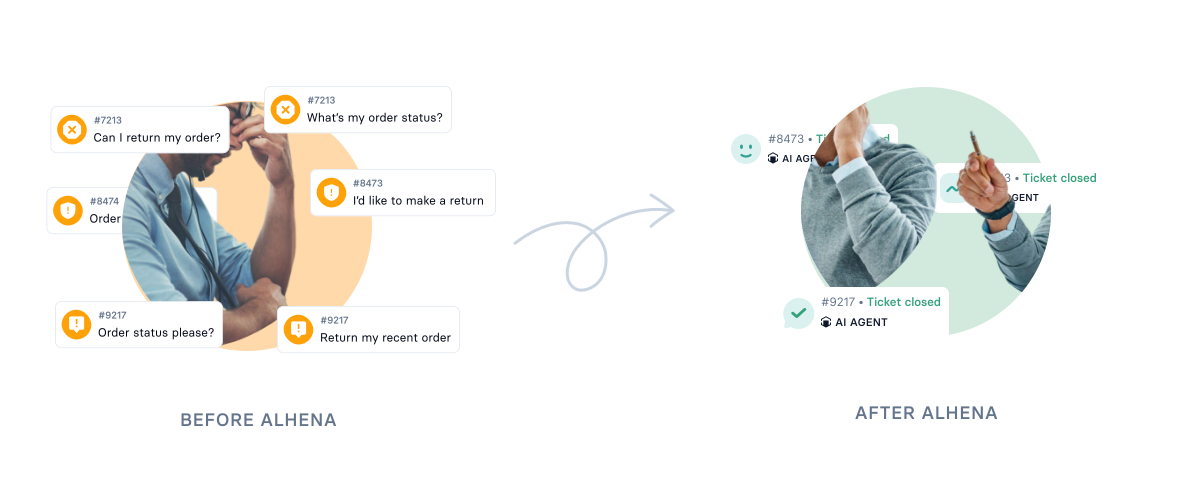
Where Alhena AI Completes the Revenue Stack
Alhena AI is an AI shopping assistant purpose-built for e-commerce. It connects directly to your Shopify store and syncs your product catalog, inventory, pricing, and order data in real time. Unlike general-purpose chatbots, Alhena is hallucination-free because every response is grounded in verified product data pulled live from your store.
Alhena deploys two specialized agents. The Product Expert Agent handles guided selling: answering product questions, comparing options, recommending items based on stated preferences, and populating carts through agentic checkout. The Order Management Agent handles post-purchase inquiries: order tracking, returns, exchanges, and subscription changes.
This is not just a support tool. Alhena actively sells. For Tatcha, Alhena delivered a 3x conversion rate, 38 percent AOV uplift, and 11.4 percent of total site revenue attributed to AI-assisted conversations. Victoria Beckham saw a 20 percent increase in average order value. Puffy achieved 63 percent automated inquiry resolution with 90 percent CSAT. You can explore more results on the Alhena case studies page.
Alhena works across every channel your customers use: web chat, email, Instagram DMs, WhatsApp, and voice. It deploys in under 48 hours with no developer resources required. And critically, it integrates with Klaviyo to feed conversational data back into your marketing flows.
How the Three-Way Integration Works
The power of this stack is the data loop it creates. Here is how information flows between Shopify, Klaviyo, and Alhena AI.
On the Shopify Side
Shopify serves as the single source of truth for your product catalog and order data. When a shopper visits your store, Shopify captures the session, referral source, and every browse event. Alhena AI reads this data in real time through its Shopify integration, so the AI shopping assistant always has accurate product availability, current pricing, and active promotions. When Alhena's agentic checkout populates a cart or pre-fills checkout fields, that action happens directly within Shopify's native checkout flow.
On the Klaviyo Side
Alhena pushes conversational events and enriched profile data into Klaviyo. Every AI-assisted conversation generates structured data: products discussed, objections raised, preferences stated, quiz answers, and purchase intent signals. This data enriches Klaviyo profiles beyond what clickstream alone can capture. A browse event tells Klaviyo a shopper looked at a product. A conversation event tells Klaviyo the shopper asked about sizing, compared two options, and preferred the premium version but hesitated on price.
The Data Loop in Action
Consider a concrete example. A shopper lands on your Shopify store from an Instagram ad. Alhena's AI shopping assistant greets them and asks what they are looking for. The shopper says they need a moisturizer for sensitive skin. Alhena recommends three options from your Shopify catalog, explains the differences, and adds the shopper's preferred product to their cart.
The shopper leaves without completing checkout. Alhena sends the conversation data to Klaviyo: "interested in sensitive skin moisturizer, discussed Product A and Product B, preferred Product A, concern about fragrance." Klaviyo triggers an abandoned cart flow that references the exact product discussed, addresses the fragrance concern, and includes a personalized recommendation. The email converts. Shopify processes the order, Klaviyo records the revenue attribution, and Alhena's analytics dashboard attributes the assist.
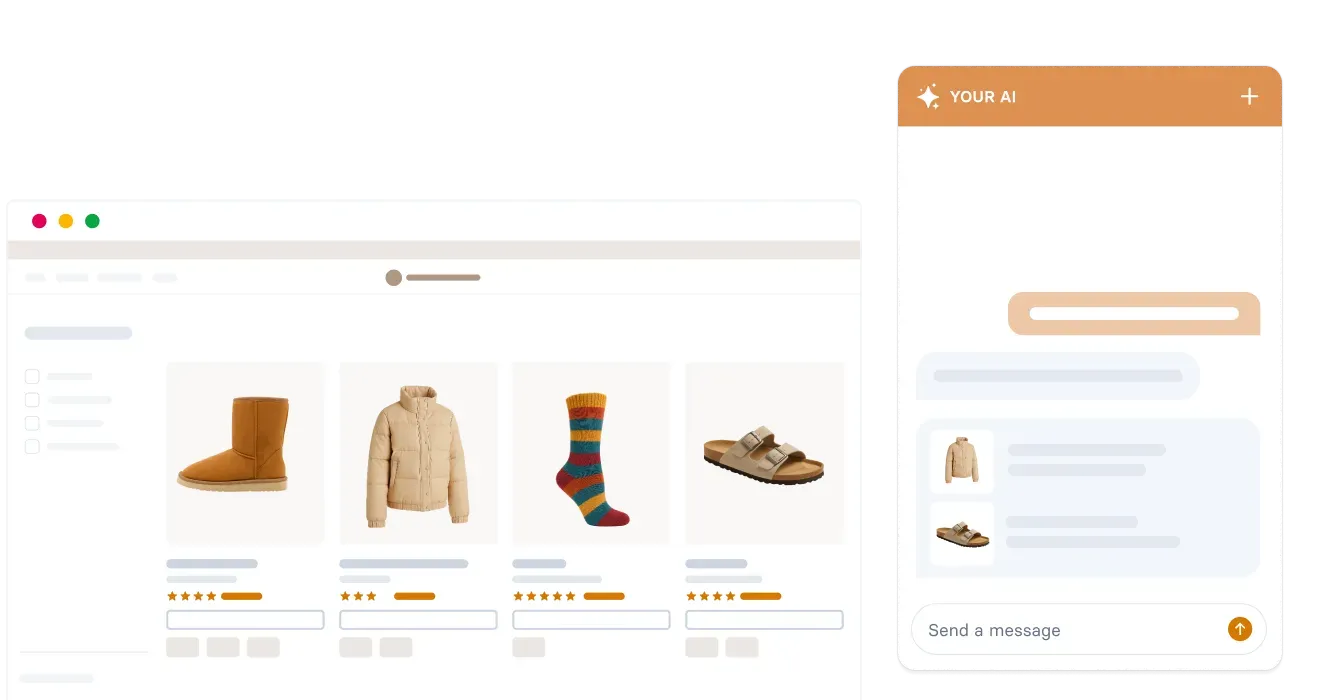
Six Revenue-Generating Strategies with This Stack
Here are six specific ways to use the Shopify, Klaviyo, and Alhena AI stack to drive measurable revenue growth.
1. Conversational Cart Recovery
Standard abandoned cart emails convert at roughly 3.3 to 3.6 percent. When you enrich those emails with data from Alhena AI conversations, recovery rates climb. Instead of a generic "you left something in your cart" message, Klaviyo can send an email that references the specific product the shopper discussed, addresses their stated concern, and offers a targeted incentive. AI-driven proactive chats recover 35 percent of abandoned carts, according to industry benchmarks.
2. AI-Powered Guided Selling
Alhena Product Expert Agent acts as a personal shopper embedded on your Shopify store. It asks qualifying questions, filters your catalog, and provides recommendations matched to the shopper's stated needs. This guided selling approach drives higher AOV because Alhena can suggest complementary products and premium alternatives within the conversation. Shoppers who engage with a shopping assistant convert at 12.3 percent compared to 3.1 percent for those who do not, a nearly 4x improvement.
3. Behavioral Segmentation from Chat Data
Alhena sends conversational events to Klaviyo that create segments impossible to build from browse data alone. You can segment by stated preferences (skin type, size, style), purchase intent level (browsing vs. ready to buy), objections raised (price, shipping, ingredients), and product comparison behavior. These segments power more targeted Klaviyo flows and campaigns, driving higher open rates, click rates, and conversion rates across your email and SMS marketing.
4. Post-Purchase Upsell and Cross-Sell Flows
After a purchase, Alhena's conversation data tells the system what else the customer considered. If a shopper bought Product A but also discussed Product B, Klaviyo can send a post-purchase sequence recommending Product B three days later. This runs automatically, so the recommendation lands in the customer's inbox without manual intervention. This approach outperforms generic "you might also like" suggestions because it is based on expressed interest, not just algorithmic similarity.
5. VIP Identification and Nurture Sequences
Alhena's AI identifies high-intent shoppers based on conversation depth, product engagement, and purchase signals. These shoppers get flagged in Klaviyo as VIP prospects before they ever make a purchase. Klaviyo can then route them into a dedicated nurture sequence with exclusive offers, early access, or personal outreach. 64 percent of AI-powered sales come from first-time shoppers, making early VIP identification a high-leverage strategy.
6. Win-Back Campaigns with Conversational Context
When a lapsed customer returns to your store and engages with Alhena, the shopping assistant remembers their history. Alhena feeds this re-engagement context to Klaviyo, which can launch a win-back sequence tailored to why the customer left and what brought them back. Instead of a blanket discount, the win-back email addresses their specific situation, making the offer more relevant and the conversion more likely.
What Alhena AI Does That Native Shopify and Klaviyo AI Cannot
Both Shopify and Klaviyo have introduced AI features. Shopify's Sidekick helps merchants manage their stores. Klaviyo's Customer Agent handles support queries and product recommendations. These are valuable tools, but they serve different purposes than Alhena AI.
Shopify Sidekick is a merchant-facing tool. It helps you write product descriptions, analyze sales data, and manage your store. It does not interact with your customers on the storefront.
Klaviyo's Customer Agent handles support queries and can recommend products, but it is primarily a CRM-native tool optimized for deflection and retention, not active selling. It works within Klaviyo's ecosystem.
Alhena AI is purpose-built for customer-facing, revenue-generating conversations. It combines a Shopping Assistant, a Support Concierge, and Agent Assist in a single platform with built-in revenue attribution analytics. Alhena does not just answer questions. It actively drives checkout with agentic capabilities: populating carts, pre-filling checkout fields, and suggesting upsells and cross-sells in real time.
Alhena does not replace Shopify or Klaviyo. It completes them. It fills the live conversation gap that neither platform addresses, and it feeds the conversational data back into Klaviyo to make every downstream flow smarter.
For detailed integration documentation, visit the Alhena Shopify integration guide. To see pricing plans or estimate your return, try the ROI Calculator.
Key Takeaways
- Shopify provides the commerce foundation, Klaviyo powers lifecycle marketing, and Alhena AI fills the live conversation gap that drives real-time selling.
- Conversational data from Alhena AI enriches Klaviyo profiles beyond what browse and click data can capture, enabling smarter segmentation and more personalized flows.
- AI-assisted shoppers convert at nearly 4x the rate of unassisted shoppers, and AI-powered personalization drives up to 40 percent more revenue.
- Alhena AI is purpose-built for e-commerce revenue, not just support deflection, with hallucination-free responses, agentic checkout, and built-in revenue attribution.
- The integration deploys in under 48 hours with no developer resources, connecting Shopify catalog data, Alhena conversational intelligence, and Klaviyo automation in a closed-loop revenue system.
Ready to turn your Shopify store into a revenue-generating AI commerce engine? Book a demo with Alhena AI to see the Shopify, Klaviyo, and Alhena integration in action, or start for free with 25 conversations.
Frequently Asked Questions
How does Alhena AI integrate with Shopify and Klaviyo?
Alhena AI connects to Shopify through a native app store integration that syncs your product catalog, inventory, pricing, and order data in real time. It then pushes conversational event data into Klaviyo profiles, enriching them with intent signals like product preferences, objections, and purchase readiness. Setup takes about 10 to 15 minutes for Shopify and requires no developer resources.
Can Alhena AI send conversation data to Klaviyo for email flows?
Yes. Every Alhena AI conversation generates structured data including products discussed, stated preferences, objections raised, and purchase intent level. This data flows into Klaviyo profiles and can trigger automated flows like context-rich abandoned cart emails, post-purchase cross-sell sequences, and personalized win-back campaigns based on real conversation history.
How does Alhena AI compare to Klaviyo's built-in Customer Agent?
Klaviyo's Customer Agent handles support queries and basic product recommendations within Klaviyo's ecosystem. Alhena AI is purpose-built for active selling with agentic checkout capabilities, omnichannel deployment across web chat, email, Instagram DMs, WhatsApp, and voice, plus built-in revenue attribution analytics. Alhena complements Klaviyo rather than replacing it, filling the live conversation gap that Klaviyo's CRM-native tools do not address.
Does Alhena AI work on channels beyond the Shopify storefront?
Yes. Alhena AI is omnichannel from day one, working across web chat on your Shopify store, email, Instagram DMs, WhatsApp, and voice. The AI maintains full conversation context across all channels, and every interaction feeds the same enriched data back into Klaviyo regardless of where the conversation started.
What is the ROI of adding an AI shopping assistant to Shopify and Klaviyo?
Brands using AI-powered personalization earn up to 40 percent more revenue than competitors, and 92 percent of companies investing in AI see positive ROI. Alhena AI provides built-in revenue attribution analytics so you can track AI-assisted conversions, AOV uplift, and total revenue influenced. You can estimate your specific return using the Alhena ROI Calculator at alhena.ai/roi-calculator.