What the Perplexity Merchant Program Is and Why It Matters
Perplexity Shopping is one of the most overlooked high-value commerce channels available to ecommerce brands right now. It's not a traditional search engine, and it's not a marketplace. It offers free product listing with 100% revenue retention and access to shoppers who spend 57% more per order than those arriving from other AI platforms. For Perplexity Shopping merchants, the economics alone make this channel worth prioritizing.
The Perplexity merchant program works like a next-generation version of Google Merchant Center. Brands share their product catalog, including reviews, pricing, specs, and images, so Perplexity's AI can deliver accurate, context-rich product recommendations to shoppers asking natural-language questions. When a user asks "best waterproof hiking boots under $200," Perplexity doesn't return a list of blue links. It returns three to five curated product cards with pricing, images, reviews, and a one-click checkout button.
The benefits of joining the program are immediate: it launched in November 2024 alongside the Buy with Pro checkout feature, and merchants who join the program early gain category positioning before the channel gets crowded. Shopping-related queries on the platform grew 5x within months. By early 2026, Perplexity reached 45 million monthly active users, with 80% holding college degrees and 65% earning high incomes. That audience profile, combined with high-intent customers actively asking purchase-ready questions, makes this channel especially attractive for premium and DTC brands.
Three components define the program. First, product feed submission gives Perplexity structured data about your catalog. Second, Buy with Pro checkout lets shoppers complete purchases without leaving the platform. Third, integrated PayPal and Venmo payment processing handles the transaction layer, with merchants staying the merchant of record. The result: zero commission fees, zero listing costs, and full control over your revenue.
How to Enroll in the Perplexity Merchant Program
Enrollment takes under five minutes. The process is a five-step online form that asks for your business name, website URL, contact information, and product category. Perplexity reviews submissions and reaches out to accepted merchants with next steps.
Eligibility Requirements
Your store must sell and ship products to the United States. The program initially targeted larger retailers, but partnerships with Firmly.ai (for agentic checkout) and PayPal have opened access to merchants of all sizes. Shopify stores get an even faster path: Perplexity's Shopify integration automatically shares product data from US-based Shopify stores. If you already accept PayPal, your products can appear in Perplexity results through the PayPal merchant network without a separate enrollment.
What Happens After Acceptance
Once accepted, you'll need to submit your product catalog, implement structured data markup on your product pages, and enable a supported checkout integration. Merchants who complete all three steps typically see products surfacing in Perplexity recommendations within four to six weeks.
Common Setup Mistakes That Delay Approval
- Missing GTINs (UPC/EAN codes): Products without GTINs are effectively invisible. Perplexity uses them for matching and de-duplication. If your catalog lacks GTINs, fix this before applying.
- Stale inventory data: Submitting a feed with outdated pricing or out-of-stock items doesn't just hurt rankings. It can get products dropped entirely.
- No structured data on product pages: Perplexity ingests Schema.org markup directly. Without Product, Offer, Review, and AggregateRating schema, your pages are harder for the AI to parse.
- Incomplete product descriptions: Sparse titles like "Style #18383" tell the AI nothing. Descriptions must be detailed enough for conversational matching.
Product Feed Requirements and Accepted Formats
Perplexity accepts product feeds in CSV format following the Google Merchant Center feed specification, delivered via SFTP or secure servers. If you already manage a Google Shopping feed, you have a head start, but don't assume your existing feed is ready without modifications.
Required Data Fields
Every product in your feed needs these fields populated accurately:
- Product title: Brand name + product type + key differentiators (material, audience, use case)
- Product description: Natural language that answers questions before they're asked
- Pricing: Accurate, real-time pricing with no discrepancies between feed and site
- Inventory status: Updated in real time. Stale stock data causes immediate exclusion.
- GTIN (UPC/EAN): Non-negotiable for product matching
- High-quality images: Hero image on plain background, plus multiple angles and lifestyle shots
- Customer reviews and ratings: AggregateRating schema is a strong ranking signal
- Product categories: Mapped to Google product taxonomy or Shopify's category structure
Your product pages also need Schema.org Product JSON-LD markup. Perplexity ingests this structured data alongside your feed, and the two sources reinforce each other. For a deeper look at which product data fields actually matter for AI shopping recommendations, we break down the full priority list in a separate guide.
How to Structure Product Data for Maximum Visibility
Perplexity's recommendation engine doesn't work like keyword-based search. It matches products to conversational intent. That means your product data needs to answer the questions shoppers are asking, not just contain the right keywords.
Write Titles That Match How People Talk
A title like "Allbirds Men's Tree Runners, Sustainable Running Shoes for Everyday Wear" works because it tells the AI who the product is for, what it does, and what makes it different. A title like "Tree Runners 18383" gives the AI nothing to work with.
Include the brand name, product type, primary material, target audience, and intended use case in every title. Keep it under 150 characters but pack in the attributes that matter for matching.
Use the Intended Purpose Field
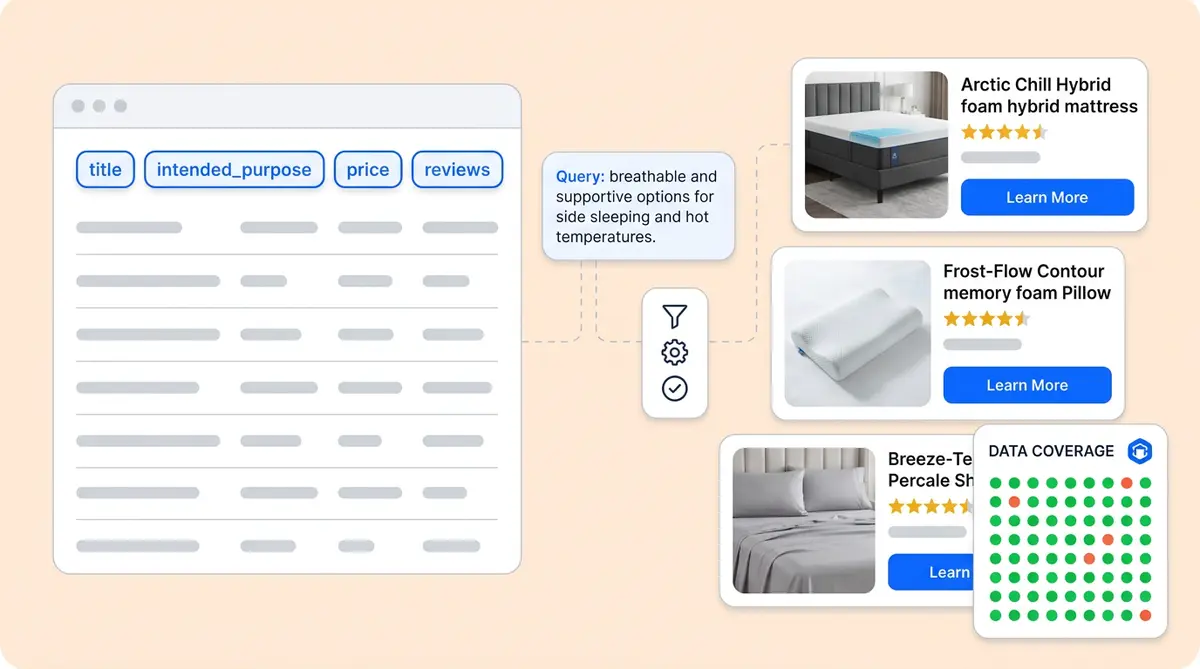
This field is one of the most underused attributes in product feeds. It tells Perplexity what a product is designed for, mapping directly to how users phrase shopping queries. If someone asks "best headphones for running in rain," a product with intended_purpose tagged as "running, outdoor use, water resistant" matches strongly. Without it, the AI has to guess intent from your description alone.
Fill this field for every product. Be specific. "Casual wear" is less useful than "everyday office commute, weekend errands, light travel." Think about the scenarios your customers actually describe when they shop.
Let Reviews Do the Selling
Perplexity runs sentiment analysis on reviews. It extracts repeated pros and cons, summarizes them, and factors review quality into rankings. The AI also pulls from third-party sources like Reddit threads and professional review sites. Inflated claims or paid-only praise get discounted.
Focus on building verified review volume through post-purchase email marketing campaigns and package inserts. These signals directly influence sales performance on the platform. A product with 200 authentic reviews and a 4.3 rating will outperform one with 15 reviews and a 5.0 rating every time.
Optimization Tactics That Go Beyond Basic Setup
Getting your products into Perplexity is step one. Getting them into the top three to five recommendations for relevant queries is where the real value sits.
Enrich Descriptions for Conversational Query Matching
Write product descriptions as if you're answering a customer's question in a store. Instead of "Premium leather wallet with RFID blocking," write "This full-grain leather wallet fits in front pockets and blocks RFID scanners, so your cards stay safe in crowded airports or public transit." The second version matches more conversational queries naturally.
Include specific use cases, target audiences, and scenarios. Mention compatible products, seasonal relevance, and common comparisons. The AI uses all of this context when deciding which products to recommend. For brands managing schema markup for AI search, getting this context layer right is critical for both Perplexity and other AI shopping platforms.
Price Transparency Matters More Than You Think
Perplexity shows pricing directly in product cards. Shoppers see your price alongside two to four alternatives in the same recommendation set. If your feed price doesn't match your website, or if you hide the real cost behind shipping fees, you lose trust with both the AI and the shopper.
Keep pricing accurate down to the cent. Update your feed in real time when you run promotions. Competitive, transparent pricing is a ranking signal.
Monitor What's Appearing vs. What's Missing
The biggest optimization gap for most Perplexity Shopping merchants is visibility into performance. You can't improve what you can't measure. Which of your products are showing up in Perplexity answers? Which queries trigger those appearances? Which products should be appearing but aren't?
Most brands are flying blind here. Understanding how Perplexity chooses its top product recommendations is the first step toward systematic optimization instead of guesswork.
Why Buy with Pro and PayPal Change the Channel Economics
The Buy with Pro and PayPal integration isn't just a convenience feature. It fundamentally changes the economics of this channel by enabling zero-click commerce, where the entire transaction happens inside Perplexity without the shopper ever visiting your website.
When a shopper clicks "Buy with Pro," their saved shipping and billing information completes the purchase instantly. Free shipping is included on all Buy with Pro orders. PayPal and Venmo partner payments work the same way: the shopper pays within the Perplexity interface, and the merchant receives funds through their existing PayPal account.
This matters for two reasons. First, every redirect to an external website is a drop-off point. Cart abandonment rates across ecommerce average 69.57%, and much of that friction comes from the checkout flow itself. In-platform checkout eliminates the redirect entirely. Second, merchants with checkout integration get a ranking boost. Perplexity prioritizes products that can complete a sale within the platform because that's a better user experience.
The implication for Perplexity Shopping merchants is clear: your product data needs to be complete enough to close a sale without the shopper ever visiting your site. That means accurate sizing charts in your feed, clear product images from multiple angles, transparent pricing, and real-time inventory. If a shopper has to leave Perplexity to check a detail, you've already lost the advantage this channel offers.
How Alhena AI Gives Merchants Visibility Into Perplexity Shopping Performance
Alhena AI is the platform that gives merchants the visibility layer Perplexity doesn't provide natively. While Perplexity offers a basic merchant dashboard, it doesn't tell you which specific queries are triggering your product recommendations, which products are being skipped despite strong data, or what gaps in your catalog are costing you placements.
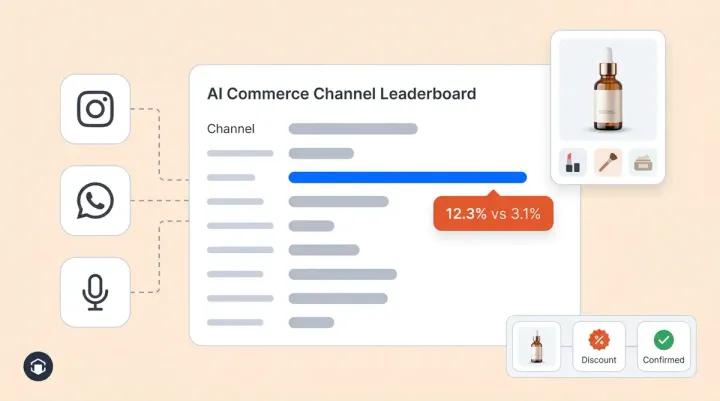
Alhena's AI Visibility tools track how your products perform inside Perplexity Shopping and other AI commerce platforms. You can see which products get recommended, which queries trigger those recommendations, and what product data gaps are costing you placement in Perplexity's top results. Instead of guessing which products need better descriptions or which intended-purpose fields need updating, you get data-driven direction.
This is especially valuable because Perplexity's own CEO has admitted the ranking algorithm isn't fully transparent, even internally. "All these things are yet to be fully understood, to be very honest with you, in terms of how the ranking works," Aravind Srinivas told Fortune. That opacity means merchants need an external measurement layer to optimize with precision.
Alhena also helps merchants structure their product feeds for AI shopping platforms beyond Perplexity, including ChatGPT Shopping and Google's AI-powered results. The same feed quality improvements that boost your Perplexity visibility compound across every AI commerce channel.
Key Takeaways
- Zero acquisition cost, full revenue retention: The Perplexity merchant program charges no fees, no commissions, and no listing costs. You keep 100% of every sale.
- High-value audience: 80% college graduates, 65% high earners, and 57% higher average order value than other AI platform referrals.
- Feed quality is your ranking lever: GTINs, Schema.org markup, intended-purpose fields, and real-time pricing determine whether your products surface or get skipped.
- In-platform checkout earns a ranking boost: Products with Buy with Pro or PayPal checkout integration get preferential visibility.
- Conversational matching replaces keyword bidding: Product data must answer questions, not just contain keywords. Write descriptions like you're talking to a customer.
- Measurement is the optimization bottleneck: Without visibility into which products appear in Perplexity answers and which queries trigger them, optimization is guesswork. Alhena AI closes that gap.
- First-mover advantage is real: Most ecommerce brands haven't enrolled yet. Merchants who set up and optimize now will own category positioning on a platform where most of their competitors have not yet arrived.
Ready to see how your products perform inside Perplexity Shopping and other AI commerce platforms? Book a demo with Alhena AI or start for free with 25 conversations to get visibility into your AI shopping performance today.
Frequently Asked Questions
How do Perplexity Shopping merchants get their products into AI recommendations?
Merchants join the free Perplexity merchant program, submit a Google Shopping format CSV feed via SFTP, add Schema.org Product markup to their pages, and include GTINs for every product. Alhena AI helps merchants identify which product data gaps are preventing specific items from appearing in Perplexity results, so you can fix the fields that actually matter instead of guessing.
What product feed format does the Perplexity merchant program accept?
Perplexity accepts CSV files following the Google Shopping feed specification, delivered via SFTP or secure servers. Required fields include product title, description, GTIN, real-time pricing, inventory status, images, and category mapping. Alhena AI provides feed intelligence that scores your product data completeness against what Perplexity needs for top placement.
How does the intended purpose field improve product visibility on Perplexity Shopping?
The intended purpose field maps your product directly to conversational shopping queries. When a shopper asks "best shoes for trail running in wet conditions," products tagged with specific use cases match more accurately than those with generic descriptions. Alhena AI tracks which queries trigger your product recommendations so you can refine intended purpose fields based on real shopper behavior, not assumptions.
Can merchants track which products appear in Perplexity Shopping answers?
Perplexity offers a basic merchant dashboard, but it doesn't show query-level data or identify which products are being overlooked. Alhena AI fills that gap with AI visibility tracking that shows exactly which products get recommended, which queries trigger those appearances, and what data improvements would increase your placement rate across Perplexity and other AI shopping platforms.
How does Buy with Pro checkout affect merchant revenue on Perplexity?
Buy with Pro and PayPal integration enable zero-friction checkout inside Perplexity, eliminating the redirect to your website that causes most cart abandonment. Merchants keep 100% of revenue with zero commissions. Alhena AI provides checkout analytics that show completion rates for AI-originated transactions, helping you measure the actual revenue impact of this channel.
Is the Perplexity merchant program worth it for small and mid-size ecommerce brands?
Yes. The program is free with zero commissions, and partnerships with PayPal and Firmly.ai have opened access beyond large retailers. Perplexity shoppers skew high-income and spend 57% more per order than other AI platform referrals. Alhena AI helps smaller brands compete by providing the same AI shopping optimization and product visibility insights that enterprise teams build internally.