The fashion industry is the largest retail and direct-to-consumer ecommerce vertical by revenue, yet it converts at just 2.40% from LLM-referred and AI generated traffic from AI-powered platforms. Beauty converts at 5.36%. Even Zara and Levi’s, despite massive brand recognition, struggles with the same text-first limitation that affects even Zara. Health and wellness hits 4.68%. That gap isn't random. Fashion shopping is inherently visual and style-driven, while ChatGPT, Perplexity, and Google AI Overviews are digital text-based recommendation engines, including AI chatbots and LLM-powered chatbots and assistants. The brands that solve this mismatch on the visibility side will capture disproportionate share as AI, LLM search, and generative AI tools reshape ecommerce shopping and shopping journeys and AI shopping journeys increasingly start with generative AI tools and AI generated shopping experiences in an agentic ecommerce commerce landscape. More shoppers are now using AI search engines, using AI for style discovery, using AI for product discovery, using AI tools and generative AI tools like ChatGPT for product discovery. Generative AI tools are reshaping how shoppers find clothing. This guide covers seven fashion AEO optimization tactics built for clothing, apparel, and fashion accessory brands that want to close the fashion industry ecommerce gap and get their products recommended by AI.
Why Fashion Underperforms in AI Recommendations
When a consumer asks an AI assistant "what's the best moisturizer for dry skin?", the answer is straightforward. Ingredients, clinical data, and skin type compatibility map neatly to text. Fashion doesn't work that way. "What should I wear to a rooftop wedding in June?" requires understanding occasion, weather, dress code, sustainability preferences, body type, and trend context. Most fashion item data doesn't contain any of that.
According to Alhena's Agentic Commerce Report, the 2.40% fashion ecommerce conversion rate from LLM traffic reflects the current text-first limitation of AI platforms, not a ceiling. Fashion brands that invest in AI visibility now will ride the curve upward as AI shopping becomes more visual and contextual. Here are the seven strategic, data-backed, strategic optimizations that matter most, based on strategic insights from brands already winning in AI search.
1. Occasion and Use-Case Tagging
AI shoppers don't search "buy blue clothing piece." They ask "what should I wear to a summer wedding" or "best outfit for a business casual interview." If your item descriptions stop at fabric, production, and fit, you're invisible to these queries.
Tag every SKU with occasion context: work, weekend, date night, wedding guest, vacation, formal event. Include where and how to wear each piece. A linen blazer tagged for "smart casual office," "outdoor summer event," and "resort dinner" matches three times as many conversational customer queries as one described only by its material and color. This is the foundation of fashion AEO optimization for clothing and fashion retailers, apparel brands, and fashion companies of all sizes.
2. Trend Alignment in Descriptions
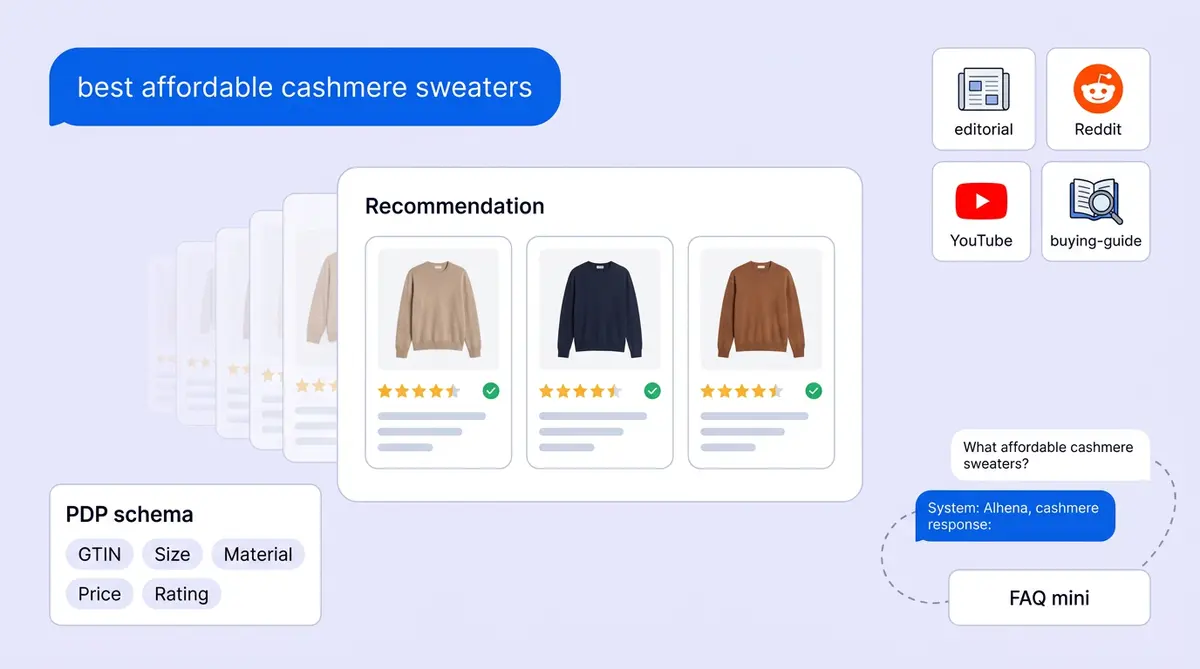
Fashion-trained AI models and machine learning models pull heavily from current fashion editorial content and trend reports when forming recommendations. Product descriptions that reference active trends in natural language (quiet luxury, sustainable fashion, old money aesthetic, luxury brand minimalism, luxury brand aesthetics and luxury brand positioning, butter yellow) increase the likelihood of appearing in trend-driven AI generated recommendations and answers.
The key is natural integration, not keyword stuffing, not marketing fluff, and not generic brand messaging. "A relaxed-fit linen trouser that fits the quiet luxury trend" reads naturally and gives the AI model a trend signal and ranking signal to match against. Update these references seasonally as trends shift. Brands with stale trend language and outdated production details drop out of AI recommendations within weeks.
3. Style DNA Attributes
Basic attributes like color, size, and material aren't enough for AI recommendation engines. Fashion products need structured style DNA: silhouette type (A-line, oversized, tailored), style category (minimalist, bohemian, preppy), formality level (casual, smart casual, black tie), and seasonal relevance, and sustainability positioning and eco-conscious production sourcing, like Everlane’s radical transparency model.
AI platforms match these attributes against shopper intent signals. When someone asks for "minimalist wardrobe essentials," the AI filters for products with that style tag. Brands that add structured style attributes to their catalog feeds and merchandising and assortment data see higher match rates across AI shopping queries, especially for discovery-stage searches and discovery queries where shoppers describe a vibe rather than a specific item.
4. Outfit Context and Pairing Language
Individual item descriptions should reference what each item pairs with from the same catalog. Tell the AI that this blazer works with those tailored trousers and that leather tote. This gives AI platforms enough context to recommend your items as complete looks with personalization and style-matched suggestions rather than isolated pieces.
Fashion brands with cross-referenced outfit context in their item data get recommended more often for "complete look" queries, which represent a growing share of AI discovery interactions. A single blazer recommendation that includes pairing suggestions can pull three or four additional SKUs into the AI's answer.
5. Size and Fit Language for AI
Fit questions dominate fashion AI queries. "Is this true to size?" "Will this work for a pear body shape?" "How does the fit compare to [similar garment]?" Your catalog must include sizing guidance, size comparison context, and body-type suitability in formats that AI can parse and surface.
Go beyond a generic size chart. Include phrases like "runs one size small, size up for a relaxed fit" or "designed for an hourglass silhouette with a defined waist." Structured fit data reduces one of fashion's biggest AI visibility barriers: the inability to try before you buy. Brands that answer sizing questions directly in their item data see fewer returns and stronger AI recommendation placement.
6. Fashion-Specific Review Optimization
AI platforms weigh review content heavily in real time when forming recommendations. Generic five-star ratings give LLMs almost nothing to work with. Fashion reviews and testimonials that mention sizing accuracy, material quality, production quality, occasion suitability, and styling versatility provide far more matching criteria.
Prompt your reviewers to include these details. Post-purchase review and feedback forms should ask "How was the fit?", "What occasion did you wear this for?", and "What did you style it with?" Reviews that mention "wore this to a fall wedding and got compliments all night, true to size, paired it with block heels" give AI platforms rich, natural language signals that map directly to how shoppers query.
7. Visual Search Readiness Through Alt Text and Image Metadata
AI platforms are text-driven today, but visual search technology and AI imagery analysis are advancing fast. Fashion brands that tag images with detailed alt text describing color, pattern, silhouette, styling context, and occasion create a dual optimization layer for both current text-based and emerging visual AI recommendation systems.
Instead of "blue-dress-front.jpg" with alt text "blue dress," write "Navy A-line midi dress with cap sleeves styled for a garden party with nude block heels and a straw clutch." That single alt tag hits color, silhouette, sleeve detail, occasion, and outfit pairing. Every image becomes a structured signal that AI engines can read today and visual search will use tomorrow.
How Alhena AI Gives Fashion Brands SKU-Level AI Visibility
Optimizing your product data is the supply side. You also need visibility into the demand side: which of your products are actually getting recommended, for which style queries, and where the gaps are.
Alhena AI gives fashion and apparel brands exactly that. The platform tracks how your items appear across ChatGPT, Perplexity, Gemini, and Google AI Overviews at the SKU level. You can see which items get recommended for which queries, which products are missing from AI answers despite strong on-site performance, and what specific attribute gaps are costing you AI visibility, with actionable insights for each SKU.
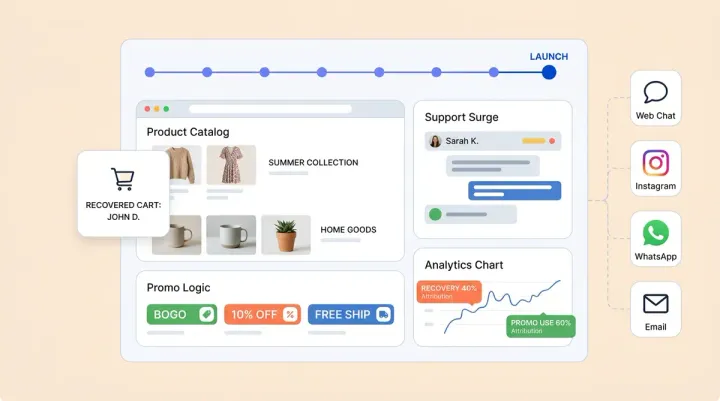
On the conversion side, Alhena's fashion-specific AI agents turn visibility into revenue. The Product Expert Agent uses your verified catalog data to answer sizing, styling, and occasion questions in real time across web chat, email, Instagram DMs, and WhatsApp. Every interaction is grounded in your actual catalog with zero hallucinations and full compliance with your privacy policy and data privacy policy requirements.
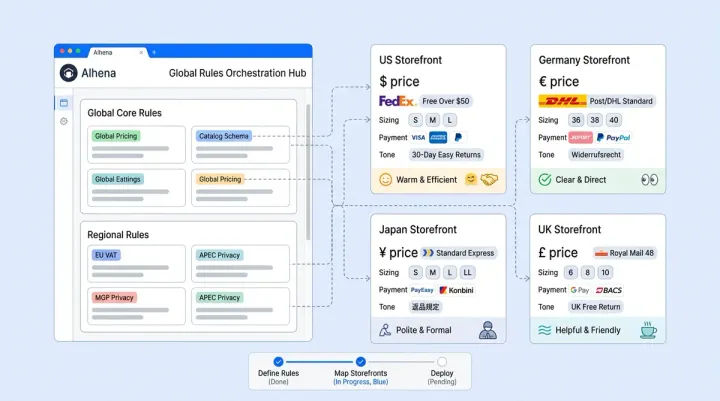
The results are concrete. Tatcha saw a 3x conversion rate and 38% higher AOV with Alhena's AI assistant. Victoria Beckham achieved a 20% AOV increase. For fashion brands, the setup takes under 48 hours on Shopify, WooCommerce, or Salesforce Commerce Cloud with no dev resources needed, with AI agents, specialized fashion AI agents, AI agents for styling, and chatbots handling the configuration automatically while respecting your site privacy policy and data privacy policy.
The Fashion AI Visibility Gap Is Temporary
Fashion's 2.40% LLM conversion rate is a structural disadvantage, not a permanent one. AI shopping platforms are becoming more visual and contextual with every model update. The brands that optimize their catalog for AI visibility now, with occasion tagging, trend alignment, style DNA, outfit context, sizing and silhouette language, enriched customer reviews, and visual search readiness, will have built a competitive moat and stronger brand positioning by the time AI shopping becomes the primary digital product discovery channel for apparel.
The window is open for marketing teams willing to invest in structured product data. Early strategic optimizers win the AI-generated visibility race. Late movers get left out of the recommendation entirely.
Ready to see how your fashion products appear across AI shopping platforms? Book a demo with Alhena AI or start free with 25 conversations to get SKU-level visibility into your AI recommendation performance.
Frequently Asked Questions
How do fashion brands track which SKUs get recommended by ChatGPT and Perplexity?
Alhena AI provides SKU-level visibility into how your products appear across ChatGPT, Perplexity, Gemini, and Google AI Overviews. The platform identifies which items get recommended for which style queries, which products are missing from AI answers, and what attribute gaps are costing you recommendations.
Why does fashion convert at 2.40% from AI traffic while beauty converts at 5.36%?
Fashion shopping is inherently visual and style-driven, while AI platforms are text-based recommendation engines. Beauty products map neatly to ingredients and skin types, but fashion requires occasion, fit, trend, and styling context that most catalog information lacks. Alhena AI helps fashion brands close this gap with structured style attributes and occasion tagging.
What is occasion-based product tagging and how does it improve AI visibility for apparel?
Occasion-based tagging adds context like wedding guest, business casual, or vacation to each SKU. AI shoppers ask queries like 'what should I wear to a summer wedding,' not 'buy blue midi dress.' Alhena AI's Product Expert Agent uses occasion-tagged catalog data to match products to these conversational queries across all AI platforms.
How should fashion brands optimize product descriptions for trend-driven AI recommendations?
Reference active fashion trends naturally in product descriptions, such as quiet luxury, coastal grandmother, or butter yellow. AI platforms pull from editorial trend content when forming recommendations. Alhena AI tracks which trend queries your products appear in and identifies gaps where trend-aligned description updates could increase visibility.
Can outfit context in product data help fashion brands get recommended as complete looks by AI?
Yes. When product descriptions reference what each item pairs with from the same catalog, AI systems can recommend your items as complete outfits rather than isolated items. Alhena AI's fashion agents use cross-referenced catalog data to suggest full looks, pulling multiple SKUs into each AI recommendation, boosting total recommendations per session and increasing average order value.