Why Static Product Recommendations No Longer Work
Amazon attributes 35% of its total revenue to AI-driven product recommendations. That single stat tells you why "Customers Also Bought" widgets are no longer enough. Marketing teams relying on static, rule-based suggestions are leaving revenue on the table.
Barilliance data shows that personalized recommendations are 2.2x more effective than generic "best selling" suggestions. McKinsey puts it more directly: brands using AI-powered personalization see 5 to 15% higher revenue, with early adopters outperforming laggards by up to 40%.
Rule-based recommendation systems rely on predefined conditions a merchandiser sets manually. "If category equals shoes, show socks." They can't adapt to a shopper's real-time behavior, shifting intent, or the context of a live conversation. When a customer's preferences change mid-session, a static system keeps recommending based on stale data.
AI product recommendations work differently. They use artificial intelligence to analyze browsing behavior, cart contents, purchase history, and conversational context to surface relevant products each shopper is most likely to buy. Shoppers who interact with AI-powered chat convert at 12.3%, compared to 3.1% for unassisted sessions, a 4x improvement.
How AI Recommendation Engines Power Upselling and Cross-Selling
Traditional recommendation engines match products using simple associations. When users search for products, these engines return generic search results. AI recommendation systems go further by combining multiple data signals to predict what a specific shopper will buy next.
Collaborative Filtering Meets Real-Time Behavior
Collaborative filtering identifies patterns across thousands of shoppers: "People who bought X also bought Y." Content-based filtering algorithms match product attributes like category, price range, and color to generate accurate product suggestions. Modern machine learning algorithms combine both approaches with real-time behavioral signals, including what a shopper is browsing right now, their browsing history and preferences, what they've added to cart, and what search queries they're entering through autocomplete. Every search query reveals intent that a machine learning algorithm can act on.
This hybrid recommender system delivers contextual product discovery that adapts within a single session. A shopper browsing moisturizers who asks about dry skin gets a personalized serum recommendation that fits their specific concern, not a generic "top sellers" list.
Conversational Context Changes Everything
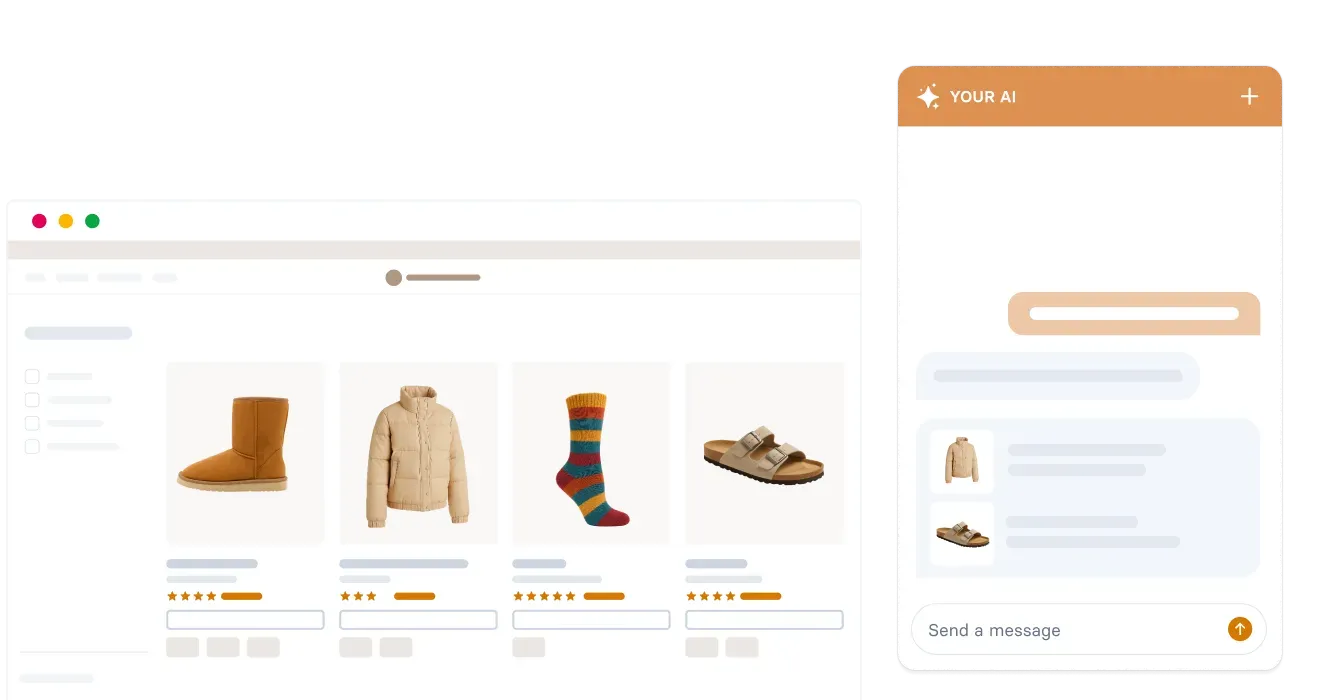
The biggest shift in AI product recommendations is the move from passive widgets to active, conversation-aware selling. When an AI agent understands what problem a customer is trying to solve, it can suggest products the way a great sales associate would.
A customer asking "Will this couch fit in a 12x14 living room?" isn't just asking about dimensions. They're signaling purchase intent. An AI agent that recognizes this can confirm the fit, then recommend matching throw pillows or a coffee table from the same collection. That cross-sell feels helpful, not pushy.
Hybrid systems that blend collaborative and content-based filtering also solve the cold start problem for new products. Transformer-based recommendation systems, the same architecture behind large language models, have shown 71% conversion increases in testing by understanding the sequence and context of user actions.
Seven AI Upselling and Cross-Selling Strategies Ranked by Conversion Data
1. Order Bumps at Checkout. Order bumps convert at 37.8%, the highest of any upsell type per a 2025 Focus Digital study. Machine learning takes this further by personalizing the bump based on cart contents and each shopper's purchase history.
2. Conversational Upselling Through AI Chat. Shoppers engaging with AI-powered chat spend 25% more per session. The key is timing: AI agents introduce add-ons as part of the decision flow. When a customer asks about a laptop's battery life, suggesting a compatible power bank feels like advice, not a pitch.
3. Post-Purchase Cross-Selling. The 48 hours after delivery represent the highest-attention window. Post-purchase upsells convert at 14.6%, and customers with positive post-purchase experience spend 140% more over their lifetime. AI personalizes these recommendations based on what the customer just received.
4. AI-Powered Product Bundles. Businesses using AI-generated bundles see 35% higher average order value than single-item sellers, per Forrester. Unlike static "frequently bought together" groupings, AI creates dynamic bundles based on browsing behavior, preferences, and real-time intent signals. About 30% of ecommerce revenue now comes from product bundles.
5. Personalized Email Cross-Selling. Email sequence upsells convert at 11.3%. AI-personalized upsell emails lift AOV by nearly 28%. ASOS saw a 75% increase in email click-through rates after integrating AI recommendations into their campaigns.
6. Social Commerce Recommendations. US social commerce hit $87 billion in 2025 and is on track to exceed $100 billion in 2026. AI on Instagram DMs and WhatsApp enables complete sales cycles within a single conversation: browse, ask, get a personalized recommendation, and purchase without leaving the app.
7. Voice AI Upselling. The voice commerce market is projected to grow from $70 billion in 2025 to $636 billion by 2035. Voice AI agents embedded in websites and post-purchase flows handle product questions and upsells through natural spoken conversation, opening an entirely new channel for AI product recommendations.
How Alhena AI Turns Every Interaction Into Revenue
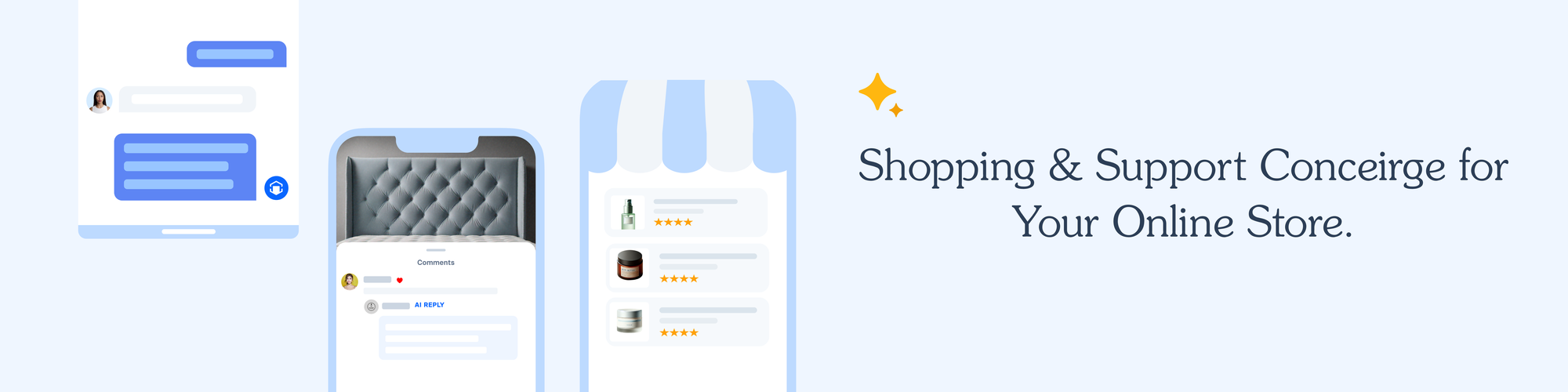
Most AI recommendation tools sit on product pages as widgets. Alhena AI takes a different approach: it embeds AI-powered upselling and cross-selling into every customer touchpoint through purpose-built vertical AI agents, from the first chat message to post-purchase follow-ups across web, email, Instagram DMs, and WhatsApp, and voice.
The Product Expert Agent and Vertical AI Agents
Alhena's Product Expert Agent trains on your entire product catalog, knowledge base, and brand voice. When a shopper asks about a specific item, the agent identifies the right moment to suggest a complementary product, an upgraded version, or a personalized bundle that fits the customer's stated needs.
What sets Alhena apart is its industry-specific vertical AI agents. Fashion and apparel brands get the Style Assistant for personalized recommendations, a Fit and Size Advisor that cross-references measurements with product dimensions, a Color Analyzer, and an Outfit Builder that suggests complete looks to increase basket size. Beauty and skincare brands get a Skin Analyzer, Shade Matcher, and ingredient-aware product expert that delivers accurate suggestions without hallucinations.
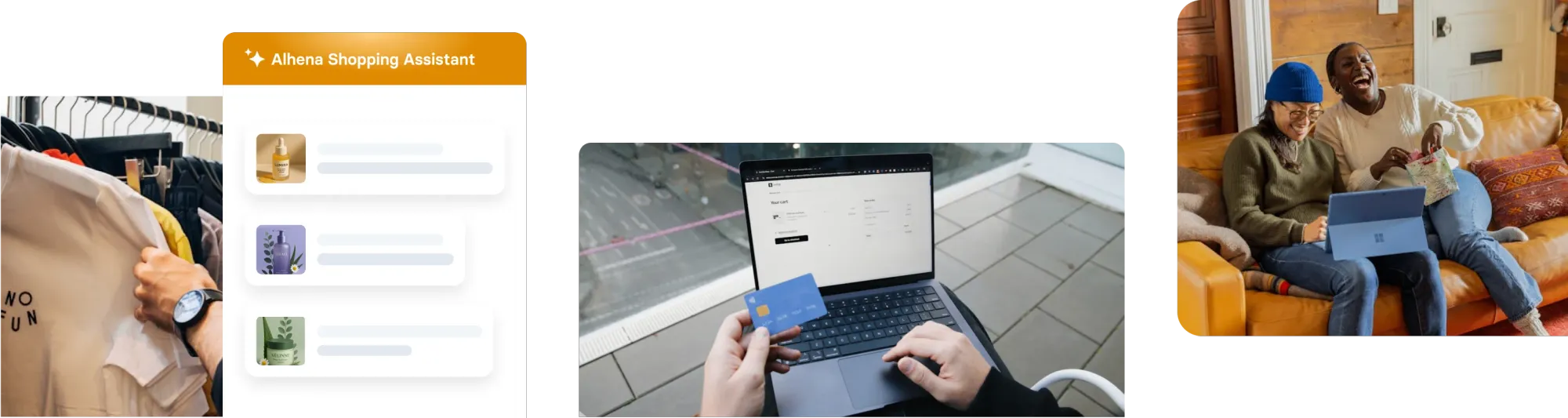
Home furnishing retailers benefit from visual search (shoppers upload room photos and Alhena finds matching products), curated palette recommendations, and dimension-aware product discovery. Travel and hospitality brands get a Trip Planner agent that turns browsing into confirmed bookings. Sports equipment retailers get gear-matching agents that connect athletes with performance-enhancing products.
Because every agent grounds its responses in verified catalog data, cross-sell suggestions are accurate and relevant, never hallucinated associations. Tatcha, the luxury skincare brand, saw a 3x conversion rate and 38% AOV uplift after deploying Alhena's AI, with 11.4% of total site revenue flowing through AI-assisted conversations. Read the full Tatcha case study here.
Agentic Checkout: From Recommendation to Cart
Recommendations mean nothing without purchases. Alhena's agentic checkout closes the gap by populating carts and pre-filling checkout fields directly within the conversation. A shopper who says "I'll take the serum too" doesn't navigate back to the product page. The AI handles it in one step, calling Shopify, WooCommerce, Salesforce Commerce Cloud or Magento APIs in real time to check inventory, apply discounts, and push items to cart. Agentic commerce is already reshaping how fashion brands sell online.
Smart Nudges, Autocomplete, and Conversational Search
Alhena's AI doesn't wait for shoppers to ask. Smart Nudges detect hesitation at checkout or on product pages and step in with contextual help or personalized suggestions. The conversational search replaces clunky filter navigation with natural language, so shoppers type what they want ("moisturizer for oily skin under $30") and the AI returns relevant matches instantly through intelligent autocomplete. Every user search becomes an opportunity for product discovery.
Omnichannel Memory and AI Support Concierge
A customer who browses on your website, messages on Instagram, and later calls your support line shouldn't start from scratch each time. Alhena's unified memory carries context across every channel. The AI Support Concierge handles support queries with the same product intelligence, while Agent Assist gives human agents AI-drafted responses and real-time product data for complex interactions that need a personal touch.
Victoria Beckham saw a 20% increase in average order value with this omnichannel approach. Puffy achieved 63% automated resolution with 90% CSAT. Manawa, a travel marketplace, cut response time from 40 minutes to under 1 minute. See how Victoria Beckham did it.
Revenue Attribution You Can Measure
Alhena includes built-in revenue attribution analytics that track exactly how much revenue each AI interaction generates. The dashboard shows which product recommendations convert, how accurate the AI's suggestions are, and where revenue opportunities are being missed, all without stitching together separate analytics tools.
Ready to turn every customer interaction into a revenue opportunity? Book a demo with Alhena AI to see how AI product recommendations work with your catalog, or start for free with 25 conversations.
Frequently Asked Questions
How do AI product recommendations differ from rule-based recommendations?
Rule-based systems use predefined conditions set by merchandisers, like showing socks when someone buys shoes. AI product recommendations analyze real-time browsing behavior, purchase history, cart contents, and conversational context to predict what each individual shopper is most likely to buy. Barilliance data shows personalized AI recommendations are 2.2x more effective than generic suggestions.
What is the average conversion rate for AI-powered upselling?
Conversion rates vary by upsell type. Order bumps at checkout convert at 37.8%, conversational AI chat upsells at 12.3%, post-purchase cross-sells at 14.6%, and email sequence upsells at 11.3%, according to a 2025 Focus Digital study of 1,847 businesses. Shoppers who engage with AI-powered chat convert at 4x the rate of unassisted sessions.
How does Alhena AI handle upselling and cross-selling?
Alhena AI embeds upselling into every customer touchpoint through its Product Expert Agent, which trains on your product catalog and brand voice. It identifies cross-sell opportunities during live conversations, suggests complementary products contextually, and uses agentic checkout to add items directly to the cart. Tatcha saw a 3x conversion rate and 38% AOV uplift with this approach.
Can AI product recommendations work on social media channels?
Yes. AI-powered product recommendations work across Instagram DMs, WhatsApp, and other social channels. Alhena AI supports omnichannel recommendations with unified memory, so context carries across web chat, email, social, and voice. US social commerce hit $87 billion in 2025 and is projected to exceed $100 billion in 2026.
How long does it take to set up AI upselling for my ecommerce store?
With Alhena AI, you can deploy AI-powered upselling and cross-selling in under 48 hours. The process involves connecting your product catalog from Shopify, WooCommerce, or Salesforce Commerce Cloud, training on your brand voice, and going live across channels. No developer resources are required.
What ROI can I expect from AI-powered product recommendations?
McKinsey reports that AI-powered personalization drives 5 to 15% higher revenue, with early adopters seeing up to 40% more revenue than laggards. Alhena AI customers have seen results including 3x conversion rates (Tatcha), 20% AOV increases (Victoria Beckham Beauty), and 38% average order value uplift. You can estimate your expected ROI using Alhena's ROI calculator.
Does AI upselling annoy customers or hurt brand perception?
When done right, AI upselling improves the customer experience rather than detracting from it. McKinsey found that 76% of consumers say personalization makes them more likely to purchase, and 78% say it drives repurchase. The key is making recommendations contextual and helpful. Alhena AI grounds suggestions in real product data and conversation context so they feel like advice, not sales pitches.
How does Alhena AI compare to static recommendation widgets?
Static widgets show the same suggestions to everyone based on simple rules. Alhena AI uses conversational context, browsing behavior, and product catalog intelligence to personalize recommendations in real time. It also includes agentic checkout to add items to cart directly, revenue attribution analytics, and omnichannel support across web, email, social, and voice channels.