McKinsey estimates that agentic commerce could orchestrate between $3 trillion and $5 trillion in global retail revenue by 2030. That is not a typo. Autonomous AI agents are already researching products, comparing prices, and completing purchases autonomously on behalf of consumers, and the shift is accelerating faster than most ecommerce teams realize. AI is redefining the shopping journey from discovery to checkout.
This guide breaks down what agent-to-agent commerce means for your brand, why it matters right now, and how to position your store so AI agents choose you over the competition.
What Is Agentic Commerce?
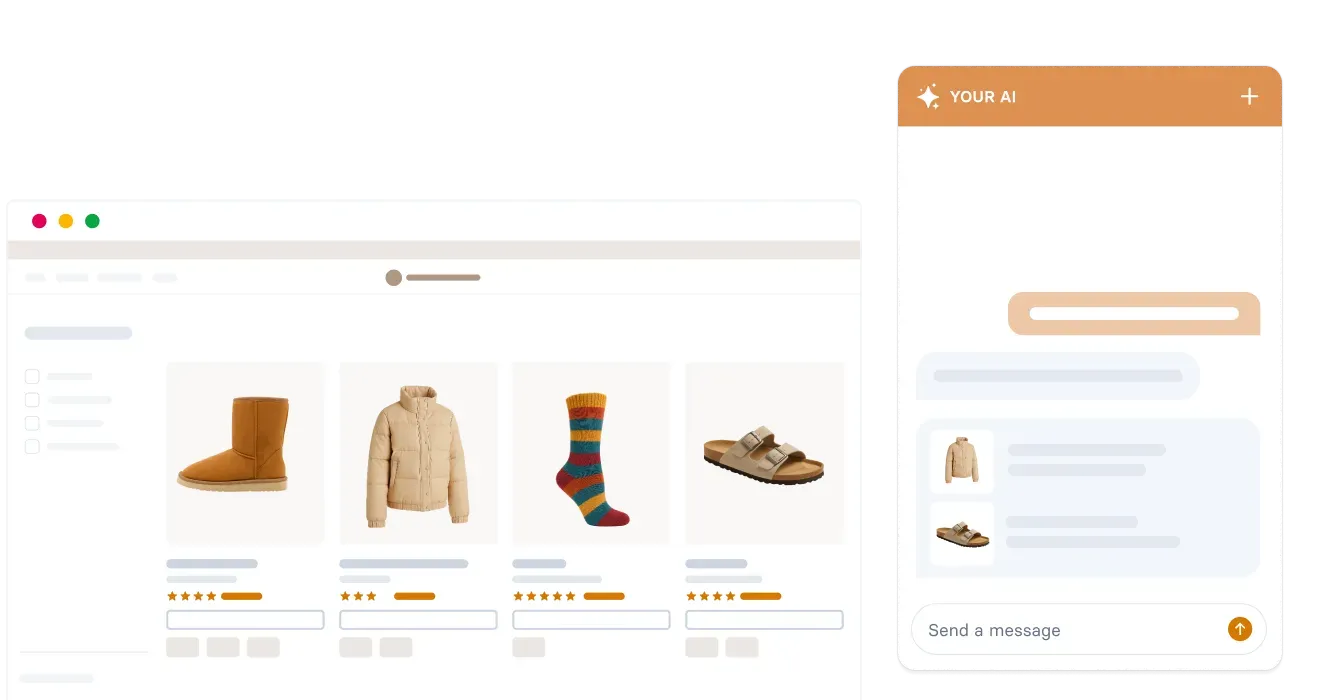
Agentic commerce is a model where AI agents act on behalf of shoppers to research, compare, negotiate, and buy products with minimal human intervention. Instead of a customer browsing your site and clicking through the traditional shopping journey, AI-powered systems handle the entire flow. For retailers, this shift means the customer's intent is now interpreted by an AI system, not a human scanning your homepage.
According to Morgan Stanley, nearly half of U.S. online shoppers will use AI shopping agents by 2030, contributing up to $385 billion in e-commerce spending. Gartner predicts that 60% of brands will rely on agentic AI for one-to-one customer interactions by 2028.
The takeaway is simple: your next high-value customer might not be a person. It might be their AI agent.
How Agent-to-Agent Commerce Works
Agent-to-agent commerce takes the concept further. Instead of one AI agent interacting with a traditional website, two AI agents communicate directly in a conversational exchange: a shopper's personal assistant and a merchant's commerce agent. The result is personalized product discovery at machine speed.
Here is what that looks like in practice:
- A consumer's agent sends a natural-language request: "Find a hypoallergenic moisturizer under $40 with next-day shipping."
- The merchant's AI shopping assistant receives the query, checks real-time inventory, confirms pricing, and returns a structured product recommendation.
- The shopper's agent validates the match, confirms the purchase, and completes checkout, all without either human touching a screen.
Two competing protocols are driving this shift. OpenAI and Stripe launched the Agentic Commerce Protocol (ACP) in September 2025, now live inside ChatGPT. Google countered with the Universal Commerce Protocol (UCP) in January 2026, targeting AI-mode search and Gemini. Most brands will need to support both.
Why Ecommerce Brands Cannot Afford to Wait
AI agents do not browse like humans. They do not see your hero banner, read your brand story, or get swayed by an Instagram campaign. They rely on AI search to evaluate structured data: product attributes, pricing accuracy, inventory availability, and return policies. Platforms like Perplexity and other generative AI search tools are already reshaping how products become discoverable. These AI platforms use autonomous agents to surface personalized results, transforming retail discovery for consumers everywhere.
If your product catalog, policies, and value proposition are not machine-readable, autonomous AI agents will simply skip you. The brands that win in agentic commerce are the ones whose product data is clean, accurate, and instantly accessible through APIs. Without structured catalog data exposed via APIs, your store becomes invisible to AI systems.
This is where most stores fall short. Legacy ecommerce stacks were built for human eyes, not agent queries. Unstructured descriptions, inconsistent attributes, and siloed inventory data create friction that AI agents have zero patience for. Retailers who fail to adapt will lose ground to brands that embrace AI-driven personalization and make their shopping assistants work autonomously.
How Alhena AI Prepares Your Store for Agentic Commerce
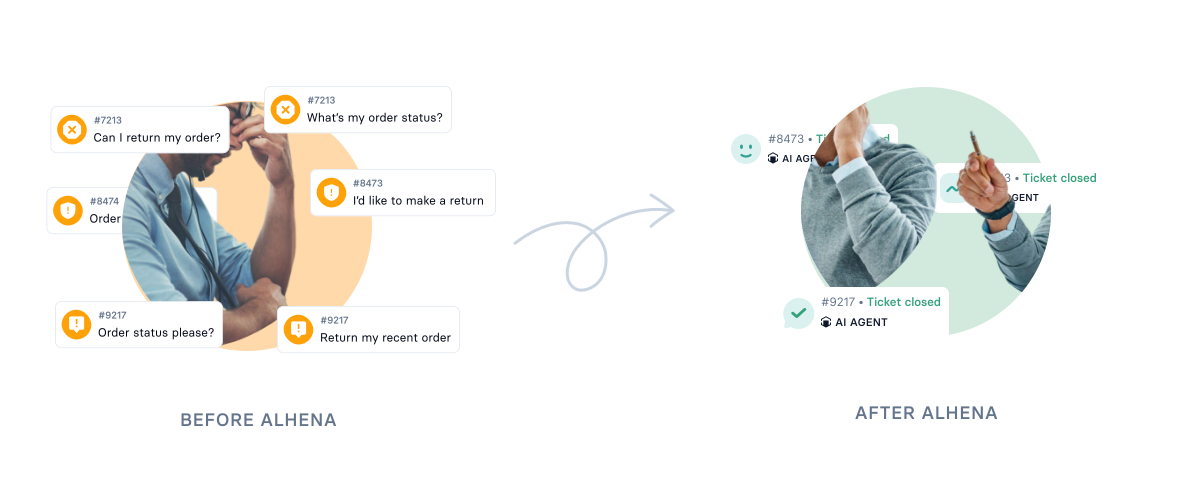
Alhena AI is purpose-built to serve as your store's intelligent, AI-powered commerce agent, the merchant-side AI that can communicate with shopper agents, deliver personalized recommendations, answer complex product queries, and drive purchases.
Hallucination-free product data. Alhena's Product Expert Agent grounds every response in verified catalog data. When an external AI agent asks about ingredient lists, sizing, or compatibility, Alhena responds with accurate, structured answers, never fabricated claims. This reliability is what makes AI agents trust your store.
Agentic checkout. Alhena does not just recommend products. It populates carts, pre-fills checkout fields, and reduces the steps between customer intent and purchase. When AI agents act autonomously on a shopper's intent and behalf, this frictionless, conversational checkout flow is essential.
Omnichannel readiness. Whether a shopper's agent reaches your store through web chat, email, WhatsApp, or Instagram DMs, Alhena handles it. The AI Support Concierge ensures consistent, accurate responses across every channel.
Proven revenue impact. Brands using Alhena are already seeing results that validate this approach. Tatcha achieved a 3x conversion rate with 38% higher average order value, while Alhena drove 11.4% of total site revenue. Victoria Beckham Beauty saw a 20% AOV increase. These numbers show what happens when AI agents have reliable data to work with. See more results on the case studies page.
Three Steps to Get Agentic-Commerce Ready
You do not need to overhaul your tech stack overnight. Start with these three moves:
- Audit your product data. Ensure every SKU has complete, structured attributes: materials, dimensions, compatibility, care instructions. AI agents rank stores with richer data higher. Optimize your catalog so every product is discoverable in real time across AI platforms.
- Deploy a merchant-side AI agent. Tools like Alhena AI for ecommerce give your store an intelligent agent that can field queries from both human shoppers and external AI agents across the entire customer journey. Setup takes under 48 hours with no developer resources needed. This lets you automate the commerce platform layer that agents interact with.
- Measure AI-driven revenue. Use Alhena's ROI calculator to project the revenue impact, then track it with built-in revenue attribution analytics. You cannot optimize what you do not measure.
The Bottom Line
Agent-to-agent commerce is not a five-year prediction. It is happening now. OpenAI, Google, Visa, Mastercard, and PayPal are all building the infrastructure. McKinsey, Morgan Stanley, and Gartner agree: the brands that prepare their stores for AI agents today will capture a disproportionate share of the trillions in AI-powered shopping transactions these agents will orchestrate, building lasting customer loyalty in the process.
The question is not whether AI agents will shop on your behalf. It is whether they will proactively shop at your store. Every consumer touchpoint, from third party AI assistants to native chatbots, is becoming an autonomous shopping channel.
Ready to make your store agentic-commerce ready? Book a demo with Alhena AI or start for free with 25 conversations.
Frequently Asked Questions
What is agentic commerce?
Agentic commerce is a model where AI-powered agents research, compare, and purchase products on behalf of consumers with minimal human intervention. McKinsey projects it could orchestrate $3 to $5 trillion in global retail revenue by 2030.
How does agent-to-agent commerce differ from traditional ecommerce?
In traditional ecommerce, humans browse websites and complete checkout manually. In agent-to-agent commerce, a shopper's AI agent communicates directly with a merchant's AI agent to discover products, verify inventory, negotiate, and complete purchases without either human touching a screen.
What are the Agentic Commerce Protocol (ACP) and Universal Commerce Protocol (UCP)?
ACP is the protocol launched by OpenAI and Stripe in September 2025, now live inside ChatGPT for conversational product discovery. UCP is Google's coalition-backed protocol announced in January 2026, designed for AI-mode search and Gemini. Most ecommerce brands will need to support both protocols.
How does Alhena AI help ecommerce brands prepare for agentic commerce?
Alhena AI serves as the merchant-side commerce agent that communicates with external shopper agents. It provides hallucination-free product data, agentic checkout that populates carts and pre-fills forms, and omnichannel support across web chat, email, WhatsApp, and Instagram. Brands like Tatcha have seen 3x conversion rates using Alhena.
How long does it take to deploy Alhena AI on an ecommerce store?
Alhena AI deploys in under 48 hours with no developer resources needed. It integrates with major platforms including Shopify, WooCommerce, Magento, and Salesforce Commerce Cloud, as well as helpdesks like Zendesk, Freshdesk, and Gorgias.
Will AI shopping agents replace human shoppers?
AI agents are not replacing human shoppers but augmenting them. Morgan Stanley predicts nearly half of online shoppers will use AI agents by 2030, handling routine tasks like price comparison and reordering. Humans still make final decisions for high-consideration purchases, while agents handle the research and execution.