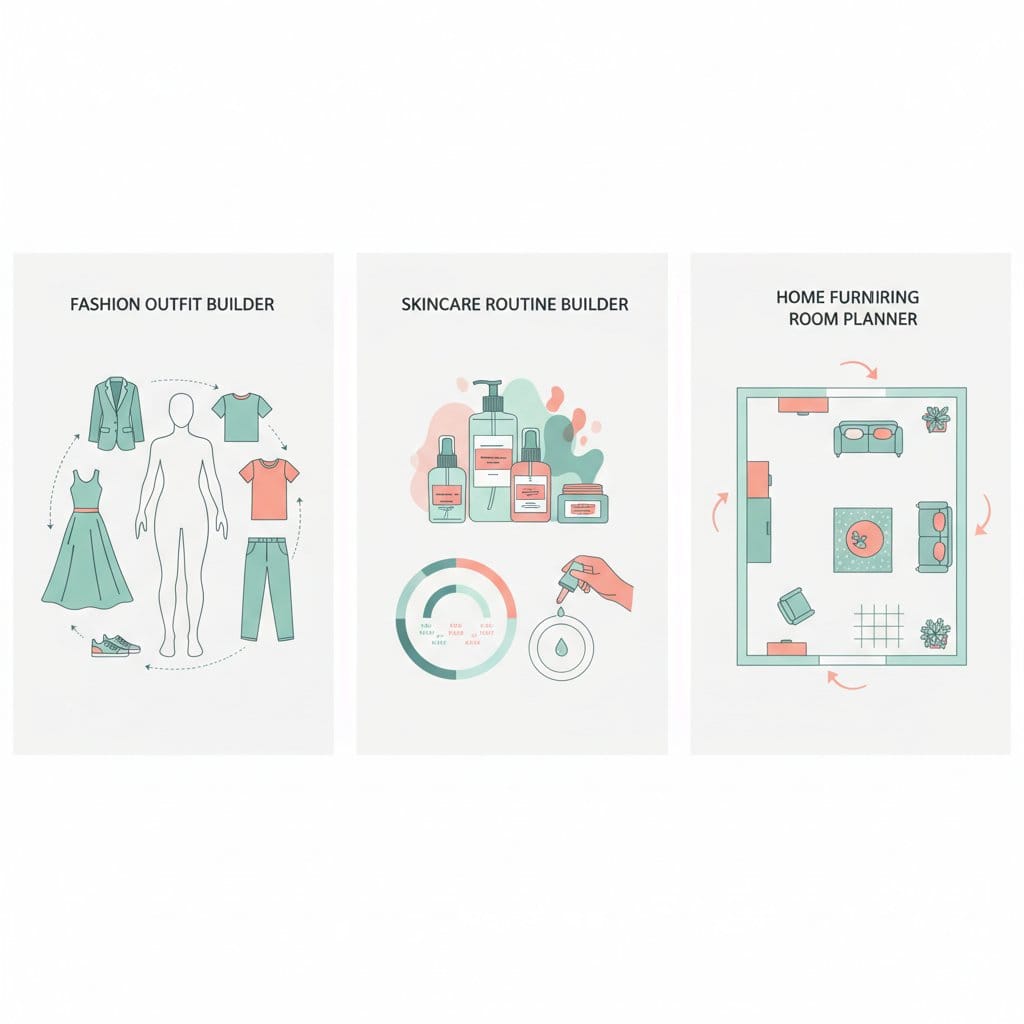
A skincare brand and a furniture retailer have almost nothing in common when it comes to how their customers shop. One buyer needs help building a morning routine around sensitive skin. The other needs to know if a sectional will fit through a 32-inch doorway. Yet most AI tools treat both shoppers the same way: keyword search, generic filters, and a chatbot that says, "Check the product page."
The technology works. The problem is that it isn't built for how people actually buy in specific categories. Here's why vertical-specific artificial intelligence can transform shopping experiences, and what that looks like across fashion, beauty, and home goods.
The Problem with Horizontal AI in Ecommerce
Generic AI solutions are built for breadth. They can answer basic questions, surface products by keyword, and handle "where is my order?" requests. But they don't understand context the way a knowledgeable salesperson would.
Ask a horizontal chatbot "What moisturizer should I use?" and you'll get a list of best-sellers. Ask a vertical AI the same question, and it will ask about your skin type, current routine, any sensitivities, and whether you're layering it under sunscreen. The difference isn't intelligence. It's domain knowledge.
Alhena AI identifies this as the "No Vertical Intelligence" failure mode: the bot can hold a conversation, but it can't understand category-specific requirements like fit in fashion or ingredient compatibility in skincare.
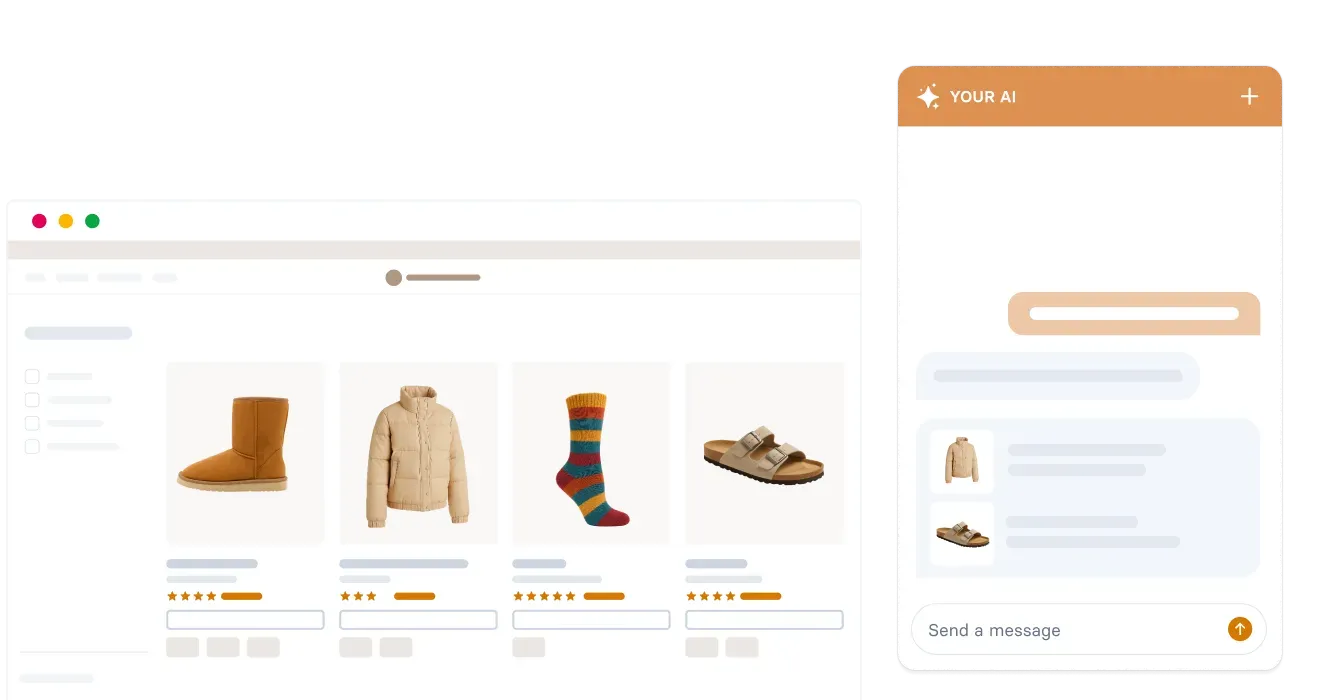
Fashion: Where Fit and Style Are Everything
Apparel has the highest return rates in ecommerce, and sizing is the primary culprit. 50 to 70% of fashion returns stem from fit issues. Shoppers "bracket" by ordering multiple sizes, intending to return most of them. That's not a shipping problem. It's a product discovery problem.
A generic chatbot responds to "What size should I get?" with "Check the size chart." A vertical AI does something different entirely. It cross-references the shopper's body measurements against SKU-level garment dimensions, factors in fabric stretch, and accounts for brand-specific sizing curves. Retailers using AI fit prediction tools have seen 27% to 67% reductions in size-related returns.
Beyond sizing, fashion shoppers need outfit discovery. They're not always looking for a single item. They want to know what pairs well, what completes a look, what matches the blazer they bought last month. Alhena's Outfit Builder Agent and Fit and Size Advisor handle exactly this: style matching, color analysis, and "Complete the Look" suggestions that increase average order value through intelligent bundling.
Generic AI treats every product as interchangeable inventory. Vertical AI for fashion understands that a customer asking about a "breathable summer dress" has different needs than someone searching for a "structured office blazer," even though both are dresses.
Beauty: Routines, Ingredients, and Skin Science
Skincare is arguably the most personal product category in ecommerce. Two people with the same skin type might need completely different routines based on climate, age, existing products, and ingredient sensitivities. A foundation shade that looks right on screen might oxidize differently on warm versus cool undertones.
Generic AI can't handle this. It recommends best-sellers or filters by price. It doesn't know that layering niacinamide with vitamin C requires specific timing, or that a retinol user needs a different moisturizer than someone using AHAs.
Vertical beauty AI changes the conversation entirely. Alhena's beauty-specific tools include a Skin Analyzer (selfie-based skin type and concern analysis), a Regimen Builder (personalized day and night routines), and a Shade Matcher for precise foundation matching. Customers describe their goals in natural language instead of filling out lengthy questionnaires.
The results from brands using vertical beauty AI are striking. Tatcha using Alhena AI, achieved a 38% AOV increase through guided product recommendations. These cases aren't marginal gains. They show the real impact of vertical AI on growth. They're proof that AI built for a specific vertical outperforms generic tools by an order of magnitude.
The latest AI features for beauty brands go even further, with inclusive AI trained on diverse skin tones and textures, and proactive post-purchase engagement that drives repeat purchases.
Home Goods: Compatibility, Space, and High-Stakes Decisions
Buying a sofa isn't like buying a t-shirt. The average furniture return costs 20 to 65% of the item's original price to process, and reverse shipping for a large piece can exceed $350. Customers must have confidence before they commit, and generic AI doesn't provide it.
Consider a shopper looking for a patio dining set. They need to know if the table fits their deck dimensions, whether the chairs are weather-resistant for their climate, and if the umbrella hole is compatible with their existing base. Unlike a human expert, a horizontal chatbot often can search "patio dining set" and sort by rating. That's it.
Vertical AI for home goods handles spatial awareness, material compatibility, and use-case matching. Alhena's home furnishing tools let shoppers upload room photos for visual style matching, get curated palettes adjusted to their taste and budget, and receive smart bundled recommendations across rooms. The AI narrows 200 sofas down to three based on room dimensions, style preferences, and price range.
Brands like have found that customers engaging with visual AI tools are 11x more likely to purchase, with size-related returns dropping by 71%. When a customer can visualize how a piece fits their space before buying, making the entire decision process faster and more confident.
Why Vertical AI Wins: The Underlying Mechanics
The pattern across all three verticals is consistent. Vertical AI reduces what behavioral economists call decision friction. With a 70.19% average cart abandonment rate globally (Baymard Institute), the biggest opportunity for retailers in ecommerce isn't driving more traffic. It's improving the customer experience so visitors make confident decisions. It's helping existing visitors make confident decisions.
Generic AI adds options. Vertical AI removes bad ones, leaving less noise and more clarity. That's the critical difference. Guided selling improves efficiency, and retailers can see results fast. Powered by vertical AI that understands the product category, it is the antidote to choice paralysis.
Gartner predicted that 40% of enterprise apps will feature task-specific AI agents by 2026, up from under 5% in 2025. The trends in generative AI and ecommerce are clear, and demand is surging. The industry is moving from monolithic, do-everything chatbots toward specialized agents that handle domain-specific tasks and excel at one vertical.

How Alhena Enables Vertical Shopping Experiences
Alhena AI is purpose-built for this shift in modern digital commerce software. Rather than offering a single generic chatbot, Alhena deploys vertical AI agents tailored to each product category: a Fit Analyzer and Outfit Builder for fashion, a Skin Analyzer and Regimen Builder for beauty, and Visual Discovery with Room Styling for home goods.
Each agent draws from the brand's actual product catalog and learns from real customer interactions, not generic training data. That means recommendations are grounded in real inventory, real specs, and real-time availability. There are no hallucinogenic products or outdated suggestions.
The results speak for themselves, and they scale across businesses of every size. Tatcha achieved a 3x conversion rate and 38% AOV uplift with Alhena's product-aware shopping experience. Puffy reached 63% automated inquiry resolution with 90% CSAT. Crocus hit an 86% deflection rate at 84% satisfaction. Victoria Beckham drove 10% revenue growth with Alhena AI Stylist. Across verticals, companies using Alhena see measurably better outcomes through intelligent, data-driven automation that boosts performance than those relying on generic AI tools.
AI has become a strategic differentiator, not just a customer service tool. The platform deploys in under 48 hours with no dev resources, works across chat, email, Instagram DMs, WhatsApp, and voice, and integrates with Shopify, WooCommerce, Magento, and Salesforce Commerce Cloud.
The Bottom Line
A fashion shopper and a furniture buyer and a skincare customer walk into your store. They have different questions, different anxieties, and different paths to purchase. Treating them all the same isn't just a missed opportunity. It's the reason most ecommerce AI projects fail.
Vertical-specific AI doesn't just personalize. It understands the product, the category, and the decision that the customer is trying to make. That understanding is the difference between an AI that deflects tickets and an AI that drives revenue, fueling marketing insights that lead to unlocking potential and long-term customer loyalty.
Ready to give your customers a shopping experience built for your vertical? Book a demo with Alhena AI or start for free with 25 conversations.

Frequently Asked Questions
How do AI agents specialize in different retail verticals?
AI agents built for specific verticals are trained on category-level data, fit charts and fabric specs for fashion, ingredient databases for beauty, spatial dimensions for home goods. Alhena AI deploys specialized AI agents for each vertical rather than relying on one general AI chatbot. Each agent analyzes real product catalog data, learns from customer interactions, and automates guided selling workflows tailored to the category. This specialized approach outperforms broad, general AI tools that lack the domain knowledge to handle complex purchase decisions.
What is the difference between general AI and vertical AI for ecommerce retailers?
General AI uses broad training data and handles basic tasks like keyword search and order tracking. Vertical AI is purpose-built for a specific industry and understands category-level nuances, fit prediction in fashion, ingredient compatibility in beauty, spatial analysis in home goods. Alhena AI's vertical approach gives retailers hyper-relevant product recommendations, while general AI treats every product and shopper the same way, leading to lower conversion and higher returns.
What retail industries benefit most from specialized AI technology?
Fashion, beauty, and home goods see the highest ROI from vertical AI because each industry involves complex, high-stakes purchase decisions. Fashion retailers reduce returns with AI fit prediction. Beauty brands boost margin by guiding customers to the right products the first time. Home goods retailers cut costly furniture returns with spatial recommendations. Alhena AI serves all three verticals with specialized agents, and the technology applies to any retail category where generic search and filters fail to address category-specific buyer anxieties.
How does vertical AI use data to improve personalization for online retailers?
Vertical AI pulls from product-level data (SKU dimensions, ingredient lists, material specs), customer behavior data (browsing patterns, past purchases, stated preferences), and real-time inventory data to deliver personalization that generic tools can't match. Alhena AI analyzes this data to build loyal customer relationships through tailored routines, curated outfits, and room-specific furniture recommendations, adjusting suggestions as stock levels and customer sentiment evolve.
How does AI reduce returns in fashion ecommerce?
AI fit prediction tools cross-reference body measurements against SKU-level garment data, accounting for fabric stretch and brand-specific sizing. Retailers using these tools report 27% to 67% reductions in size-related returns. Without vertical AI, 50 to 70% of fashion returns stem from fit issues.
How long does it take to deploy vertical AI for an ecommerce store?
Alhena AI deploys in under 48 hours with no developer resources required. The platform integrates with Shopify, WooCommerce, Magento, and Salesforce Commerce Cloud, and works across chat, email, Instagram DMs, WhatsApp, and voice channels.