Salesforce AgentForce has signed roughly 12,000 customers since its late-2024 launch. That sounds impressive until you learn Salesforce has over 150,000 existing customers, and 77% of B2B AgentForce deployments fail. For e-commerce brands, the numbers get worse: AgentForce wasn't built to sell products, recommend outfits, or populate shopping carts. It was built to extend Salesforce's CRM.
If you're evaluating agentforce alternatives for your online store, you need a tool that does more than deflect tickets. You need AI that drives revenue. This guide breaks down seven alternatives worth considering, what each one does well, and where Alhena AI fits for brands that want their AI to actually sell.
Why E-Commerce Brands Are Looking Beyond AgentForce
AgentForce sits inside the Salesforce ecosystem. That's both its strength and its biggest limitation. To use it, you need a Salesforce environment with Service Cloud or Commerce Cloud at a minimum, plus Data Cloud ($125 to $250 per user per month), plus the AgentForce license itself. True annual TCO reaches roughly $13,600 per user when you factor in implementation services ($50,000 to $150,000) and ongoing managed services.
That's a lot to spend on an AI agent that charges $2 per conversation regardless of whether it resolves the issue. Compare that to Intercom Fin at $0.99 per resolution (charged only when the AI actually solves the problem) or Gorgias at $0.90 per resolved conversation.
Beyond pricing, AgentForce has hard technical limits: 20 agents per org, 15 topics per agent, and a 60-second action timeout. For e-commerce brands handling thousands of use cases like product questions, order tracking requests, and return inquiries daily, those constraints add up fast. As one operations lead put it: "I never know how much it will really cost me, how much to budget, or how credits are being calculated."
7 Best AgentForce Alternatives for E-Commerce
Here's how the top alternatives stack up for online retailers. Each tool takes a different approach to AI customer service, so the right choice depends on your platform, budget, and whether you need your AI to sell or just support.
1. Alhena AI: Purpose-Built for E-Commerce Revenue
Alhena AI is the only AI agent platform built specifically to drive e-commerce sales, not just handle support tickets. While most agentforce alternatives focus on ticket deflection, Alhena deploys two specialized agents: a Product Expert Agent that guides shoppers through product discovery, and an Order Management Agent that handles post-purchase inquiries like returns, tracking, and cancellations.
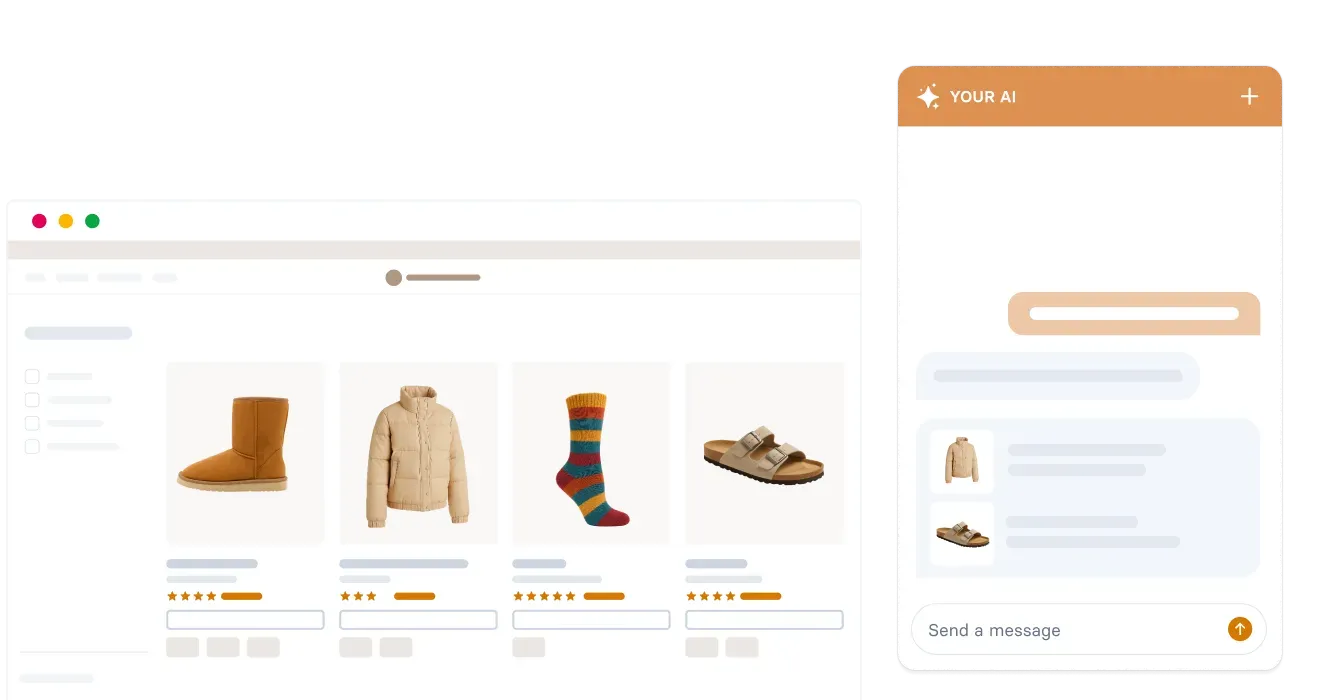
What sets Alhena apart is agentic checkout. The AI doesn't just recommend products; it populates carts, pre-fills checkout fields, and nudges hesitant shoppers with contextual offers. Tatcha saw a 3x conversion rate and 38% AOV uplift after deploying Alhena, with 11.4% of total site revenue attributed to AI conversations. Victoria Beckham reported a 20% increase in average order value.
Alhena is hallucination-free, grounding every response in your verified product data, knowledge base, and brand voice. It works across web chat, email, Instagram DMs, WhatsApp, and voice, and deploys in under 48 hours with no developer resources. It integrates natively with Shopify, WooCommerce, Magento, and Salesforce Commerce Cloud, plus helpdesks like Zendesk, Freshdesk, Gorgias, and Intercom.
Best for: E-commerce brands that want AI to generate revenue, not just cut costs.
Pricing: Free to start with 25 conversations. Paid plans scale with usage.
2. Intercom Fin: Strong on Resolution, Weak on Sales
Intercom Fin has processed over 40 million resolved conversations with a 67% resolution rate. At $0.99 per resolution, you only pay when the AI actually solves the customer's problem. Fin connects to external systems via APIs and MCP connectors, and uses natural-language "Procedures" for multi-step workflows.
The catch? Fin is a support tool. It deflects tickets and answers questions, but it doesn't guide product discovery, populate carts, or drive upsells. For SaaS companies and general customer service, Fin is excellent. For e-commerce brands that want their AI to sell, it falls short. If you're comparing options, our Alhena AI vs Intercom Fin breakdown covers the key differences.
Best for: SaaS and e-commerce brands focused primarily on support automation.
Pricing: $0.99 per resolution, plus Intercom platform fees starting at $29/seat/month.
3. Zendesk AI: Enterprise-Grade Support, Not E-Commerce Native
Zendesk's AI agents come pre-trained on billions of customer support interactions and offer outcome-based pricing at $1.50 to $2.00 per automated resolution. The "dynamic pricing" model lets you shift budget between human agent seats and AI resolutions within the same contract, which helps seasonal e-commerce businesses manage variable support volumes.
Zendesk handles ticket routing, knowledge base answers, and basic automation well. But like Fin, it wasn't designed to sell. There's no product recommendation engine, no cart population, and no revenue attribution built in. For a deeper look at where Zendesk AI falls short for online stores, see our guide to Zendesk AI alternatives.
Best for: Mid-market to enterprise companies already on Zendesk who want to add AI support.
Pricing: $1.50 to $2.00 per automated resolution, plus Zendesk Suite plans starting at $55/agent/month.
4. Gorgias: E-Commerce Helpdesk With AI Add-On
Gorgias has evolved from a Shopify-focused helpdesk into a platform with AI agent capabilities. Its 2026 "AI Agent 2.0" update introduced a proactive shopping assistant that engages customers during browsing and recommends products based on cart and browsing behavior. At $0.90 per resolved conversation, it's the cheapest per-resolution option among major players.
The limitation is scope. Gorgias works best for Shopify, BigCommerce, and Magento stores. If you're on WooCommerce or Salesforce Commerce Cloud, the integration story is weaker. And while Gorgias now offers pre-sale engagement, its core DNA is still helpdesk-first. For brands weighing Gorgias against other options, our Gorgias alternatives guide provides a detailed comparison.
Best for: Shopify-native brands looking for affordable AI support automation.
Pricing: $0.90 per automated resolution. Platform plans start at $10/month.
5. Tidio (Lyro AI): Budget-Friendly for Small Stores
Trusted by over 300,000 businesses and their users, Tidio targets small and medium e-commerce operations. Its Lyro AI agent claims to solve up to 67% of customer problems autonomously. The Shopify integration lets agents view carts, issue refunds, check shipping, and manage orders within the chat interface.
Tidio's strength is accessibility. The entry price is $32.50 per month for 50 AI conversations, making it the most affordable option for stores just starting with AI. The trade-off is depth: Lyro lacks the sophisticated product recommendation, checkout assistance, and revenue analytics that larger brands need. For a head-to-head comparison, check our Alhena AI vs Tidio analysis.
Best for: Small e-commerce stores with limited budgets and moderate ticket volumes.
Pricing: From $32.50/month for 50 conversations. Free plan available with limited features.
6. Freshdesk Freddy AI: Mid-Market Value Play
Freshworks' Freddy AI operates within the Freshdesk ecosystem and offers session-based pricing in packs of 1,000 at roughly $0.10 per session. That makes it one of the cheapest options on paper, though the "session" model means you pay whether the AI resolves the issue or not.
Freddy handles common support tasks like ticket categorization, auto-responses, and knowledge base suggestions. It integrates with the broader Freshworks suite (Freshsales, Freshmarketer), giving mid-market companies a unified customer engagement platform. But for e-commerce specifically, Freddy lacks native commerce platform integrations and any sales-oriented AI features. See our Alhena vs Freddy AI comparison for a full breakdown.
Best for: Budget-conscious mid-market teams already in the Freshworks ecosystem.
Pricing: ~$0.10 per session in 1,000-session packs. Platform plans from $15/agent/month.
7. Ada CX: Enterprise Automation Without Commerce DNA
Ada lets teams build and deploy AI agents without engineering resources. It focuses on high-volume automation across chat, email, and voice, and serves enterprise clients with custom pricing (estimated $1.00 to $3.50 per resolution). Ada's strength is scale: it handles millions of conversations for brands like Meta and Verizon.
For e-commerce, Ada's challenge is the same as Zendesk and Intercom. It automates support, not sales. There's limited customization for e-commerce, no product discovery engine, no cart integration, and no revenue tracking. If your priority is deflecting high-volume tickets at enterprise scale, Ada works. If you want AI that sells, you'll need to look elsewhere. Our Ada alternatives for e-commerce guide explores this in detail.
Best for: Enterprise brands with massive ticket volumes needing multilingual automation.
Pricing: Custom quotes. Estimated $1.00 to $3.50 per resolution.
AgentForce Alternatives Compared: At a Glance
Here's how the top agentforce alternatives compare across the criteria that matter most for e-commerce brands:
AgentForce Alternatives: At a Glance
| Platform | Best For | Per-Resolution Cost | E-Commerce Sales AI | Setup Time |
|---|---|---|---|---|
| Alhena AI | E-commerce revenue + support | Usage-based, free tier | Yes (agentic checkout, cart, recs, Vertical AI Agents) | Under 48 hours |
| Intercom Fin | SaaS + e-commerce support | $0.99/resolution | No | Days |
| Zendesk AI | Enterprise omnichannel support | $1.50-$2.00/resolution | No | Weeks |
| Gorgias | Shopify support automation | $0.90/resolution | Limited (new feature) | Days |
| Tidio (Lyro) | SMB e-commerce | ~$0.65/conversation | No | Hours |
| Freshdesk Freddy | Budget mid-market | ~$0.10/session | No | Weeks |
| Ada CX | Enterprise high-volume | $1.00-$3.50 (est.) | No | Weeks to months |
| AgentForce | Salesforce ecosystem | $2/conversation or $0.10/action | No (CRM-focused) | Months |
What AgentForce Alternatives Can't Do (But Alhena Can)
Every alternative listed above handles some form of AI customer support. Zendesk deflects tickets. Intercom resolves conversations. Gorgias automates post-purchase inquiries. But none of them were built with a single goal: turning browsers into buyers.
Alhena AI's Product Expert Agent doesn't wait for a customer to file a ticket. It proactively engages shoppers, asks qualifying questions ("What's the occasion? What's your skin type? What size are you looking for?"), and returns personalized product recommendations grounded in your actual catalog data. No hallucinations. No made-up products. No generic "here are some options" responses.
Then it closes the sale. Alhena's agentic checkout populates the cart, applies relevant discounts, and pre-fills shipping details. Puffy achieved 63% automated inquiry resolution with 90% CSAT using this approach. Crocus hit an 86% deflection rate with 84% customer satisfaction. Manawa cut response times from 40 minutes to 1 minute while automating 80% of inquiries.
The difference isn't incremental. It's structural. Support tools measure success by tickets avoided. Alhena measures success by revenue generated, with built-in reporting and attribution analytics that show exactly how much revenue each AI conversation drives.
How to Choose the Right AgentForce Alternative
Picking the right AI agent platform comes down to five questions. Answer these honestly, and the right choice usually becomes obvious.
1. What's Your Primary Goal: Cost Reduction or Revenue Growth?
If you only care about cutting support costs and want to improve ticket resolution, tools like Zendesk AI, Freshdesk Freddy, and Intercom Fin will get the job done. They deflect tickets, automate common answers, and reduce agent workload. But if you want your AI to actively contribute to revenue through product discovery, cart building, and conversion optimization, Alhena is the only platform purpose-built for that.
2. What E-Commerce Platform Are You On?
This narrows the field quickly. Gorgias is strongest on Shopify. Alhena works across Shopify, WooCommerce, Magento, and Salesforce Commerce Cloud. Zendesk and Intercom are platform-agnostic but require more configuration to pull commerce data. If you're still on Salesforce Commerce Cloud, Alhena's native integration gives you AgentForce-level data access without the AgentForce price tag.
3. What's Your Real Budget?
Don't just compare sticker prices. AgentForce's $2 per conversation looks reasonable until you add Data Cloud fees, implementation costs, and managed services. Calculate your total cost of ownership across all options, including platform fees, per-resolution charges, implementation time, and ongoing maintenance.
4. How Fast Do You Need to Go Live?
AgentForce implementations typically take months and require dedicated Salesforce admins. Tidio and Alhena can go live in days. If time-to-value matters (and for most e-commerce teams, it does), lean toward tools that deploy in under 48 hours without dev resources.
5. Do You Need Omnichannel Coverage?
Some tools only cover web chat. Others add email. Alhena covers web chat, email, Instagram DMs, WhatsApp, and voice from day one, with social commerce features that let customers buy directly through social messaging. If your customers reach out across multiple channels, make sure your AI meets them everywhere.
Staying on AgentForce means paying enterprise prices for a tool that wasn't designed to capture that revenue upside. Every month you spend on a support-only AI is a month your competitors are using AI to sell.
Ready to replace AgentForce with an AI that actually sells? Book a demo with Alhena AI to see how brands like Tatcha and Puffy are turning customer conversations into revenue. Or start for free with 25 conversations and test it on your own store.
Frequently Asked Questions
What are the best Salesforce AgentForce alternatives for e-commerce?
The top AgentForce alternatives for e-commerce include Alhena AI (purpose-built for e-commerce revenue), Intercom Fin ($0.99/resolution), Zendesk AI ($1.50-$2.00/resolution), Gorgias ($0.90/resolution), Tidio Lyro, Freshdesk Freddy AI, and Ada CX. Alhena AI is the only option that combines AI support with agentic checkout, vertical AI agents and revenue attribution.
How does Alhena AI compare to Salesforce AgentForce for AI-powered customer service?
Alhena AI outperforms AgentForce for e-commerce customer service in three key areas: speed, cost, and capability. AgentForce charges $2 per conversation regardless of resolution, requires the Salesforce ecosystem (Service Cloud, Data Cloud, Commerce Cloud), and takes months to implement. Alhena AI goes live in under 48 hours, offers a free tier with 25 conversations, and includes AI-powered product recommendations, agentic checkout, and autonomous AI resolution, all without enterprise-level licensing. For brands on Salesforce Commerce Cloud, Alhena provides native integration that pulls product catalog data without the full Salesforce AI stack or Data Cloud dependency.
Why do e-commerce brands switch from AgentForce to specialized AI tools?
E-commerce brands switch because AgentForce is a horizontal CRM tool, not an e-commerce sales engine. It has a 77% B2B deployment failure rate, only 20% adoption in most organizations, and does not offer product recommendation, cart population, or revenue attribution features. Specialized tools like Alhena AI deploy in under 48 hours and start driving revenue from day one.
Can Alhena AI work alongside my existing CRM and helpdesk?
Yes. Alhena AI is designed to plug into your existing ecosystem rather than replace it. If you use Salesforce as your CRM, Alhena integrates natively with Salesforce Commerce Cloud and can work alongside Salesforce Service Cloud without requiring the AgentForce add-ons or Data Cloud licensing. It also connects directly with Zendesk, Freshdesk, Gorgias, and Intercom as helpdesk platforms, supplementing your human agent workflow with autonomous AI resolution. This means you can keep your current suite of tools while adding AI-driven sales capabilities and knowledge management through Alhena's Knowledge Hub.
How do I choose the right AI agent platform to replace AgentForce?
Choosing the right AgentForce alternative comes down to five factors: your primary goal (cost reduction vs. revenue growth), your e-commerce platform (Shopify, WooCommerce, Magento, or Salesforce Commerce Cloud), your real budget including total cost of ownership, your required deployment speed, and your omnichannel needs. If your priority is enterprise support automation, Zendesk AI or Ada CX are strong options. If you need budget-friendly Shopify support, Gorgias or Tidio excel. If your goal is to turn AI into a revenue channel, with product discovery, agentic checkout, and revenue attribution, Alhena AI is the only competitor built for that purpose. Start by auditing what AgentForce currently costs you across licensing, implementation, and managed services, then compare that against the functionality and pricing of each alternative.