Alhena Headless: your customer intelligence, now inside Claude and ChatGPT
For the past few years, every conversation a shopper has with your Alhena concierge has produced a signal. Why people buy. What they ask about. What they want and cannot find. Which product they almost purchased before something gave them pause. Until recently, your team reached all of that through our dashboard.
With Alhena Headless, you can now connect your own Claude or ChatGPT account directly to your Alhena workspace and ask questions about your store, your customers, and your operation in plain English. The same intelligence that lives in our dashboard becomes available through the AI assistant your team already opens every morning.
A few examples of what that looks like in practice:
- Ask which products customers keep requesting that you do not yet stock, and get a ranked list of unmet demand with real transcripts behind it.
- Ask which SKUs you should buy more of next quarter and which are losing momentum, based on the questions shoppers are actually asking before they purchase.
- Ask why last weekend's sales moved the way they did, and trace it back to the category, the campaign, or the social mention that drove it.
- Ask what is making shoppers hesitate on a specific product, and see the common objections around fit, fabric, shipping, or price pulled together in one place.
Work that once took an analyst the better part of a week now takes a few minutes of conversation. The connection runs on an open standard called the Model Context Protocol, which is simply a secure way for AI assistants to talk to business systems. It operates under the same permissions and audit trail your team already uses, so nothing is exposed that should not be.
There is a quieter point worth making here. Connecting a platform this way is a test of how well built it is underneath. The data has to be clean, the knowledge has to be organized, and the agents and rules have to be things an AI can reason over. We did that groundwork over the last few years precisely so this would be possible today.
Most customers are connected and asking questions in under ten minutes. Your customer success contact is happy to walk your team through it.
AI Help, rolled out the careful way
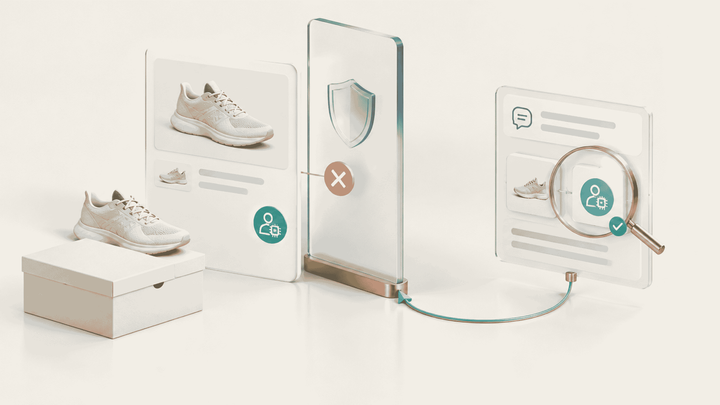
We have been expanding our new AI Help experience, which brings better assisted support directly into your team's workflows. The work here went into the controls around the rollout: feature flags, conversation search, channel mappings, and internal safeguards.
Why this matters to you: we can now turn the new experience on company by company, at a measured pace, rather than flipping a single switch for everyone at once. That keeps risk low while your team gets the benefit of better help inside the tools they already use.
Smarter shopping and product discovery
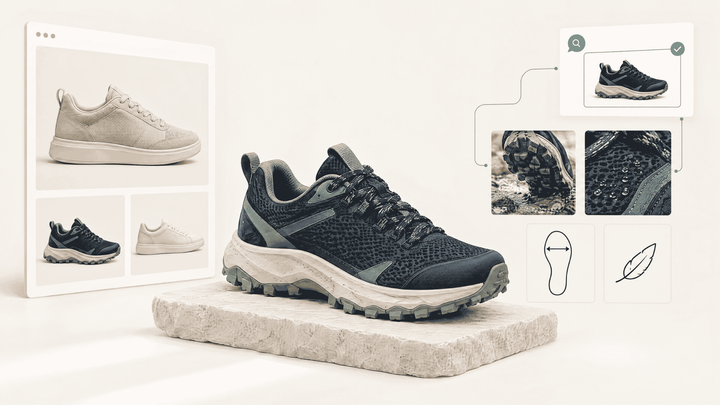
We rebuilt our Virtual Try-On pipeline with a new process that checks image quality and reviews each result before it reaches a shopper. The outcome is more dependable try-on images, which raises the quality of the apparel shopping experience and gives higher-value categories a stronger showing.
Alongside that, we improved how shoppers find and choose products. Shoppers can now see outfit suggestions, pick color and size variants directly from product cards, and move through choices more naturally, with cleaner handling of items that should be excluded. We also made a series of refinements to the chat widget itself, including a sound toggle for new messages, clearer copy controls, and tidier history filtering, so the shopping experience feels smoother and less noisy.
For you, this is straightforward: a richer, more confident path from browsing to purchase.
Getting found in AI search
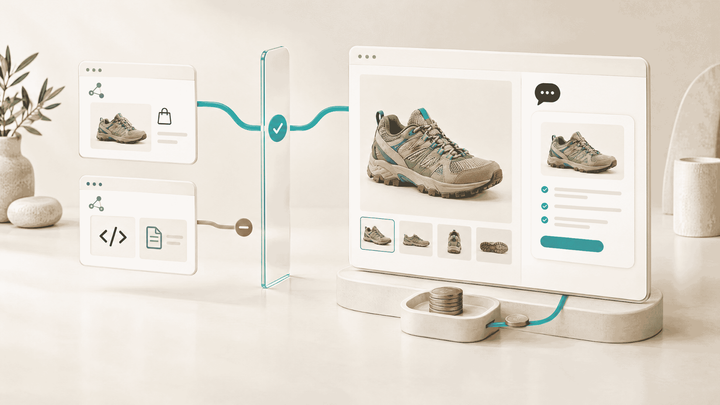
More of your customers are now asking AI assistants for product and brand recommendations before they ever reach a search engine or your site. Our AI Visibility product (AEO/GEO solution) helps brands understand and improve how they show up in those AI answers.
This past month, we've expanded it considerably: new onboarding, support for the EU, content visibility sorting, clearer content and FAQ tools, and a stronger backend to handle scale. As this becomes a real channel for discovery, this gives your team a way to see where you stand and act on it.
Stronger answers and cleaner handoffs
A good support experience depends on two things: the quality of the answer, and how smoothly a conversation moves between systems and people. We invested in both.
On answer quality, we improved how the agent chooses its approach, added support for newer models from across the industry, sharpened how answers are classified, improved language detection, and added clearer signaling when an answer should be held back. The practical result is that the agent picks better paths and produces safer, more reliable responses, with sensible fallback behavior when it is unsure.
On continuity, we deepened our connections to the helpdesk and commerce tools your team already runs. That includes case-history summaries in Salesforce, improved handling in Freshchat, Gorgias, Zoho, and Zendesk, and better support for post-purchase work such as preorders, returns, and shipping-address changes. When a shopper asks about an order or a return, the agent can now help with higher-value questions rather than stopping at a generic answer, and handoffs to your human team carry the full context as always.
We've also extended our voice experience, with more natural language switching and steadier behavior during live calls, which helps for teams looking to support customers beyond text.
The platform underneath
Some of our most important work this season is the kind customers rarely see but always feel.
We added to and improved our work across the commerce platforms and tools Alhena connects with, including Purple Dot, Loop, Yotpo, Shopify, BigCommerce, Magento, Salesforce Commerce Cloud, and Solidus. In plain terms, more merchants can run Alhena cleanly against the store stack they already use, which widens the range of businesses we can serve well.
Finally, we strengthened security and access. New user roles, page-level controls, and resource-based permissions let you give more of your team access to Alhena while keeping the wrong settings and data out of the wrong hands. For a growing team, that balance between access and control is what makes scaling up comfortable.
If you would like a walkthrough of anything here, your customer success contact can set one up.