Why the Top 3 Slots on Perplexity Are Worth Fighting For
Perplexity doesn't show twenty blue links. It surfaces a handful of products per query, sometimes just three. That makes each result slot extraordinarily valuable, especially when you consider the data: Perplexity shoppers deliver 57% higher average order values than traffic from other AI platforms, according to Alhena AI's ecommerce AOV report. The audience skews educated and high-income, with 80% holding college degrees and 65% earning above-average household incomes. If your products aren't showing up in Perplexity's online shopping results, you're leaving high-intent sales revenue on the table.
This post breaks down exactly how Perplexity selects its top product recommendations, what signals its generative engine weighs, and what ecommerce brands can do right now to land in those top slots. Think of it as a generative engine optimization (GEO) playbook for the AI shopping era.
How Perplexity's Shopping Algorithm Picks Products
Perplexity doesn't run ads. There's no bidding for product placement. Visibility is earned, not bought. The algorithm evaluates products across several core signals, weighted roughly in this order:
Structured Data Completeness
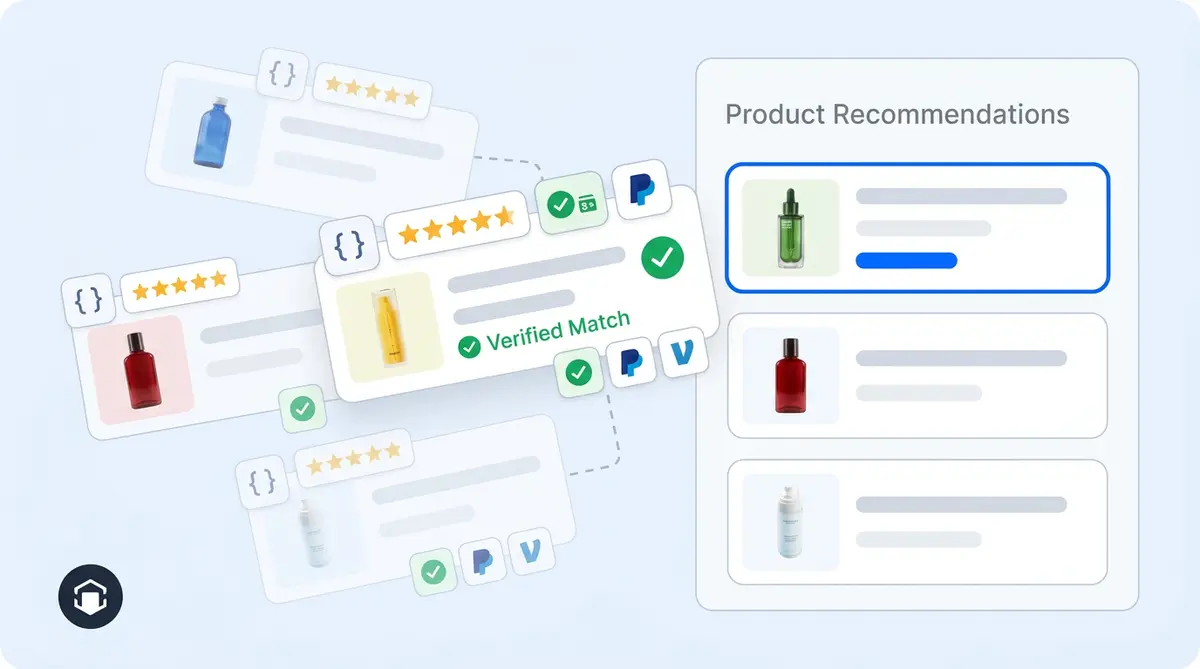
Perplexity's AI reads JSON-LD schema markup before it reads your HTML. Products with complete Product, Offer, AggregateRating, and Review schema get indexed faster and recommended more often. Pages with structured data are cited 3.1x more frequently in AI-generated answers. Without clean schema, Perplexity can't reliably parse your specs, pricing, or availability, and it will skip your product entirely.
Review Quality and Volume
Verified reviews with specific, detailed feedback carry more weight than generic star ratings. Perplexity's model pulls sentiment signals from review content, not just aggregate scores. A product with 200 detailed reviews outranks one with 2,000 vague "great product" ratings.
Pricing Transparency and Real-Time Accuracy
Stale pricing data kills recommendations. Perplexity cross-references your listed price against its crawled data. If your product feed shows $49 but your site shows $59, the inconsistency drops your product from consideration. Real-time Offer schema with accurate price, currency, availability, and condition fields is non-negotiable.
Product Specificity Matching Query Intent
Perplexity users ask highly specific questions: "best lightweight stroller for city apartments under $300" or "organic face serum for combination skin." The algorithm matches product attributes against query specifics. Products with detailed, structured attribute data (dimensions, materials, skin type, use case) win over products with thin descriptions, regardless of brand size.
Content Authority from Third-Party Sources
Perplexity's citation model pulls from across the web, not just your product page. Brand mentions on review sites, Reddit threads, YouTube comparisons, and editorial roundups all contribute to your product's authority score. Consistent entity information (same brand name, same product specs) across these sources reinforces trust in Perplexity's ranking model.
The Merchant Program and Checkout-Enabled Boost
Perplexity's Merchant Program is free with zero transaction fees. Enrolled merchants retain 100% of revenue and remain the merchant of record. The program provides a dashboard with consumer behavior insights and, critically, better product indexing.
The real advantage comes from checkout enablement. Products that support in-app checkout through Perplexity's payment integration (powered by PayPal and Venmo) receive a ranking boost. Perplexity directly prioritizes products that keep users inside the experience. If a shopper can research and buy without leaving the chat, that product is more likely to surface in the top three.
Shopify-powered stores get automatic baseline visibility through Perplexity's Shopify integration, even without enrolling. But enrolled merchants with checkout enabled consistently outperform on selection frequency.
Why Structured Data Beats Domain Authority Alone
Traditional search engines like Google rewarded big brands with high domain authority. Perplexity's citation-heavy model works differently. It favors products with rich, machine-readable data over brands that simply rank well on Google. A smaller DTC brand with complete Product schema, GTINs, and detailed attribute markup can outrank a household name that has a strong domain but thin structured data.
AI search traffic converts at 14.2% compared to 2.8% from traditional search. Pages with complete Product schema see a 74.1% CTR lift. The data is clear: investing in structured data pays off disproportionately in AI shopping surfaces.
Your Perplexity Shopping Optimization Playbook
Here's what ecommerce marketers and digital teams should act on this week:
1. Audit and Complete Your Schema Markup
Add or fix JSON-LD markup for Product, Offer, AggregateRating, and Review types on every product page. Include GTINs (UPC/EAN), brand name, SKU, dimensions, materials, and condition. Use Google's Rich Results Test tool to validate your real-time markup.
2. Clean Up Your Product Feed
Ensure your product feed matches your live site exactly. For a step-by-step walkthrough of feed setup, see our <a href="https://alhena.ai/blog/perplexity-shopping-merchants-setup-guide/" title="Perplexity Shopping merchants setup guide">Perplexity Shopping merchant setup guide</a>: pricing, availability, images, and descriptions. Update feeds in real time or at minimum daily. Inconsistencies between feed data and on-page data trigger ranking penalties in AI shopping systems.
3. Build a Review Strategy That Creates Depth
Ask customers specific post-purchase questions that generate detailed reviews: "What problem did this solve?" or "How does it compare to what you used before?" Review depth matters more than review count for Perplexity product recommendations.
4. Enroll in the Merchant Program and Enable Checkout
Sign up at Perplexity's merchant portal. If you're on Shopify, you already have baseline visibility, but enrollment unlocks better indexing and the checkout-enabled boost. The next step: connect your payment integration to support in-app purchasing.
5. Position Your Content for AI Citation
Create product pages that answer specific questions in natural language. Add FAQ sections to PDPs. Ensure your brand entity is consistent across review sites, social platforms, and editorial content. Perplexity pulls authority signals from every source it indexes.
How Alhena AI Helps You Win on Perplexity
Alhena AI gives ecommerce brands visibility into how their products appear across online AI shopping surfaces, including Perplexity. Instead of guessing which products are surfacing (or missing) from AI recommendations, Alhena provides actionable data on your product presence across LLM-powered shopping experiences.
Alhena's Product Review intelligence and ecommerce-specific AI agents help brands optimize the signals that matter: structured product data, review quality, and conversion pathways. Brands using Alhena AI have seen results like 3x conversion rates (Tatcha) and 38% AOV uplift, proving that AI-optimized product presence translates directly to revenue. Learn how Tatcha did it.
With AI shopping queries growing 5x since late 2024 and 65% of consumers expecting AI-powered shopping to become standard by 2026, optimizing for surfaces like Perplexity isn't optional. That's because it's a current, growing revenue channel that rewards early movers.
The Bottom Line: High Intent, Not High Traffic
Winning on Perplexity isn't about traffic volume. It's about showing up for high-intent, high-value queries where a single recommendation drives outsized revenue. The brands that invest in Perplexity shopping optimization now, while the channel is still uncrowded, will own those top three slots. That’s the advantage of moving now, before the market catches on.
Ready to see how your products appear across AI shopping surfaces? Book a demo with Alhena AI or start for free with 25 conversations.
Frequently Asked Questions
How does Perplexity decide which products to recommend in shopping results?
Perplexity ranks products based on structured data completeness, review quality and volume, pricing accuracy, query intent matching, and third-party content authority. Alhena AI helps brands track and improve these signals across AI shopping surfaces so your products are more likely to appear in top recommendation slots.
What is Perplexity shopping optimization and why does it matter for ecommerce brands?
Perplexity shopping optimization is the process of improving your product data, schema markup, and content signals to increase visibility in Perplexity's AI-powered shopping results. It matters because Perplexity shoppers spend 57% more per order than other AI referral traffic. Alhena AI provides the analytics and product intelligence to make optimization measurable and actionable.
Can small DTC brands compete with large retailers on Perplexity product recommendations?
Yes. Perplexity's algorithm favors structured data quality over domain authority, so a smaller brand with complete Product schema and detailed reviews can outrank larger competitors with thin data. Alhena AI levels the playing field by giving DTC brands the same AI visibility tracking and conversion intelligence that enterprise retailers use.
How does the Perplexity Merchant Program affect product visibility and ranking?
Enrolled merchants get better product indexing and access to checkout enablement, which provides a ranking boost inside Perplexity's shopping experience. The program is free with no transaction fees. Alhena AI helps brands monitor how Merchant Program enrollment impacts their product recommendation frequency across AI shopping channels.
How can I track whether my products are appearing in AI shopping results on Perplexity and other LLMs?
Traditional analytics tools don't track AI shopping surface visibility. Alhena AI fills this gap by monitoring how your products appear across LLM-powered shopping experiences, including Perplexity, and providing actionable data on product presence, conversion pathways, and revenue attribution from AI-driven recommendations.