How to Choose the Best AI Agent for Your E-commerce Brand
Learn how to choose the best AI agent for e-commerce. Discover key criteria to guide shoppers, reduce hesitation, and drive real revenue growth.
TL;DR
The best AI agent for e-commerce understands shopper intent, guides product discovery, works autonomously across the shop journey, and drives measurable revenue. Avoid generic chatbots. Choose an AI agent built for commerce, accuracy, and real buying decisions.
How do you choose the best AI agent for e-commerce?
You should choose an AI agent that can guide buying decisions, reduce shopper hesitation, and act autonomously across product discovery, support, and checkout. The best ecommerce AI agents are accurate, conversational, and built specifically for commerce, not generic AI or basic AI search tools.
Why most e-commerce AI agents fail
Many e-commerce brands rush into AI expecting instant results.
What they often buy instead:
- A chatbot that answers FAQs
- A layer on top of AI search
- A tool optimized for deflection, not conversion
These tools struggle when real decisions are involved. Buying is not a lookup problem. It’s a confidence problem.
What should an ecommerce AI agent actually do?
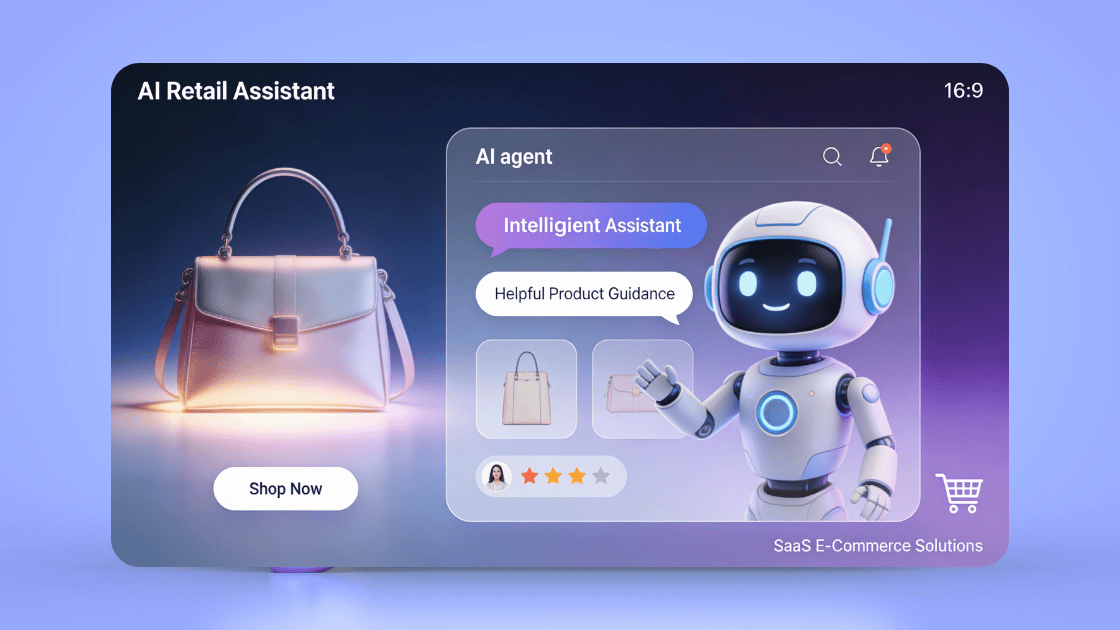
An effective ecommerce AI agent behaves like an intelligent retail assistant, not a scripted bot.
It should:
- Understand shopper intent in real time
- Reason across the product catalog
- Reduce perplexity during product discovery
- Act autonomously when guidance is needed
- Step back when confidence is achieved
If it can’t do this, it’s not an agent. It’s just automation.
Key criteria to evaluate an AI agent for e-commerce
1. Does the AI agent understand intent, not just keywords?
Shoppers rarely ask perfect questions.
The best AI agents:
- Interpret intent from vague queries
- Ask clarifying questions conversationally
- Adapt guidance based on context
Keyword-based AI search fails here.
Vertical AI Agents Demo
2. Can it guide product discovery, not just list products?
Strong agents don’t increase choices.
They:
- Narrow options
- Explain tradeoffs
- Help shoppers decide
This reduces perplexity and shortens the shop journey.
3. Does it operate autonomously but safely?
An ecommerce AI agent must act autonomously within clear boundaries.
Look for:
- Guardrails against hallucinations
- Business rules tied to inventory and policies
- Controlled agent actions near checkout
Autonomy without control erodes trust.
4. Is it built for e-commerce, not general AI?
Generic generative AI tools are not built for retail complexity.
Ecommerce AI agents should natively handle:
- Product catalogs
- Variants and bundles
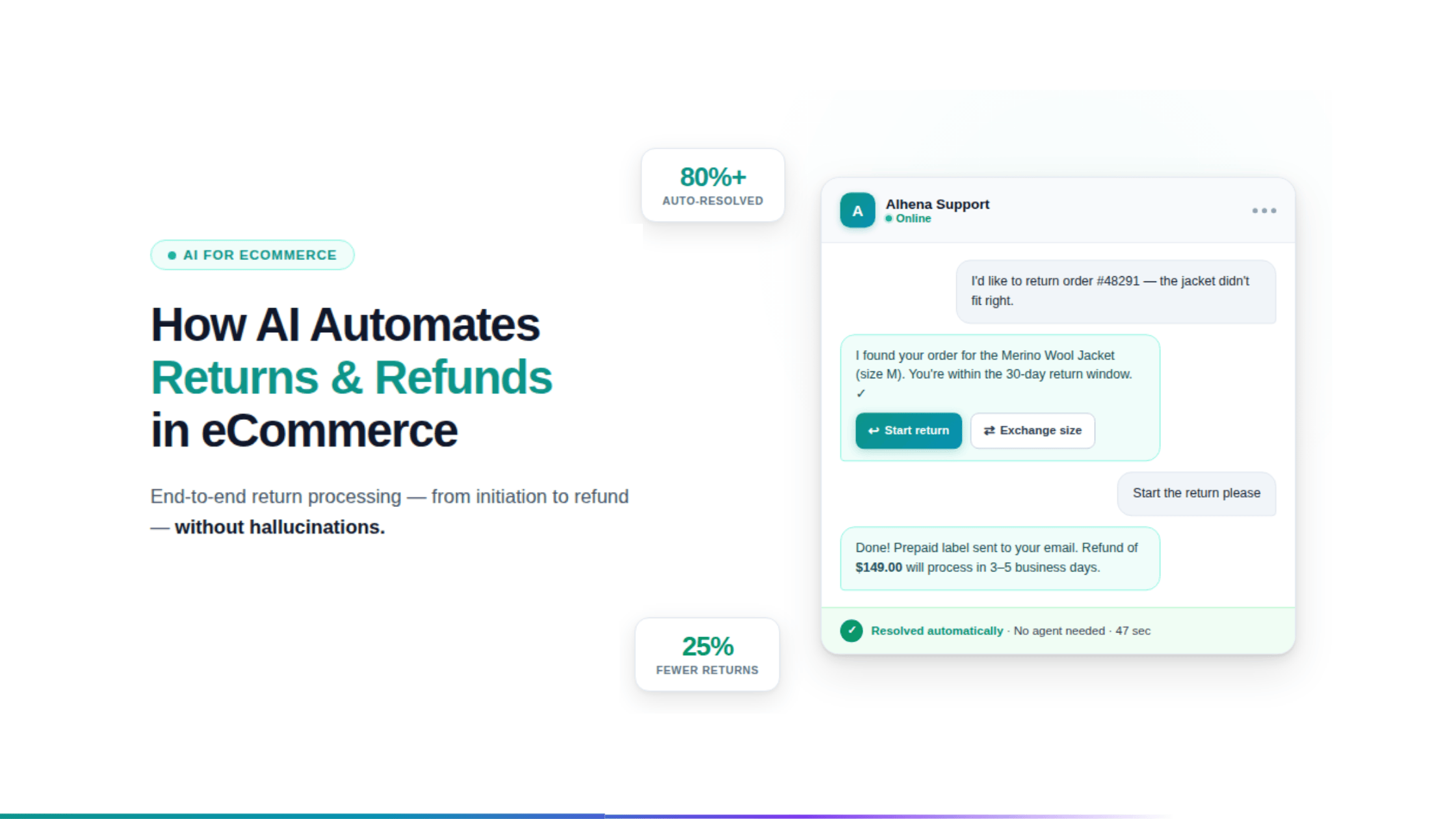
- Returns and shipping logic
- Promotions and availability
Commerce context matters.
5. Can it work across the full shop journey?
Buying does not happen in one step. The right AI agent supports:
- Discovery
- Consideration
- Pre-purchase questions
- Checkout confidence
- Post-purchase support
Fragmented tools break continuity.
6. Does it sound conversational and on-brand?
Tone affects conversion. Especially in:
- Beauty
- Luxury
- Wellness
- Premium DTC
Your AI assistant should match the brand voice, not feel robotic.
7. Can you measure revenue impact from conversations?
Deflection alone is not success. You should be able to see:
- Which conversations influenced conversion
- Which agent interactions increased AOV
- How AI power translates into revenue
If it can’t show impact, it’s just noise.
An AI agent understands intent, reasons over the catalog, and acts autonomously across the shop journey. A chatbot answers questions.
AI agents reduce perplexity during discovery, guide decisions conversationally, and step in only when shoppers hesitate before checkout.
That difference defines agentic commerce.
Questions to ask before choosing an AI agent
Use these as a quick checklist:
- Does it guide decisions or just answer questions?
- Can it reduce shopper confusion?
- Does it operate safely and autonomously?
- Is it built for e-commerce use cases?
- Can it attribute revenue to conversations?
If the answer is “no” to more than one, keep looking.
AI agent vs traditional e-commerce tools
| Traditional Ecommerce Tools | Agentic AI for Ecommerce |
|---|---|
| Static AI search and filters | Intent-driven product discovery |
| FAQ chatbots that answer questions | AI agents that guide buying decisions |
| Isolated tools across the stack | Unified AI system across the shop journey |
| Focus on clicks and deflection | Focus on confidence and conversion |
| Reactive support workflows | Autonomous, controlled agent actions |
Final thoughts: choosing the right AI agent matters
Most e-commerce brands don’t need more AI tools.
They need:
- Fewer confused shoppers
- Faster decisions
- Better conversion without pressure
The best AI agent feels invisible. It helps shoppers move forward without noticing the help.
Case Study: Alhena AI + Victoria Beckham
Why Alhena AI is built for this exact problem
Alhena AI is designed as an all-in-one AI agent platform for e-commerce brands.
Read how Victoria Beckham increased revenue by 10%: Full Story here.
It combines:
- Shopping-first AI agents for product discovery
- Hallucination-free support automation
- Conversational guidance across the entire shop journey
- Revenue attribution tied to real conversations
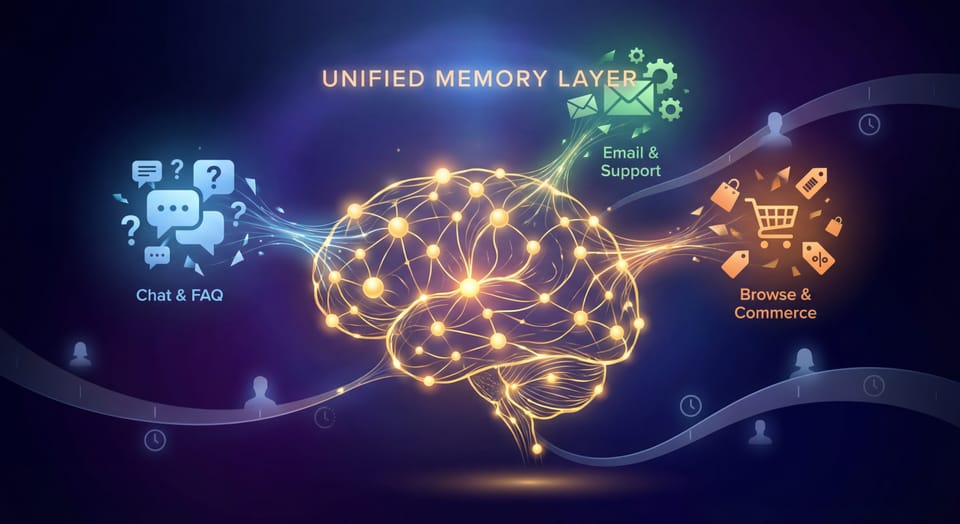
- One unified AI system for commerce, not separate tools
Instead of choosing between shopping assistants, support bots, and AI search, brands use Alhena AI to unify everything into a single intelligent agent experience.
That’s what modern agentic commerce looks like.

FAQ
What is an agentic AI agent for ecommerce?
An agentic AI agent is an intelligent agent that acts autonomously on behalf of a retailer to guide shoppers through product discovery, reduce perplexity, and support decisions across the shopping journey.
What should retailers look for in the best AI agent?
Retailers should look for an AI system built for commerce that supports product discovery, works autonomously with guardrails, and improves conversion before checkout.
Can AI agents improve e-commerce conversion and personalization?
Yes. AI agents reduce shopper hesitation by simplifying discovery, enabling real personalization, and guiding decisions with contextual AI power.
Is generative AI enough to power an ecommerce AI agent?
No. Generative AI must be combined with an e-commerce-ready AI platform, real-time data, and accuracy controls to work safely in retail.
When should an ecommerce brand adopt an AI agent?
When shoppers ask repeated questions, experience decision friction, or rely on assistants to decide what to buy, the brand is ready for agentic commerce.