TL;DR
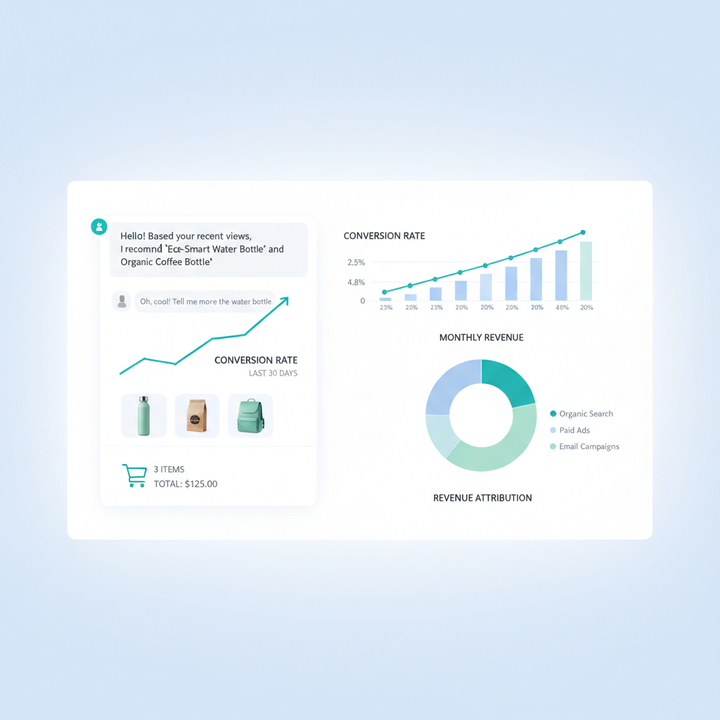
I’ve learned this the hard way: fashion ecommerce isn’t a search problem. It’s a confidence problem. A storefront copilot like Alhena AI acts as an AI shopping assistant that guides shoppers through discovery, outfit selection, and purchase using conversational commerce and shoppable chat. By behaving like a virtual stylist, AI agents help shoppers move from “just browsing” to confident buying.
What Is a Storefront Copilot in Fashion E-commerce?
A storefront copilot is an AI shopping assistant built into the online store to guide shoppers in real time. Unlike basic chatbots, it helps customers move from browsing to buying with confidence.
A storefront AI copilot:
- Understands shopper intent, even when it’s vague
- Learns personal style and style DNA
- Recommends outfits through natural conversation
- Personalizes suggestions across the shopper’s wardrobe
- Enables buying directly inside chat
In practice, it acts as an AI stylist for ecommerce, offering personalized, on-demand guidance as shoppers explore and decide.
Why Conversational Commerce Works for Fashion
Fashion decisions are emotional and visual. Shoppers want to describe what they want in their own words, share inspiration, and refine choices without starting over.
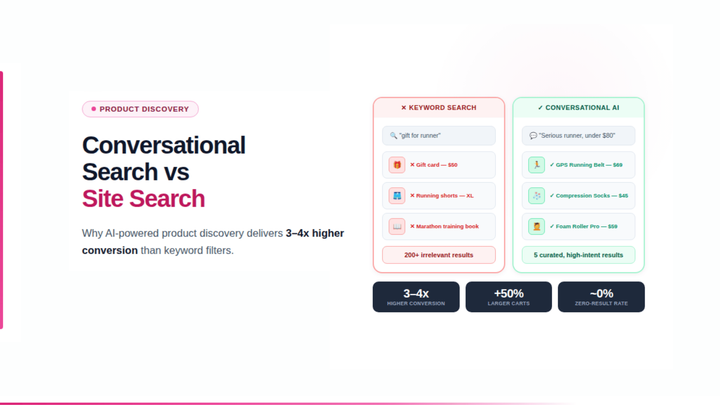
Conversational commerce makes this possible. Instead of navigating filters and menus, shoppers interact naturally with an AI assistant. When combined with shoppable chat, the conversation becomes the storefront itself, products are discovered, outfits are suggested, and questions are answered in real time.
This is where a storefront copilot delivers real value. Shoppers feel guided, not overwhelmed, like working with a personal stylist rather than scrolling endlessly. That confidence is what drives higher conversion.
The Storefront Copilot as a Virtual Stylist
A great in-store stylist understands the shopper, curates outfits, explains why pieces work, and builds confidence at the moment of decision.
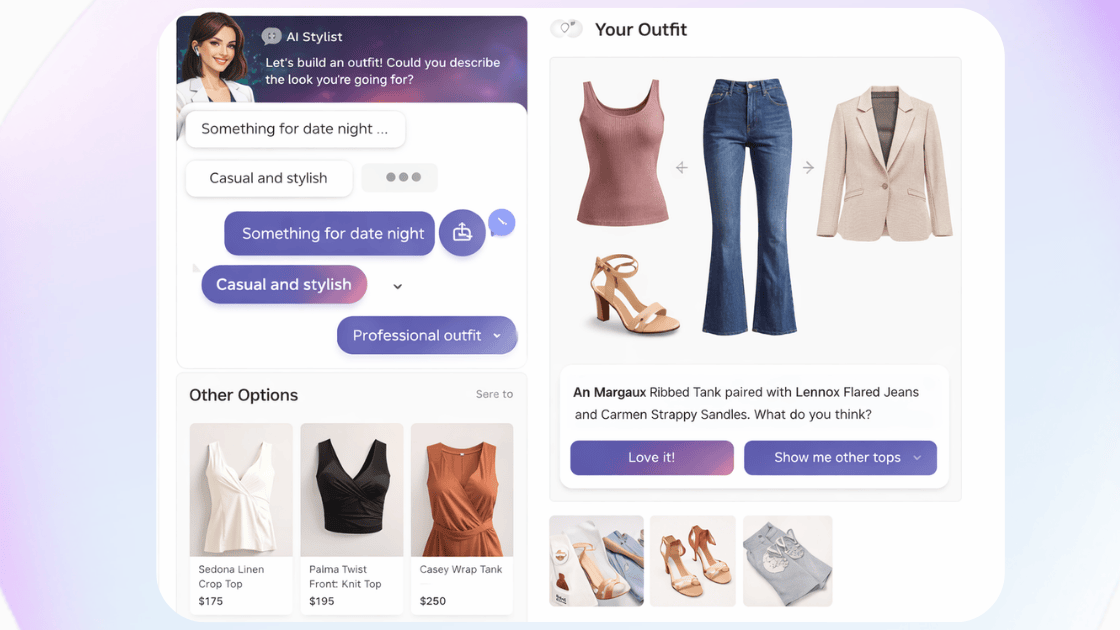
A storefront AI copilot brings this experience online. It acts as a virtual stylist, recommending outfits based on personal style, body type, and occasion, and refining suggestions in real time based on feedback.
Instead of browsing hundreds of SKUs alone, shoppers receive curated outfit ideas that make sense together. The result is less uncertainty, more confidence, and higher conversion.
Real-World Example: Victoria Beckham’s Digital Stylist
Luxury fashion raises the bar for AI. Tone, accuracy, and brand control are critical. In the e-commerce experience of Victoria Beckham, AI couldn’t behave like a generic chatbot. It needed to feel like a refined, brand-aligned stylist.
Using Alhena AI, the brand implemented an AI shopping assistant that functions as a storefront copilot.
- Guided outfit discovery: The AI engages shoppers in conversation to learn what they’re looking for (e.g. a seasonal look, something to match an item they already love) and then provides tailored outfit suggestions.
- Deep product knowledge: It can answer detailed questions about each item – from fabric and fit to where it’s made, just like an educated sales associate would in a boutique.
- Low-pressure comparisons: The assistant helps customers compare options and piece together complete looks, but in a way that doesn’t overwhelm. It might show two styled outfits side by side and discuss the merits of each.
- Seamless, shoppable chat: All of this happens within a chat interface on the site. Customers can ask, get answers, see product images, and even add items to their cart straight from the chat.
The AI agent essentially became a virtual stylist for Victoria Beckham’s online store, chiming in with expert advice only when needed and always in the brand’s elegant tone. The result? The online shop saw a measurable lift in performance including about a 10% increase in overall revenue and a 20% boost in average order value after launching the AI assistant.
Shoppers received the high-touch experience they expect from a luxury brand, and that translated into more items in cart and more purchases completed.
Read the full case study: Learn how Victoria Beckham scaled a luxury clienteling experience with Alhena AI in our customer success story.
Visual Discovery and AI-Generated Outfit Ideas
Because fashion is such a visual domain, the best AI shopping assistants combine image intelligence with conversation. A modern storefront copilot leverages:
- Image-based discovery
- Conversational recommendations
- AI-generated outfit ideas
Shoppers can upload an image, describe a style, or ask for inspiration. The AI stylist interprets the request and generates recommendations aligned to style, wardrobe context, and availability. This turns inspiration into powered shopping.
In short, the storefront copilot acts like an intelligent fashion outfit builder, instantly translating a shopper’s inspiration into shoppable looks they can buy.
Why Alhena AI Is Built for Fashion E-commerce
Fashion brands like Victoria Beckham choose Alhena AI because it’s built for shopping, not just support.
Alhena AI works as a true AI storefront copilot by:
- Powering conversational product and outfit discovery directly from live catalog and inventory data
- Enabling fully shoppable chat, from discovery to checkout in one flow
- Maintaining on-brand tone for luxury and DTC experiences
- Preventing hallucinations with strict accuracy and control guardrails
In fashion, where trust, aesthetics, and detail matter, Alhena AI delivers guided shopping without compromising brand integrity.
FAQ
How does an AI shopping assistant help shoppers choose the right outfit?
An AI shopping assistant improves outfit discovery by asking clarifying questions, understanding style DNA, and making outfit suggestions that work together. It can generate outfit ideas, explain why pieces match, and adapt recommendations based on shopper feedback, just like a personal stylist in a store.
How does an AI stylist for ecommerce stores personalize recommendations?
An AI stylist personalizes recommendations by learning a shopper’s personal style, body type, past purchases, and preferences. It uses this context to suggest clothes, outfits, and accessories that fit together, creating a more relevant and human shopping experience.
Can AI shopping assistants generate outfit ideas automatically?
Yes. Modern shopping AI can AI-generate outfit ideas by combining items from the catalog into complete looks. Shoppers can ask for outfit suggestions for a specific occasion, style, or dress type, and the AI outfit builder assembles shoppable combinations instantly.
How does an ecommerce AI agent differ from traditional personalization tools?
Traditional personalization tools rely on rules or static recommendations. An ecommerce AI agent adapts in real time, asks follow-up questions, and adjusts suggestions dynamically. This agentic AI approach allows the assistant to guide shoppers instead of passively showing products.