Why Third-Party Prompt Scraping Is Fundamentally Unreliable
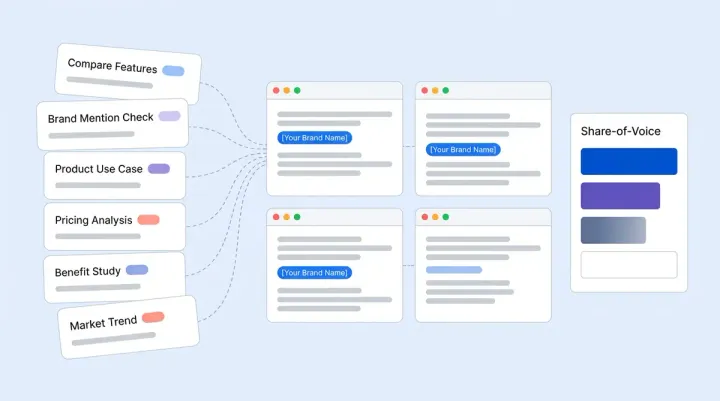
Most AI visibility tools work by doing something deceptively simple: they prompt ChatGPT, Gemini, or Perplexity with shopping queries, log what comes back, and sell that data as "AI visibility insights." The problem? Large language models are non-deterministic. The same query returns different answers every time.
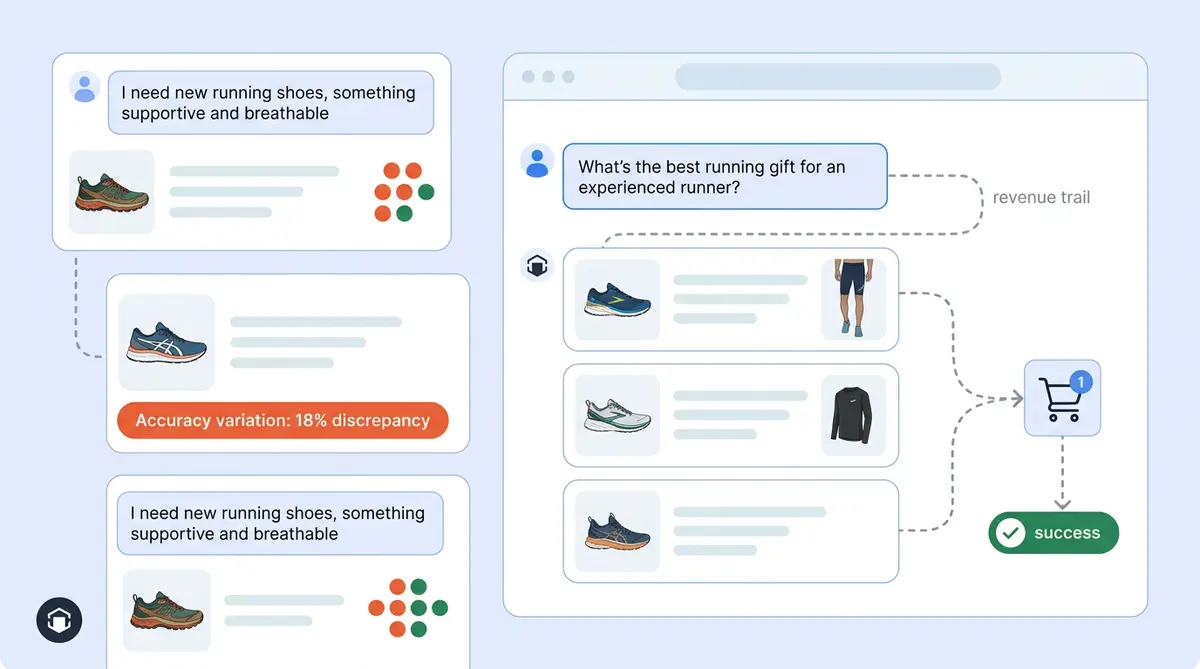
This isn't a minor technical footnote. Research published in 2025 (and confirmed through 2026 model releases) found accuracy variations of up to 15% across identical runs, with the gap between best and worst possible performance reaching 70%. Even with temperature set to zero (the setting designed for consistency), models produced different outputs due to how compute infrastructure batches requests. None of the five LLMs tested delivered repeatable results across all tasks.
Now apply that to ecommerce. A scraping-based tool prompts ChatGPT with "best moisturizer for dry skin" and captures the response. But that response reflects one possible output at one moment in time, shaped by the model's current weights, the session context, and infrastructure-level variables outside your control, invisible to any external tool. Your actual users asking the same question five minutes later, from a different location, mid-conversation about skincare routines, will likely see a different set of recommendations.
AI models also update constantly. OpenAI, Google, and Anthropic push model changes weekly. Yesterday's scraped snapshot is already stale. Businesses paying for these snapshots are making merchandising, campaigns, advertising spend, and SEO decisions based on data they can't trust that may not reflect what their shoppers actually experience. You're trusting a moving target with a compass that points in a different direction every time you check it.
The First-Party Data Advantage
If third-party scraping captures what AI might say, first-party data captures what shoppers actually do. That's not a subtle distinction. It's the gap between a guess and a ground truth. It's the difference between guessing and knowing.
What makes AI visibility actionable isn't more frequent scraping or fancier prompt engineering. It's combining AI monitoring with your own first-party ecommerce data, including the signals no external tool can access:
- Real cart behavior showing which products shoppers add and buy after an AI referral, not which products an AI mentioned in a scraped response
- Conversion data proving which AI-recommended products actually generate revenue, and which ones drive traffic and clicks but no purchases
- Catalog data revealing mismatches between what AI engines recommend and what's actually in stock, on sale, or profitable enough to promote
- Shopper conversation data showing the exact questions real customers ask before purchasing, not the generic queries a scraping tool guesses at, stripped of real purchase intent
Leading companies that ground their personalization in first-party data generate 40% more revenue from those efforts compared to average performers. The data feeding your AI strategy matters more than the model, and fragmented, third-party snapshots starve your decision-making of the intent signals that actually predict purchases.
This combination turns AI visibility from a vanity metric ("we're mentioned in 23% of queries") into measurable revenue intelligence ("AI recommendations for our vitamin C serum convert at 4.2%, but AI never mentions our best-selling SPF, which converts at 6.1%"). You're not just tracking what AI says. You're connecting it to what actually sells.
How Alhena Closes the Loop
Alhena AI Visibility is built differently because it starts from a different foundation. Instead of scraping AI answers from the outside, Alhena helps generate first-party intelligence from the inside of your store.
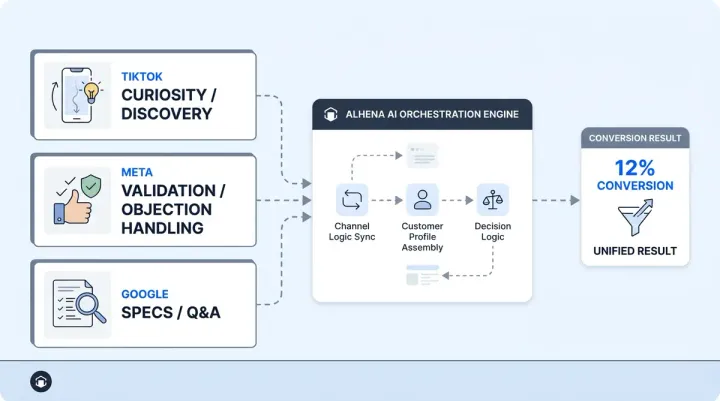
Here's what that means in practice. Because Alhena runs the AI Shopping Assistant on your storefront, it surfaces data no third-party monitoring platform ever touches: real shopper conversations, the specific product questions your customers ask, cart behavior tied to AI interactions, and actual purchase outcomes. This is proprietary behavioral data that belongs to your brand, and it's the kind of insight no external tool can generate.
That behavioral layer connects directly to Alhena's AI visibility monitoring across AI search services, engines, and overviews in ChatGPT, Gemini, and Perplexity at the SKU level, not just the brand level. So instead of a dashboard showing "your brand was mentioned 47 times this week," you see:
- Which specific products AI engines recommend, and which of those recommendations actually convert when shoppers land on your store
- Which products your shoppers frequently ask about that AI engines fail to surface, revealing discovery gaps, content gaps, and optimization blind spots costing you revenue
- Where the gap between AI perception (what models recommend) and purchase reality (what sells) is widest, and what to do about it
Brands using Alhena's AI Shopping Assistant already see results that validate the first-party approach. Tatcha achieved a 3x conversion rate with 38% higher average order values and 11.4% of total site revenue attributed to AI-assisted shopping. That kind of closed-loop insights and attribution, connecting AI visibility to actual revenue, is only possible when you own the data from shopper question to checkout.
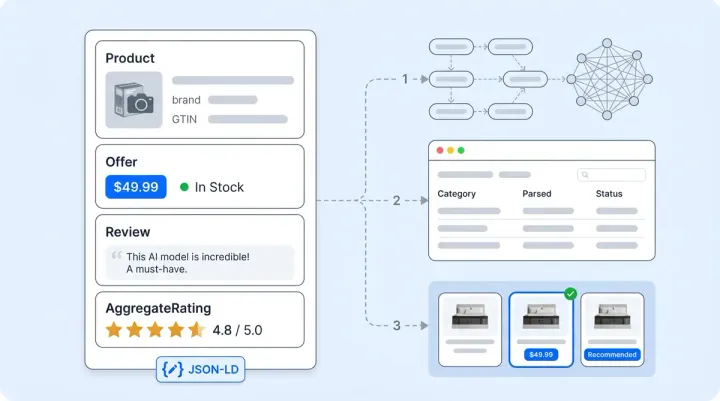
Alhena's AEO FAQ Engine takes this further by turning real shopper questions (not guesses about what people might ask) into structured, citation-ready content that improves how AI engines reference your products. Your traditional SEO and content optimization strategy comes from actual customer behavior, giving you a data strategy no competitor can copy, not scraped approximations.
AI-driven referral traffic and clicks to ecommerce sites grew 302% in 2025, and the trend is accelerating into 2026. The businesses that capture this wave won't be the ones with the fanciest scraping dashboards. They'll be the ones whose AI visibility intelligence is grounded in first-party data from real ecommerce sources and interactions, connected to real revenue, and impossible for competitors to replicate.
Ready to turn AI visibility into revenue intelligence? Book a demo with Alhena AI or start for free with 25 conversations.
Frequently Asked Questions
What is first-party data AI visibility?
First-party data AI visibility means monitoring how your product presence appears in AI engines like ChatGPT and Gemini, then connecting those findings to your own ecommerce data (cart behavior, conversions, shopper questions). Alhena AI is built on this model, linking AI monitoring directly to real purchase outcomes so businesses can see which AI recommendations actually drive revenue.
Why is scraping AI answers unreliable for ecommerce brands?
Large language models are non-deterministic. Research shows accuracy variations of up to 15% across identical runs, with best-to-worst performance gaps reaching 70%. Scraping-based tools capture one possible answer at one moment, but your shoppers see different results based on their location, session context, and conversation history. Alhena AI sidesteps this problem with first-party data, tracking real shopper behavior on your store instead of relying on scraped snapshots.
How does Alhena AI connect AI visibility to revenue?
Alhena AI runs the Shopping Assistant on your storefront, capturing real shopper conversations, product questions, cart additions, product discovery, and purchases. This first-party data and behavioral signals connects directly to Alhena's AI visibility monitoring across ChatGPT, Gemini, and Perplexity, so you're seeing which AI-recommended products actually convert, not just which ones get mentioned.
What ecommerce data does Alhena AI use for AI visibility?
Alhena AI uses four types of first-party ecommerce data: real cart behavior showing what shoppers buy after AI referral, conversion data proving which products generate revenue, catalog data revealing mismatches between AI recommendations and inventory, and shopper conversation data showing the exact questions customers ask before purchasing.
Can third-party AI monitoring tools track SKU-level visibility?
Most third-party monitoring platforms track brand mentions, not individual SKUs. Alhena AI monitors at the SKU level across AI engines, then connects each product's AI visibility to its actual conversion rate on your store. This means you can identify exactly which products AI overlooks and how to measure the revenue that gap costs.
How quickly can Alhena AI start tracking AI visibility for my store?
Alhena AI deploys in under 48 hours with no developer resources needed. Once the AI Shopping Assistant is live on your storefront, it immediately begins capturing first-party shopper data that feeds into AI visibility monitoring. Brands like Tatcha saw 3x conversions and 11.4% of total site revenue from AI-assisted shopping after deployment.