Ecommerce brands spend millions on product pages, site speed, and on-site search optimization. But their share of voice in AI search depends on sources they don't control. But the sources that shape what AI tells shoppers about your products? Most brands don't even know those exist, let alone monitor them.
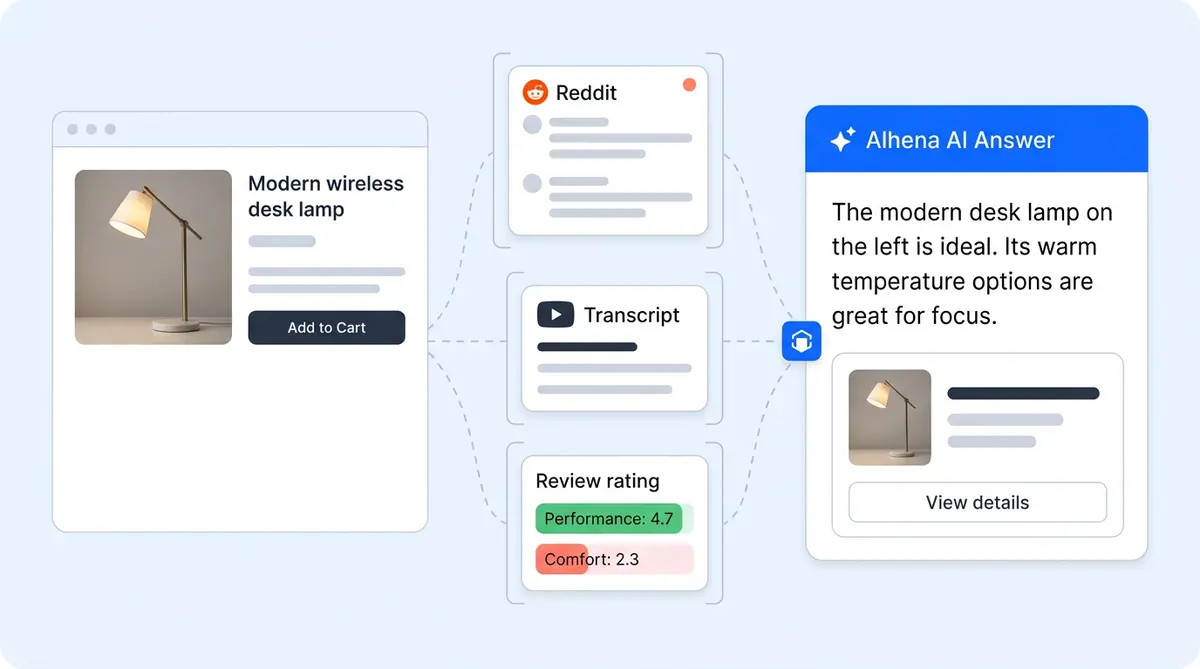
Reddit threads, YouTube reviews, and third-party review aggregators now feed the AI models that answer questions like "what's the best moisturizer for dry skin" or "is this mattress worth the price." A Semrush analysis of over 150,000 generative AI citations found Reddit alone accounted for 40.1% of all sources referenced by large language models. Meanwhile, 45% of consumers already use AI search tools like ChatGPT and Google AI Overviews during their buying journey, according to a 2026 IBM-NRF study of 18,000 shoppers. The gap between what your site says and what AI says about you is growing, and most brands aren't watching.
This post breaks down why external source monitoring and AI observability for brand data and external source observability is now a customer experience priority, not just a marketing nice-to-have. You'll get a practical framework for correlating external signals with real conversion outcomes, plus the metrics and workflows that matter.
Reddit Is the Most Cited Source in AI Shopping Answers
Google paid $60 million a year for direct access to Reddit's data API. OpenAI signed a separate licensing deal worth millions more. These data pipelines feed Reddit content directly into ML training infrastructure, where every token of every anonymous post becomes training data for AI applications across the cloud. The result: Reddit threads are the single largest citation source in AI-generated responses, appearing in 97% of product-related search queries. Your competitors’ products get recommended alongside yours based on these anonymous discussions. When an autonomous AI agent shops on behalf of a customer, it pulls from these same sources with zero oversight, amplifying any bias in the underlying data.
Here's the problem for brands. 63.2% of Reddit threads that rank for branded searches contain negative sentiment, and 71.4% of that content comes from older threads that keep ranking for years. Anonymous opinions posted three years ago still shape what AI platforms tell today's shoppers. When someone asks an AI assistant "is [your brand] good," the answer often pulls from Reddit posts your team has never seen.
Reddit AI recommendations carry weight precisely because AI systems treat community discussions as authentic, unbiased signals. What AI sees on Reddit shapes your brand’s share of voice in ways traditional SEO can’t control. Without anomaly detection for sentiment drift and proper observability tooling, most brands never trace the root cause analysis back to a single Reddit thread that quietly reshaped how AI platforms rank their products. That's a strength when sentiment is positive. It's a silent revenue killer when it isn't. Brands investing in answer engine optimization need to treat Reddit monitoring as step one.
YouTube Transcripts Feed AI Models More Than You Think
As of January 2026, YouTube has overtaken Reddit in citation share across major AI platforms, appearing in 16% of all LLM-generated answers. AI models parse YouTube's auto-generated transcripts, structured metadata, and video descriptions to extract detailed product sentiment, comparison context, and feature-level opinions. These data flows happen with minimal latency, often faster than any traditional performance monitoring can detect. A new video review can appear in AI-generated answers within days, shaping product discovery across every major platform.
For product categories with active video review cultures (beauty, electronics, home goods), a single negative YouTube review can become the primary source an AI shopping assistant references when a customer asks for a recommendation. Your brand might not even know the video exists, but the AI has already read every word of the transcript.
The difference between YouTube and your product page is that YouTube reviews come with perceived objectivity. For brands, this creates a black box problem: without the right analytics tools, you can't manage performance of your AI presence because you can't see what's feeding the models. AI models weight that heavily when building answers. If you're tracking your brand mentions on social media but ignoring YouTube transcript content, you're missing the source that now carries the most influence in AI visibility for agentic commerce.
Review Aggregators Are the Trust Layer AI Relies On
Third-party review platforms act as citation anchors for AI-generated shopping answers. One major review site saw 15x growth in click-throughs from AI search tools in a single year. AI models treat these platforms as credible because reviews are structured, timestamped, and moderated. This data quality signal gives them higher trust scores than brand-owned content, directly affecting your performance metrics in AI-generated results.
The danger is inconsistency. When your product has a 4.8 rating on your own site, a 3.9 on one review aggregator, and scattered complaints on another, AI models synthesize that mixed signal into an equivocal or negative recommendation. The shopper never sees the individual reviews. They just get the AI's conclusion: "reviews are mixed" or "some users report quality issues."
Inconsistent review signals across platforms don't just hurt your SKU-level AI visibility. They actively degrade the accuracy of every AI-powered shopping experience that references your products.
This Is a CX Integrity Problem, Not Just a Marketing Problem
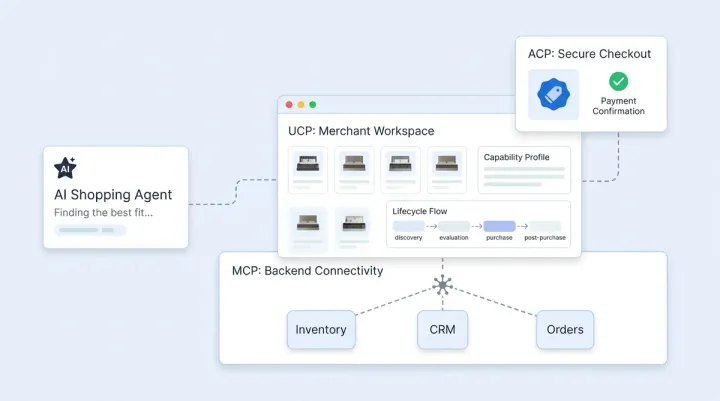
External source monitoring for AI matters because polluted off-site data doesn't just affect search rankings. It corrupts the AI answers that AI agent-powered shopping assistants give during live purchase conversations.
When a shopper asks your AI shopping assistant "what's the best serum for aging skin" and the assistant pulls context from an outdated Reddit thread or a negative YouTube review, the answer the customer gets may contradict what your product pages say. That disconnect erodes trust at the exact moment the customer is ready to buy.
71% of consumers abandon a brand after a single negative AI interaction. The source of that negative information is often external content the brand never monitored, never corrected, and never knew existed. Generative AI hallucinations in ecommerce cost an estimated $67.4 billion in 2024, a figure that doesn't account for the hidden complexity of enterprise pricing errors and misinformation that AI agents propagate from external sources. Unmonitored external sources are one of the biggest contributors to inaccurate AI answers.
This is why external source monitoring AI isn't a vanity metric. It's a CX integrity issue that directly affects conversational commerce accuracy and revenue.
A Practical External Source Monitoring Framework
What to track:
- Reddit threads ranking for your brand name and top product keywords
- YouTube review videos and parsed transcripts mentioning your products
- Third-party review platforms where your brand appears (even if you didn't create a profile)
- AI-generated answers from major platforms for your core product queries
What signals matter:
- Observability into sentiment of cited sources (positive, negative, mixed)
- Recency of cited content (stale negative posts are the biggest risk)
- Accuracy of product claims in external sources vs. your actual product data
- Citation frequency: how often each source appears in AI answers
How often to audit: Monthly at minimum for branded queries. Weekly for your highest-revenue product categories. Set real-time alerts for new Reddit threads and YouTube reviews mentioning your brand.
What to do when issues surface: Respond authentically on the source platform. Generate fresh, accurate content on high-authority platforms. Request corrections for factually inaccurate reviews. Most importantly, ensure your first-party product data is structured, authoritative, and accessible to AI crawlers so your own information competes with external noise. Think of this as building observability into your AI data pipelines: you need to achieve full observability over the data flows, track the metrics, and manage performance across every source that feeds AI applications about your brand.
In ML engineering, observability platforms like Arize AI and Datadog use OpenTelemetry standards and LlamaIndex retrieval tracing to monitor data quality, run root cause analysis on model drift, and track AI application performance and latency across managed cloud and Azure OpenAI endpoints. These APM tools provide deep performance monitoring for every layer of the AI stack, correlating data flows with performance metrics to catch anomaly detection gaps before they affect production.
Arize AI handles observability for production ML systems by tracking data quality across pipelines, while Datadog extends this with OpenTelemetry instrumentation for infrastructure-level performance monitoring. LlamaIndex adds a retrieval observability layer that traces how AI applications access external data sources. Ecommerce brands need that same observability discipline for external sources: monitoring how Reddit, YouTube, and review data flow through AI systems, whether enterprise pricing stays accurate, and running root cause analysis when AI-generated recommendations go wrong. This correlating of external signals with AI outputs is how you manage performance across the full data pipeline, not just your own black box infrastructure.
How Alhena AI Gives Brands Visibility Into External Sources
Alhena AI doesn't just power your on-site AI agent for shopping. It gives brands direct visibility into what off-site sources are telling AI platforms and AI systems about their products, and how that shapes your voice in AI-generated conversations, and how that affects the conversational commerce experience.
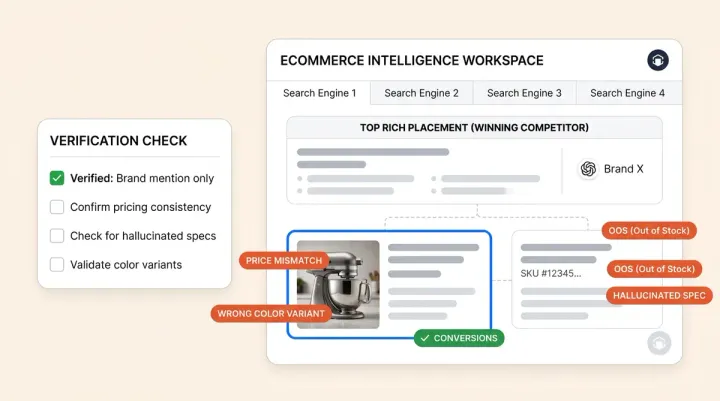
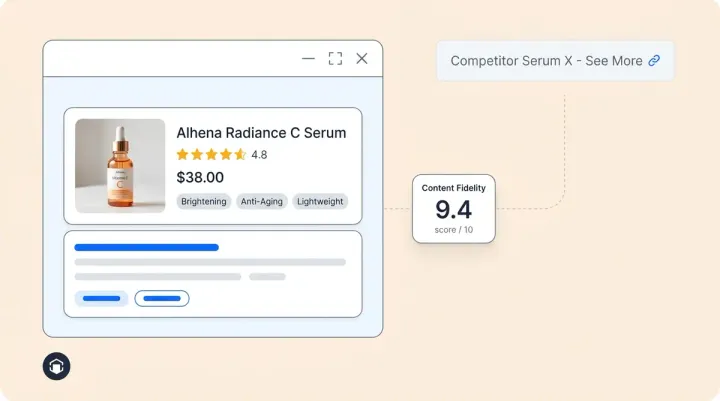
With Alhena's AI visibility monitoring, brands can track which external sources, Reddit threads, YouTube reviews, review aggregators, are being cited in AI shopping answers for their product categories. You see exactly what information AI models are pulling, where it comes from, and whether it's accurate. Automated observability and anomaly detection workflows flag when sentiment shifts or inaccurate claims surface, so you can act before they spread.
Alhena's Product Expert Agent is grounded in your verified product data, which means the answers it gives shoppers on your site are hallucination-free regardless of what external sources say. But more importantly, Alhena helps you identify and correct the external narrative before it costs conversions across every AI touchpoint, not just your own.
Brands like Tatcha have seen 3x conversion rates with Alhena's AI, while Puffy achieved 90% customer satisfaction. Those results come from controlling the full customer experience, including what AI tells shoppers before they ever reach your site. Learn more in our customer success stories.
Stop Optimizing Half the Customer Experience
If you're only optimizing your own site, you're controlling half the customer experience and half your competitive share of voice in AI search. AI platforms and autonomous AI agents are building the other half from Reddit threads, YouTube transcripts, and review aggregators. Without observability, this infrastructure of external source data remains invisible to most brands, yet it drives purchase decisions at scale.
Every unmonitored external source is a leaky point in the purchase journey. A single outdated Reddit complaint or a negative YouTube review transcript can override thousands of dollars in on-site optimization. Every unmonitored source leaves traces in AI-generated answers that silently erode operational efficiency and conversion rates. The brands that win in AI-driven commerce won't just have the best product pages. They'll have the best visibility into, and control over, the external sources that shape what AI tells their customers.
Ready to see what AI is saying about your products across Reddit, YouTube, and review sites? Book a demo with Alhena AI or start for free with 25 conversations.
Frequently Asked Questions
What is external source monitoring AI and why does it matter for ecommerce?
External source monitoring AI tracks what off-site platforms like Reddit, YouTube, and review aggregators tell AI models about your products. With 40% of AI citations coming from Reddit alone, these sources directly shape purchase decisions. Alhena AI gives ecommerce brands real-time visibility into these external signals so you can correct inaccurate information before it costs conversions. Similar to how Arize AI and Datadog provide observability for ML pipelines, external source monitoring gives ecommerce brands visibility into off-site data quality.
How do Reddit AI recommendations affect my product sales?
Reddit threads are the top-cited source in AI shopping answers, and 63% of branded Reddit threads contain negative sentiment. When a shopper asks an AI assistant for a product recommendation, the answer often pulls from anonymous Reddit opinions your team has never seen. Alhena AI monitors these Reddit AI recommendations and helps brands understand exactly how they influence conversational commerce outcomes. OpenAI and other AI providers licensed Reddit data specifically for training, making these threads high-weight inputs to AI applications.
Can AI shopping assistants give wrong answers because of external review sites?
Yes. When your product has inconsistent ratings across review aggregators, AI models synthesize that mixed signal into equivocal or negative recommendations during live shopping conversations. Alhena AI's Product Expert AI agent is grounded in verified product data, delivering hallucination-free answers on your site while tracking ML model behavior and flagging external review inconsistencies that affect AI visibility across other platforms. This data quality monitoring helps brands manage performance end to end.
How often should ecommerce brands audit external sources feeding AI models?
Monthly audits are the minimum for branded queries. Set up automated monitoring workflows with weekly checks for your highest-revenue product categories. You should set real-time alerts for new Reddit threads and YouTube reviews mentioning your brand. Alhena AI automates this monitoring process, tracking which external sources are being cited in AI shopping answers for your product categories and surfacing issues before they affect CX integrity. Fast-moving categories need near real-time observability to catch latency between source changes and AI model updates.
How does Alhena AI help brands control what AI tells shoppers about their products?
Alhena AI provides two layers of protection. First, its AI shopping assistant delivers hallucination-free answers grounded in your verified product catalog, so on-site conversational commerce stays accurate regardless of external noise. Second, Alhena's AI visibility monitoring tracks external sources feeding other AI platforms, giving you the data to identify, prioritize, and correct off-site content that hurts your brand across AI touchpoints.