Sixty-one percent of consumers have already used ChatGPT for online shopping, according to a 2025 consumer survey. One in four say it gives better product recommendations than Google. ChatGPT now processes roughly 50 million shopping-related queries every day, and Bain & Company reports that 80% of consumers rely on AI-written results for at least 40% of their searches.
For ecommerce brands, the question isn't whether ChatGPT matters. It's how it decides which products to show, what "AI rendering analysis" means for your pages, and how to make your catalog visible in this new channel.
How ChatGPT Shopping Actually Works
ChatGPT doesn't recommend products from memory. Shopping Research, launched in November 2025, actively searches the web in real time. Semrush tested 100 shopping prompts and found ChatGPT runs two parallel query sets per response: one contextual (for the written answer) and one encoded Google Shopping search (for product carousels). ChatGPT's top recommendation appeared in Google Shopping's top three results 75% of the time.
The Shopping Research variant runs on a specialized GPT-5 mini model, spends three to five minutes per query, asks clarifying questions, and delivers a personalized buyer's guide. As OpenAI told Retail TouchPoints: "They are not ads. They are not sponsored." Products are selected on relevance, structured data, and authority signals.
Five Signals That Determine Which Products Get Recommended
Based on research from HubSpot, Similarweb, and Semrush, five factors drive ChatGPT's product ranking:
- Semantic query relevance. ChatGPT matches intent, not keywords. "Quiet vacuum for a small apartment" matches products described with noise levels and compact dimensions, not ones stuffed with keyword phrases.
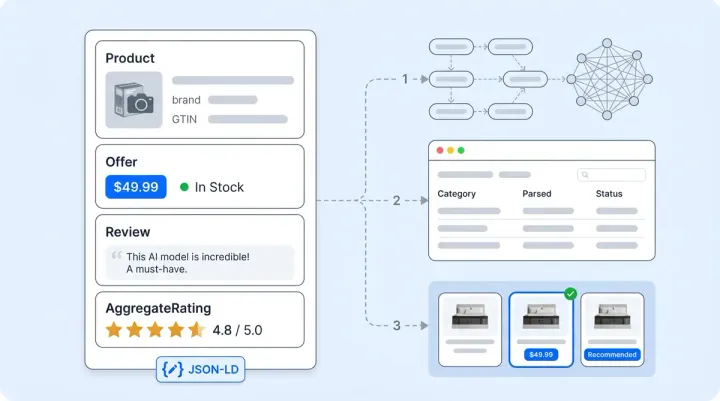
- Structured data quality. Schema.org markup (Product, Offer, AggregateRating) is the baseline for inclusion. OpenAI's Agentic Commerce Protocol requires feeds in TSV, CSV, XML, or JSON, refreshed as often as every 15 minutes.
- Pricing and availability accuracy. In-stock products with current pricing rank higher. If your feed shows $49.99 but the landing page shows $59.99, that erodes trust fast.
- Third-party authority. 91% of AI citations come from third-party sources, not brand sites. Roundup articles, buyer guides, Reddit threads, and review platforms do more for generative engine optimization than any on-site change.
- Contextual alignment. ChatGPT uses dynamic priority weighting per query. Budget shoppers get price-weighted results. Quality-focused shoppers get rating-weighted results.
AI Rendering Analysis: How ChatGPT Frames Your Products
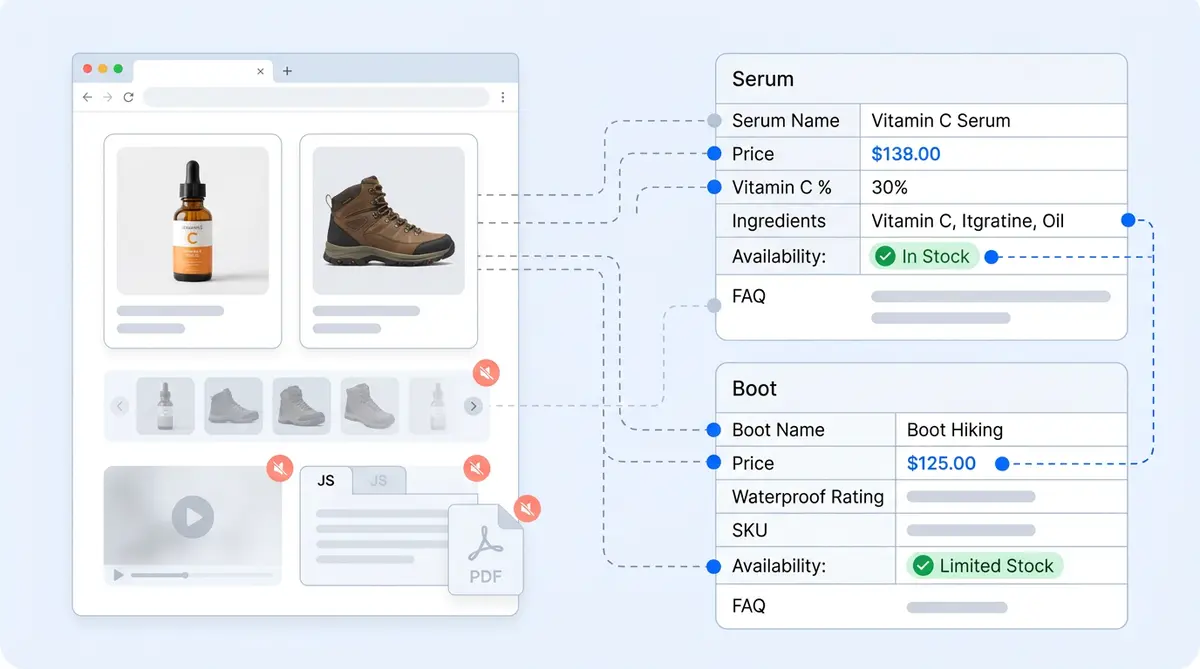
"AI rendering" refers to how ChatGPT constructs and presents product information. Unlike a Google Shopping result (thumbnail, title, price), ChatGPT renders a narrative. It writes sentences about your product, chooses which attributes to highlight, and frames it against alternatives. That framing determines whether a shopper clicks through.
Products with clean, factual, use-case-rich descriptions get better rendering. Vague marketing copy ("the ultimate solution for your lifestyle") gets skipped or misrepresented. Research from UNSW Business School also found ChatGPT exhibits "abstraction bias," consistently favoring premium products over practical alternatives. Budget-friendly products need stronger use-case framing to compete.
The Conversion Data: Early but Promising
Visibility Labs analyzed 94 ecommerce stores and found ChatGPT traffic converts at 1.81% vs. 1.39% for non-branded organic search, a 31% lift. Revenue per session was 10.3% higher. ChatGPT referral visits grew 1,079% in 12 months.
The channel is still small (1.5-2.2% of organic revenue), but users arrive pre-qualified. They've already compared options inside the conversation. That's why answer engine optimization for product pages pays off even at current traffic levels.
Where ChatGPT Falls Short
ChatGPT achieves 64% accuracy on standard product queries and 52% on multi-constraint queries. Nearly half of complex recommendations miss the mark. Hallucinations still happen (an Apple Watch appearing in "basketball shoes" results). And OpenAI's Instant Checkout, launched September 2025, was shut down by March 2026 after only a dozen merchants integrated.
The gap between AI product discovery and AI-powered purchasing remains wide. Purchases redirect to merchant storefronts, and brands face platform dependency risk similar to early Google SEO.
How to Get Your Products Recommended
Given how ChatGPT's rendering analysis works, here's what moves the needle for visibility in conversational search:
- Allow OAI-SearchBot in robots.txt. If ChatGPT can't crawl your site, your products are invisible.
- Submit product feeds via the Agentic Commerce Protocol. Include product ID, title, description, price, availability, weight, seller name, URL, and primary image.
- Write for use cases, not features. "Quiet enough for apartment living, under 4 kg" beats "1200W motor, HEPA filter." ChatGPT matches intent to descriptions, so AI-powered product discovery rewards specificity.
- Build third-party authority. Get reviewed on Trustpilot, niche review sites, and buyer guides. 91% of AI citations come from off-site sources.
- Keep pricing and inventory current. Stale data was a core reason OpenAI's checkout failed.
How Alhena AI Fills the Gaps ChatGPT Leaves Behind
ChatGPT sends shoppers to your site with intent. But it can't answer questions about your return policy, walk someone through sizing, or add items to a cart. That's where Alhena AI's Shopping Assistant picks up.
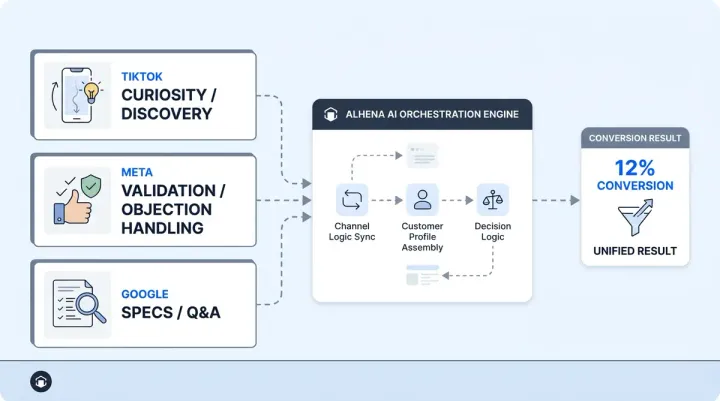
While ChatGPT's 52% accuracy on complex queries means frequent mismatches, Alhena's Product Expert Agent is grounded in your verified catalog. No hallucination. No stale prices. Alhena's agentic checkout populates carts and pre-fills checkout fields, handling the post-click experience ChatGPT abandoned. Tatcha saw a 3x conversion rate and 38% AOV uplift, generating 11.4% of total site revenue from AI.
Alhena also meets shoppers across web chat, email, Instagram DMs, WhatsApp, and voice. And its built-in analytics give you clear revenue attribution that ChatGPT can't provide. Victoria Beckham saw a 20% AOV increase. Puffy achieved 90% CSAT with 63% automated inquiry resolution.
Ready to turn ChatGPT-driven traffic into revenue? Book a demo with Alhena AI or start free with 25 conversations.
Frequently Asked Questions
How does ChatGPT decide which products to recommend?
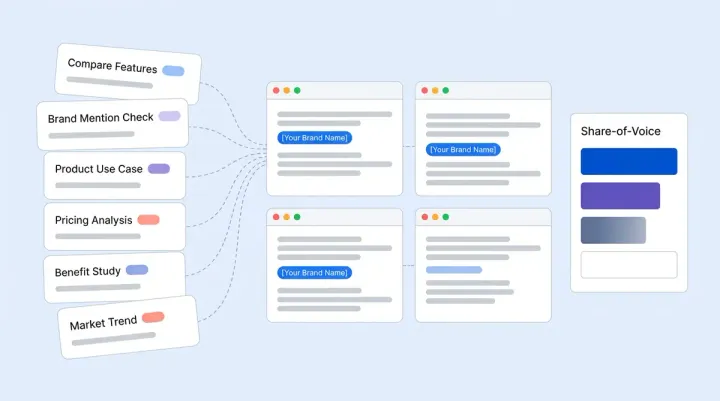
ChatGPT runs two parallel query sets per shopping prompt: a contextual search for the written answer and an encoded Google Shopping search for product carousels. Products are ranked by semantic relevance, structured data quality, pricing accuracy, third-party authority, and contextual alignment with the shopper's query. Alhena AI Visibility tracks exactly how your products appear across ChatGPT, Gemini, and Perplexity so you can spot where your catalog is visible, invisible, or misrepresented.
What is AI rendering analysis for ecommerce product pages?
AI rendering analysis refers to how generative engines like ChatGPT construct and present product information to users. Unlike traditional search results, ChatGPT renders a narrative: it writes sentences about your product, decides which attributes to highlight, and frames your product against competitors. Alhena AI's rendering analysis feature shows you exactly how each AI engine parses your product pages, so you can fix gaps before they cost you visibility.
Does ChatGPT pull product data from Google Shopping?
Yes. Semrush's research found ChatGPT's top product recommendation matched Google Shopping's top three results 75% of the time, with retailer, title, and price matching exactly. If you're investing in Google Shopping feeds and GEO, you're already building the foundation for ChatGPT visibility. Alhena AI Visibility monitors which of your SKUs actually appear across all major AI engines simultaneously.
How can I improve my product visibility in ChatGPT and Google SGE?
Start with the basics: allow OAI-SearchBot in robots.txt, submit product feeds via OpenAI's Agentic Commerce Protocol, and write use-case-rich descriptions instead of feature lists. Build third-party authority through reviews and buyer guides (91% of AI citations come from off-site sources). Alhena AI Visibility gives you SKU-level tracking across ChatGPT, Gemini, and Perplexity, showing you which products get recommended and where the gaps are.
What is the conversion rate from ChatGPT referral traffic?
Visibility Labs found ChatGPT traffic converts at 1.81% compared to 1.39% for non-branded organic search, a 31% lift. Revenue per session is 10.3% higher because ChatGPT users arrive pre-qualified. The channel is still small but growing at 1,079% year-over-year. Alhena AI helps you convert that traffic once it lands on your site, with brands like Tatcha seeing 3x conversion rates.
What is AEO and how does it differ from traditional SEO?
Answer engine optimization (AEO) focuses on getting your products recommended in AI-generated answers from ChatGPT, Gemini, Perplexity, and Google AI Overviews, rather than ranked as blue links. AEO prioritizes structured data, semantic relevance, and third-party authority over keyword density and backlinks. Alhena AI Visibility tracks your AEO performance at the individual product level across all major AI engines.
What is generative engine optimization (GEO) for ecommerce?
GEO is the practice of making your products, brand, and content appear favorably in AI-generated responses. For ecommerce, this means ensuring AI engines surface the right products with accurate pricing, correct specs, and strong positioning. Alhena AI combines GEO monitoring with first-party shopper data to reveal which products shoppers actually ask about versus which ones AI recommends.
How accurate are ChatGPT product recommendations?
ChatGPT achieves roughly 64% accuracy on standard product queries and 52% on multi-constraint queries. That means nearly half of complex recommendations miss the mark. Hallucinations still occur, and pricing can go stale between feed refreshes. Alhena AI's Shopping Assistant is grounded in your verified product catalog, eliminating hallucination and ensuring every recommendation is accurate.