Zowie has built a solid reputation as an AI customer service platform for ecommerce brands. It automates support tickets, handles returns, and resolves answering common questions and resolving issues across communication channels. But if your goal is to turn customer engagement into revenue, not just close tickets faster, the decision gets more interesting.
AI chatbot solutions can vary widely. This comparison breaks down how Alhena AI and Zowie differ across features, pricing philosophy, sales capabilities, and real-world results. By the end, you'll know which ai chatbot for ecommerce fits your business growth goals.
What Zowie Does Well
Zowie, founded in 2019 and headquartered in New York, positions itself as an end-to-end AI agent platform for customer service. The platform uses deterministic reasoning to process support requests, which means every response follows a predefined logic path rather than generating answers on the fly. For brands drowning in repetitive tickets, that improves customer experience.
The platform supports 24/7 chat, email, voice, and social channels. It connects with CRM and ERP systems, supports 70+ languages, and holds SOC 2 Type II certification. On G2, Zowie holds a 4.7/5 rating across 60+ reviews, with users praising its onboarding speed and ticket deflection rates.
Zowie's customer results include an 8% conversion rate increase for Decathlon and a reported 50% reduction in tickets per order for some brands. The platform also recently added "Sales Skills," a feature that gives agents basic revenue-focused capabilities.
Where Zowie falls short, according to G2 reviewers and competitor analyses, is in three areas: opaque pricing (no public pricing page), limited integrations (around 36, compared to 100+ for platforms like Gorgias), and reporting that lacks depth for multi-brand or multi-market operations.
Where Alhena AI Differs from Zowie
The core difference is intent. Zowie was built to automate customer service. Alhena AI was built to sell and support. That distinction shapes every feature, from how the AI handles questions about your products to what happens at checkout.
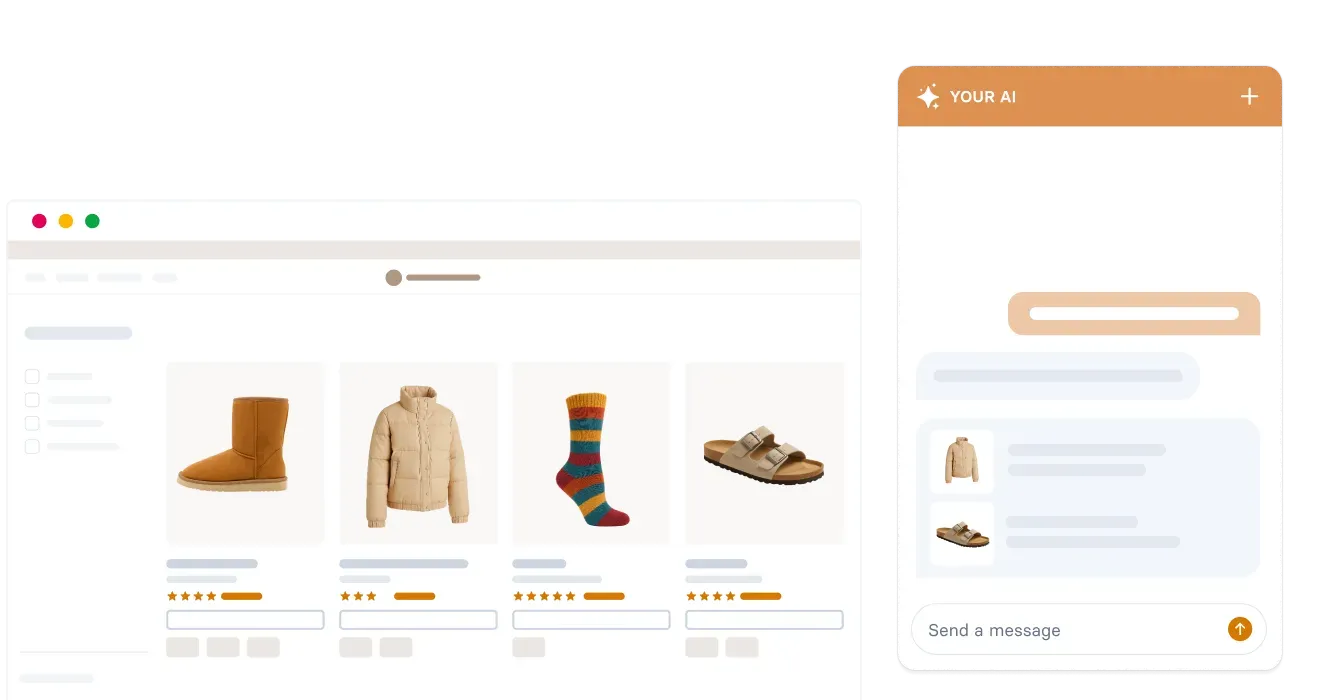
Alhena's Product Expert Agent doesn't just answer "do you have this in blue?" It understands layered product queries, runs conversational search against your full catalog, and guides shoppers to the right product through follow-up questions. Zowie's AI resolves tickets. Alhena's AI closes sales.
Then there's agentic checkout. When a shopper finds what they want through an Alhena conversation, the AI can populate their cart and pre-fill checkout fields. That removes friction at the exact moment intent is highest. Zowie doesn't offer this capability.
Alhena's Support Concierge handles the support side too, with an Order Management Agent that helps improve the post-purchase experience by processing returns, tracks shipments, and modifies orders. But it does this while keeping the sales layer active. A customer asking about a delayed order might also get a personalized marketing recommendation for a complementary product. Zowie treats these as separate workflows.
For a closer look at how Alhena compares to another popular support-first tool, see our Alhena AI vs Intercom Fin breakdown.
Feature Comparison: Alhena AI vs Zowie
Here's how the two platforms stack up across the capabilities that matter most for ecommerce brands.
Alhena AI vs Zowie: At a Glance
| Alhena AI | Zowie | |
|---|---|---|
| Core Focus | Sales + support for ecommerce | Support automation for ecommerce |
| Agentic Checkout | Yes (cart population, pre-fill checkout) | No |
| Revenue Attribution | Built-in (tracks AI-driven revenue) | Not available |
| Product Recommendations | Conversational search + guided discovery | Limited |
| Channels | Chat, email, Instagram, WhatsApp, voice | Chat, email, voice, social |
| Setup Time | Under 48 hours, no dev needed | Weeks (vendor-assisted) |
| Pricing Transparency | Public pricing + free tier (25 convos) | Custom quotes only (contact sales) |
| Integrations | Shopify, WooCommerce, Magento, SFCC, Zendesk, Freshdesk, Gorgias, Intercom +more | ~36 integrations (CRM/ERP focus) |
Sales and Revenue Capabilities
This is where the gap between the two platforms is widest. Alhena was purpose-built as an AI shopping assistant that turns browsing into buying. Zowie added sales features later, layered on top of a support-first architecture.
Product Discovery and Recommendations
Alhena's conversational search understands intent, not just keywords. A shopper can say "I need a moisturizer for dry skin that won't break me out" and get tailored results from your catalog, filtered by ingredients, skin type, and price range. The AI asks clarifying questions when it needs to narrow results.
Zowie's product recommendation capabilities are limited. Gorgias, a direct competitor, publicly noted that Zowie lacks "AI-powered product recommendations" and "dynamic discounts." For brands in beauty, fashion, or home furnishing where guided discovery drives average order value, that's a meaningful gap.
Revenue Attribution
Alhena includes built-in revenue attribution analytics that track which AI conversations led to purchases, what the average order value was, and how much total revenue the AI influenced. Tatcha, for example, attributes 11.4% of total site revenue to Alhena's AI, with a 3x conversion rate and 38% AOV uplift.
Zowie tracks conversation metrics and deflection rates but doesn't offer the same direct line from "AI conversation" to "revenue generated." If you need to prove ROI to your leadership team, that matters. Use the Alhena ROI Calculator to estimate your own numbers.
Agentic Checkout
Alhena can populate a shopper's cart and pre-fill checkout fields during the conversation. The buyer stays engaged in the chat, search for the product, and add it manually. This alone can lift conversion rates by reducing the steps between "I want this" and "I bought this."
Zowie does not offer cart population, leaving shoppers without a quick path to buy or checkout assistance within its AI conversations.
Support and Automation
Both platforms handle the core support automation tasks that ecommerce businesses need. The differences are in depth and flexibility.
Ticket Deflection and Resolution
Zowie claims up to 100% interaction resolution and highlights a deterministic reasoning engine that ensures responses stay predictable. For straightforward "where is my order" and "how do I return this" queries, Zowie performs well.
Alhena's Support Concierge achieves similar results. Puffy saw 63% automated inquiry resolution with 90% CSAT, and Crocus hit an 86% deflection rate with 84% CSAT. The difference is that Alhena's deflection doesn't just close tickets. It routes high-intent conversations toward purchases.
Order Management
Alhena's dedicated Order Management Agent handles cancellations, returns, exchanges, and shipment tracking with full action execution. It connects directly to your ecommerce platform and helpdesk to process these requests end to end.
Zowie also executes order-related actions (processing refunds, modifying orders), but its integration depth depends on your stack. With only ~36 integrations compared to Alhena's connections with Shopify, WooCommerce, Magento, Salesforce Commerce Cloud, Zendesk, Freshdesk, Gorgias, Intercom, and more, you may hit integration gaps with Zowie.
Human Escalation
Both platforms support handoff to human agents with conversation context preserved. Alhena also offers Agent Assist, which gives your human agents real-time live chat AI suggestions, draft replies, and customer context during live conversations. Zowie has an "AI Coach" feature focused on agent training, but it works differently from an in-conversation copilot.
Channels and Deployment
Omnichannel coverage matters when your customers reach out from Instagram DMs at 11 PM, email at 8 AM, and your website chat during lunch.
Alhena supports live chat, email, Instagram DMs, WhatsApp, and voice. Every channel gets the same AI capabilities, including product recommendations, order management, and agentic checkout.
Zowie covers chat, email, voice, and social channels. The specific social platforms supported aren't always clear in their documentation, and some users have noted that the email integration can feel disjointed, routing inquiries to an external chatbot rather than handling them natively.
Setup Time
Alhena deploys in under 48 hours with without any dev resources. The AI trains and learns automatically on your product catalog, knowledge base, and past customer interactions. Manawa went from zero to live in days, cutting their response time from 40 minutes to 1 minute and automating 80% of inquiries.
Zowie advertises "fast deployment" and claims setup within weeks. The difference between "under 48 hours" and "within weeks" can matter if you're heading into a peak sales season or need to scale support quickly.
Pricing and Transparency
Alhena offers transparent pricing on its website, starting with 25 free conversations so you can test the platform with real customers before committing. Plans scale based on conversation volume.
Zowie does not publish pricing. Every prospect must contact sales for a custom quote based on volume, which makes it harder to evaluate cost before committing time to a sales process. G2 reviewers have flagged the "high pricing" as a concern, particularly for smaller teams.
For brands that want to calculate expected return before buying, Alhena's ROI Calculator provides revenue projections based on your traffic and conversion data.
When to Choose Zowie
Zowie is a reasonable choice if your primary goal is support ticket deflection at enterprise scale. Brands with high ticket volumes, complex multi-language requirements, and deep CRM/ERP integration needs may find Zowie's deterministic reasoning engine and workflow automation sufficient.
If you already use Zowie and your main KPI is cost per ticket (not revenue per conversation), switching may not be urgent. Zowie handles the support side competently.
If you're evaluating multiple options, our guide to the best AI customer service chatbots for ecommerce covers the full landscape.
When to Choose Alhena AI
Choose Alhena if you want your AI to sell and support. Specifically:
- You measure AI by revenue, not just deflection. Alhena's revenue attribution shows exactly how much your AI earns. Tatcha generated 11.4% of site revenue through AI conversations.
- You need guided product discovery. If your catalog has hundreds or thousands of SKUs and customers need help finding the right product, Alhena's conversational search outperforms Zowie's limited recommendation engine.
- You sell on social channels. Alhena's Social Commerce handles Instagram DMs and WhatsApp with full product recommendation and checkout capabilities.
- You want fast deployment. Under 48 hours, no developers needed. Manawa's results speak for themselves: 43% lower workload and response times that dropped from 40 minutes to 1 minute.
- You run on Shopify, WooCommerce, or Magento. Alhena's integrations go deeper than Zowie's, especially for ecommerce-specific workflows like cart population and order tracking.
- You want transparent pricing. See plans and pricing before talking to sales.
The Bottom Line
Zowie is a capable AI customer service solution. It deflects tickets, automates repetitive workflows, and supports multiple languages at scale. For brands whose only goal is reducing support costs, it gets the job done.
But ecommerce AI chatbots can do much more than ticket deflection. The brands seeing the highest ROI from AI are the ones using it to drive revenue, not just cut costs. Alhena AI was built for that shift. With agentic checkout, conversational product discovery, revenue attribution analytics, and results like Victoria Beckham's 20% AOV increase, it's the platform designed to make your AI a profit center.
This shift from support to sales is part of a broader trend. Read more about how shopping AI agents fix the missing revenue layer in most ecommerce AI tools.
Ready to see what AI-driven revenue looks like for your brand? Book a demo with Alhena AI or start free with 25 conversations.
Frequently Asked Questions
How does Alhena AI compare to Zowie for ecommerce?
Alhena AI is built for both sales and support, while Zowie focuses primarily on support automation. Alhena offers agentic checkout, conversational product discovery, and revenue attribution analytics that Zowie doesn't provide. Brands using Alhena have seen up to 3x conversion rates and 38% AOV uplift.
Does Zowie have an AI shopping assistant?
Zowie recently added 'Sales Skills' to its platform, but its core architecture is support-first. It lacks conversational product search, guided discovery, and cart population features. Alhena's Product Expert Agent was purpose-built for ecommerce product recommendations and sales conversion.
What is the best AI chatbot for ecommerce in 2026?
The best AI chatbot for ecommerce depends on your goals. If you need ticket deflection only, Zowie performs well. If you want AI that drives revenue through product discovery, agentic checkout, and conversion optimization, Alhena AI is the stronger choice. Tatcha attributes 11.4% of site revenue to Alhena conversations.
How much does Zowie cost compared to Alhena AI?
Zowie does not publish pricing and requires contacting sales for custom quotes. Alhena AI offers transparent pricing on its website with a free tier that includes 25 conversations. This lets you test the platform with real customers before committing to a paid plan.
Can Alhena AI replace Zowie for customer support?
Yes. Alhena's Support Concierge handles ticket deflection, order management, returns processing, and human escalation. Crocus achieved 86% deflection with 84% CSAT using Alhena. The difference is that Alhena also adds a sales layer that Zowie doesn't match.
Does Zowie integrate with Shopify and Zendesk?
Zowie connects to Shopify and some CRM systems, but reviewers note the Shopify integration has limited depth. Alhena offers deep integrations with Shopify, WooCommerce, Magento, Salesforce Commerce Cloud, Zendesk, Freshdesk, Gorgias, Intercom, and 10+ other platforms.
How fast can I deploy Alhena AI vs Zowie?
Alhena deploys in under 48 hours with no developer resources required. The AI trains automatically on your product catalog and knowledge base. Zowie advertises deployment 'within weeks,' which typically involves vendor-assisted onboarding and configuration.
Does Alhena AI work on Instagram and WhatsApp?
Yes. Alhena's Social Commerce agent operates on Instagram DMs and WhatsApp with full product recommendation, order management, and checkout capabilities. Zowie supports social channels, but the depth of ecommerce features on those channels is more limited.