Choose Profound if you need maximum AI engine breadth for an enterprise brand. Choose Alhena AI Visibility if you run an online store and need SKU-level tracking, product card rendering checks, live catalog sync, and checkout-level revenue attribution across ChatGPT, Google AI Overviews, Gemini, Perplexity, and Claude.
Alhena vs Profound: which should you pick?
Profound is the enterprise AEO category leader: the broadest engine coverage in the market, citation data at a scale nobody matches, and a growing automation layer. Alhena is the ecommerce specialist: SKU-level visibility, product card rendering checks, storefront catalog sync, and AI traffic joined to actual checkout events.
| If you are… | Pick | Because |
|---|---|---|
| A DTC or ecommerce brand | Alhena AI Visibility | Your questions are product-shaped: which SKUs appear, how they render, what AI traffic bought |
| An enterprise or B2B brand | Profound | You need 10-engine breadth, prompt volume panel data, and enterprise trust features |
| A mid-market team with no analyst | Alhena AI Visibility | Free tier, $199/mo entry, and a fix list instead of a data lake |
What is the difference between Alhena AI Visibility and Profound?
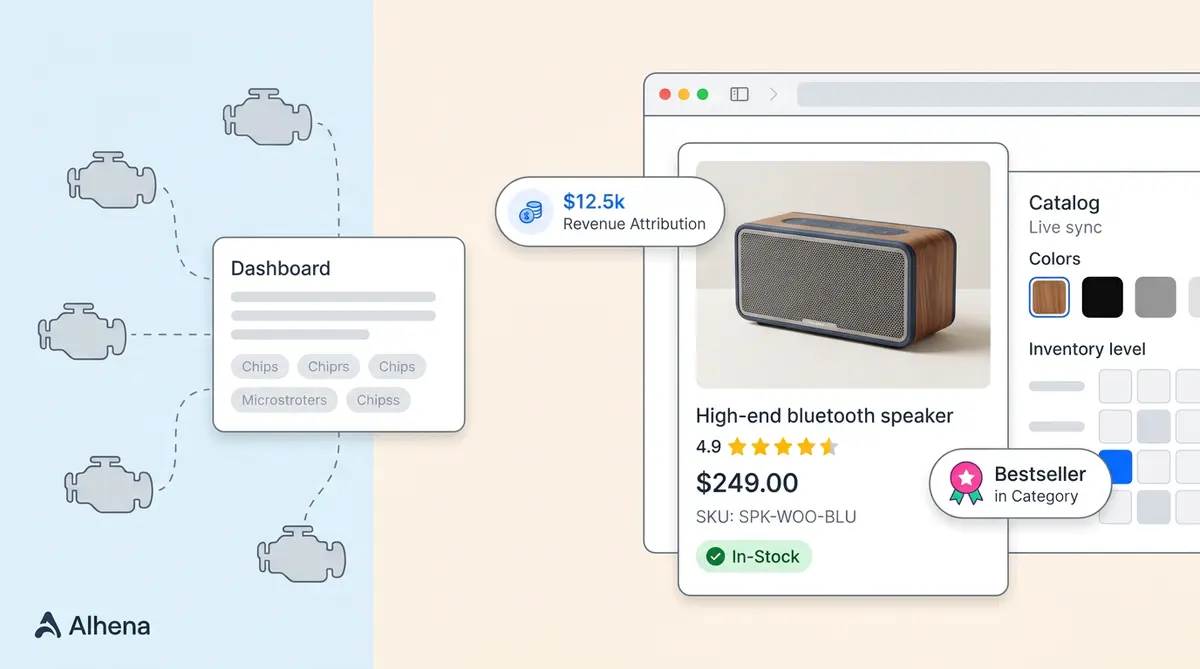
Profound tracks brands across up to 10 AI engines at enterprise scale. Alhena tracks products across 5 engines: which SKUs appear in AI shopping answers, whether the card rendered with the right price, which bestsellers are invisible, and what AI-referred sessions purchased.
| Feature | Alhena AI Visibility | Profound |
|---|---|---|
| Built for | Ecommerce and DTC brands | Enterprise marketing organizations |
| Tracking level | Brand-level and SKU-level | Brand-level; Shopping Analysis module adds shopping surfaces |
| AI engines | 5 in every paid plan: ChatGPT, Google AI Overviews, Gemini, Perplexity, Claude | Up to 10, including Copilot, Grok, Meta AI, DeepSeek |
| Rendering analysis (cards, price, position) | Yes | No |
| Revenue attribution | Native: AI-source sessions joined to checkout events vs sitewide baseline | Via Partnerize partnership |
| Ecommerce integrations | Shopify, WooCommerce, Magento, Salesforce Commerce Cloud | Shopify via Nostra partnership |
| Live catalog sync | Real-time pricing, inventory, variants | No |
| Content tools | Content gap detection, AEO FAQ engine, PDP and blog fixes, citation analysis and outreach | Prompt gap analysis, Agents workflows, Aim (July 2026) |
| Entry pricing | Free tier; paid from $199/mo | From $99/mo; enterprise custom |
| Best for | Product revenue from AI channels | Brand share of voice in AI answers |
What does Profound do well?
Profound effectively defined the AEO category and remains its reference point. For enterprise brand teams that need breadth, scale, and workflow automation, it is the strongest offer in the category, and this comparison does not pretend otherwise.
Which capabilities lead the category?
- Widest engine coverage. Up to 10 AI engines including Copilot, Grok, Meta AI, and DeepSeek, with day-zero support when new models ship.
- Citation data at scale. The company cites billions of citations and millions of prompts processed daily.
- Prompt Volumes. Search-volume-style panel data applied to AI prompts.
- Aim (July 2026). An always-on agent that converts visibility findings into executed marketing projects, publishing through Webflow, WordPress, and Contentful.
How established is Profound?
- Raised a $96M Series C at a reported $1B valuation in February 2026 (Fortune).
- Serves 1,800+ customers, including Fortune 100 logos.
- Holds G2's AEO Leader position.
Why does brand-level AEO tracking fall short for ecommerce?
Brand-level tracking answers "was my brand mentioned?" For an online store, that is the wrong resolution. A mention can be scored as a win while the AI recommends a discontinued product or quotes last season's price.
What can a single brand mention hide?
- The AI recommends a discontinued product.
- The answer quotes last season's price.
- The engine surfaces your worst-margin item.
- A competitor SKU holds the top slot in the same answer.
What does an ecommerce operator actually need to know?
- Which SKUs appear in shopping answers.
- Whether the product card rendered with correct price and placement.
- Which bestsellers are invisible.
- What the AI-referred sessions actually bought.
What do buyers flag about Profound?
Per recurring themes in G2 reviews, Profound buyers flag pricing that excludes most mid-market teams and data volume that assumes a dedicated analyst.
Neither is a flaw for the enterprise buyer Profound targets. Both matter for a DTC brand with a two-person growth team.
What is SKU-level AI visibility tracking?
SKU-level tracking measures the visibility of individual products, not just your brand name, inside AI answers: which of your products get recommended per topic, in what position, rendered how, and against which competitor products.
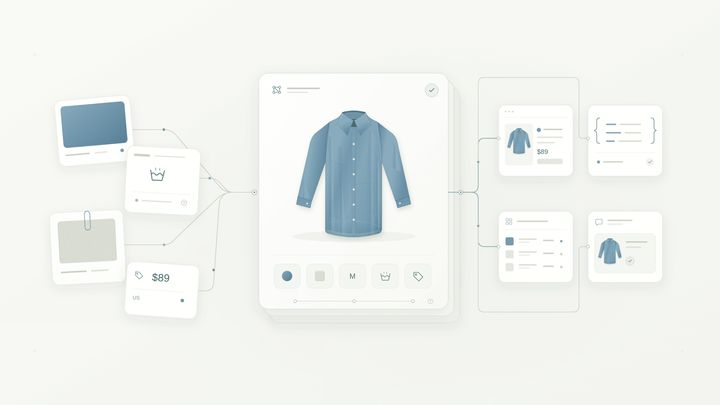
Alhena tracks the products inside AI shopping answers per topic, with your catalog's items flagged. You see which SKUs win the recommendation, which competitors take the slot, and which tracked topics surface no product of yours at all.
SKU-level tracking
Which products win the recommendation, per topic, and which competitor takes the slot.
Rendering analysis
Full product card with image, price, and carousel position, or a passing text mention.
Live catalog sync
Real-time pricing, inventory, and variants from Shopify, WooCommerce, Magento, and SFCC.
Invisible bestseller detection
Products that sell strongly on your site but never appear in AI answers.
Fan-out and citation intelligence
The searches engines run under the hood, and the domains shaping answers in your category.
Native revenue attribution
AI-classified sessions joined to checkout events against your sitewide baseline.
How does product rendering analysis work?
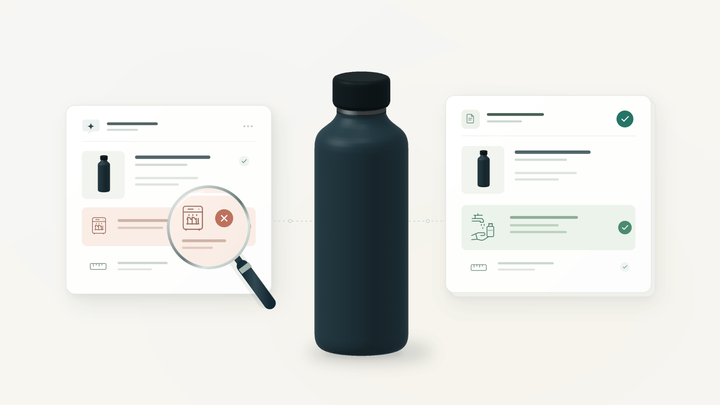
Appearing is not the same as selling. Alhena checks whether a full product card rendered (image, price, carousel position) or your product was a passing text mention.
It also checks whether the surfaced price and availability match your live catalog. That is what live sync with Shopify, WooCommerce, Magento, and Salesforce Commerce Cloud is for.
What is invisible bestseller detection?
Invisible bestsellers are products that sell well on your site but never appear in AI answers. It is the highest-leverage fix in ecommerce AEO.
Alhena flags them by joining catalog sales data with visibility data, which is only possible when the platform can see both.
What are fan-out queries, and why do they matter?
Fan-out queries are the web searches engines run under the hood before answering. Alhena surfaces them with your organic position on each.
A citations view groups results by domain and page with a 0-100 Domain Rating, so you can see which third-party sites shape answers in your category and which cite your competitors but not you.
The Competitors tab auto-discovers every brand appearing in your tracked answers and shows threat prompts where a competitor ranks top-3 and you are absent.
Why does first-party data change the answer?
Alhena operates on both sides of the customer journey. Its AI Shopping Assistant and Support Concierge handle real conversations with shoppers across web chat, email, Instagram DMs, and WhatsApp.
That first-party behavioral data (which products shoppers ask about, what questions they raise, what drives conversions) feeds the AI Visibility intelligence layer. It informs which prompts are worth tracking, which content gaps matter, and which fixes to prioritize.
Profound relies entirely on external observation; Alhena also sees what happens on your storefront.
Case study: what does that data foundation produce?
Tatcha, the prestige skincare brand, reports 3x site-average conversion and a 38% AOV uplift with Alhena's agents on site. It is the same data foundation the visibility product attributes against.
Which tool tracks more AI engines?
Profound, by a clear margin: up to 10 engines and more prompts at enterprise scale, plus panel-based prompt volume data Alhena does not offer. Alhena tracks 5 engines but goes deeper on each.
Alhena tracks per-product visibility, rendering detail, and per-topic product cards on the shopping answers commerce buyers care about. Those five engines drive nearly all commerce AI traffic today.
ChatGPT alone drove 96.1% of LLM referrals to online stores in Alhena's 310-brand cohort study.
Depth or breadth is a real tradeoff. Global enterprises legitimately need Grok and DeepSeek coverage; a Shopify brand mostly does not, yet.
Which is better for ecommerce features?
Alhena, and this is the least contested section. Profound's commerce capability is a module on a brand-level architecture; Alhena's commerce capability is the architecture.
- Profound: Shopping Analysis (launched late 2025) on brand-level architecture, with Shopify connectivity through its Nostra partnership.
- Alhena: catalog sync, SKU tracking, rendering analysis, and invisible-bestseller detection, because the product was designed for stores.
If your evaluation includes "connect my catalog and tell me which products are broken in AI answers," only one of the two does it natively today.
How do Alhena and Profound measure revenue from AI search?
Profound partners with Partnerize for attribution, which works where affiliate-style link tracking fits. Alhena computes attribution natively: engine-classified sessions joined to checkout events by visitor fingerprint, benchmarked against your sitewide conversion baseline, per engine.
Attribution is association, not causation, and Alhena's methodology page says so plainly. But for the CFO question ("what did AI search sell?") a native checkout join beats a partner integration on both latency and coverage.
Peec AI, for calibration, scopes attribution out entirely.
What content and optimization tools does each platform offer?
Profound's action layer is ahead on breadth and automation. Alhena's action layer is commerce-shaped rather than CMS-shaped. Neither approach subsumes the other; they automate different jobs.
Profound
CMS-shaped automation
- Agents workflows publish content changes to Webflow, WordPress, and Contentful
- Aim (July 2026) turns findings into ranked, executed projects
- Impressive machinery, though G2 reviewers describe the agent features as young
Alhena AI Visibility
Commerce-shaped automation
- Content gap detection across your tracked topics
- AEO FAQ engine generating citation-ready Q&A pairs
- PDP and blog fixes, section by section
- Citation strategy: the publications AI engines cite in your category, plus contacts and outreach tooling to earn them
How much do Alhena and Profound cost in 2026?
Alhena starts free, then $199, $499, and $999/mo. Profound starts at $99/mo with a $399/mo growth tier and custom enterprise pricing that G2 reviewers report reaching well into five figures annually.
| Tier | Alhena AI Visibility | Profound |
|---|---|---|
| Free | 5 tracked prompts, 1 engine | Not published |
| Entry | $199/mo Essentials: 25 prompts, all 5 engines, 10 competitor benchmarks, scheduled refresh | $99/mo starter: single engine, limited prompts |
| Mid | $499/mo Growth: 75 prompts, weekly refresh | $399/mo growth tier: multi-engine |
| Top published | $999/mo Scale: 150 prompts, 25 competitors, daily refresh | Enterprise custom; G2 reviewers report well into five figures annually |
| What's included | AI visibility in every paid plan, alongside the agent suite | Metered by engines, prompts, and agent credits |
Verified July 2026 on both pricing pages. Packaging differs materially, so a like-for-like dollar comparison understates what each includes.
When should you choose Profound over Alhena?
Choose Profound
Enterprise brand and B2B teams
- You need maximum engine breadth: 10 engines with day-zero model support
- You want prompt volume panel data
- You have enterprise trust requirements: SOC 2 Type 2, SAML, asset hierarchies
- You want a content automation layer, with the budget and analyst staffing to use it
In that evaluation Profound is the category leader and the safe choice.
Choose Alhena AI Visibility
Ecommerce and DTC operators
- You need to know which SKUs appear in ChatGPT, Google AI Overviews, Gemini, Perplexity, and Claude
- You need to know how they render, and which bestsellers are invisible
- You want to know what AI traffic actually purchased
- You want native catalog sync and checkout-level attribution at a fraction of an enterprise contract
The free tier means the evaluation costs an afternoon, not a procurement cycle.
Which tool fits edge cases?
Applying the capability differences above to the situations that do not fit either default.
| Your situation | Likely fit | Why |
|---|---|---|
| Hybrid B2B SaaS with a small merch store | Profound | Your revenue question is brand share of voice, not product cards |
| DTC brand on WooCommerce or Magento | Alhena | Profound's only commerce connectivity is Shopify via Nostra |
| Global brand needing Grok or DeepSeek | Profound | Those engines are outside Alhena's 5-engine coverage |
| Store with frequent price or inventory changes | Alhena | Live catalog sync is what catches stale prices inside AI answers |
| Two-person growth team, no analyst | Alhena | G2 reviewers flag Profound's data volume as assuming dedicated analyst time |
| You need a CFO-ready revenue number | Alhena | Native checkout join vs an affiliate-style partner integration |
| You publish heavily in Webflow, WordPress, or Contentful | Profound | Agents workflows and Aim publish directly into those systems |
| You are testing whether AI search matters at all | Alhena free tier | 5 prompts, 1 engine, no procurement cycle |
How do you run a 30-day evaluation?
An actionable sequence you can start today, on either platform.
- Days 1-2. List 25 buying-intent prompts real shoppers would type, not brand-name queries.
- Days 3-5. Connect your catalog (or your domain) and record a baseline: prompts where you appear, average position, citation share.
- Days 6-10. Identify your invisible bestsellers: top-selling SKUs with zero appearances in tracked answers.
- Days 11-18. Fix the top five: PDP content, structured data, and FAQ coverage for those specific products.
- Days 19-25. Pull the citation list for your category and open outreach to the three highest-Domain-Rating sites citing competitors but not you.
- Days 26-30. Compare AI-referred sessions and conversion rate against your sitewide baseline. Report it as attribution, not incrementality.
Evaluation checklist
- Does the tool tell you which SKUs appear, or only whether your brand was mentioned?
- Does it check whether the price shown matches your live catalog?
- Does it connect to your platform natively, not through a partner?
- Can it name your invisible bestsellers without you exporting sales data manually?
- Does it produce a revenue number your CFO will accept, and state its limits?
- Does the entry plan cover the engines that actually refer traffic to your store?
Key takeaways
- Profound owns breadth. The most engines (up to 10), the biggest datasets, the strongest enterprise trust stack, and an automation layer nobody in the category matches.
- Alhena owns commerce depth. SKU-level tracking, rendering analysis, catalog sync, and native revenue attribution exist nowhere else in the category as core architecture.
- Brand mentions hide product problems. A "win" can sit on top of a stale price, a discontinued item, or an invisible bestseller.
- ChatGPT is the surface that matters for stores. It drove 96.1% of LLM referral traffic to online stores in Alhena's 310-brand cohort study.
- The channel is compounding. The same study measured 6.5x growth in LLM referral traffic over 12 months on a stable brand cohort.
- The right choice is the one shaped like your business. Product-shaped questions need product-level answers.
See which products AI is recommending
Connect your catalog, track five engines, and find your invisible bestsellers. Free tier, no procurement cycle.
Frequently asked questions
An AEO (answer engine optimization) tool for ecommerce tracks how AI engines like ChatGPT, Google AI Overviews, Gemini, Perplexity, and Claude recommend products in your category, then helps you improve that presence. The channel is growing fast: Alhena's 12-month study across 310 online stores measured 6.5x growth in LLM referral traffic on a stable brand cohort.
Profound tracks brands across up to 10 AI engines at enterprise scale. Alhena tracks products: which SKUs appear in AI shopping answers, whether product cards render with correct price and placement, which bestsellers are invisible, and what AI-referred sessions purchased, using live catalog sync with Shopify, WooCommerce, Magento, and Salesforce Commerce Cloud.
AEO (answer engine optimization) focuses on earning citations in direct AI answers, while GEO (generative engine optimization) covers visibility across generative surfaces more broadly, including ChatGPT shopping results and Google AI Overviews. In practice the terms overlap heavily, and both matter for stores because shopping answers blend citations with product cards.
Profound offers Shopify connectivity through its partnership with Nostra rather than a native integration, and does not offer WooCommerce, Magento, or Salesforce Commerce Cloud catalog sync. Alhena integrates natively with all four and keeps pricing, inventory, and variants synced in real time.
SKU-level tracking measures the visibility of individual products, not just your brand name, inside AI answers: which of your products get recommended per topic, in what position, rendered how, and against which competitor products. It matters because AI shopping answers recommend specific items, and a brand-level mention can hide a broken or missing product presence.
Alhena publishes its pricing: a free tier, then $199/mo (Essentials), $499/mo (Growth), and $999/mo (Scale), with AI visibility included in every paid plan alongside its agent suite. Profound starts at $99/mo with a $399/mo growth tier, and its enterprise contracts are custom, with G2 reviewers reporting well into five figures annually. Verified July 2026 on both pricing pages.
Yes, and for stores it is the surface that matters most: ChatGPT drove 96.1% of LLM referral traffic to online stores in Alhena's 310-brand cohort study. Alhena tracks ChatGPT shopping answers at the product-card level, including rendering detail; Profound's Shopping Analysis covers shopping surfaces at brand level.
Invisible bestsellers are products that sell strongly on your site but never appear in AI answers, which usually signals missing or weak content, structured data, or third-party corroboration for those products. Alhena detects them by joining catalog sales signals with per-product visibility data, so you fix the gaps with the highest revenue upside first.
If your questions are product-shaped (which SKUs appear, how they render, what AI traffic bought), a commerce-native platform answers them at a fraction of an enterprise Profound contract. If you need 10-engine breadth and enterprise trust features, Profound remains the strongest offer.
Track visibility movement (prompts where you appear, average position, citation share) next to business outcomes (AI-referred sessions, conversion rate against your sitewide baseline, attributed revenue). Alhena reports the outcome layer natively by joining AI-classified sessions to checkout events; with monitoring-only tools you assemble it from UTM and referrer data. Report it as attribution, not incrementality, unless you ran a controlled experiment.