The way consumers discover and buy products online is going through a fundamental shift. For years, e-commerce brands focused on ranking in traditional search results. That playbook is no longer enough. AI-powered shopping experiences, from ChatGPT and Gemini to Perplexity and emerging agentic commerce platforms, are changing where and how consumers find, compare, and purchase products.
For a detailed breakdown, see our GEO vs SEO vs AEO comparison.
This shift has given rise to two critical disciplines: Answer Engine Optimization (AEO) and Generative Engine Optimization (GEO). Both address the same core challenge: how do you ensure your brand and products appear, accurately and favorably, inside AI-generated answers and agentic shopping experiences?
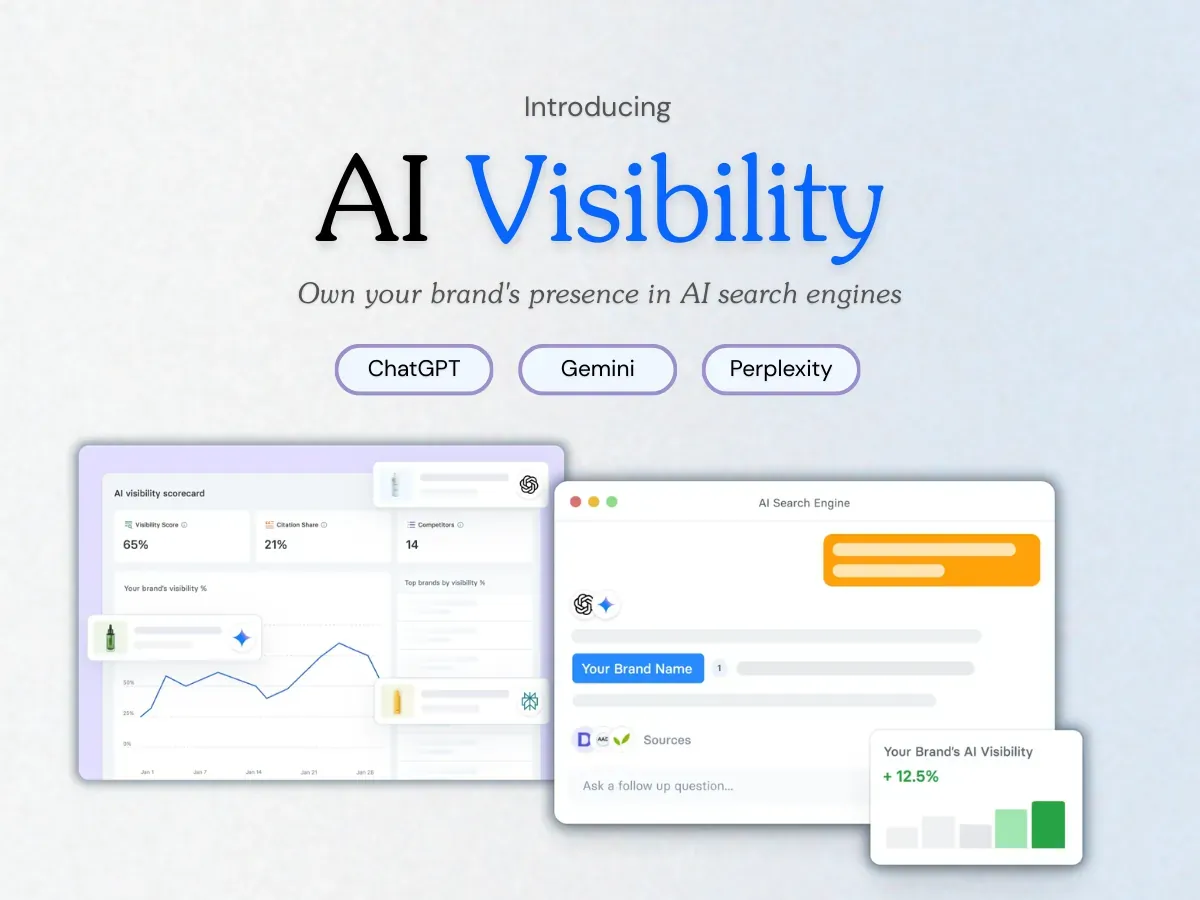
That's the question behind our newest product at Alhena: AI Visibility.
Why we built AI Visibility
Agentic commerce is here. AI shopping assistants don't just search for products anymore. They compare options, weigh tradeoffs, read reviews, and make recommendations on behalf of the consumer. Whether it's ChatGPT suggesting the best running shoes or Perplexity comparing skincare ingredients, these AI systems are becoming the new front door for product discovery.
For e-commerce brands, this creates an urgent set of questions:
- Are your products being cited or recommended by AI shopping assistants?
- When AI systems answer product queries, are they pulling the right details about your catalog, including pricing, reviews, materials, and sizing?
- Are third-party publishers and review sites shaping what AI says about your brand, and is that information accurate?
- Is any of this driving real revenue?
Most teams don't have a reliable way to answer these questions. The existing GEO and AEO tools on the market stop at monitoring. Learn more about <a href="https://alhena.ai/blog/first-party-data-ecommerce-ai-visibility-intelligence/">why first-party data is the moat for AI visibility</a>. They'll tell you whether your brand was mentioned in an AI answer. But they can't tell you why you were mentioned, whether the representation was accurate, or what to do about it.
That gap is what AI Visibility is built to close.
What AI Visibility does
AI Visibility gives e-commerce brands a structured way to monitor, optimize, and measure how their products appear across AI-driven shopping and discovery environments. It's built on three pillars, each grounded in something only Alhena can provide: first-party shopper behavior data.
First-party content optimization
Here's what makes Alhena fundamentally different from every other AEO and GEO tool on the market: we have the first-party data.
Alhena's Shopping Concierge and Support Concierge are already embedded on your site, handling real conversations with real shoppers every day. That means we see exactly how consumers ask about your products, which product attributes create engagement, where hesitation shows up in the buying journey, and what specific details drive conversion.
No other AI visibility platform has access to this signal. Third-party monitoring tools can only observe what AI engines output. We can tell you what consumers actually need to hear to buy, because we see it happening in real time across hundreds of e-commerce stores.
AI Visibility feeds this first-party intelligence back into your content strategy. We identify gaps in your product pages, FAQ content, and editorial pages that are costing you visibility in AI answers. Then we give you specific, actionable recommendations to make your catalog content more citation-ready for AI shopping assistants, search engines, and agentic commerce platforms.
This isn't guesswork. It's optimization grounded in actual shopper behavior data that only Alhena has.
External source monitoring
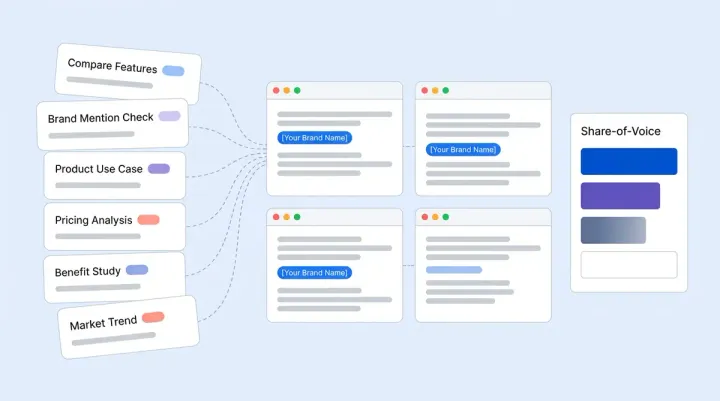
AI systems don't rely only on what's on your website. They draw heavily on third-party sources: review sites, editorial coverage, forums, affiliate content, and other publishers in your category.
Some of that coverage helps your brand. Some of it hurts. And increasingly, some of it is simply inaccurate, with outdated product information being surfaced by AI as if it were fact.
We call this external source pollution. It's one of the biggest blind spots in GEO and AEO strategy today.
AI Visibility maps the external sources and publishers that are influencing AI answers about your brand and products. You'll see which external sources AI engines are citing, whether those sources contain accurate information about your catalog, and where polluted or outdated external source content is undermining your brand's positioning in AI-generated recommendations.
Without first-party data from on-site shopper interactions, you can't even tell whether third-party content is accurate. Alhena can, because we see what shoppers actually experience on your site versus what AI systems are telling them before they arrive.
Revenue measurement
Visibility tracking alone isn't enough. The question every e-commerce leader asks is: does this actually drive revenue?
AI Visibility connects the dots between AI-driven discovery and downstream commercial outcomes. We help brands attribute real revenue back to AI sources, so this stops being an abstract emerging trend and becomes a measurable, optimizable channel.
Again, this is only possible because Alhena sits on both sides of the equation. We see how AI systems represent your products (through visibility tracking) and we see what happens when shoppers arrive on your site (through our concierge products). That closed loop turns agentic commerce from a buzzword into a revenue line item.
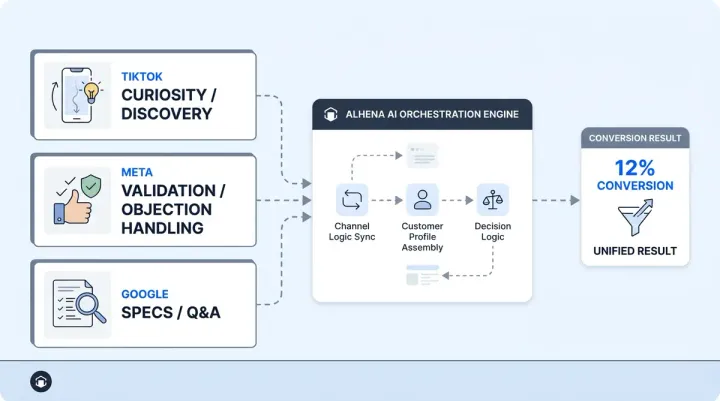
We recently completed a study of conversion data across 329 e-commerce stores that reveals how consumer buying behavior is shifting in the age of AI shopping assistance. Download the study here.
Product-level visibility tracking
Most AI visibility tools operate at the brand level. They'll tell you "your brand was mentioned in a ChatGPT answer." That's not granular enough for e-commerce.
AI Visibility tracks your catalog at the SKU level across AI search engines and agentic shopping platforms. For each product, you can see:
- Which AI engines are surfacing it, and how often
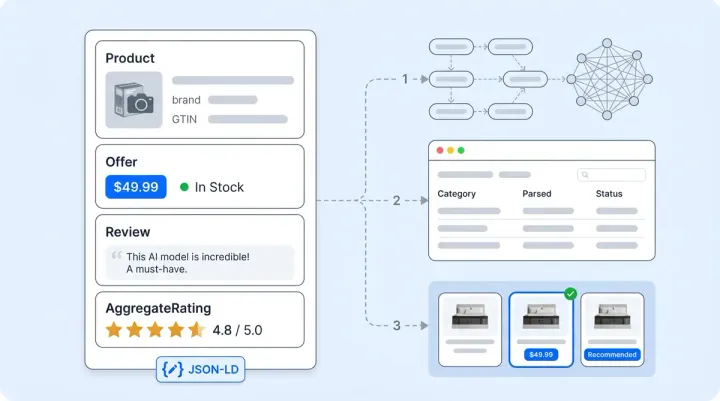
- How the product renders inside AI answers, including pricing, ratings, images, and positioning
- Whether the right product attributes are being included
- How your products compare to competitors in the same AI answers
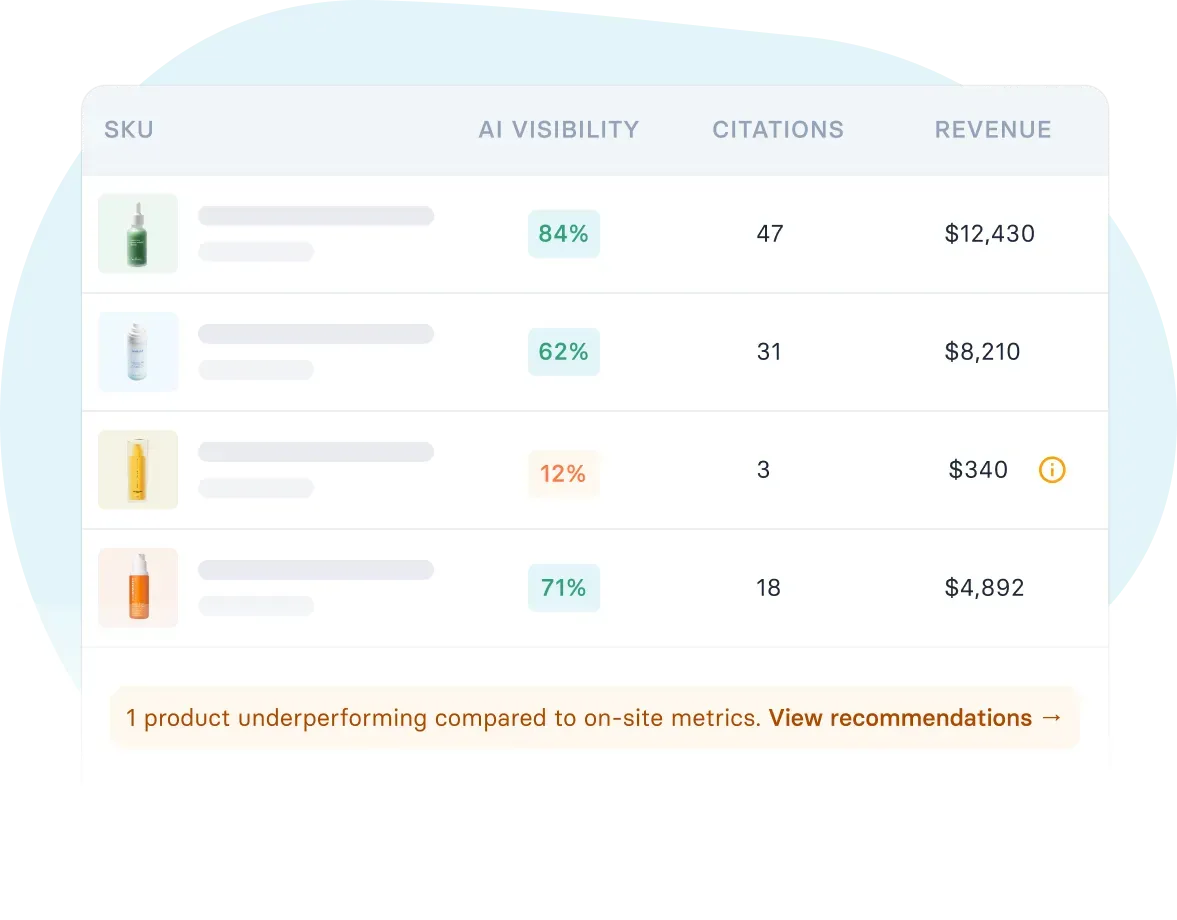
This level of granularity matters because agentic shopping experiences are product-specific. When an AI shopping assistant recommends "the best waterproof hiking boots under $200," it's making a product-level decision. Brands need product-level intelligence to compete in that environment.
Rendering analysis
Being mentioned in an AI answer isn't always a win. How your product appears can matter just as much as whether it appears.
Was it shown as a rich product card with pricing and ratings? Or was it buried in a text paragraph with no visual treatment? Was the right product variant highlighted? Were the attributes that actually matter to shoppers, like fit, material, and size availability, included in the AI's response?
Rendering analysis answers these questions so teams can assess not just presence, but presentation quality across AI engines and agentic commerce platforms.
How AI Visibility fits into the Alhena platform
AI Visibility is designed to work alongside the rest of Alhena's product suite. Each part of the platform supports a different moment in the customer journey:
- AI Visibility wins the moment before the visit, when an AI engine or agentic shopping assistant decides which products to recommend
- Shopping Concierge converts that demand once a shopper arrives on site, providing AI shopping assistance that guides buyers to the right product
- Support Concierge reduces service cost and improves quality at scale
Together, these products create a closed loop that no other platform can replicate. The first-party data from Shopping Concierge and Support Concierge feeds directly into AI Visibility's optimization engine, making your products more discoverable across the AI-driven shopping environments where consumer journeys increasingly begin. And the visibility insights flow back into on-site experiences, ensuring your concierge products address the exact questions and concerns AI systems are raising about your products.
Other GEO and AEO tools don't have access to on-site shopper behavior data. They can only observe AI outputs from the outside. Alhena connects the inside (what shoppers actually do on your site) to the outside (how AI systems represent your products). That's what makes the optimization actionable and the results measurable.
Who this is for
AI Visibility is built for e-commerce brands that want a practical, data-driven approach to the rise of AI search, agentic commerce, and AI shopping assistance.
It's particularly relevant for teams already asking:
- Are our products showing up in AI answers at all?
- Are competitors being recommended more often in agentic shopping experiences?
- Is our catalog structured in a way AI systems can understand and cite?
- Which product pages should we fix first to improve AEO performance?
- How do we measure revenue impact from AI-driven discovery and GEO efforts?
For some teams, AI Visibility will be a strategic monitoring layer. For others, it will become a core part of their AEO, GEO, and content optimization workflow across SEO, PDP optimization, digital merchandising, and growth.
Frequently Asked Questions
What is AI Visibility?
AI Visibility is Alhena’s product that helps e-commerce brands monitor, optimize, and measure how their products appear across AI-powered search engines and agentic shopping platforms like ChatGPT, Gemini, and Perplexity. It tracks visibility at the SKU level, identifies content gaps, and connects AI discovery to revenue.
What is AEO and how does it relate to AI Visibility?
AEO (Answer Engine Optimization) is the practice of optimizing your content so that AI-powered answer engines cite and recommend your brand and products. AI Visibility provides the data and insights brands need to execute an effective AEO strategy, including identifying which product pages need optimization and tracking how AI engines represent your catalog.
How is GEO different from traditional SEO?
GEO (Generative Engine Optimization) focuses on how your brand and products appear in generative AI responses, not just traditional search engine results pages. Unlike SEO, which optimizes for link rankings, GEO optimizes for citation, recommendation, and accurate representation inside AI-generated answers. AI Visibility gives brands the tools to track and improve their GEO performance.
What is agentic commerce and why should e-commerce brands care?
Agentic commerce refers to AI shopping assistants that autonomously compare products, weigh tradeoffs, and make purchase recommendations on behalf of consumers. As more shoppers rely on these AI agents for product discovery, brands need to ensure their products are being accurately represented and recommended. AI Visibility helps brands track and optimize their presence in these agentic shopping experiences.
How does Alhena use first-party data for AI visibility optimization?
Alhena’s Shopping Concierge and Support Concierge are embedded on e-commerce sites, capturing real shopper conversations, questions, and buying behavior. This first-party data reveals what consumers actually need to hear before purchasing, which product attributes drive engagement, and where hesitation occurs. AI Visibility uses these insights to make content optimization recommendations that no third-party monitoring tool can provide.
What is external source monitoring in AI search?
External source monitoring identifies which third-party publishers, review sites, forums, and editorial sources are influencing what AI systems say about your brand and products. By mapping these external sources, brands can see where outdated or inaccurate information is being surfaced by AI as fact, and take action to correct or counteract it.
Which AI search engines does AI Visibility track?
AI Visibility tracks product appearances across major AI-powered search and shopping platforms, including ChatGPT, Google Gemini, Perplexity, and other emerging agentic commerce environments. The platform monitors how products render, which attributes are included, and how your brand compares to competitors in AI-generated answers.
How does AI Visibility measure revenue from AI search?
AI Visibility connects AI-driven discovery to downstream commercial outcomes by sitting on both sides of the customer journey. It tracks how AI systems represent your products (visibility) and, through Alhena’s on-site concierge products, measures what happens when shoppers arrive (conversion). This closed-loop approach lets brands attribute real revenue to AI sources and measure the ROI of their AEO and GEO efforts.
Get started
AI Visibility is live now. Get started by testing your AI visibility and seeing how your products appear across AI search engines and agentic shopping platforms today.
Want to go deeper on AEO strategy? Our answer engine optimization for ecommerce guide covers the six strategies that drive AI product recommendations.