Average subscription ecommerce churn runs 6 to 8% monthly. That translates to roughly 64% annual subscriber loss. Every churned subscriber represents not just a lost sale but the entire future lifetime value of that recurring revenue stream, often hundreds or thousands of dollars in revenue that simply vanishes.
Most subscription brands fight churn with blunt tools. A blanket 20% discount offer appears at cancellation. A generic "We'll miss you" email fires. These tactics treat every departing subscriber the same way, ignoring the specific reason they decided to leave.
The real lever is AI subscription box ecommerce technology that understands why each subscriber is at risk and intervenes with the right action at the right moment. Not a broad discount, but a precise response matched to the individual subscriber's behavior, preferences, and stated concerns. This is the difference between a 10% save rate and a 40% save rate, and it is the difference between a subscription brand that grows and one that runs on a treadmill replacing the subscribers it loses every month.
Here are six subscription-specific AI capabilities that directly address recurring revenue churn mechanics.
1. Preference Learning Across Subscription Cycles
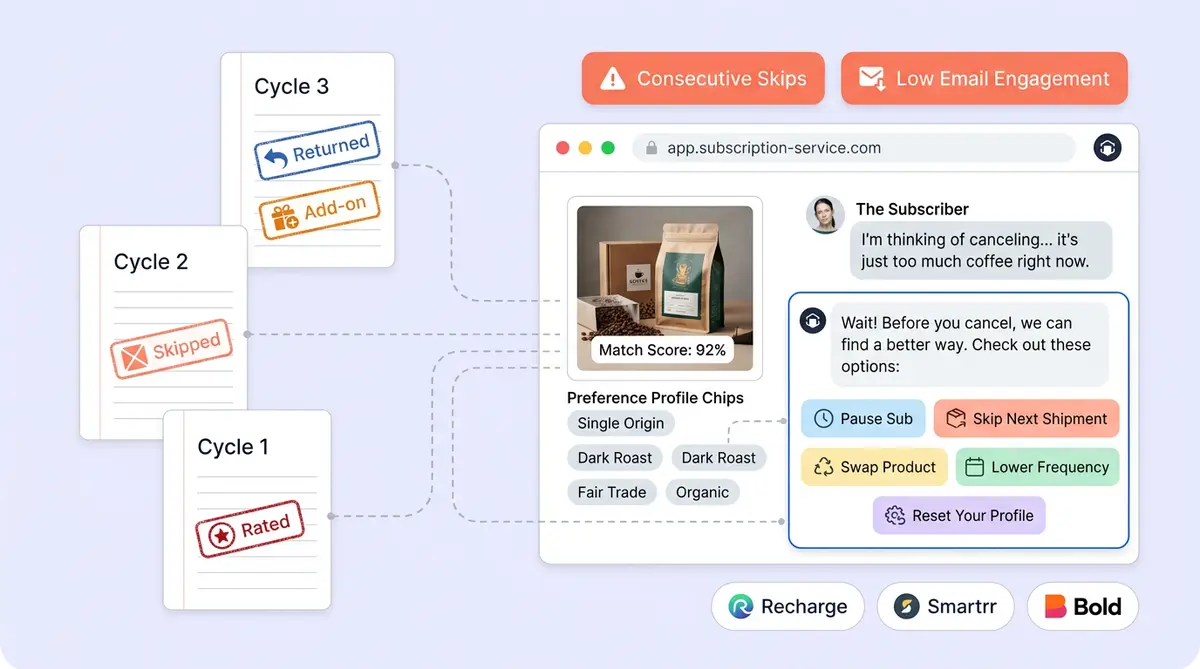
Subscription commerce generates a unique data asset that one-time ecommerce does not: repeated product interactions from the same customer over months and years. Subscription churn AI leverages this data by tracking which products each subscriber rates highly, which they skip, which they return, and which they repurchase as one-time add-ons.
This builds a progressive preference profile that gets more accurate with every box. The profile informs both automated curation and proactive support conversations where the AI can say, "I noticed you've skipped the last two coffee blends with fruit notes. Want me to adjust your profile to prioritize chocolate and nut flavors?"
This is not a static recommendation engine. It is a living preference model that evolves with the subscriber, reducing the product mismatch that drives a significant percentage of subscription cancellations.
2. Churn Risk Detection from Behavioral Signals
Subscribers rarely cancel without warning. The warning signs are embedded in their behavior weeks before they hit the cancel button. AI identifies pre-churn patterns including consecutive skips, reduced engagement with box preview emails, increased support contacts about billing, and declining product ratings.
By detecting these signals 2 to 4 weeks before cancellation, subscription churn AI triggers retention interventions while the subscriber is still persuadable. A subscriber who has skipped two consecutive boxes and stopped opening preview emails is at high risk. The AI can trigger a personalized re-engagement message, a preference reset offer, or a proactive outreach from a support agent before that subscriber reaches the cancellation page.
The difference between reactive and proactive retention is the difference between talking to someone who is considering leaving and someone who has already decided to leave.
3. Pause, Skip, Swap, and Cancel Automation Within Conversation
Subscription support tickets are dominated by lifecycle management requests. Pause my subscription. Skip next month's box. Swap this product for something else. Change my delivery frequency. Update my payment method. Cancel my subscription.
Each of these actions requires integration with subscription management platforms to process in real time. AI subscription box ecommerce solutions must handle pause, skip, swap, frequency change, payment update, and cancellation within a single conversational flow. Every lifecycle action the AI handles in-conversation is a ticket that never reaches a human agent and a friction point removed from the subscriber experience.
When a subscriber can type "skip my next box" into a chat widget and receive immediate confirmation that the skip has been processed, there is no reason for that interaction to consume human agent time.
4. Intelligent Cancellation Interception
When a subscriber initiates cancellation, the AI must understand the stated reason and offer a personalized alternative. This is where subscription churn AI delivers its highest-impact results.
"Too much product" triggers a frequency reduction offer. "Too expensive" triggers a downgrade to a smaller box tier. "Not using the products" triggers a preference reset conversation to realign future boxes with what the subscriber actually wants. "Just need a break" triggers a pause with an automatic reactivation date.
Generic "save offers" convert at 10 to 15%. Personalized alternatives based on the specific cancellation reason convert at 25 to 40%. That gap represents thousands of retained subscribers annually for mid-size subscription brands and tens of thousands for larger operations.
The key is that the AI does not simply present a discount. It listens to the reason and responds with the alternative that addresses that specific concern.
5. Subscription-to-One-Time Cross-Selling
Subscribers who love a specific product from their box are prime candidates for one-time purchases. Full-size versions of a sample they rated highly. Complementary products that pair with their favorites. Limited editions related to products in their preference profile.
AI identifies these moments from preference data and proactively suggests one-time purchases within support or browsing conversations. A subscriber who rated a skincare serum 5 stars in their last box might see a suggestion for the full-size version during their next support interaction.
This expands revenue beyond the recurring subscription fee, turning the subscription itself into a discovery engine that drives additional one-time purchases. Brands using this approach report 15 to 25% increases in per-subscriber revenue from one-time add-on sales driven by AI-powered product recommendations.
6. Box Curation and Preview Intelligence
For brands offering curated boxes, AI can generate personalized box previews showing the subscriber what is coming in their next shipment based on their preference profile. The subscriber can review the upcoming products and swap items before the box ships.
This preview-and-swap workflow reduces post-delivery dissatisfaction and eliminates the "I didn't want this" cancellation trigger that drives a significant share of curation box churn. When subscribers feel they have control over what arrives at their door, they stay subscribed longer. When they are surprised by products they do not want, they cancel.
Preview intelligence also reduces return rates and negative reviews, both of which carry operational costs that compound across a large subscriber base.
The Integration Layer That Makes Subscription AI Work
None of these capabilities function without deep integration into subscription management platforms. The AI must connect to platforms like Recharge, Smartrr, and Bold to read subscriber status, billing cycles, product preferences, and order history in real time.
Without this integration, the AI cannot process lifecycle actions, access preference data, or trigger retention interventions. An AI that can only answer questions about subscription products but cannot actually pause, skip, or swap within the conversation creates friction instead of removing it. The subscriber still has to navigate to their account portal, find the right setting, and process the change manually.
Real-time platform integration is what separates a conversational AI from a glorified FAQ bot in subscription commerce.
How Alhena AI Powers Subscription Commerce Retention
Alhena AI is built for subscription commerce with native integrations to Recharge, Smartrr, and Bold subscription platforms. These integrations give the AI real-time access to subscriber status, billing, preferences, and order history.
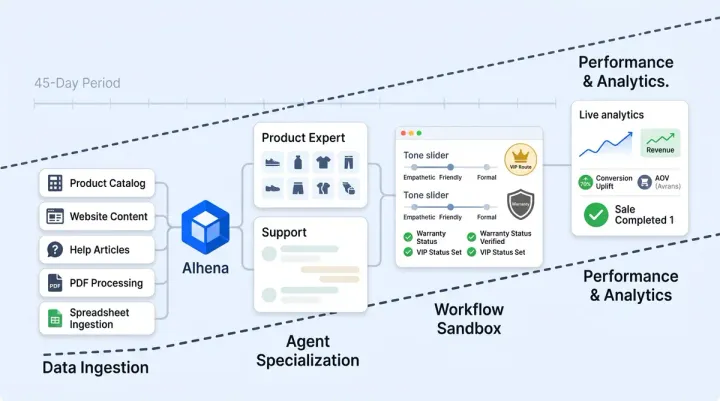
Alhena's Order Management Agent processes pause, skip, swap, frequency change, and cancellation requests within conversational AI across web chat, email, Instagram DMs, and WhatsApp without routing to human agents. Every lifecycle action is handled in-conversation, instantly, on any channel the subscriber prefers.
The Product Expert Agent uses preference data to recommend one-time purchases, suggest box customization, and proactively address product dissatisfaction before it becomes a cancellation trigger. When a subscriber's ratings trend downward, the Product Expert Agent initiates a preference reset conversation rather than waiting for the subscriber to cancel.
Alhena's hallucination-free architecture ensures every subscription action, billing date, product availability claim, and pricing reference is grounded in live platform data rather than AI-generated guesses. When a subscriber asks "When does my next box ship?" the answer comes from their actual subscription record, not a fabricated response.
The Compounding Advantage of Subscription AI
Subscription commerce has the highest customer lifetime value potential in ecommerce but also the highest churn exposure. A 5% reduction in monthly churn compounds into dramatically different revenue outcomes over 12, 24, and 36 months. The brands that deploy AI specifically configured for recurring revenue mechanics will retain subscribers at rates that build an insurmountable revenue advantage over competitors still fighting churn with manual processes and generic discount offers.
The subscription brands winning in 2026 and beyond are not the ones with the best acquisition funnels. They are the ones that keep the subscribers they acquire.
Frequently Asked Questions
How does AI reduce subscription box churn differently than standard retention tools?
AI subscription box ecommerce platforms like Alhena AI analyze behavioral signals such as consecutive skips, declining ratings, and reduced email engagement to predict churn 2 to 4 weeks before cancellation. Unlike static discount offers, Alhena AI matches personalized retention actions to each subscriber's specific risk pattern, converting 25 to 40% of at-risk subscribers compared to 10 to 15% with generic save offers.
Can AI actually process subscription lifecycle changes like pauses and skips in conversation?
Yes. Alhena AI connects natively to subscription platforms like Recharge, Smartrr, and Bold, allowing it to process pause, skip, swap, frequency change, and cancellation requests directly within chat, email, or social messaging. Every lifecycle action completes in real time without routing to a human agent or redirecting the subscriber to an account portal.
How does preference learning AI improve subscription box curation over time?
Alhena AI builds a progressive preference profile for each subscriber by tracking product ratings, skips, returns, and one-time repurchases across every subscription cycle. This profile informs automated curation and proactive support conversations, enabling the AI to recommend preference adjustments and product swaps that align each box more closely with what the subscriber actually wants.
What makes AI cancellation interception more effective than a standard cancel-save flow?
Alhena AI interprets the subscriber's stated cancellation reason and responds with a targeted alternative rather than a blanket discount. Frequency reduction for "too much product," tier downgrades for "too expensive," and preference resets for "not using the products" address the root cause of cancellation, which is why personalized interception converts at roughly double the rate of generic save offers.
How does subscription-to-one-time cross-selling work with AI in subscription commerce?
Alhena AI identifies subscribers who rated specific box products highly and proactively suggests full-size versions, complementary items, or limited editions during support or browsing conversations. This preference-driven cross-selling expands per-subscriber revenue 15 to 25% beyond the recurring subscription fee by turning the subscription box into a product discovery engine that drives incremental one-time purchases.