Email marketing earns $36 for every $1 spent, and for e-commerce brands the return climbs to $45, according to Litmus research. Yet 75 percent of shoppers abandon a purchase because they cannot get instant answers, according to Klaviyo's AI Shopping Index. The gap between those two numbers is where revenue leaks. An AI shopping assistant captures the buying signals that standard email flows miss: product preferences, stated objections, sizing questions, and price sensitivity. When that conversational data flows into Klaviyo, every email, SMS, and automated flow becomes dramatically more relevant and profitable. This guide breaks down exactly how to connect an AI shopping assistant with Klaviyo, the revenue-generating use cases it unlocks, and why Alhena AI is the best platform to make the integration work.
Why Klaviyo Matters for E-commerce Revenue
Klaviyo powers email and SMS marketing for more than 183,000 e-commerce brands. The platform typically generates 20 to 30 percent of total online revenue for the average store, processing over two billion daily events across 7 billion customer profiles. It has evolved from a pure email tool into a full B2C CRM with email, SMS, WhatsApp, RCS messaging, push notifications, and a customer data platform built specifically for commerce.
But Klaviyo only knows what your store tells it. It captures purchase history, browse behavior, and email engagement. What it misses is the richest signal of all: what shoppers say when they ask for help.
Every conversation a customer has with your AI shopping assistant reveals buying intent, product preferences, objections, and price sensitivity. When that data stays locked inside a chat widget, Klaviyo's segmentation is incomplete and your email flows automatically fire generic messages instead of the personalized customer experience shoppers expect. Connecting an AI shopping assistant to Klaviyo closes that gap and turns conversational data into email revenue.
What an AI Shopping Assistant Does (and Why Alhena AI Leads the Category)
An AI shopping assistant is not a basic FAQ chatbot. It is an intelligent, real-time sales agent that guides shoppers through smart product discovery, answers detailed questions, compares options, and nudges them toward checkout. The best AI shopping assistants go further: they populate carts, pre-fill checkout fields, and resolve order issues without human involvement.
Alhena AI's Shopping Assistant is purpose-built for e-commerce revenue. Unlike general-purpose chatbots or support-first tools like Zendesk AI or Intercom Fin, Alhena is grounded in your verified product catalog, which means it never hallucinates specs, prices, or availability. It operates across web chat, email, Instagram DMs, WhatsApp, and voice, covering every channel where shoppers start conversations.
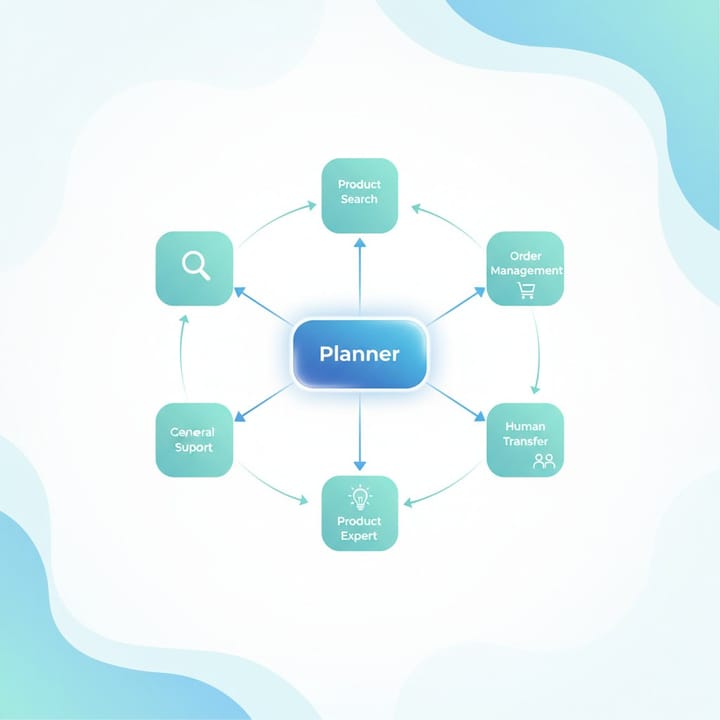
What sets Alhena apart is its dual-agent architecture. The Product Expert Agent handles guided selling, personalized recommendations, and cross-sells using live catalog data. The Order Management Agent manages post-purchase inquiries like tracking, returns, and modifications. Both agents feed interaction data back to your marketing stack, which is exactly what makes the Klaviyo connection so powerful.
Alhena deploys in under 48 hours with no developer resources required. You do not need to manually train the AI — it automatically learns from your product catalog and brand knowledge base. Brands like Tatcha have seen a 3x conversion rate and 38 percent average order value uplift after implementing it, while Puffy achieved 63 percent automated inquiry resolution with a 90 percent CSAT score.
How Connecting an AI Shopping Assistant with Klaviyo Works
The integration between an AI shopping assistant and Klaviyo follows a straightforward data-flow pattern. Conversational events from the assistant automatically sync to Klaviyo as custom events and profile properties, enriching the customer profiles that drive your email and SMS campaigns.
Step 1: Connect Your Platforms via API
To get started, link your AI shopping assistant to Klaviyo through an API integration. Alhena AI connects via Klaviyo's Events API and Webhooks API, syncing data in real time. This requires your Klaviyo private API key and takes minutes to configure. No custom development is needed.
Step 2: Define Your Conversational Event Schema
Map the conversational events you want to track in Klaviyo. The most valuable events include:
- Product Inquiry -- when a shopper asks about a specific product, category, or attribute
- Recommendation Viewed -- when the AI serves a personalized suggestion and the shopper engages with it
- Cart Action -- when the AI adds items to a shopper's cart or initiates agentic checkout
- Objection Raised -- when a shopper mentions price concerns, shipping hesitation, or sizing doubts
- Support Resolved -- when the AI handles a post-purchase issue like tracking or returns
Each event carries metadata: product IDs, categories, price points, and conversation context. This metadata becomes the foundation for precise segmentation in Klaviyo.
Step 3: Enrich Klaviyo Profiles with Conversational Data
Beyond events, the integration pushes custom profile properties to Klaviyo. These first party data points include preferred product categories, stated skin type or size, price sensitivity level, and communication preferences discovered during chat. Each subscriber profile gets richer over time. Alhena AI's unified memory layer maintains a continuous understanding of each customer across every touchpoint, so every profile property reflects the full conversation history rather than just the last interaction.
Step 4: Build Triggered Flows Based on AI Events
With conversational data flowing into Klaviyo, you can create flows triggered by AI shopping assistant events. A shopper who asked about running shoes but did not buy can receive a targeted email 30 minutes later featuring the exact products discussed, plus similar options. That level of specificity is impossible with standard browse-abandonment flows that only know which pages were visited.
Six Revenue-Generating Use Cases
Once your AI shopping assistant is connected to Klaviyo, the revenue opportunities multiply. Here are six ways ecommerce brands use ai shopping data to drive measurable results.
1. Conversational Cart Recovery
Standard abandoned cart emails convert at just 3.3 to 3.6 percent. When you enrich those emails with data from AI conversations, recovery rates climb significantly. If a shopper told your AI assistant they were concerned about mattress firmness before abandoning, the recovery email can address that exact objection with a firmness guide and a relevant testimonial. Alhena AI's agentic checkout capability also lets the AI pre-populate the cart and send a one-click checkout link directly through Klaviyo flows.
2. AI-Informed Product Recommendations
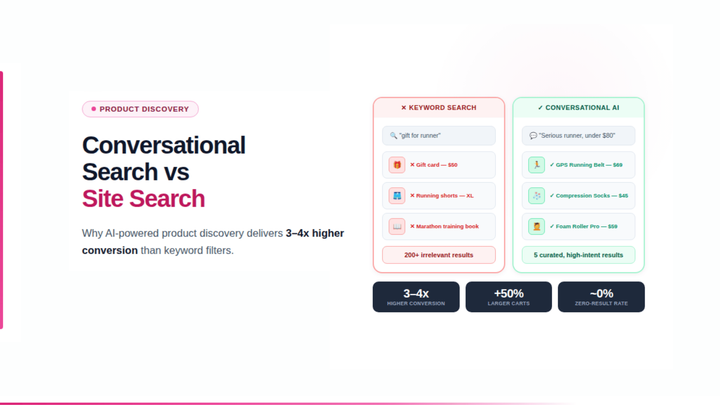
Klaviyo's product recommendation blocks pull from purchase and browse history. Adding conversational context from Alhena AI transforms these recommendations with a deeper level of personalization. A shopper who asked for "a moisturizer for sensitive skin that doesn't feel greasy" gives you intent signals no clickstream can match. Use these signals as Klaviyo profile properties to power dynamic recommendation blocks in campaigns and flows.
3. Behavioral Segmentation from Chat Data
Create Klaviyo segments based on AI interaction events for smarter behavioral segmentation. High-intent segments might include shoppers who asked the AI to compare two products, requested a discount, or asked about stock availability. Low-intent segments might include browsers who only asked general questions. Tailor your email cadence, offer strategy, and creative to each segment's demonstrated intent level.
4. Post-Purchase Upsell and Cross-Sell Flows
When a customer asks Alhena AI's Order Management Agent about delivery timelines or product care, that interaction signals ongoing engagement. Trigger a Klaviyo flow that follows up with complementary products after the order arrives. If a customer asked about leather care for their new boots, the AI can pass that context to Klaviyo, which fires an email featuring leather care kits and matching accessories.
5. Win-Back Campaigns with Conversational Context
Lapsed customers who previously engaged with your AI shopping assistant have a richer profile than those who only browsed. Use their conversation history to craft win-back emails that reference their stated preferences. "We remember you loved our lightweight running shoes. Here is what is new in that category" performs better than a generic "We miss you" template.
6. VIP Identification and Nurture
Shoppers who engage deeply with your AI shopping assistant, asking multiple product questions, requesting comparisons, and using the agentic checkout feature, are high-value prospects. Create a Klaviyo segment for these engaged chatters and enroll them in a VIP nurture flow with early access to new arrivals, exclusive discounts, and personalized lookbooks.
Real Benefits and ROI of the Integration
The combination of an AI shopping assistant and Klaviyo creates compounding returns across your marketing funnel and delivers a better customer experience at every touchpoint.
Higher email revenue per recipient. Emails informed by conversational data achieve higher open and click rates because they speak to stated needs, not inferred ones. According to Klaviyo's benchmark data, personalized flows already outperform batch campaigns by 3x or more. Adding AI conversation data deepens that personalization further.
Reduced cart abandonment. With 70 percent of online shopping carts abandoned globally, according to Baymard Institute, proactive AI intervention plus targeted email follow-up creates a multi-touch recovery system. Proactive AI chatbots achieve 12.3 percent conversion rates, nearly four times higher than passive bots at 3.1 percent. The subsequent Klaviyo flows capture those who still slip through.
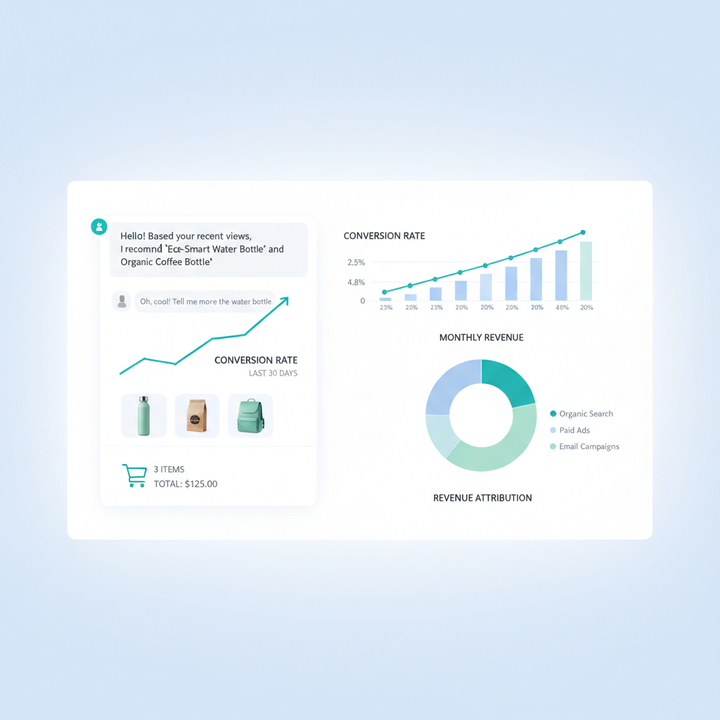
Revenue attribution clarity. Alhena AI includes built-in revenue attribution analytics that track which conversations led to purchases. When you connect this to Klaviyo's flow analytics dashboard, you get end-to-end visibility from AI conversation to email engagement to completed order. Use the Alhena ROI Calculator to optimize and estimate the impact for your store.
Proof from real brands. Victoria Beckham Beauty saw a 20 percent AOV increase with Alhena AI. Tatcha attributes 11.4 percent of total site revenue to AI-assisted conversations. Crocus achieved an 86 percent deflection rate with 84 percent CSAT. Manawa reduced support workload by 43 percent and cut response times from 40 minutes to 1 minute. When this conversational data flows into Klaviyo, the downstream email and SMS campaigns become significantly more effective, amplifying these results across the entire customer lifecycle.
Best Practices for Maximizing Revenue from This Integration
Connecting your AI shopping assistant to Klaviyo is just the starting point to get started with ai powered revenue growth. These best practices help you extract maximum value from the integration.
Start with your highest-value flows. Abandoned cart and browse abandonment flows drive the most immediate revenue lift when enriched with AI data. Optimize these first before expanding to welcome series, win-back, and post-purchase flows.
Use conversation data for dynamic content. Do not just segment differently. Change the actual email content based on AI-collected preferences. If a shopper told the AI they prefer organic ingredients, show organic product blocks in every email they receive. Klaviyo's conditional content blocks make this straightforward when you have the right profile properties from Alhena.
A/B test AI-enriched segments against standard ones. Measure the incremental lift from conversational data. Create two versions of your abandoned cart flow: one using standard platform data and one enriched with Alhena AI conversation context. The difference in conversion rate and revenue per recipient quantifies the integration's value.
Monitor and refine your event schema. As your AI assistant handles more conversations, new data patterns emerge. Review your Klaviyo dashboard event data monthly and add new custom properties as you discover high-signal conversation attributes. Alhena gets smarter over time as it continues to train on new interactions, and your Klaviyo setup should evolve with it to optimize performance.
Leverage omnichannel data. Alhena AI operates across web chat, email, WhatsApp, Instagram DMs, and voice. Each channel generates unique intent signals that shape the customer experience. Feed all of them into Klaviyo so your segments reflect the full picture of subscriber behavior, not just what happens on your website.
Respect consent and privacy. Conversational data is powerful, and it must be handled responsibly. Ensure your data collection practices comply with GDPR, CCPA, and platform-specific guidelines. Alhena AI is designed with privacy compliance built in, and Klaviyo provides robust consent management tools to keep you covered.
Key Takeaways
- Klaviyo generates 20 to 30 percent of e-commerce revenue, but its effectiveness depends on the quality of data feeding its segments and flows.
- An AI shopping assistant captures conversational intent signals, including product preferences, objections, and price sensitivity, that no clickstream analytics can provide.
- Connecting Alhena AI to Klaviyo requires only an API key and takes minutes, not weeks. No developer resources needed.
- Six proven use cases drive revenue: conversational cart recovery, AI-informed recommendations, behavioral segmentation, post-purchase upsells, contextual win-backs, and VIP identification.
- Alhena AI's hallucination-free responses, agentic checkout, and built-in revenue attribution make it the strongest AI shopping assistant for Klaviyo integration.
- Brands using Alhena AI have achieved 3x conversion rates, 38 percent AOV uplift, and up to 11.4 percent of total site revenue from AI interactions.
Ready to turn every AI conversation into a revenue-generating Klaviyo flow? Book a demo with Alhena AI to see how the integration works for your store, or start for free with 25 conversations and experience the difference conversational data makes to your email marketing.
Frequently Asked Questions
How does an AI shopping assistant connect to Klaviyo?
An AI shopping assistant like Alhena AI connects to Klaviyo through the Events API and Webhooks API. Conversational events such as product inquiries, recommendation views, and cart actions sync to Klaviyo in real time as custom events and profile properties. Setup requires only a Klaviyo private API key and takes minutes with no developer resources needed.
What data does an AI shopping assistant send to Klaviyo?
The integration sends custom events like product inquiries, recommendation interactions, cart actions, and objection signals. It also pushes profile properties including preferred categories, stated sizes or skin types, price sensitivity, and communication preferences. Alhena AI's unified memory layer ensures every data point reflects the customer's full conversation history, not just their last interaction.
Can connecting an AI shopping assistant to Klaviyo improve abandoned cart recovery?
Yes, significantly. Standard abandoned cart emails convert at 3.3 to 3.6 percent. When enriched with conversational context from an AI shopping assistant, recovery emails address specific objections the shopper raised during chat. Alhena AI can also send one-click checkout links through Klaviyo flows with the exact items discussed, which increases recovery rates substantially.
What is the ROI of integrating Alhena AI with Klaviyo?
Brands using Alhena AI have achieved a 3x conversion rate and 38 percent AOV uplift (Tatcha), 20 percent AOV increase (Victoria Beckham Beauty), and 11.4 percent of total site revenue from AI interactions. When this conversational data flows into Klaviyo, it amplifies email and SMS campaign performance across the entire customer lifecycle. Use the Alhena ROI Calculator at alhena.ai/roi-calculator to estimate your specific results.
How long does it take to set up the AI shopping assistant and Klaviyo integration?
Alhena AI deploys in under 48 hours with no developer resources required. The Klaviyo API connection itself takes minutes to configure. Once connected, conversational data begins flowing into Klaviyo profiles immediately, and you can start building triggered flows based on AI events the same day.
Is Alhena AI better than Klaviyo's built-in AI shopping assistant?
Klaviyo's K:AI Customer Agent is designed to work within the Klaviyo ecosystem. Alhena AI is purpose-built for e-commerce selling across all channels, including web chat, email, Instagram DMs, WhatsApp, and voice. Alhena offers hallucination-free product answers grounded in your verified catalog, agentic checkout that populates carts and pre-fills fields, and built-in revenue attribution analytics. The two complement each other: Alhena handles the conversational selling and support, while Klaviyo automates the downstream email and SMS marketing.
What e-commerce platforms does Alhena AI support alongside Klaviyo?
Alhena AI integrates with Shopify, WooCommerce, Magento, and Salesforce Commerce Cloud. It also connects with helpdesks like Zendesk, Freshdesk, Gorgias, Kustomer, and Intercom. This means whatever commerce platform feeds your Klaviyo account, Alhena can sit as the AI layer between your storefront, your support system, and your marketing automation.
How does conversational data improve Klaviyo email segmentation?
Standard Klaviyo segments rely on purchase history and browse behavior. Conversational data from an AI shopping assistant adds intent signals that no clickstream can capture: stated product preferences, specific objections, price sensitivity, and feature priorities. You can create high-intent segments of shoppers who compared products or asked about stock, and low-intent segments of general browsers, then tailor cadence, offers, and creative to each group.