Most ecommerce brands still rely on interruptive pop-ups and generic discount overlays to drive conversions. The result? Shoppers trained to close anything that appears on screen. A 10%-off modal that fires before someone even scrolls past the hero image doesn't convert. It teaches visitors that your site interrupts them, and they respond by ignoring every message during their browsing session you send after that.
AI-driven contextual nudges work differently. They read behavioral signals in real time and deliver the right message at the right moment, converting hesitation into purchase action creating a seamless shopping experience instead of disrupting it. This post breaks down what AI nudges actually are, the behavioral signals that power them, the specific nudge types that improve product discovery and lift add-to-cart, and why commerce intelligence separates nudges that convert from nudges that annoy.
What AI Nudges Are and How They Differ From Pop-Ups
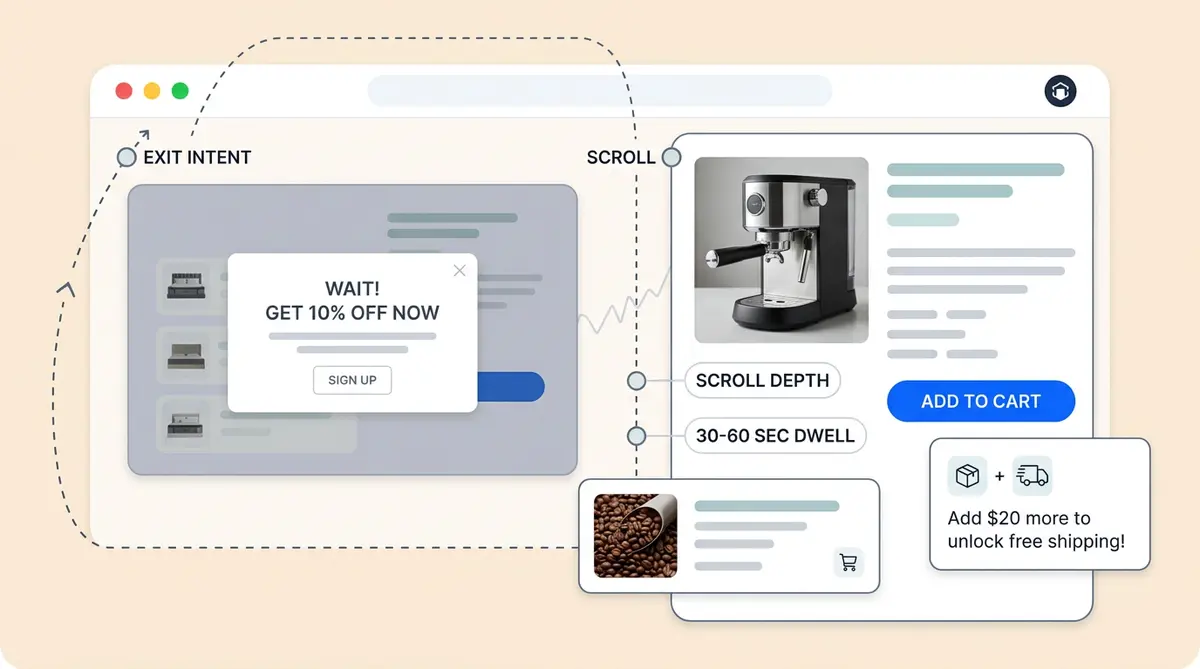
Pop-ups are pre-scheduled, generic, and triggered by arbitrary rules. A timer fires at 5 seconds. An exit-intent overlay shows a blanket discount. A slide-in promotes a sale that has nothing to do with what the shopper is browsing. These interruptions treat every visitor the same regardless of intent, behavior, or context.
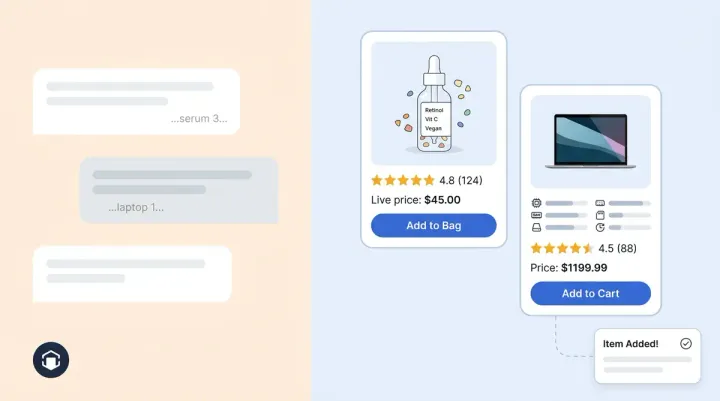
AI nudges are the opposite. They are contextual, personalized, and triggered by real-time behavioral signals. Browsing patterns, time on specific product pages, scroll depth, comparison behavior, repeat visits, and cart composition all feed into when and what the nudge says. A pop-up asks "Want 10% off?" to everyone. An AI nudge tells a shopper comparing two moisturizers, "This one has retinol; this one doesn't. Here's how customers with sensitive skin rated each."
The distinction matters for user experience because shoppers don't hate messages. They hate irrelevant ones. A conversational, contextual nudge that answers a question the shopper was already thinking feels intuitive and helpful. A generic overlay that blocks the page feels like a bad chatbot, not a seamless smart assistant.
The Behavioral Signals That Power Effective AI Nudges in Ecommerce
Every buyer leaves a trail of micro-signals that reveal where they are in their decision process. Smart AI reads these signals, analyzing each one and responds with precision instead of guesswork.
Time on a Product Page Beyond a Threshold
When a shopper spends 45 or more seconds on a product detail page, they're interested but hesitating. Something is holding them back: uncertainty about ingredients, fit, compatibility, or value. This signal calls for a clarification nudge, not a discount.
Scroll Depth Without Add-to-Cart
A visitor who scrolls through the full product description, reviews, and specs without adding to cart is information-seeking. They want to buy but haven't found the answer they need. This is the moment to surface a specific product attribute, a relevant review quote, or a comparison point.
Toggling Between Two Products
Back-and-forth navigation between two similar items signals comparison paralysis. The shopper can't decide. A nudge that highlights the key differences between the two products, grounded in real catalog attributes, breaks the deadlock.
Cart Inactivity and Abandonment Risk
Items sitting in a cart for minutes without checkout progression signals friction. Maybe shipping costs are unclear. Maybe the return policy is hard to find. A nudge that proactively answers the most common pre-checkout questions for the items in the cart removes the blocker.
Return Visits to the Same Product
A shopper who comes back to the same product page across multiple sessions, with purchase history showing interest, has high intent with an unresolved objection. This is the highest-value nudge opportunity. The AI should surface whatever information addresses the most common hesitation for that product category, whether that's social proof, sizing guidance, or a direct answer to "is this worth it?"
AI Nudge Types and When Each Should Trigger
Not all nudges serve the same purpose. The right nudge depends on the behavioral signal, and you can optimize each nudge type, the product category, and the stage of the shopping journey.
Product Clarification Nudges
Activate when browsing behavior suggests confusion: extended dwell time, repeated scrolling through specs, or visits to the FAQ section. The nudge surfaces a specific product detail, ingredient explanation, or compatibility answer pulled from live catalog data. For beauty brands, this might mean explaining the difference between two serum concentrations. For electronics, it could clarify which adapter works with which model.
Social Proof Nudges
Activate when hesitation signals appear on high-traffic products. "1,247 customers bought this in the last 30 days" or "Rated 4.8 across 900 verified reviews" reduces perceived risk and helps build trust. The key is pulling real numbers from actual review data, not fabricating urgency with countdown timers.
Bundle and Complementary Suggestions
Activate when cart composition indicates an incomplete solution. A shopper buying a camera body without a lens, a skincare cleanser without a moisturizer, or a sofa without throw pillows is leaving value on the table. The nudge suggests the complementary item with a reason: "Most customers pair this cleanser with the hydrating toner for a complete routine."
Genuine Scarcity Signals
Activate only when inventory or pricing data supports real scarcity. "3 left in your size" works when it's true. Artificial urgency like limited time offers ("Only 2 hours left!") erodes trust. Commerce-aware nudging pulls from live inventory feeds, so the scarcity message is always grounded in fact.
Size and Fit Guidance Nudges
Activate when category-specific hesitation patterns emerge, particularly in fashion and apparel. A shopper toggling between two sizes or reading the size chart multiple times needs help. The nudge surfaces fit recommendations based on product attributes and review sentiment: "Customers say this runs a half size small. Consider sizing up."
Why the 5.5x Engagement Gap Exists
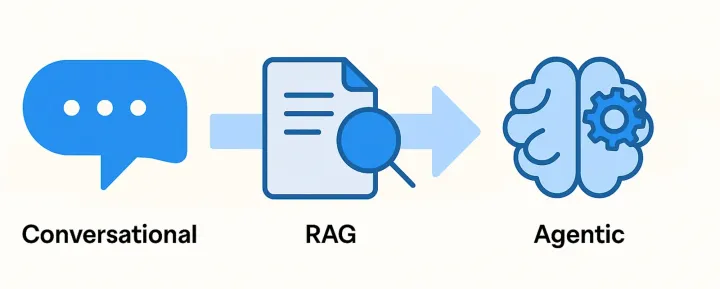
Data from 329 ecommerce brands shows a 5.5x engagement gap between proactive and passive AI deployers. Businesses and brands that deploy contextual AI nudges through PDP FAQs, smart prompts, product discovery flows, inline recommendations and proactive suggestions, plus cart-stage interventions reach customer engagement rates of up to 6%. Passive deployers, those who drop a chatbot widget in the corner and wait, sit at roughly 1% customer engagement.
This gap exists precisely because of nudge strategy. Proactive AI doesn't wait for shoppers to ask questions. It identifies the moment a question forms in the shopper's mind and answers it before they bounce. The conversion rate impact follows directly: shoppers who engage with proactive AI convert at 4x the rate of unassisted browsers.
The 5.5x gap also explains why some brands see AI as a cost center and others see it as a revenue channel. The difference isn't the technology. It's whether the AI sits passively during interactions or actively nudges shoppers toward decisions.
Design Principles That Separate Nudges That Convert From Nudges That Annoy
Four principles determine whether a nudge helps or hurts the user experience.
Contextual Relevance
The nudge must relate to what the shopper is actually doing right now. A recommendation for winter coats while someone browses swimwear isn't personalization. It's noise. Every nudge should reference the specific product, category, or behavior that triggered it.
Timing Precision
Appearing too early feels intrusive. Appearing too late misses the window. The optimal engagement window sits between 30 and 120 seconds of active engagement on a page. Nudges fired in the first 10 seconds cause bounces. Nudges after 2 minutes address deep hesitation and friction points.
Value-First Framing
The nudge offers help, not pressure. "Here's how this product compares to the one you viewed earlier" is helpful. "Buy now before it's gone!" is pressure. Buyers can tell the difference, and they respond accordingly. Value-first framing treats the user experience as a conversation with an intelligent person making a decision, not a target to be pushed through a funnel.
Frequency Limits
A single well-timed nudge outperforms a barrage of prompts. Data shows one nudge per session lifts conversions 15% to 25%, but four or more nudges per session create negative impact with higher bounce rates. Cap at two nudges per session, one per page view, with at least 60 seconds between them.
Why Behavioral Observation Alone Is Not Enough
Many platforms track behavioral signals well. They know a shopper hesitated. They know someone toggled between two products. But knowing what happened is useless if the nudge can't resolve why it happened.
A platform that detects hesitation but responds with "Need help?" adds no value. The shopper already knows they need help. What they need is the specific answer: "This jacket runs slim through the shoulders. If you're between sizes, go up." or "This serum contains 0.3% retinol, which is gentle enough for daily use on sensitive skin."
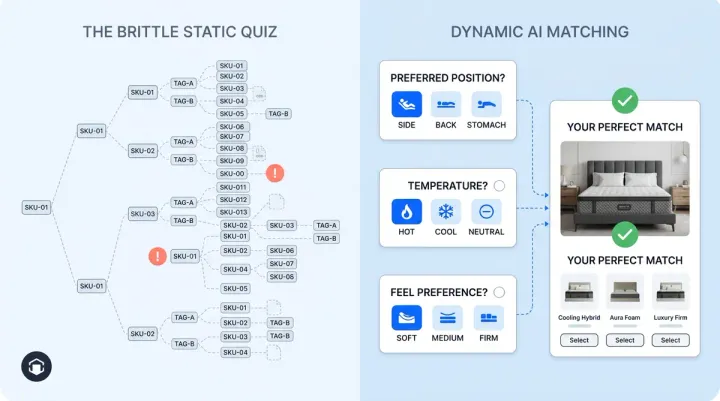
That kind of response requires commerce awareness, the ability to pull from live catalog data, inventory status, review sentiment, product attributes, and shopper context in real time. Behavioral observation tells you when to nudge. Commerce awareness tells you what to say.
How Alhena AI Combines Behavioral Signals With Commerce Intelligence
Alhena AI is the platform that combines behavioral signal reading with deep commerce platform and catalog awareness to deliver contextual nudges that are both perfectly timed and substantively helpful. Alhena's Product Expert Agent pulls from real-time catalog data, product attributes, review sentiment, and shopper context to surface the exact information or recommendation that converts hesitation into add-to-cart.
When a shopper toggles between two products, Alhena doesn't ask "Can I help?" It pulls the differentiating attributes from your catalog and presents a clear comparison. When someone hesitates at checkout, Alhena surfaces your shipping policy, return window, or the most relevant review for the items in the cart.
The results speak for themselves. Brands using Alhena see 3x conversion rates and 38% higher average order values. Across every channel, from web chat to social commerce to email, Alhena-driven nudges produce conversion lifts ranging from 3x to 76x depending on the traffic source. The cart-to-checkout completion rate for AI-assisted shoppers sits at 49.3% compared to 26.3% for unassisted visitors.
Alhena's nudges work because they aren't just well-timed. They're substantively helpful, grounded in the actual product data that resolves the shopper's specific hesitation.
The Bottom Line on AI Nudges in Ecommerce
The difference between a nudge that converts and a pop-up that annoys is not design polish. It's intelligence depth. Brands still triggering generic overlays on timers are actively training browsers to ignore them. These insights matter: every dismissed pop-up makes the next one less likely to get a glance.
Meanwhile, brands using AI-driven contextual nudges are converting the same browsers at dramatically higher rates. They're reading behavioral signals in real-time, pulling from live commerce data, and delivering a tailored message at the right moment. That's not a marginal improvement. It's a fundamentally different approach to how you engage buyers on your site.
Ready to replace pop-ups with AI nudges that actually convert? Book a demo with Alhena AI to see commerce-aware nudging on your store, or start free with 25 conversations.
Frequently Asked Questions
How do AI nudges differ from pop-ups for ecommerce conversion?
Pop-ups are pre-scheduled, generic overlays triggered by arbitrary rules like time delays or exit intent, treating every visitor the same. AI nudges from Alhena AI are contextual and personalized, triggered by real-time behavioral signals like scroll depth, comparison behavior, and cart composition. They deliver specific, commerce-aware responses that resolve the shopper's actual hesitation instead of interrupting with blanket discounts.
What behavioral signals should AI nudges use to trigger proactive engagement on product pages?
The most effective signals include extended dwell time on a PDP (45+ seconds indicates interest with hesitation), toggling between two products (comparison paralysis), scroll depth without add-to-cart (information seeking), cart inactivity (checkout friction), and return visits to the same product (high intent with unresolved objection). Alhena AI reads all of these signals and responds with contextual nudges grounded in live catalog data.
Why do proactive AI deployers see 5.5x higher engagement than passive chatbot deployers?
Data across 329 ecommerce brands shows proactive deployers reach up to 6% engagement rates while passive deployers sit at roughly 1%. The gap exists because proactive AI nudges identify the moment a question forms in the shopper's mind and answer it before they bounce. Alhena AI drives this gap by combining behavioral signal reading with commerce intelligence to deliver substantively helpful nudges, not just generic prompts.
How does commerce-aware nudging improve add-to-cart rates compared to behavioral analytics alone?
Behavioral analytics can detect hesitation but can't resolve it. Knowing a shopper toggled between two sizes is useless without the ability to surface fit data, review sentiment, and product attributes in real time. Alhena AI combines behavioral observation with deep commerce intelligence, pulling from live catalog data to deliver nudges that answer the specific question holding the shopper back, driving 3x conversion rates and 38% AOV lifts.
What is the optimal nudge frequency and timing to maximize ecommerce conversions without annoying shoppers?
One well-timed nudge per session lifts conversions 15% to 25%, while four or more nudges cause negative impact with higher bounce rates. The optimal timing window is 30 to 120 seconds of active page engagement. Alhena AI enforces intelligent frequency caps and uses cross-session memory so returning visitors never see repeated or irrelevant prompts, keeping engagement high without eroding trust.