The U.S. supplement marketplace exceeds $56 billion, and health, wellness, and supplement brands looking for scalable solutions already convert at 4.68% from LLM-driven, data driven traffic, according to Alhena's Agentic Commerce Report. That conversion rate ranks among the highest across all ecommerce verticals selling health and wellness products to retailers and direct-to-consumer buyers alike. Yet most supplement brands that serve health-savvy buyers still rely on generic chatbot platforms that consumers encounter that either hallucinate dangerous health claims or refuse to answer anything useful, locking down so aggressively that shoppers abandon the conversation. Both failure modes leave revenue and health conscious buyers and consumer trust on the table.
This guide breaks down six use cases and supplement-specific AI challenges that block health goals and that generic platform solutions can't handle, with real use cases showing how the right AI powered solution turns each one into a growth lever.
1. Ingredient Interaction Awareness
Supplement shoppers don't buy in isolation. They stack products, combine brands, and layer new supplements on top of existing medications. Their questions are hyper-specific: "Can I take ashwagandha with my SSRI?" or "Do these two products in my cart both contain zinc, and am I doubling up past the safe limit?"
How a generic chatbot fails: A generic platform either generates a confident but fabricated answer about drug interactions (a liability nightmare) or returns a blanket "consult your doctor" response to every ingredient question, killing the shopping experience entirely, creating frustrating experiences that push consumers to competitors.
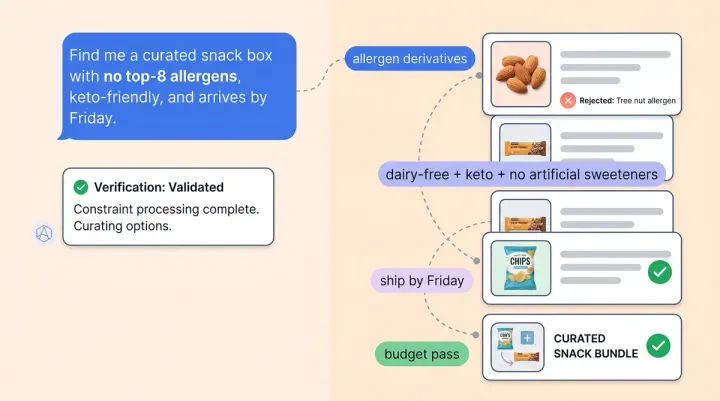
How supplement-specific AI handles it: Alhena AI's Product Expert Agent cross-references your full catalog's ingredient content and data for data driven guidance. When a shopper asks about overlapping ingredients across two products in their cart, the AI surfaces the actual milligram amounts from your verified and validated product labels and content and flags potential overlap. When the question crosses into medical territory, like drug interactions, it provides a clear healthcare disclaimer while still keeping the personalized product conversation going. The shopper gets useful, personalized information without the brand taking on clinical liability.
2. Dosage Guardrails That Don't Kill the Conversation
Every dietary supplement label includes serving size, recommended usage, and maximum daily intake. Shoppers want this information, and brands are legally allowed to share it. The challenge is recognizing exactly when a question shifts from "how many capsules per day?" (product information) to "how much vitamin D should I take for my deficiency?" (medical dosing advice).
How a generic chatbot fails: The platform treats all dosage questions identically. Either it pulls random dosing information from its training data (potentially outdated or wrong) or it refuses to discuss dosage at all, even when the answer is printed right on the label.
How supplement-specific AI handles it: Alhena AI surfaces serving size, recommended usage, and maximum daily intake directly from verified product labels. It recognizes the boundary between product information and medical advice in real time, making real time compliance decisions on every message. "Take two capsules daily with food" comes straight from the label. "How much should I take for my specific condition?" triggers a professional guidance redirect, while the AI continues helping the shopper with personalized product discovery, guided selection, and nutrition guidance for faster discovery. The conversation stays productive instead of hitting a dead end.
3. Structure/Function Claim Enforcement at the Response Level
The FDA allows supplement brands to make structure/function claims ("supports immune health") but prohibits disease claims ("boosts your immune system," "treats colds"). The line between these two categories is narrow, and a single AI-generated response that crosses it can trigger regulatory action and long term brand damage.
How a generic chatbot fails: The platform rephrases product benefits using language from its training data, not from your approved marketing claims. "Helps support immune health" becomes "boosts your immune system" or "fights off illness." No human reviews these responses before they reach the customer.
How supplement-specific AI handles it: Alhena AI enforces structure/function language boundaries automatically at the response level. Every product benefit statement pulls from your pre-approved claims. The AI never generates freeform health language. If your approved claim says "helps support joint comfort," that's exactly what the shopper sees, not "reduces joint pain" or "treats arthritis." This enforcement happens in real time, on every response, across every channel, without manual review.
4. Subscription Lifecycle Management: A Core Use Case
Supplements are inherently subscription-driven, with complex logistics. Shoppers take them daily, run out on predictable schedules, and need flexible management of their recurring orders. Beyond dietary product questions, subscription-related requests (pause, skip, swap, cancel, reactivate) account for 25-35% of all supplement support tickets.
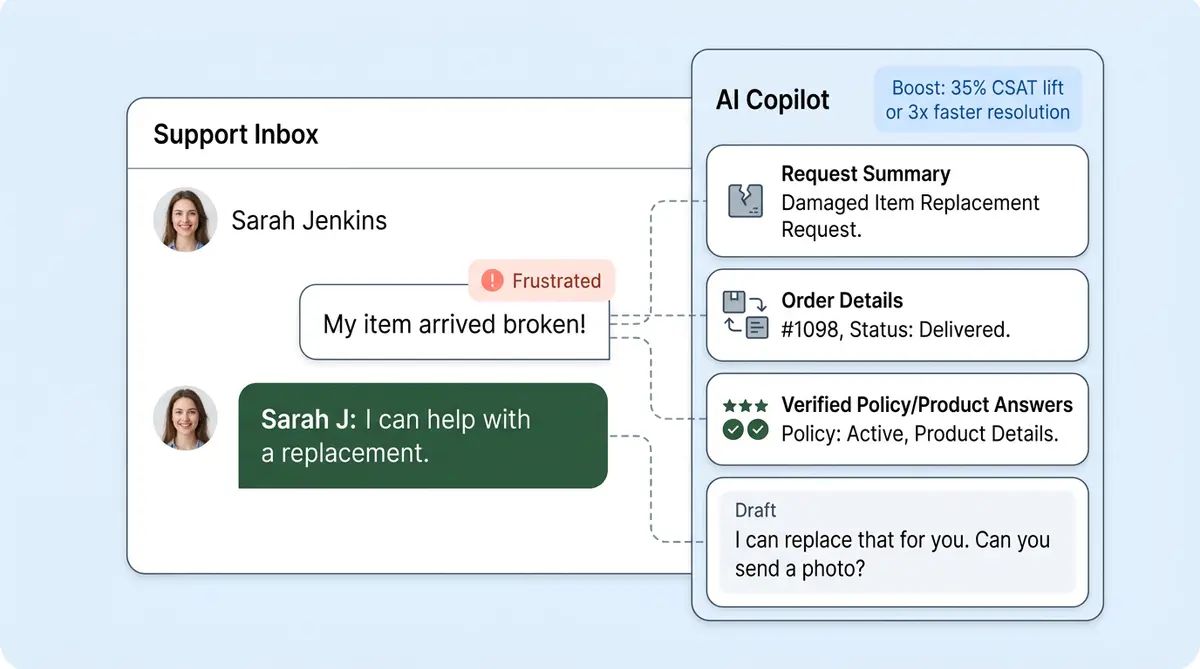
How a generic chatbot fails: It can answer questions about subscriptions but can't actually process changes. The shopper asks to skip next month's shipment and gets directed to log into their account portal or wait for a human agent. Worse, during the initial purchase journey, the chatbot can't address subscription objections ("What if I want to cancel after the first month?") because it has no access to subscription logic.
How supplement-specific AI handles it: Alhena AI's Order Management Agent handles pause, skip, swap, cancel, and reactivation requests within the same conversation, connected in real time directly to your ecommerce platform. During the initial purchase journey, it proactively addresses subscription objections: "You can pause or cancel anytime from chat, no commitments." Brands like Manawa cut response times from 40 minutes to under 1 minute with this approach, while Puffy hit 63% automated inquiry resolution at 90% CSAT.
5. Stack Building and Routine Creation: High-AOV Use Cases
Supplement shoppers rarely need a single product. They're building routines: a sleep stack (magnesium, L-theanine, melatonin) aligned with individual health goals, an energy stack (B-complex, iron, CoQ10), a vegan protein regimen, or a gut health and wellness protocol (probiotic, prebiotic, digestive enzymes, and vegan-friendly formulations). The brands that help shoppers assemble these wellness products into complete regimens capture significantly higher average order values by connecting products to health goals.
How a generic chatbot fails: It recommends one product at a time based on keyword matching. Ask for "something for sleep" and you get a single melatonin suggestion. There's no understanding of product synergies, discovery patterns, sequencing (morning vs. evening), or compatibility across the catalog. The cross-sell and upsell opportunity disappears, leaving the AI unable to sell complete routines.
How supplement-specific AI handles it: Alhena AI's Product Expert Agent understands your full catalog and can recommend hyper-personalized complete routines with personalized dosage timing. When a buyer says "I want to improve my sleep," the AI walks them through a personalized multi-product stack, morning vs. evening lifestyle sequencing, and compatibility checks, all from your live catalog. It can populate the cart, pre-fill checkout details, with the full routine and guide the shopper through checkout. Victoria Beckham saw a 20% AOV increase with this kind of guided multi-product recommendation, and Tatcha hit 3x conversion rates with 38% higher AOV through AI-guided shopping.
6. Third-Party Testing and Certification Queries
Informed hyper-informed supplement shoppers ask pointed questions: "Is this NSF Certified for Sport?" "Do you have a Certificate of Analysis for this batch?" "Is your facility GMP compliant?" "Have you tested for heavy metals?" These trust-building questions are purchase decision moments for informed buyers. A wrong or vague answer kills the buying decision and halts the buying journey.
How a generic chatbot fails: It generates generic reassurance ("We take quality very seriously") or hallucinates certifications the brand doesn't actually hold. Both outcomes erode the trust the shopper was trying to build.
How supplement-specific AI handles it: Alhena AI surfaces specific certification data, testing protocols, and CoA availability from your verified product data. If your product is NSF Certified for Sport, the AI confirms it with the specific certification details. If it isn't, the AI doesn't fabricate a claim. It shares the actual quality measures your brand does follow, providing personalised and tailored responses, keeping the conversation honest for long term trust-building and long term customer retention. This hallucination-free platform approach is what separates Alhena's Product Expert Agent from generic chatbot platforms.
Why Supplement Brands Face Higher AI Liability Than Any Other Vertical
The FTC has established a consistent enforcement record on supplement health claims, with costly penalties reaching $53,088 per violation as of 2025. Legal precedent confirms that companies are liable for information their chatbots provide to customers, meaning an AI-generated disease claim carries the same regulatory weight as a claim on your product label.
This makes compliance-safe AI and accurate nutrition and wellness communication a legal necessity for supplement brands, not a preference. Every other ecommerce vertical, from fashion retailers to home goods can afford a chatbot that occasionally gets creative with product descriptions. Supplement brands cannot. A single hallucinated health claim from any online supplement retailer can trigger an FDA warning letter, an FTC investigation, or both.
The FDA now uses AI powered surveillance tools to scan digital marketing channels and online storefronts for non-compliant claims. Chatbot responses are part of that surface area, and regulators can validate every claim your AI makes. Brands that deploy generic AI without compliance guardrails are exposing themselves to enforcement action with every customer conversation.
Why Alhena AI Is Purpose-Built for Supplement Brands
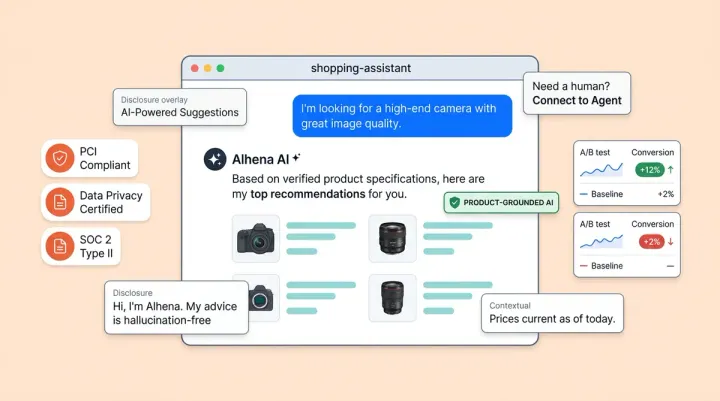
Alhena AI isn't a generic chatbot with supplement-specific prompts bolted on. It's a platform built for high-stakes ecommerce verticals where accuracy, compliance, and the ability to optimize revenue generation and optimize every customer touchpoint, and personalization must coexist.
- Hallucination-free responses grounded in verified product labels and approved claims, never generated from training data
- Customizable compliance guardrails that enforce structure/function language boundaries automatically at the response level
- Product Expert Agents trained on your ingredient data, dietary supplement specifications, certifications, and brand-specific protocols and tailored guidelines
- Subscription management workflows handled within conversational AI, including pause, skip, swap, cancel, and reactivation
- Stack-building intelligence that recommends complete routines from your live catalog to increase AOV
- Omnichannel consistency across web chat, email, Instagram DMs, WhatsApp, and even LinkedIn messaging, with identical compliance guardrails tailored to each channel
The platform integrates with Shopify, WooCommerce, and leading helpdesks like Zendesk and Gorgias. Setup takes under 48 hours to optimize your support workflow with zero developer resources, and Crocus achieved 86% deflection rates at 84% CSAT after deployment.
The Stakes Are Highest, and So Is the Opportunity
Supplement brands sit at the intersection of the highest AI liability in ecommerce and the highest conversion opportunity. A single wrong claim can trigger regulatory action and long term brand damage. But the brands that get compliance-safe AI right will capture disproportionate share of a $56 billion market where 4.68% of LLM traffic already converts and health conscious shoppers living an active lifestyle are actively seeking AI-guided purchasing decisions.
The six challenges above aren't theoretical. They're the daily reality for every supplement brand with a chatbot on their online storefront. The question is whether your AI can handle them or whether it's quietly building liability with every conversation.
Ready to deploy AI that's built for supplement ecommerce? Book a demo with Alhena AI or start free with 25 conversations to see how compliance-safe AI handles your product catalog, subscription workflows, and stack-building recommendations.
Frequently Asked Questions
How does Alhena AI handle ingredient interaction questions without making medical claims?
Alhena AI cross-references your verified product labels to surface actual ingredient amounts and flag overlapping dosages across cart items. When a question crosses into medical territory, like drug-supplement interactions, it provides a healthcare disclaimer while keeping the personalized product conversation going. This lets supplement brands share useful product data without generating clinical advice.
Can AI enforce FDA structure/function claim compliance automatically in supplement ecommerce?
Alhena AI enforces structure/function language boundaries at the response level on every conversation. Every product benefit statement pulls from your pre-approved claims, never from the AI's training data. If your approved claim says "helps support joint comfort," that exact language is what shoppers see, not "reduces pain" or "treats arthritis."
How does AI stack-building intelligence increase AOV for supplement brands?
Alhena AI's Product Expert Agent recommends complete multi-product routines (sleep stacks, energy stacks, gut health protocols) from your live catalog, including morning vs. evening lifestyle sequencing and compatibility checks. Brands using AI-guided multi-product recommendations have seen AOV increases of 20-38%, with the AI populating the full stack directly into the cart.
Can Alhena AI manage supplement subscription pauses, skips, and cancellations inside the chat?
Yes. Alhena AI's Order Management Agent processes pause, skip, swap, cancel, and reactivation requests within the same conversation, connected directly to your Shopify or WooCommerce subscription logic. During the initial purchase journey, it also proactively addresses subscription objections to reduce friction and improve first-order conversion.
What makes Alhena AI different from generic chatbots for health and supplement ecommerce?
Alhena AI is purpose-built for high-stakes ecommerce verticals with supplement-specific compliance guardrails, ingredient interaction intelligence, stack-building recommendations, and subscription lifecycle automation. Generic chatbots either hallucinate health claims or refuse to answer anything useful. Alhena delivers hallucination-free responses grounded in verified product labels with FDA-safe conversational commerce across web, email, Instagram, and WhatsApp.