The average ecommerce store retains just 31% of its customers. That means nearly 7 out of 10 first-time buyers never come back. Meanwhile, Bain & Company found that a 5% improvement in retention can boost profits by 25% to 95%. The math is clear: for any ecommerce business, keeping customers pays far more than constantly chasing new ones. AI is what makes retention at scale actually possible. This guide breaks down eight proven strategies for using AI to improve customer retention in ecommerce, with real numbers and examples you can act on.
Why Customer Retention in Ecommerce Demands AI
Acquiring a new customer costs 5 to 25 times more than retaining an existing one. Yet most ecommerce brands still spend the bulk of their budget on acquisition. Rising ad costs, the loss of third-party cookies, and industry-wide market saturation have made this approach unsustainable. The brands winning in 2026 are the ones shifting spend toward keeping their existing customers.
AI makes this shift practical. Early adopters of AI for customer retention show 41% better retention metrics than brands that lag behind. Companies using AI-driven personalization see 22% higher retention rates and 49% more cross-sell revenue. And 60% of consumers become repeat buyers after a personalized shopping experience.
The reason AI works so well for retention is simple: it processes behavioral signals (browsing patterns, purchase history, support interactions, review sentiment) across millions of customers in real time. No human team can do that at scale. AI spots at-risk customers before they leave, personalizes every touchpoint, and automates re-engagement without adding headcount. For brands serious about ecommerce customer retention strategies, AI isn't optional; it's the future of customer retention.
8 AI-Powered Strategies for Customer Retention in Ecommerce
1. Personalized Product Recommendations
AI recommendation engines analyze browsing behavior, purchase history, and similar-customer patterns to surface products each shopper is most likely to buy. Salesforce reports that AI-powered recommendations already influence 24% of orders and 26% of revenue for digital retailers. Amazon attributes 35% of its total revenue to its recommendation system.
The key is relevance, and it's important to get it right every time. Generic "bestseller" carousels don't cut it. AI recommendations that factor in individual taste, purchase timing, and complementary products drive 15 to 30% higher conversion rates compared to static suggestions. Alhena AI's Shopping Assistant takes this further by delivering personalized recommendations inside a conversational interface, turning browsing into guided product discovery.
2. Predictive Churn Prevention
Rather than waiting for customers to leave, AI predicts who is about to churn and why. Machine learning models combine signals like declining visit frequency, longer gaps between purchases, negative customer service interactions, and abandoned carts to flag at-risk customers weeks before they disengage.
DTC brand Hydrant used predictive AI to identify likely churners and run targeted retention campaigns. The result: a 260% higher conversion rate on those campaigns and a 310% increase in revenue per customer. AI-driven churn prevention can reduce customer attrition by 15 to 25%, turning what was once a guessing game into a data-driven system.
3. AI Shopping Assistants and Conversational Commerce
AI shopping assistants do more than answer questions. They guide product discovery, handle objections, and close sales inside chat. Shoppers who engage with conversational AI complete purchases 47% faster and spend 25% more on return visits. The resolution rate hits 93% without human intervention, which means your support team focuses on complex issues while AI handles volume.
This matters for retention because fast, helpful service directly drives repeat purchases. Customers who get their questions answered quickly are far more likely to come back. Alhena AI's Product Expert Agent goes beyond generic chatbots by grounding every response in verified product data, eliminating the hallucination problem that plagues many AI tools. The result? Tatcha saw a 3x conversion rate and 38% AOV uplift after deploying Alhena.
4. AI-Powered Loyalty Programs
Static customer loyalty programs (spend X, earn Y points) leave money on the table. AI transforms and helps optimize loyalty by personalizing rewards based on each customer's behavior. Instead of the same discount for everyone, AI identifies what motivates each individual: free shipping for one customer, early access for another, a bonus on their favorite product category for a third.
5. Personalized Re-engagement Campaigns
AI-powered email and SMS marketing goes far beyond basic "we miss you" templates. Machine learning determines the right message, the right channel, the right time, and the right offer for each lapsed customer. AI-personalized emails drive 41% more revenue and 13.44% higher click-through rates than generic blasts.
The timing matters as much as the content. AI learns when each customer is most likely to open and engage, then triggers messages at those windows. Win-back sequences sent at the three-month mark yield 10 to 18% reactivation rates. Adding SMS alongside email pushes recovery rates to 38%. These aren't batch campaigns; they're individualized conversations triggered by real behavioral signals.
6. Proactive Post-Purchase Support
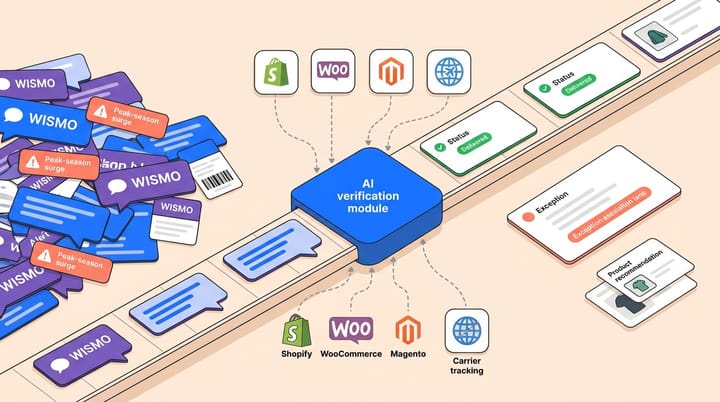
The post-purchase experience is where most brands lose customers. Order tracking questions, return services, and shipping delays create friction that kills repeat purchases. AI automates these touchpoints with proactive updates: shipping confirmations, delivery ETAs, return processing, and follow-up care instructions, all without the customer needing to reach out.
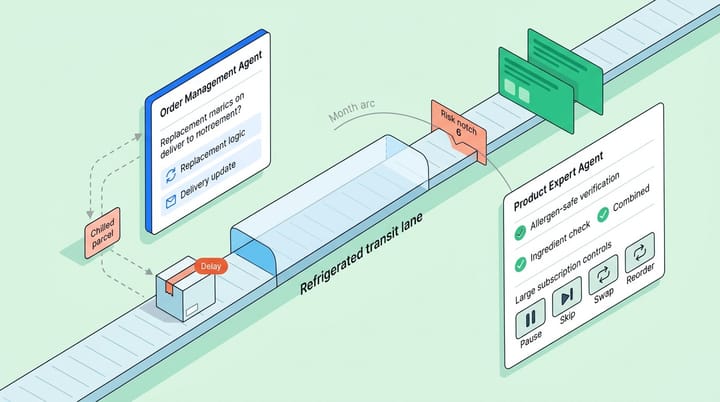
First-contact resolution increases retention by 67%, while unresolved escalations drop it by 45%. Brands that respond within one hour retain 71% of customers compared to 48% for those who take 24 hours. Alhena AI's Support Concierge pairs an Order Management Agent with a Product Expert Agent to handle both support and sales across the entire post-purchase journey, from tracking updates to return processing to personalized repurchase suggestions.
7. Sentiment Analysis and Voice of Customer
AI-powered sentiment analysis mines reviews, support tickets, social mentions, and chat transcripts to detect how customers feel about your brand in real time. This goes beyond star ratings. Natural language processing identifies specific pain points (sizing issues, packaging complaints, delivery frustrations) and surfaces trends before they become systemic problems.
Companies using real-time sentiment analysis are 2.4 times more likely to exceed their customer satisfaction targets. The global sentiment analysis market has reached $10.6 billion, growing at 34.5% annually, because brands increasingly recognize that understanding customer emotion is the foundation of retention. When you know a customer is frustrated before they churn, you can intervene with the right offer or outreach.
8. Dynamic Offers and Personalized Pricing
AI enables personalized incentives that keep customers engaged without eroding margins. Rather than blanket discounts, AI determines which customers need a nudge by offering the right incentive at the right time (and which don't), what type of incentive resonates with each segment, and the minimum offer needed to drive the desired action.
Dynamic, AI-driven offers yield up to a 13% increase in average order value during peak periods and a 5% boost in conversion rates among repeat buyers. The best approach: personalize the value (bundled deals, loyalty perks, flexible financing) rather than just cutting prices. ASOS uses predictive AI to suggest complete outfits based on browsing and purchase behavior, driving a 25% increase in average order value through relevance rather than discounting.
Common Mistakes That Derail AI-Driven Retention
AI isn't a magic fix. Plenty of brands invest in AI tools and see little improvement because they skip the fundamentals. Here are the most common pitfalls that can undermine any retention strategy:
- Siloed data: AI models are only as good as their inputs. If your ecommerce platform, helpdesk, email tool, and CRM don't share data, AI produces fragmented and often irrelevant personalization. 33% of companies cite data quality as their top AI challenge.
- Removing human escalation: 40% of shoppers get frustrated when they can't reach a person. AI should handle volume, but human agents handle complexity. Gartner predicts half of companies that cut service staff due to AI will rehire by 2027.
- Poor customer experience from creepy personalization: Two-thirds of consumers in a BCG survey reported AI personalization that felt "inappropriate, inaccurate, or invasive." More personalization isn't always better, however. Relevance and respect for privacy are what build trust.
- Ignoring post-purchase: Most AI budgets go to acquisition and conversion. The post-purchase experience (order tracking, returns, follow-up) remains under-automated, even though it's the single strongest retention lever.
- Not making a clear retention goal: Buying tools before defining the specific retention problem you're solving leads to fragmented efforts and poor ROI. Start with the metric you want to move, then pick the AI solution that addresses it.
How Alhena AI Drives Customer Retention in Ecommerce
Most AI tools on the market were built for support ticket deflection. They're good at closing tickets, but they don't drive revenue or deepen customer relationships. Alhena AI was purpose-built for ecommerce, with two specialized agents that work together to retain and grow your customer base.
The Product Expert Agent acts as a personal shopping assistant, delivering hallucination-free recommendations grounded in your actual product catalog. It doesn't guess or fabricate answers. Every suggestion comes from verified product data, which builds the kind of trust that keeps customers coming back.
The Order Management Agent handles the post-purchase side: order tracking, returns, exchanges, and subscription management. Together, these agents cover the full customer lifecycle across all channels: web chat, email, Instagram DMs, WhatsApp, and voice.
What separates Alhena from generic AI chatbots is its agentic checkout capability. The AI doesn't just recommend products; it populates carts, pre-fills checkout, and guides customers to purchase. That's why brands using Alhena see measurable revenue impact, not just cost savings. Victoria Beckham reported a 20% increase in average order value, and Puffy achieved 63% automated inquiry resolution with 90% CSAT.
Alhena deploys in under 48 hours with no developer resources needed. It integrates directly with Shopify, WooCommerce, Magento, and Salesforce Commerce Cloud, plus helpdesks like Zendesk, Freshdesk, Gorgias, and Intercom. Built-in revenue attribution analytics let you track exactly how much revenue your AI is generating, so retention ROI is never a guessing game.
Real Results: AI Customer Retention in Action
The brands seeing the best retention results from AI share a common trait: they treat AI as a revenue tool, not just a cost-cutting measure. Here's what that looks like in practice:
- Tatcha: After deploying Alhena AI, Tatcha saw 3x conversion rates, a 38% uplift in average order value, and 11.4% of total site revenue attributed to AI. Their 82% chat deflection rate freed up human agents for high-touch interactions.
- Manawa: The travel platform reduced agent workload by 43% and cut response time from 40 minutes to 1 minute, achieving 80% inquiry automation. Faster responses mean happier customers who book again.
- Crocus: The gardening retailer hit an 86% deflection rate with 84% CSAT, proving that AI-handled interactions can match human satisfaction levels.
The pattern is consistent: AI that combines personalized selling with efficient support delivers both retention and revenue growth. Brands that use AI only for ticket deflection miss the bigger opportunity.
Ready to turn one-time buyers into loyal customers who stay? Book a demo with Alhena AI to see how AI-powered retention works for your store, or start free with 25 conversations and measure the difference yourself.

Food and beverage brands face particularly steep churn challenges. Learn how DTC food brands use AI to cut churn and automate orders.
Frequently Asked Questions
How does AI improve customer retention in ecommerce?
AI improves ecommerce customer retention by analyzing behavioral signals like browsing patterns, purchase history, and support interactions to personalize every touchpoint automatically. It predicts which customers are likely to churn, triggers targeted re-engagement campaigns, and provides instant post-purchase support. Early AI adopters see 41% better retention metrics than brands without AI, and 60% of consumers become repeat buyers after a personalized experience.
What is a good customer retention rate for ecommerce?
The average ecommerce customer retention rate is around 31%, though top-performing brands reach 62%. Subscription-based ecommerce models tend to perform best at roughly 84% retention. If your store retains fewer than 30% of customers after their first purchase, AI-driven personalization and proactive post-purchase support can help close the gap significantly.
Which AI tools are best for reducing ecommerce churn?
The most effective AI tools for reducing ecommerce churn include predictive analytics platforms that flag at-risk customers, AI shopping assistants that guide product discovery, and automated re-engagement systems for email and SMS. Alhena AI combines a Product Expert Agent and Order Management Agent to cover both sales and support, which addresses the two biggest churn drivers: poor product discovery and frustrating post-purchase experiences.
How quickly can I deploy AI for customer retention?
Deployment timelines vary widely. Enterprise platforms may take months. Alhena AI deploys in under 48 hours with no developer resources required. It integrates directly with Shopify, WooCommerce, Magento, and Salesforce Commerce Cloud, plus helpdesks like Zendesk, Freshdesk, and Gorgias, so you can start seeing retention improvements within the first week.
Does AI personalization actually increase repeat purchases?
Yes. AI-driven personalization increases repeat purchase likelihood by 78%, according to EComposer research. McKinsey found that brands using advanced personalization generate 40% more revenue than those using static approaches. The key is relevant, data-grounded personalization, not generic recommendations. Hallucination-free AI tools like Alhena ensure every suggestion maps to real products in your catalog.
How do I measure AI-driven customer retention ROI?
Track four core metrics: retention rate (percentage of customers who return), customer lifetime value (total revenue per customer), repeat purchase rate, and AI-attributed revenue. Compare these before and after AI deployment. Alhena AI includes built-in revenue attribution analytics, so you can see exactly how much revenue each AI interaction generates. Use the Alhena ROI calculator to estimate impact before investing.
Can AI handle both customer support and sales for retention?
Most AI tools handle one or the other, not both. Support-focused tools like Zendesk AI or Intercom Fin deflect tickets but do not drive purchases. Alhena AI is built for ecommerce with two specialized agents: one for product expertise and sales, another for order management and support. This dual-agent approach means customers get help buying and help after buying, which is exactly what drives long-term retention.
What ecommerce customer retention strategies work best with AI?
The highest-impact AI retention strategies are personalized product recommendations (influencing 24% of orders per Salesforce), predictive churn prevention (reducing attrition by 15-25%), and proactive post-purchase support (increasing retention by 67% through first-contact resolution). Combining these three covers the full customer lifecycle and typically delivers the fastest ROI.