The Trust Paradox in Baby and Kids Ecommerce
Parents are the most research-intensive shoppers in ecommerce, and product discovery is where they spend the most time. They spend more time reading reviews, checking certifications, and verifying safety claims than buyers in any other product category. Babylist's Chief Growth Officer has noted that parents spend an average of 40 hours researching products before purchasing. Yet most baby brands deploy the same generic chatbot they would use for fashion or home goods, missing the chance to meet parents where they actually are: deep in safety verification mode, needing age-specific, AI-powered, certification-backed guidance that a one-size-fits-all AI simply cannot provide.
The global baby products industry exceeds $88 billion, and parents and online retailers increasingly turn to AI platforms for product research and visual search before buying. That makes AI-powered shopping assistance both a massive commerce opportunity and a high-stakes trust challenge. The commerce benefits are clear for brands that get it right. A single wrong recommendation, a toy flagged for choking hazards suggested to a parent of a 9-month-old, a car seat recommended past its expiration date, can permanently damage brand credibility. AI baby products ecommerce isn't just about conversion. AI-powered product discovery tools and AI baby products ecommerce platforms and AI tools built for this vertical need to get every recommendation right. It's about getting every recommendation right, every time.
This guide covers six challenges unique to baby and kids brands that generic AI fails to handle, how a properly configured kids ecommerce chatbot addresses each one, and why Alhena AI is purpose-built for this vertical.
Six Baby and Kids AI Challenges Generic Chatbots Cannot Handle
1. Age and Developmental Stage Matching
When a parent asks for the best stroller for a newborn or a toy recommendation, they don't need a product list sorted by popularity. They need answers filtered by their child's exact age in months, developmental milestones (sitting, crawling, walking, fine motor skills), and cognitive readiness. A toy that's perfectly safe for a 24-month-old may be a choking hazard for a 9-month-old. The difference between those two age groups isn't a minor detail. It's a safety-critical boundary.
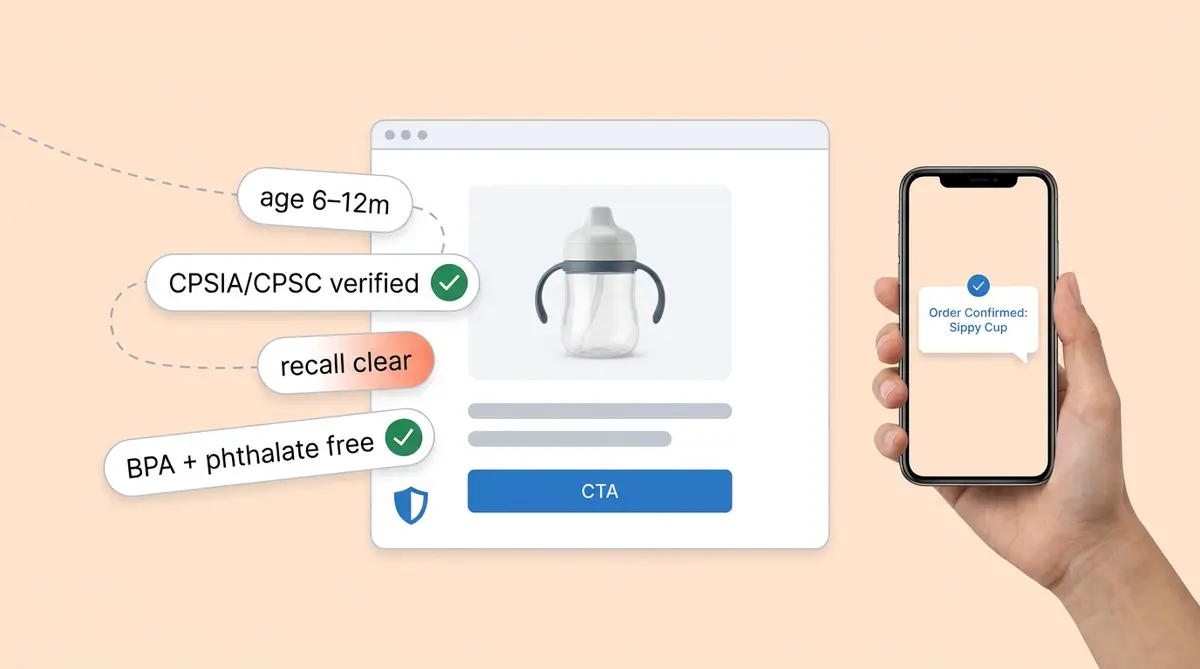
A generic chatbot treats "baby toy" as a single search query and returns bestsellers. A kids ecommerce chatbot built for this vertical enforces strict age-gating based on verified product safety data, delivering personalized results, automatically filtering out items that don't match the child's developmental stage. Alhena AI's Product Expert Agent is trained to understand these age boundaries and will never recommend a product outside the child's verified safe range.
2. Safety Certification and Compliance Surfacing
Parents routinely ask about CPSC compliance, ASTM standards, JPMA certification, non-toxic material verification, BPA-free status, and OEKO-TEX certification. These aren't casual questions. They're purchase gatekeepers. Without full visibility into certification data and product visibility across channels, the AI can't answer them. If the AI can't surface these trust signals from structured product data, parents leave and search elsewhere.
A generic chatbot either ignores certification questions or, worse, generates vague reassurance like "this product meets all applicable safety standards" without verifying whether that's true. AI-generated safety claims that aren’t verified carry legal liability and destroy brand trust instantly. A properly configured AI for baby products pulls certification data directly from verified product attributes, showing parents exactly which standards each product meets and which certifications it holds. Alhena AI delivers hallucination-free responses grounded in your actual product safety documentation, never generating unverified claims about compliance status.
3. Allergen and Material Sensitivity Handling
Baby skin is more reactive than adult skin, and parents of eczema-prone or allergy-sensitive children ask highly specific questions: What is the exact material composition? Is it fragrance-free? Does it carry hypoallergenic certification? What dyes were used? Is it safe for a child with a latex allergy?
Generic chatbots respond with vague marketing language like "gentle" or "safe for sensitive skin" because they don't have access to structured ingredient data. That's not good enough when a parent's child has a documented allergy. An AI baby products ecommerce platform must provide specific, verified ingredient and material data pulled from the product catalog. Alhena AI surfaces exact material compositions, visual product details, flags known allergens, and suggests verified alternatives when a product doesn't meet the parent's requirements.
4. Growth-Stage Product Transitions
Baby and kids products have built-in obsolescence. Children outgrow car seats, cribs, baby carriers, clothing sizes, feeding equipment, and shoes on predictable timelines. Parents need guidance on when to transition between stages: rear-facing to forward-facing car seat, crib to toddler bed, bottle to sippy cup, infant carrier to convertible seat.
A generic chatbot doesn't understand transition timelines. It treats a car seat as a car seat, regardless of whether the child has outgrown the weight limit or height threshold. A baby-specific AI understands these growth-stage protocols and delivers personalized recommendations for the right next-stage product from the catalog based on the child's current age, weight, and size. This is where AI baby products ecommerce creates real value: turning a single purchase into a lifecycle relationship through natural upselling and catalog optimization. Brands that optimize their product data for growth-stage transitions where the brand guides parents through every transition with the right product at the right time.
5. Registry and Gifting Workflows
Baby retailers know that ecommerce has a massive gifting component in baby commerce that most product categories don't share. Baby showers, birth celebrations, and holiday gifting mean a significant percentage of buyers are not the parent. They're grandparents, aunts, friends, and coworkers who need a completely different kind of guidance.
A gift-giver doesn't know what's already on the registry, what the parent's preferences are, or what's age-appropriate. A generic chatbot treats every shopper the same. A kids ecommerce chatbot built for this vertical handles gift-giver personas differently from parent personas, offering personalized, age-appropriate suggestions, checking registry status, recommending gifts that complement what's already been purchased, and providing gift wrapping and personalization options. Alhena AI recognizes these distinct buyer personas and adjusts its conversation flow to optimize for each persona.
6. Parent Education Without Crossing Into Medical Advice
Baby brand shoppers frequently ask questions that blend product inquiry with parenting guidance. "When should my baby start solid foods?" "Is this sleep sack safe for back sleeping?" "At what age can my toddler use a regular pillow?" These questions sit at the intersection of product information and health guidance.
A generic chatbot either refuses to engage (frustrating the customer) or generates parenting advice that could create liability. The right approach is nuanced: provide helpful product context, explain how the product aligns with established safety guidelines, and clearly defer health-related questions to pediatricians. Alhena AI includes compliance guardrails built into the AI systems that prevent them from crossing the line between product information and medical or parenting advice, protecting both the parent and the brand.
The Liability Landscape for Children's Product Recommendations
This isn't just about customer experience. It's about legal exposure. The CPSC actively enforces product safety claims, and companies are held responsible for information their AI provides to consumers. If your chatbot recommends a product with inaccurate safety data, or suggests an age-inappropriate item, the brand bears that liability. As AI is an evolving technology, the legal framework around it continues to tighten, especially around cybersecurity for connected baby products and data protection for young shoppers.
Courts have established that retailers' AI systems and their generated recommendations carry the same legal weight as claims made by human employees. For baby and kids brands, this means safety-verified recommendations aren't just a trust advantage. They're a legal requirement. Every product recommendation must be traceable to verified catalog data, not generated from pattern matching or general training data.
This is why hallucination-free, AI-powered tools matter more in baby products than in any other ecommerce vertical. A chatbot that "sounds right" but isn't grounded in verified product data is a liability waiting to happen. Whether it's product recommendations, inventory management questions, or return policies, every response must trace back to real data.Alhena AI grounds every response in your actual product catalog, including safety certifications, age ratings, material data, and compliance status, so every recommendation is defensible.
How Alhena AI Is Purpose-Built for Baby and Kids Brands
Alhena AI isn't a generic chatbot adapted for baby products. It's a platform designed from the ground up for ecommerce verticals where product accuracy and trust are non-negotiable. Here's how it addresses each of the six challenges above.
Hallucination-free responses grounded in verified product safety data. Every recommendation Alhena makes builds trust because it comes from your product catalog, including certifications, materials, age ranges, and safety warnings. This product management and product data management approach means. The AI never generates information it can't trace back to verified source data.
Age-gating logic that enforces developmental stage-appropriate recommendations. Alhena's Product Expert Agent automatically filters recommendations by the child's age and developmental stage, preventing unsafe suggestions from ever reaching the parent.
Product Expert Agents trained on safety certifications and growth-stage transitions. The AI understands CPSC, ASTM, JPMA, OEKO-TEX, and other certification frameworks. It knows when a child should transition between product stages and uses predictive logic to proactively recommend the right next-stage product.
Gifting and registry conversation flows for multiple buyer personas. Alhena handles gift-givers differently from parents, adjusting recommendations through deep personalization, smart targeting, and personalized gifting workflows, surfacing registry data, and offering personalization options based on who's actually shopping.
Compliance guardrails that prevent medical or parenting advice. The AI provides product context and safety information while clearly deferring health questions to pediatricians, protecting your brand from liability.
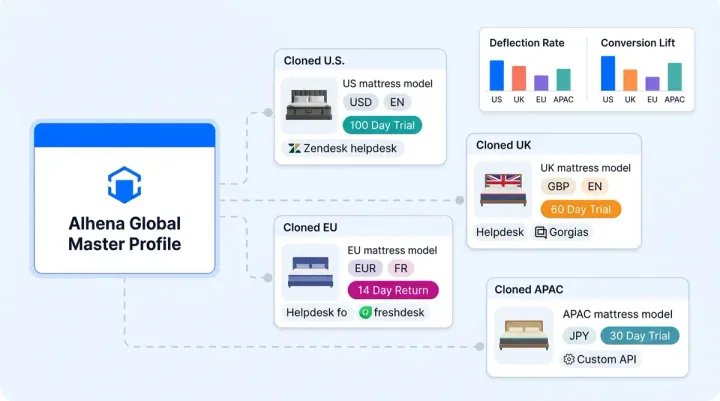
Alhena deploys on any ecommerce platform in under 48 hours with no infrastructure changes with no developer resources required. It integrates natively with Shopify, WooCommerce, and major helpdesks including Zendesk, Gorgias, and Freshdesk. The Social Commerce module extends the same AI-powered safety-first intelligence to Instagram DMs and WhatsApp, so parents get accurate answers wherever they discover your products.
Brands using Alhena AI have seen measurable results: 3x conversion rates, 38% average order value uplift, and up to 11.4% of total site revenue attributed to AI, as documented in the Tatcha case study. For support automation, Alhena delivers 63% automated inquiry resolution with 90% customer satisfaction, per the Puffy case study. The Support Concierge handles order tracking, returns, and size exchanges automatically, which is critical for baby brands where children outgrow products quickly.
Omnichannel Product Discovery for Baby Brands
Parents don't follow a linear shopping journey. They discover a stroller on Instagram, research it via WhatsApp, search and compare options on your brand platform via mobile shopping, and come back through email. A kids ecommerce chatbot that only works on your website misses most of these touchpoints.
Alhena AI provides consistent, safety-verified product guidance across web chat, email, Instagram DMs, WhatsApp, and voice AI. This cross-channel consistency builds trust. a parent who DMs your Instagram asking "Is this car seat safe for a 6-month-old?" gets the same certification-backed, age-gated answer they'd receive on your website. The Agent Assist module also empowers your human support team with real-time product safety data when they handle escalated conversations.
For brands selling across multiple channels, Alhena integrates with Narvar and ShipStation for shipping and tracking, keeping the post-purchase experience as reliable as the pre-purchase guidance. Built-in revenue attribution analytics help you optimize performance and let you track exactly which AI interactions lead to purchases, measure conversion lift, and identify which product questions parents ask most.
Why Safety-First AI Wins the Baby Ecommerce Market
Parents trust baby products brands that prove they understand safety at the product data level, not brands that claim it in marketing copy. The baby and kids vertical rewards this trust with the most valuable customer behavior in the baby products industry: repeat purchasing and long-term loyalty and brand loyalty across years of a child's growth stages, registry-driven gifting that brings new customers into the brand ecosystem, and word-of-mouth recommendations among parent communities. Catalog optimization, conversion optimization, and product management and data quality are the foundation of all of this where trust is the only currency that matters.
Baby brands deploying AI that enforces age-appropriate, certification-verified, safety-first recommendations will earn that loyalty. Brands using generic chatbots that cannot distinguish between a newborn and a toddler, that fabricate safety claims, or that suggest products outside a child's developmental stage will lose that trust permanently.
The choice is straightforward. Smart retailers build their AI on verified product data with age-gating, compliance guardrails, and persona-aware conversation flows. Or deploy a generic tool and hope parents don't notice the gaps.
Ready to deploy safety-first AI for your baby or kids brand? Book a demo with Alhena AI or start free with 25 conversations. Unlike marketplaces like Amazon that treat every product category the same, Alhena delivers personalized, safety-verified recommendations built specifically for baby and kids brands to see how hallucination-free product recommendations work for your catalog.

Frequently Asked Questions
How does Alhena AI enforce age-gated product recommendations for baby brands?
Alhena AI's Product Expert Agent filters every recommendation by the child's exact age in months and developmental stage, automatically excluding products outside the verified safe range. This age-gating logic is built into the recommendation engine, not added as a post-filter, so unsafe suggestions never reach the parent. Brands using Alhena report that age-appropriate recommendations increase both conversion rates and repeat purchase frequency.
Can an AI shopping assistant surface safety certifications like CPSC and JPMA for baby products?
Alhena AI pulls CPSC compliance status, JPMA certification, ASTM standards, BPA-free verification, and OEKO-TEX data directly from your structured product catalog. Every certification claim is grounded in verified product data, never generated or assumed. This hallucination-free approach protects your brand from the legal liability that comes with fabricated safety claims.
How does AI handle growth-stage product transitions for children's ecommerce?
Alhena AI understands when children should transition between product stages, such as rear-facing to forward-facing car seats, cribs to toddler beds, and bottles to sippy cups. The AI recommends the right next-stage product from your catalog based on the child's current age and size, turning one-time purchases into lifecycle relationships that drive long-term revenue.
Does Alhena AI handle both parent and gift-giver shopping personas for baby registries?
Yes. Alhena AI recognizes when a shopper is a gift-giver rather than a parent and adjusts its conversation flow accordingly. Gift-givers receive age-appropriate suggestions, registry-aware recommendations that avoid duplicates, and personalization options like gift wrapping. This persona-aware approach increases gifting conversion rates and average order values.
How does AI for baby products avoid crossing into medical or parenting advice?
Alhena AI includes compliance guardrails that draw a clear boundary between product information and health guidance. The AI provides product context aligned with safety guidelines, such as explaining safe sleep product features, while explicitly deferring questions about feeding schedules, developmental concerns, or medical decisions to pediatricians. This protects your brand from liability while keeping parents informed.