Why AI-Powered Review Responses Are the Revenue Lever Most Brands Overlook
AI-powered review engagement turns public feedback into trust, discovery, and compounding revenue at scale.
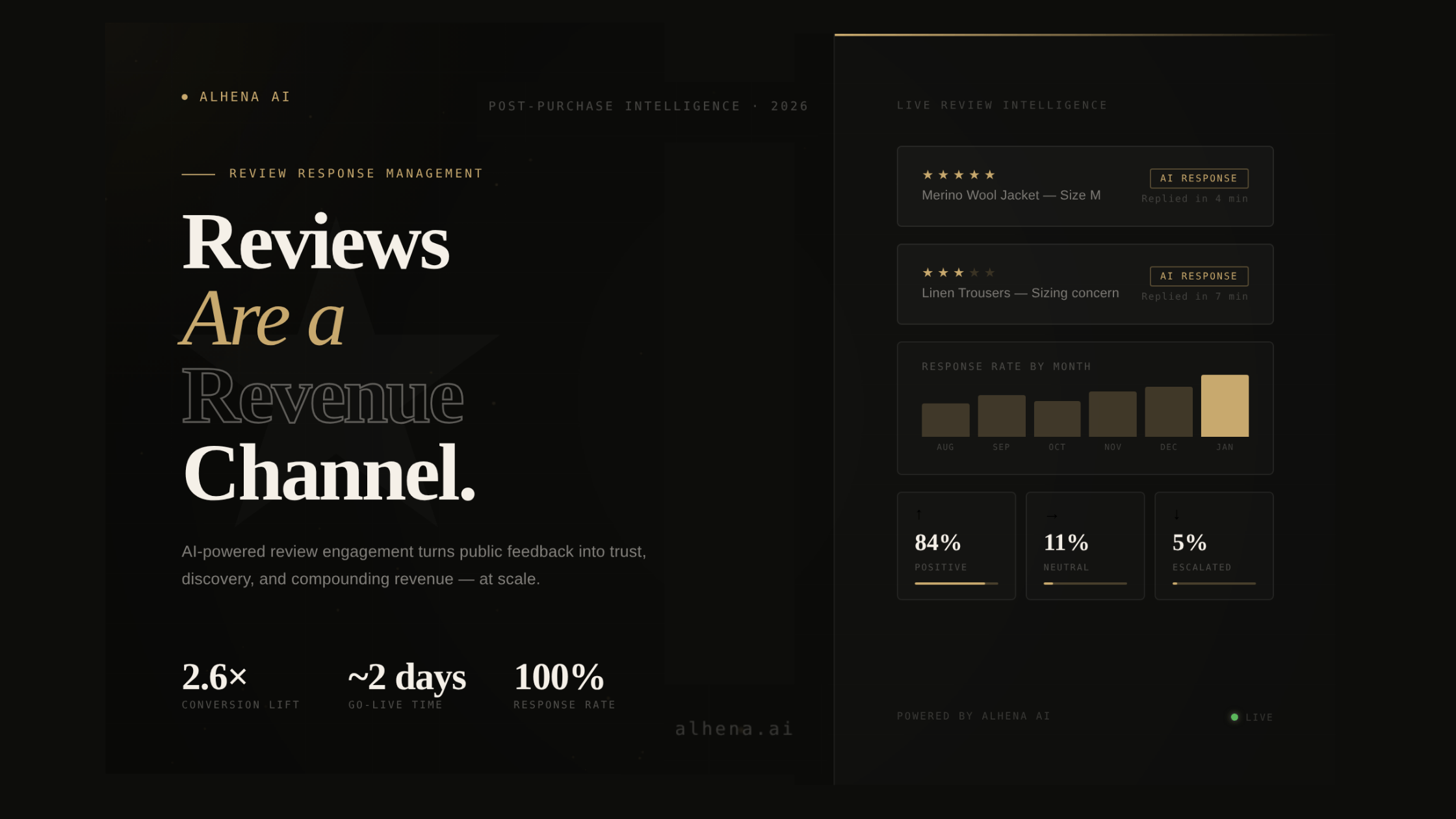
Most ecommerce teams still treat reviews as a reporting metric. They track ratings, measure customer satisfaction, and optimize customer service workflows. But they rarely see the response itself as part of the customer journey and a live moment of customer experience.
Shoppers are not just scanning stars. They read the brand’s reply. That single interaction signals whether you understand customer need, whether a human agent steps in when required, and whether your CX is thoughtful or transactional.
This is where AI changes the equation. Instead of basic chatbots pushing templated responses, brands now use AI and generative AI to personalize replies at scale. The real AI power is not in automation alone. It is in combining personalization, context, and judgment to elevate every public response.
When brands use AI well, each review becomes proof of how they operate. It strengthens customer experience, builds trust across the customer journey, and turns what looks like customer service into a visible growth lever. Read more about AI Review management.
The Review Response Gap Is a Revenue Problem
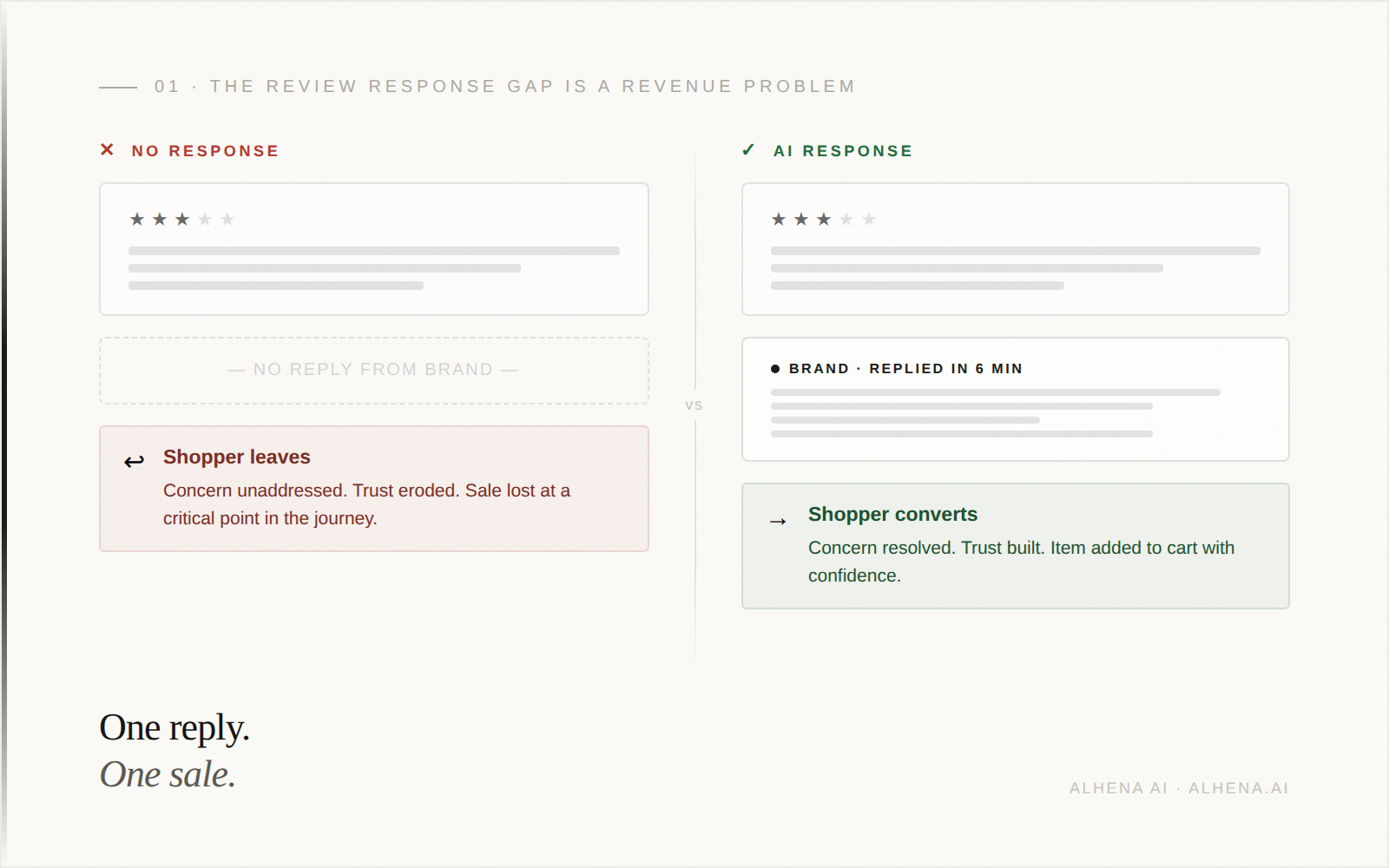
A shopper lands on a product page. Recent reviews mention sizing inconsistencies. The shopper scrolls to see how the brand addressed it. No response. The shopper leaves. That is not a customer service failure. It is a sales failure at a critical point in the customer journey where one interaction could have made the difference.
Now consider the opposite. The brand replied within hours, acknowledged the issue, explained sizing for that fabric, and linked to a fit guide. The shopper feels reassured and adds the item to cart. That proactive, personalized engagement turns browsers into buyers.
The response answered a customer need already in the buyer's path, delivering a better customer experience without adding operational overhead.
Why Manual Review Response Does Not Scale
A growing brand receives thousands of reviews monthly. Each requires context: the product, the concern, the policies, the right tone. Human agents handling this manually face repetitive work that pulls them from higher-value interactions.
Most teams are already stretched handling tickets, live chat, and order issues. The result: reviews go unanswered, responses are generic, or only negative reviews get attention. None of these outcomes optimize the customer experience or drive the retention brands need.
Ignoring positive reviews misses a chance to reinforce loyalty and reduce churn. Leaving negative reviews unanswered erodes trust. When you analyze the sentiment behind silence, the pattern is clear: it accelerates customer loss.
How AI Changes the Economics of Review Engagement
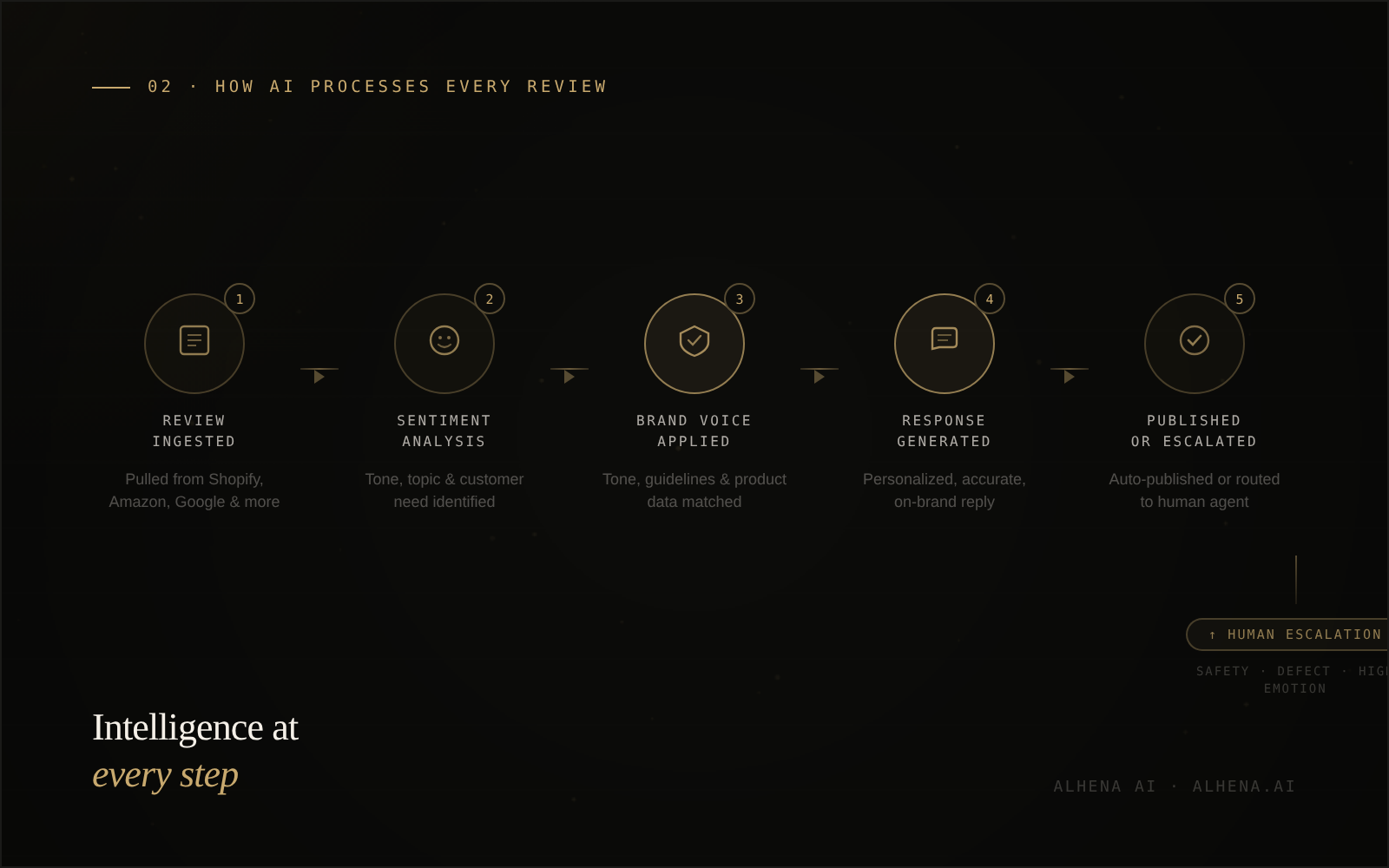
AI-powered review response makes personalized, brand-consistent replies possible at scale. An AI agent generates contextually accurate responses that reflect brand voice, reference product details, and follow response guidelines. This is one of the most effective use cases for generative AI in customer service.
AI enhances what your team can accomplish. It handles volume while human agents focus on complex interactions requiring empathy. Here is what it looks like in practice:
Sentiment analysis in real time. The AI system analyzes customer sentiment to understand whether a review is about shipping, quality, or fit, then addresses the actual customer need. This intelligent approach ensures no generic replies.
Personalization at scale. The AI maintains brand tone across every interaction. A luxury brand and a streetwear label sound different, and with configured AI tools, their review responses reflect that. Each reply feels conversational and authentic because it draws from real product data.
Speed that drives customer satisfaction. AI makes near-instant response times feasible across thousands of reviews. Shoppers see a brand that is proactive and attentive, which directly impacts satisfaction and retention.
Smart escalation to human agents. The best AI systems route reviews requiring human intervention, like safety concerns or emotional situations, to a human agent with full context. This workflow balances automation with judgment.
Beyond Damage Control: Reviews as a Discovery Channel
There is a broader shift happening here. Reviews are no longer just a feedback mechanism. They are becoming a discovery channel, and AI is evolving how brands participate in that channel.
Search engines increasingly surface review content in results. AI-powered shopping assistants read and synthesize reviews to make product recommendations. This means the quality and completeness of your review responses directly affects how your products are discovered, evaluated, and chosen by intelligent systems that predict what shoppers want.
Brands that respond to reviews with detailed, helpful, product-specific information are effectively creating new content that improves discoverability. A response that explains a product's material composition, care instructions, or ideal use case adds value not just for the original reviewer but for every shopper who encounters it later. When chatbots and AI-powered assistants analyze your product pages, rich review responses give them more to work with, making your products more likely to surface in conversational recommendation engines.
This is where the intersection of CX and artificial intelligence becomes a real competitive advantage. Brands that use AI to optimize their review presence are not just improving customer service. They are building a layer of intelligent, searchable content that compounds over time.
What This Looks Like With Alhena
At Alhena, we have seen firsthand how automating review responses transforms the post-purchase experience from a cost center into a revenue driver.
Our AI agents connect to your product catalog, brand guidelines, and customer data to generate responses that are accurate, on-brand, and contextually relevant. They do not guess. They reference real product attributes, real policies, and real inventory data.
For brands managing reviews across Shopify, Amazon, and other channels, this means consistent engagement everywhere your customers are talking about you, without scaling your team linearly to match.
The goal is simple. Every review, positive or negative, should feel like it was read by someone who understands the product and cares about the customer's experience. AI makes that possible at a scale that manual processes never could.
The Takeaway
Review response is not a nice-to-have. It is a conversion lever hiding in plain sight. Shoppers read your responses before they buy. They judge your brand by how you handle criticism and how you celebrate praise.
If your reviews are going unanswered or getting copy-paste replies, you are leaving revenue on the table and handing trust to competitors who show up in the conversation.
AI-powered review response changes the math. It turns a backlog into an engine. And for brands that are serious about turning customer experience into competitive advantage, it is one of the highest-ROI moves available right now.
Want to see how Alhena's AI agents handle review responses for your brand? Reach out to us.

Frequently Asked Questions
How does AI generate personalized review responses instead of generic templates?
AI review response tools connect to your product catalog, brand guidelines, and customer data to craft replies that reference specific product details, policies, and the customer's actual concern. Unlike templates that swap in a name and call it personalization, AI understands context and customer sentiment. A review about fabric quality on a silk blouse gets a fundamentally different response than a review about shipping speed on the same order. The result is a reply that reads like it came from someone who knows the product inside and out, delivering the kind of personalized customer experience that builds real trust.
Will customers know they are reading an AI-generated response?
When configured properly, AI responses match your brand voice closely enough that they are indistinguishable from responses written by your team. Customers care about whether the response is helpful, accurate, and timely. They are far less concerned with who or what wrote it, as long as it addresses their concern and reflects a genuine understanding of their customer need.
Should brands use AI to respond to every review, including positive ones?
Yes. Positive reviews are an underutilized engagement opportunity. A thoughtful response to a five-star review reinforces the customer's decision, encourages repeat purchases, and reduces churn by deepening loyalty at a critical point in the customer journey. AI makes it feasible to respond to every review without overwhelming your team, turning your entire review section into an active conversation rather than a one-sided feedback wall. It is one of the most practical use cases for AI in customer service today.
How does AI handle negative reviews that require nuance or escalation?
The best AI review systems include escalation logic that operates in real time. They identify reviews involving potential product safety issues, recurring defect patterns, highly emotional language, or situations that require a refund or replacement decision, then flag and route those to a human agent with full context attached. AI handles the volume so your team can focus on the interactions that genuinely need a human touch. This balance between automation and human judgment is what makes AI-powered review management so effective for customer satisfaction.
What platforms can AI review response tools work across?
AI-powered review response tools can operate across any platform where your brand receives reviews, including Shopify, Amazon, Google, Trustpilot, and social channels. The goal is consistent customer experience everywhere your customers are leaving feedback, managed through a single streamlined workflow rather than platform by platform. This kind of operational efficiency is one of the clearest advantages of using AI at scale.