A shopper opens ChatGPT and types: "What's the best moisturizer for dry skin?" The AI responds with your brand name. Sounds like a win, except the product it recommends is one you discontinued six months ago. Or it pairs your brand with a competitor's moisturizer as the actual top pick. Your monitoring tool marks this as a "mention" and moves on. You just lost a sale you'll never know about.
This is the blind spot brand-level AI monitoring misses entirely. Ecommerce brands don't sell brand names. They sell products, each with its own price, margin, and inventory status. A brand mention in an AI answer means nothing if the AI got the product wrong. With shopping queries on AI platforms growing 4,700% between 2024 and 2025, the revenue at stake keeps climbing.
Why Brand-Level AEO Monitoring Fails Ecommerce
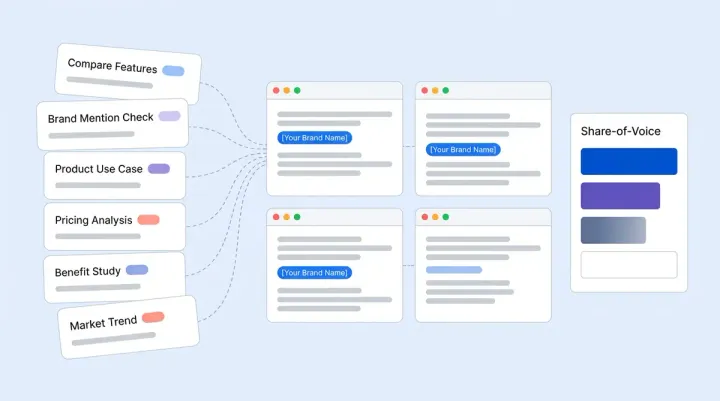
Most AI visibility tools answer one question: "Did my brand appear in this AI response?" For ecommerce, that's the wrong question. When a shopper asks an AI engine for a product recommendation, the AI makes a product discovery decision, not a brand decision. Brand-level tools can tell you your name appeared. They can't tell you which SKU was recommended, whether the price was accurate, whether the product was in stock, or whether the AI positioned a competitor as the better choice.
According to Alhena's Agentic Commerce Report, AI-engaged visitors convert at 9.84%, roughly three times the typical ecommerce conversion rate. Now imagine that 9.84% applied to the wrong product: a discontinued item, a low-AOV accessory instead of your flagship, or a competitor's product surfaced alongside your name. You're actively losing revenue to your own catalog, and brand-level AEO tools have no way to flag it.
What SKU-Level AI Visibility Tracking Looks Like
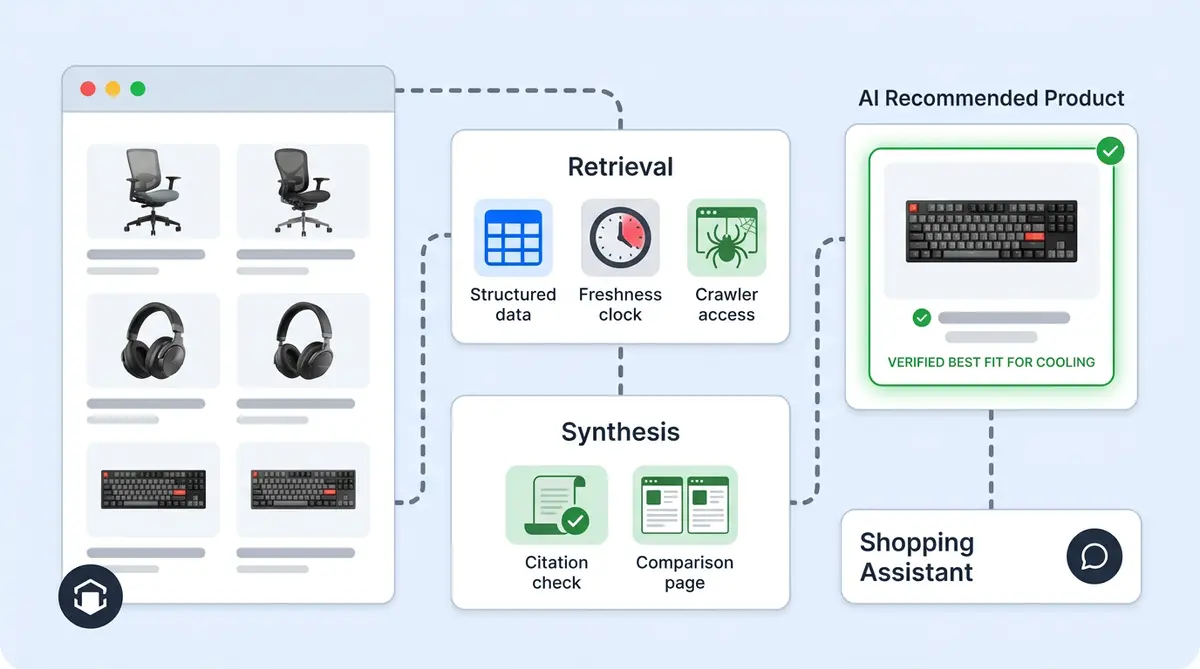
Real AI visibility for ecommerce means monitoring at the individual product level across every AI engine. Alhena AI Visibility tracks which specific SKUs get recommended for which queries across ChatGPT, Gemini, Perplexity, and Google AI Overviews simultaneously. It verifies pricing accuracy, flags out-of-stock recommendations, catches hallucinated specs, and detects when AI engines never recommend your bestsellers despite strong on-site performance.
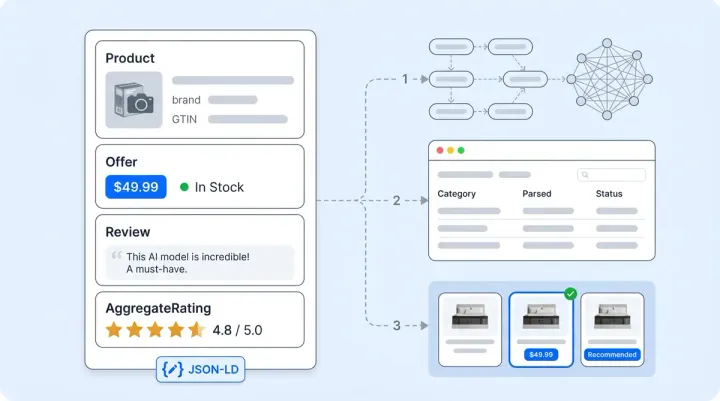
Alhena's Rendering Analysis goes deeper than presence detection. It examines whether your product appears as a rich card with pricing and ratings or a buried text mention, whether it's positioned as the premium pick or the budget option, and whether the AI selected the right variant. A product rendered as a rich card converts at a fundamentally different rate than one mentioned in passing. Without rendering analysis, you can't measure that difference.
The Revenue Impact of Getting This Wrong
The gap between brand-level monitoring and SKU-level visibility shows up directly in revenue. LLM traffic converts at 2.47% according to Alhena's data, making it the fourth-highest converting channel. Every bounced visit from an out-of-stock AI recommendation is high-intent revenue lost. Every time AI cites wrong specs, returns spike. Every time AI surfaces a $149 accessory instead of your $699 flagship, the AOV gap compounds across hundreds of queries per week.
The most damaging pattern: AI mentions your brand but picks a competitor as the top recommendation. Your monitoring dashboard shows a "mention." In reality, you trained AI traffic toward your competitor. ChatGPT drives 97% of LLM commerce traffic, so when it positions you as the runner-up, the impact is concentrated.
First-Party Data Closes the GEO Attribution Gap
Brand-level monitoring tools can't access what shoppers actually ask about on your site. Alhena's AI Shopping Assistant and Support Concierge process thousands of shopper queries daily across web chat, email, Instagram DMs, and WhatsApp. That first-party data reveals which products shoppers want versus which ones AI engines recommend, exposing the mismatch where revenue leaks hide.
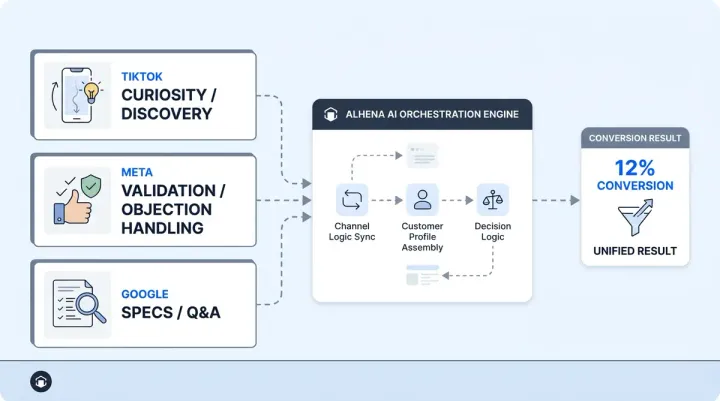
Proactive brands that act on this data see 5.5x higher engagement. Alhena's closed-loop attribution connects AI visibility (which products appear in which answers) through on-site behavior to actual conversions. That's the difference between generative engine optimization that tracks mentions and GEO that tracks money.
Building Your SKU-Level AI Visibility Strategy
Start by auditing your top 10 products across ChatGPT, Gemini, and Perplexity. If you find even one case where the wrong variant, wrong price, or wrong product surfaces, you have a visibility problem brand monitoring will never catch. Prioritize by revenue impact: focus on your highest-margin products, bestsellers, and seasonal launches.
Alhena AI Visibility connects directly to your Shopify, WooCommerce, or Magento catalog. It understands your product hierarchy, inventory, and pricing in real time. The AI ecommerce market hit $9 billion in 2025 and is on track for $64 billion by 2034. Brands building product-level AI visibility now will compound their advantage. The ones relying on brand-level AEO will keep celebrating mentions that cost them money.
Ready to see how your products actually appear across AI engines? Book a demo with Alhena AI or start free with 25 conversations.
For a practical breakdown of the off-site sources that influence AI recommendations, see our GEO citation strategy guide.
FAQs: SKU-Level AI Visibility for Ecommerce
What is SKU-level AI visibility and how is it different from brand monitoring?
SKU-level AI visibility tracks which individual products AI engines recommend for specific queries, not just whether your brand name appears. Alhena AI monitors each product across ChatGPT, Gemini, and Perplexity, verifying pricing accuracy, spec correctness, and variant selection. Brand-level AEO tools miss all of this because they only count mentions.
How does AI product monitoring work across ChatGPT, Gemini, and Perplexity?
Alhena AI Visibility continuously monitors all major AI engines simultaneously, tracking which SKUs get recommended for which shopper queries. It checks whether each engine displays correct pricing, current availability, and accurate specifications. This multi-engine GEO approach matters because a product visible on Perplexity may be absent from ChatGPT Shopping.
What happens when AI recommends the wrong product from my catalog?
When AI recommends an out-of-stock variant, shoppers bounce. When it cites incorrect specs, returns spike. When it surfaces a low-margin accessory instead of your flagship, you lose hundreds per transaction. Alhena AI's rendering analysis catches these mismatches at the product level before they drain revenue.
Can I track which products AI engines never recommend?
Yes. Alhena AI Visibility flags products with strong on-site sales but low or zero AI discoverability. These invisible bestsellers represent your biggest untapped AEO opportunity, and brand-level monitoring tools have no way to identify them.
How does SKU-level AI visibility connect to actual revenue?
Alhena AI uses closed-loop attribution to connect AI visibility data to on-site shopper behavior and conversions. First-party data from Alhena's Shopping Assistant reveals query-to-product mismatches that standalone GEO monitoring tools can't detect, linking AI appearances directly to sales.
How quickly can I get SKU-level visibility data for my store?
Most brands see their first actionable SKU-level insights within days of connecting their storefront. Alhena integrates directly with Shopify, WooCommerce, and Magento catalogs, so it understands your full product hierarchy, pricing, and inventory from day one.
What is rendering analysis and why does it matter for AEO?
Rendering analysis examines how AI engines display your products: rich card with pricing and ratings, or buried text mention. Alhena AI checks positioning (premium pick vs. budget option), variant selection, and attribute inclusion. These presentation details directly affect click-through and conversion rates in answer engine results.
How do I measure the ROI of improving AI visibility at the product level?
Track share of AI recommendations for high-intent queries, pricing accuracy rates across engines, and revenue attributed to each AI source. Alhena AI provides all three, with AI-engaged visitors converting at 9.84%. Even small improvements in product-level GEO translate to measurable revenue gains.
Does SKU-level tracking show how my products compare to competitors in AI answers?
Alhena AI surfaces where competitor products outrank yours for specific queries. You can see when AI positions your brand as secondary while recommending a competitor as the top pick. This competitive intelligence lets you adjust catalog data, citation strategy, and pricing to win back those recommendations.
What types of ecommerce brands benefit most from SKU-level AI visibility?
Brands with large catalogs (100+ SKUs), high-margin hero products, seasonal inventory, or frequent price changes benefit the most. If your revenue depends on AI recommending the right product at the right price, Alhena AI Visibility gives you the product-level AEO intelligence to protect and grow that revenue across every AI engine.