An MIT study found that 95% of generative AI pilots fail to deliver measurable bottom-line impact. The problem isn't the technology. It's organizational complexity, bloated scope, and no plan for measuring results. If you run an online store and want to test AI tools without betting the budget, this five-step guide shows you how to reduce the risk of adopting AI by running a focused test for your digital storefront that produces a clear yes-or-no answer and a path to growth.
Step 1: Choose the Right Scope for Your AI Pilot
The fastest way to kill a pilot is to test everything at once. Most ecommerce teams fail by trying to deploy an entire ai platform across all channels on day one. Pick one use case and one commerce surface area. The goal of any AI experiment is to reduce complexity and deliver a clear insight, not to test everything at once.
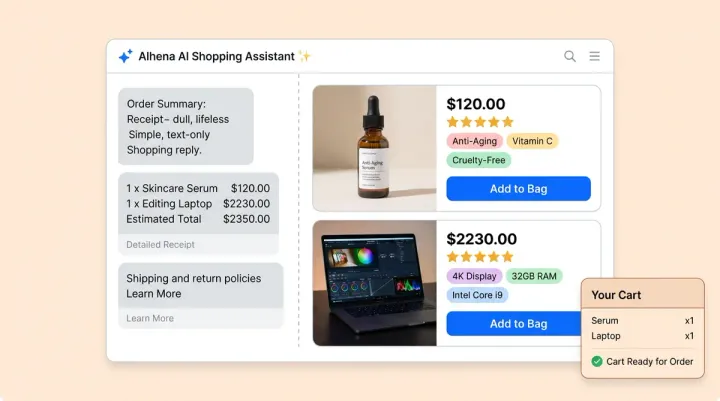
If you operate across multiple regions, run the pilot in your smallest global market first. Lower traffic means lower risk, and you still get real data whether you run Shopify, WooCommerce, Salesforce Commerce Cloud, or another ecommerce platform. Each integration supports full optimization of your ai tools. Single storefront? Scope by feature instead. Start with an AI shopping assistant that handles shopping questions, custom product recommendations, and personalization-driven guided discovery across product pages, product images, and category browsing. The AI works autonomously to analyze customer preferences and surface the right products. Alhena’s agentic AI does the heavy lifting, using ai automation to handle repetitive tasks while you focus on monitoring results. Don't add order management or returns automation yet.
Product FAQs sit at the top of the funnel where small conversion lifts drive outsized revenue impact. The operational insight you gain from a focused test is worth more than months of internal debate. Alhena AI deploys in under 48 hours with no developer resources, so you won't burn weeks on integration before the pilot starts.
Step 2: Define KPIs Before You Launch
Set numeric metrics before you turn anything on. Without clear targets, even a strong AI experiment drifts into an optimization black hole. Track these four KPIs when using ai in your ecommerce operations:
- Conversion rate lift for AI-engaged sessions. Virtual shopping experiences with AI-engaged shoppers generate conversion rates 3x to 5x higher. A 2x lift is a reasonable starting target. This single metric can drive your entire go/no-go decision when using ai tools for ecommerce.
- Average order value (AOV) change. AI-powered recommendations and cross-sells can increase AOV by 10% to 25%. Target a 10% lift as your floor.
- Support ticket deflection rate. A good AI support concierge should handle 40% to 80% of routine inquiries without human involvement, using triage workflows to route only complex cases to your team. This cuts operational costs while keeping quality high.
- CSAT for AI interactions. Aim for 85% or higher. If satisfaction dips below your current baseline, the AI needs tuning, not scaling.
Alhena AI includes built-in revenue analytics that trace conversations directly to purchases, so you won't need to stitch together data from five different tools.
Step 3: Negotiate Pilot-Friendly Pricing
You shouldn't pay enterprise rates to run a four-week test. Look for scalable ai platform pricing tied to your existing business systems. Here are the models that work best:
- Usage-based billing. You pay per conversation or per resolution, not per seat. For digital commerce brands, if traffic is low during the test, your costs stay low too.
- Credit-based models. Buy a block of conversations upfront and use them at your own pace. No monthly minimums. Alhena AI also offers credit-based options for seasonal commerce brands.
- Floor-and-ceiling structures. Seasonal brands benefit from a pricing floor that keeps costs predictable during slow months and a ceiling that caps spend during peak periods.
Alhena AI offers usage-based pricing with a free tier that includes 25 conversations, so you can validate the setup before spending anything. Use the ROI calculator to model expected returns at your traffic level.
Step 4: Set Up for Clean Measurement
Bad measurement systems ruin good pilots. Data silos between your ecommerce platforms, analytics ai tools, and support operations make it worse. Without proper monitoring, you can't sync data across these systems or tell what's working. You need a clear way to compare AI-assisted sessions against a control group.
Option A: A/B test design. Show the AI shopping assistant to 50% of visitors and hide it from the other 50%. Run the test for at least two full business cycles (typically four weeks) to account for weekly traffic patterns.
Option B: Engaged vs. non-engaged comparison. Compare sessions where shoppers interacted with the AI against those where they didn't. Look at how customer preferences drive different outcomes in each group. Simpler, but less rigorous since engaged shoppers may already have higher purchase intent.
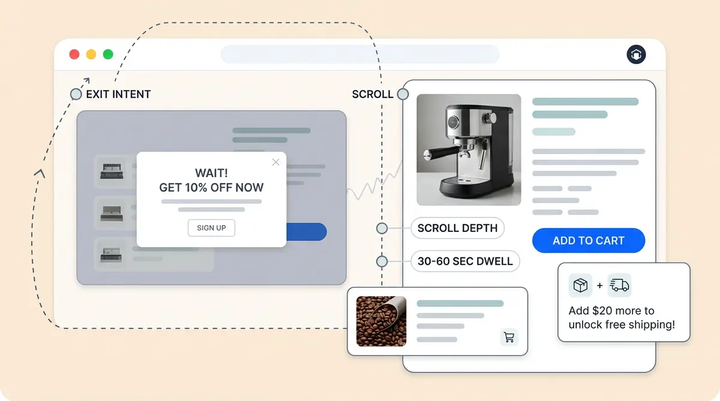
Either way, split your analytics by source. Alhena AI's multi-source analytics break performance down by chat widget, product page FAQs, and proactive nudges separately, giving you the ability to analyze which touchpoint drives the most value across key metrics in real time. Over a full pilot cycle, you’ll spot pattern recognition in how shoppers engage with AI, including which product categories generate the highest conversion and performance lift.
Step 5: Set a Timeline and Commit to a Decision
Open-ended programs drift into "permanent beta." Set a hard timeline of four to eight weeks. Using ai without a deadline adds complexity and schedule weekly check-ins with your AI partner.
Here's what a good pilot cadence looks like:
- Week 1: Launch, confirm data is flowing through your systems, fix any integration or data connection gaps. Confirm your ecommerce platform integration is pulling real-time product and order data.
- Weeks 2 to 3: First performance review. Are KPIs trending in the right direction? Look for operational insight on how customer preferences shape AI engagement.
- Weeks 4 to 6: Enough data for statistical confidence. Compare results against your pre-set targets.
- Week 6 to 8: Decision time. Scale, adjust, or stop.
At the end of the timeline, approve or reject the results based on the data, not gut feeling. Many ai projects stall because teams treat agentic ai automation as a permanent experiment instead of committing to a decision date. Alhena AI assigns pilot customers a dedicated Slack channel with their implementation team, so you get real-time support without waiting on ticketed responses. Weekly reviews happen inside that channel with shared dashboards and reporting templates.
Did AI for your ecommerce store hit the targets you set in Step 2? If yes, scale. If results are inconclusive, use the insight from your first cycle to optimize the scope and extend by two weeks. If the numbers aren't there, you've spent minimal budget learning something valuable about your digital growth strategy. The operational data, customer preferences, and predictive modeling signals you collect during the pilot drive smarter decisions going forward.
Ready to start using ai on your store with zero risk? Book a demo with Alhena AI or start for free with 25 conversations.
Frequently Asked Questions
How much does an AI pilot typically cost for a small ecommerce store?
Most small ecommerce stores can pilot ecommerce ai tools for under $500 per month using usage-based pricing. Alhena AI offers a free tier with 25 conversations, so you can validate ai tools and see initial results before committing any budget. Costs scale only when engagement grows.
What is the minimum website traffic needed to run a meaningful AI pilot?
You need enough traffic to reach statistical significance, typically 1,000 to 2,000 AI-engaged sessions over four weeks. Alhena AI's revenue analytics track every conversation-to-purchase path, so even lower-traffic stores can identify clear patterns within a focused pilot window.
Should I launch an AI shopping assistant or AI support automation first?
Start with an AI shopping assistant focused on product FAQs and recommendations. It sits at the top of the funnel where conversion optimization is easiest to measure, personalization drives higher engagement, and revenue impact is immediate. Alhena AI's Product Expert Agent handles this out of the box and deploys in under 48 hours.
Do I need developer resources to set up an AI pilot on Shopify or WooCommerce?
No. Alhena AI's ecommerce ai tools integrate with Shopify, WooCommerce, Magento, and Salesforce Commerce Cloud without adding complexity or custom development. Setup takes under 48 hours using a lightweight JavaScript widget. The ai platform trains itself from your existing product catalog and support data, with no manual configuration needed.
What should I do if my AI pilot results are inconclusive after six weeks?
Extend by two weeks and narrow the scope to your highest-traffic product category or single best-performing channel. Alhena AI's monitoring and multi-source analytics help you run optimization cycles and isolate which touchpoint (chat widget, product FAQs, or proactive nudges) is closest to hitting your KPI targets, so you can double down on what's working. Use the insight from each week to build a case for final approval or pivot to a new approach.