A major search platform and a major commerce platform have collaborated to create an open protocol that enables agentic, native AI checkout. The Universal Commerce Protocol (UCP) lets shoppers autonomously discover, evaluate, and purchase products entirely within AI-powered search without visiting a brand's website. Over 20 companies across payments, retail, and commerce technology endorsed this agentic protocol at its January 2026 launch. This is not a product announcement. It is a structural shift in where and how ecommerce transactions happen, and every brand selling online needs to understand what it means for the shopping journey for their revenue, their customer relationships, and their product data strategy.
How the Universal Commerce Protocol Works
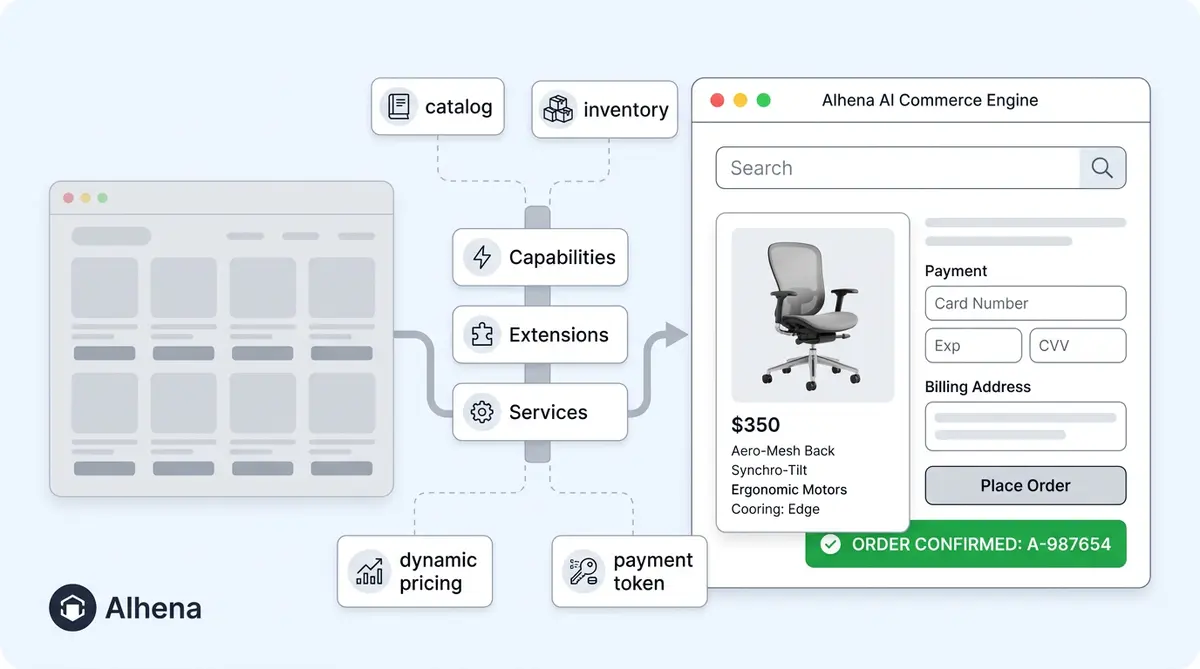
UCP creates a standardized communication layer between AI agents, merchant backends, and payment providers. It connects merchant product catalogs, real-time inventory feeds, dynamic pricing, and checkout systems directly to agentic search surfaces. During product discovery, when a shopper types "find a hypoallergenic pillow under $80 with free shipping" into an AI-powered search interface, the AI agent acting on the shopper's behalf queries participating merchant systems through UCP, pulls live availability and pricing, presents options, processes payment, and confirms the order. The consumer never opens a product page or fills out a checkout form.
Technically, UCP is built around three constructs: Capabilities, Extensions, and Services. At launch, it covers Checkout, Identity Linking, and agentic Order Management. Merchants expose their capabilities through standardized agentic JSON manifests, and Intelligent agents autonomously discover and interact with those capabilities through agentic REST APIs. A March 2026 update added Cart functionality for agentic multi-item purchases from a single store, a Catalog capability for real-time product details, and Identity Linking via OAuth 2.0 so shoppers retain loyalty benefits when buying through AI.
The protocol is open source, designed for agentic interoperability across agentic platforms. Any AI agent, not just the search platform that co-created it, can use UCP to interact with participating merchants. That interoperability is what makes this different from a proprietary feature rollout.
Which Retailer Categories Have Endorsed UCP
The endorsement list spans categories that signal where AI-native checkout is heading. Large home goods retailers, pet supply brands, marketplace platforms, mass-market retailers, and specialty ecommerce companies all signed on at launch. Major payment networks and payment processing platforms endorsed the protocol alongside them.
This breadth matters. When retailers across furniture, fashion, beauty, home improvement, and general merchandise all participate in the same agentic checkout protocol, it signals that agentic commerce is not limited to one vertical. It is becoming horizontal agentic infrastructure. The early participants are not experimenting. They are building their storefronts inside AI search because they believe that is where a meaningful share of transactions will happen within the next two to three years.
Industry projections support that bet. Analyst estimates place AI-influenced ecommerce spending between $190 billion and $385 billion in the U.S. alone by 2030, capturing 10 to 20 percent of all online transactions. During the 2025 holiday season, roughly one in five global online orders was already influenced by an AI agent or AI shopping assistant.
What Brands on the Partnered Commerce Platform Need to Know
If your store runs on the commerce platform that co-built UCP, your integration path is the most straightforward. The platform rolled out "Agentic Storefronts" as a native agentic feature inside its admin panel, meaning merchants can enable agentic checkout without custom API development.
Here is what participation requires:
- Product data standards. Your catalog must meet agentic data requirements including complete product attributes, accurate variant information (sizes, colors, materials), real-time inventory status, and dynamic pricing. Incomplete feeds mean the AI agent cannot present your products, and there is no website fallback to compensate.
- Checkout flow handling. Transactions happen inside the AI search interface. The consumer authenticates through the AI surface, selects a product, and completes payment without redirecting to your domain. You remain the Merchant of Record and receive the order data, but the checkout experience itself is controlled by the AI interface.
- Identity and loyalty integration. The OAuth 2.0 Identity Linking capability lets shoppers connect their loyalty accounts so they keep rewards and membership pricing when buying through AI. Brands with loyalty programs should enable this to avoid losing repeat customers who skip your site entirely.
- Fee structures. Revenue share and transaction fees for AI-native checkout follow models similar to existing marketplace and advertising fee structures. Exact terms vary by merchant tier, but brands should factor these into their unit economics alongside existing platform fees and payment processing costs.
What Brands Not on the Partnered Platform Should Do
If you run on a different commerce platform, you are not locked out of AI-powered shopping. But your path requires more deliberate preparation.
UCP is an open protocol. Any merchant can expose UCP-compatible endpoints, and any AI agent can interact with them. Several alternative commerce platforms are building connectors for intelligent agents and agentic workflows and middleware providers are building UCP connectors. The protocol's open-source nature means that access is not gated by which platform you use. It is gated by whether your product data and checkout infrastructure can communicate through the standard.
Regardless of your ecommerce platform, here is what you need to get right now:
- Structured product feeds. AI agents rely on structured data to discover, present, and sell your products. This means complete product feeds with accurate titles, descriptions, pricing, availability, shipping details, and product attributes. If your feed has gaps, your products don't appear in AI shopping results at all.
- Schema markup. Product schema, offer schema, review schema, and FAQ schema on your site tell AI systems what you sell, at what price, and with what terms. Structured markup is how AI agents evaluate your products even outside the UCP protocol.
- Real-time inventory and pricing APIs. Static catalog exports won't work in a world where AI agents promise live availability. You need API endpoints that return current stock levels and pricing so AI surfaces can make accurate purchase commitments on behalf of consumers.
The brands that treat product data as a strategic asset, not an afterthought, will be visible across every AI shopping surface regardless of which protocol or platform powers the interaction.
Strategic Implications: Where the Point of Sale Is Moving
UCP shifts the point of sale away from brand websites and into AI interfaces. That single change creates cascading effects on how ecommerce brands operate.
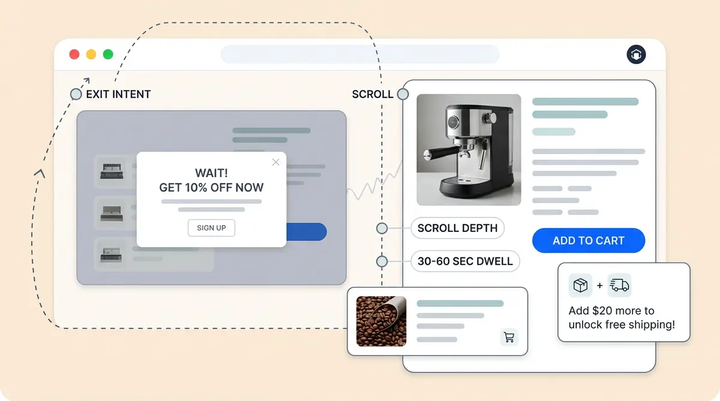
Customer data ownership changes. When checkout happens on your site, you capture browsing behavior, cart composition, time on page, and other signals that inform retargeting and personalization. When checkout happens inside an AI search interface, you receive order data but lose the behavioral context around it. You know what someone bought, but not what else they considered, how long they deliberated, or what nearly made them leave.
Brand experience control narrows. Your product page, your imagery, your copywriting, your cross-sell suggestions: none of that exists inside AI-native checkout. The agentic AI agent acting as the storefront presents your product based on structured data attributes alone. If your competitive advantage depends on storytelling, visual merchandising, or curated product discovery, you need to find new ways to deliver that value. Industries like fashion and apparel, beauty and skincare, and home furnishing face the sharpest version of this challenge.
Participation is becoming a competitive necessity. When AI is the marketplace, opting out doesn't mean preserving your existing traffic. It means removing your products from a growing shelf. The question is not whether to participate. It is how to participate while protecting the channels and customer relationships you control.
Why Product Data Quality Is the New Competitive Moat
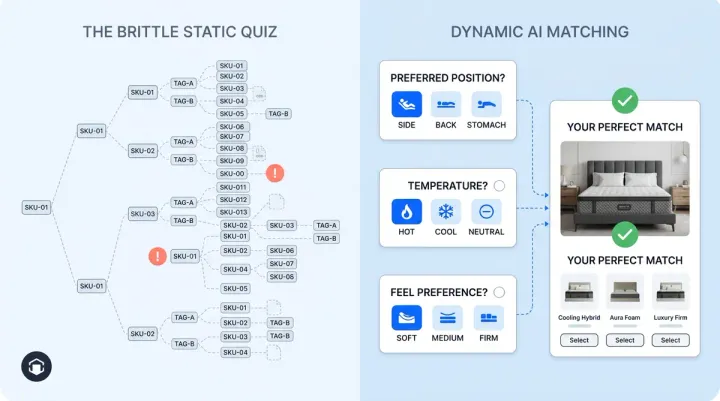
Under UCP, your product feed is the entire shopping experience. There is no website to compensate for missing attributes, weak descriptions, or incomplete specifications. When a shopper asks an AI agent to "compare lightweight running shoes with arch support under $150," the agent pulls from structured product data. If your feed doesn't include arch support as an attribute, your shoe doesn't appear in the results. If your description is vague, the AI ranks a competing product higher.
This raises the bar for product data across the shopping journey across every dimension:
- Attribute completeness. Every size, color, material, weight, dimension, and feature must be in your feed. AI agents filter and compare on attributes, so missing data means missing sales.
- Description quality. Product descriptions need to be specific, factual, and rich in the language shoppers actually use. "Comfortable everyday shoe" loses to "memory foam insole, breathable mesh upper, 8.2 oz, neutral arch support" in an AI comparison.
- Accuracy and freshness. Wrong prices, out-of-stock items showing as available, or outdated specifications erode trust with AI agents. Protocols will deprioritize merchants with high error rates over time.
How Alhena AI Prepares Brands for Protocol-Level Shifts in AI Commerce
Alhena AI helps ecommerce brands build the product data foundation and AI visibility layer that UCP and future commerce protocols demand.
Product data completeness and accuracy. Alhena's Product Expert Agent is grounded in your verified product catalog, ensuring hallucination-free responses. It surfaces gaps in product attributes, descriptions, and structured data that would prevent your products from appearing in AI shopping results. When your data is complete and accurate on your own site, it is ready for any protocol that queries it.
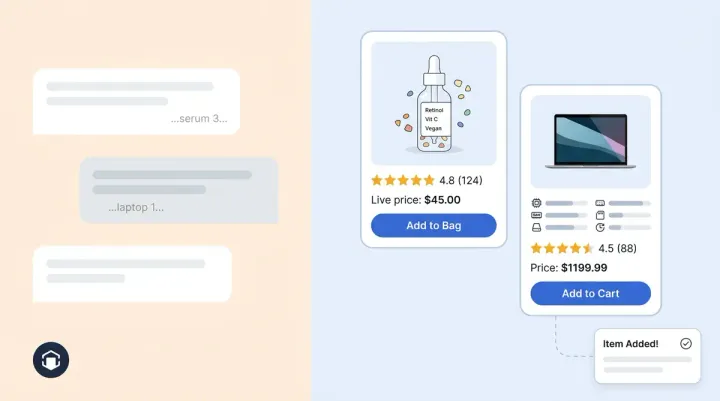
AI visibility across every shopping surface. Alhena works across web chat, email, social commerce on Instagram and WhatsApp, and voice. That omnichannel presence means your products are discoverable and purchasable on AI-powered surfaces you control, not just surfaces controlled by search platforms like Perplexity or others. Brands using Alhena have seen 3x conversion rates and 38 percent higher average order values because the AI delivers accurate, personalized product recommendations from verified data.
Revenue intelligence across AI channels. As transactions spread across AI search, on-site chat, social DMs, and voice, Alhena's built-in revenue attribution analytics track which AI surface drives each sale. You see exactly where your AI-assisted revenue comes from, whether that is your own shopping assistant, a social commerce interaction, a Perplexity referral, or a referral from an AI search surface like Perplexity.
Protocol readiness without platform lock-in. UCP is one agentic protocol. Others will follow from payments networks, AI companies, and competing platforms. Alhena's approach ensures your product data, structured markup accuracy, and AI shopping experience are ready for whichever protocol gains dominance. You prepare once and participate everywhere.
Brands Waiting for Clarity Are Already Behind
The Universal Commerce Protocol, the defining agentic standard, is not a future concept. It is active agentic infrastructure, live with participating merchants, processing real agentic transactions inside AI search right now. Brands waiting to see how it plays out before investing in product data quality, structured feeds, and AI-native checkout readiness are already behind the retailers who started preparing in January 2026.
The shift is straightforward: AI agents are becoming the new storefront, and your product data is the new merchandising layer for AI discovery. Get the data right, build AI visibility on the surfaces you control, and you will be ready for UCP, for competing protocols, and for whatever the next generation of AI commerce demands.
Ready to prepare your brand for AI-native commerce? Book a demo with Alhena AI to see how your product data scores for protocol readiness, or start free with 25 conversations to experience the AI shopping assistant on your own store.
Frequently Asked Questions
How does the Universal Commerce Protocol change checkout for ecommerce brands?
UCP moves checkout from your website into AI search interfaces, where AI agents handle product discovery, payment, and order confirmation on behalf of the shopper. Brands remain the Merchant of Record but lose control over the checkout experience and on-site behavioral data. Alhena AI helps brands maintain AI visibility and conversion performance across both protocol-driven and owned shopping surfaces.
What product data requirements does UCP set for ecommerce merchants?
UCP requires complete structured product feeds with accurate attributes, real-time inventory, dynamic pricing, and variant details like size, color, and material. Missing data means your products won't surface in AI shopping results. Alhena AI's Product Expert Agent audits your catalog for gaps and ensures your product data meets the standards that UCP and competing protocols demand.
Can ecommerce brands that don't use the partnered commerce platform participate in AI-native checkout?
Yes. UCP is an open-source protocol, so any merchant can expose compatible endpoints regardless of their commerce platform. The key requirements are structured product feeds, schema markup, and real-time pricing APIs. Alhena AI ensures your product data foundation is protocol-ready so you can participate in AI checkout across any platform or protocol.
How does AI-native checkout through UCP affect brand experience and customer data ownership?
When transactions happen inside AI search, brands lose on-site behavioral data like browsing patterns, cart composition signals, and cross-sell opportunities. The AI agent presents products based on structured data alone, removing visual merchandising and brand storytelling from the purchase flow. Alhena AI gives brands revenue attribution analytics across every AI surface so they can measure the impact and protect owned-channel performance.
How should ecommerce brands prepare for the Universal Commerce Protocol and future AI commerce protocols?
Start with product data completeness, structured schema markup, and real-time inventory APIs. These are table stakes for any AI commerce protocol, not just UCP. Alhena AI builds the AI visibility layer and product data foundation that works across all protocols, so brands prepare once and remain visible on every AI shopping surface regardless of which standard gains dominance.