Most ecommerce AI tools sound the same. They're polite, helpful, and completely characterless. Shoppers don't identify it as a bot because the answers are wrong. They identify it as a bot because it doesn't sound like the brand.
A luxury skincare brand and a streetwear brand should not have AI tools that speak identically, yet most do. The default personality in most AI tools is "helpful assistant" with no brand-specific configuration. The result is an AI that answers questions correctly but builds zero brand affinity, zero emotional connection, and zero differentiation from competing solutions on every other store. Brands that use AI for customer conversations need voice configuration, not just accuracy. If you use AI without configuring its personality, you're letting the default speak for your brand. Smart brands that use AI invest in voice settings from day one.
The fix is a three-element brand voice framework: Identity, Tone, and Situational Guidelines. Together, these layers turn a generic AI powered shopping assistant into one that sounds, feels, and sells like your brand.
Element One: Brand Identity Defines Who the AI Is
Brand identity is the character your AI plays in every conversation. It defines the agent's role, its expertise, and its relationship to the customer. In Alhena's Personality voice settings, the Identity field sets the contextual foundation for every response the agent generates across all channels.
"You are a skincare consultant who helps customers find the right products for their skin concerns" produces fundamentally different conversations than "You are a sneaker expert who helps collectors find rare drops." Identity shapes how the AI frames every answer, what content it creates, what content it prioritizes, and how it positions products.
Start with a strong brand identity statement that's specific and role-driven. "You are supporting developers building on our platform, and you're acting as a friendly technical assistant" is the kind of example Alhena's docs recommend. Vague brand identity descriptions like "be helpful and friendly" give the AI nothing to anchor on. Specific ones create a persona your audience recognizes and remembers. When your audience encounters a consistent brand voice, trust builds faster.
Element Two: Tone Controls How the AI Communicates
Tone defines how the identity expresses itself across the formal-to-casual spectrum. It controls humor tolerance, emoji usage, sentence length preferences, vocabulary register, and emotional warmth. In Alhena's configuration, the Tone field sits alongside Identity under AI Settings > Brand voice and personality.
"Accurate, warm, and conversational with a hint of playfulness" produces different phrasing than "Expert-level, direct, and no-nonsense," even when both deliver the same factual answer. Tone is what makes the AI feel like your brand's best salesperson, a real teammate rather than a generic assistant you'll want to replace. Don't settle for defaults you'll need to replace later.
Think of it this way: brand identity decides what the AI knows and how it sees its role. Tone decides how it says things. Two brands can have similar product catalogs but completely different tones, and it's exactly the point. It's what makes your brand recognizable. Your voice settings should match the voice your audience already associates with your brand across your website content, your packaging, and your social media and social channels.
Element Three: Situational Guidelines Override Brand Voice by Context
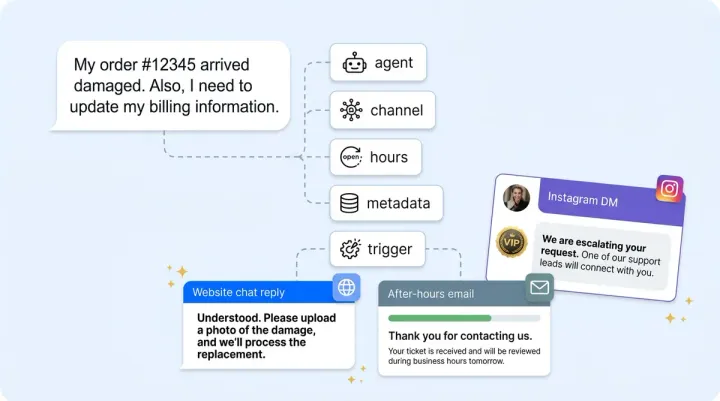
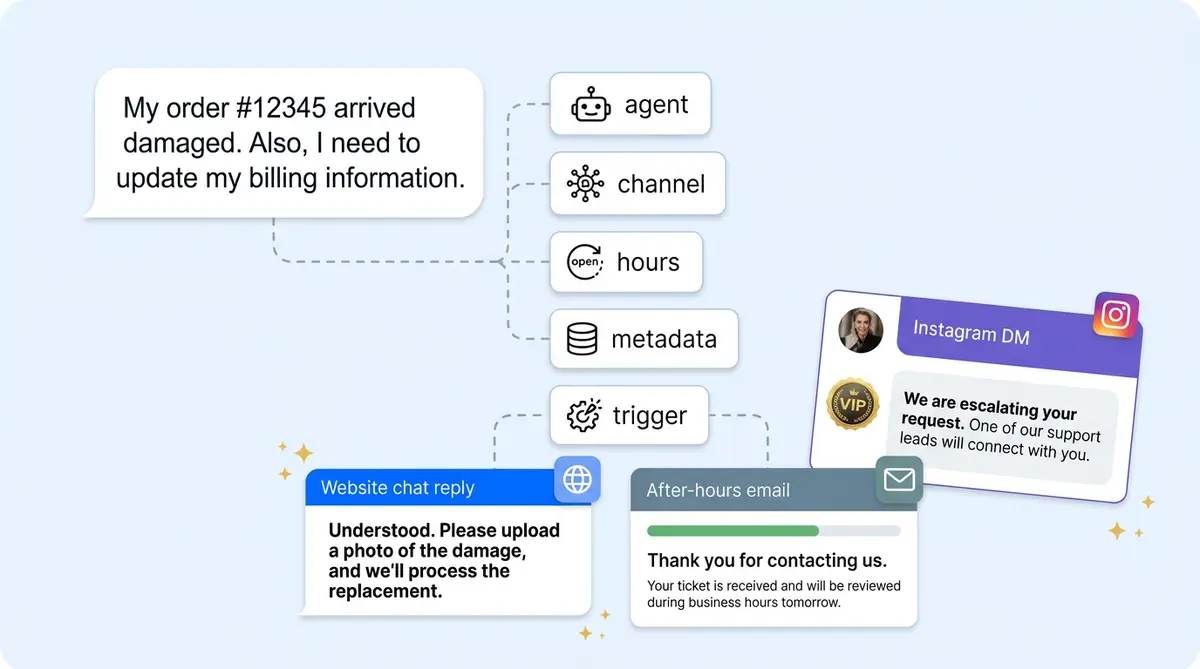
Even the friendliest brand voice should turn serious during a complaint escalation. A playful streetwear brand should sound empathetic, not casual, when processing a damaged-item claim. This is where Alhena's Guidelines system comes in.
Each guideline pairs a specific trigger (the situation) with a prescribed action (the behavior) that activates automatically. "When a customer mentions a damaged or defective product, respond with empathy first and offer a resolution before asking for order information or account information." Guidelines activate automatically when the trigger condition matches. The AI automatically adjusts its register. Overrides activate automatically, then stands down when the conversation moves on.
Guidelines also scope by channel and business hours. Your AI can adapt its register for Instagram DMs and WhatsApp versus email versus web chat. After-hours conversations can proactively set expectations about response times while keeping the same brand personality. The key: guidelines adjust voice for specific scenarios without changing the base personality, so the AI stays on-brand in routine conversations and adapts appropriately in sensitive ones.
Why Separating Global Personality from Situational Guidelines Matters
Without this separation, brands either make their AI too rigid or too inconsistent. Too rigid means one tone for everything: complaints and celebrations treated identically, frustrated shoppers getting the same peppy energy as happy ones. Too inconsistent means different tone every conversation depending on which rules fire, with no stable base personality underneath.
The architecture of global Identity plus Tone as the foundation, with Guidelines as contextual overrides, creates consistency with flexibility. Your AI has a recognizable voice your buyers learn to expect and learn to trust. In either case, this is the same principle behind how your best human agents work: they have a consistent personality but adapt their approach when a customer is upset versus excited. As the AI learns your brand's patterns over time, your configured voice settings help AI models generate responses that sound increasingly natural.
Four Vertical Examples: What Brand Voice Looks Like in Practice
Luxury beauty: A warm expert who never uses slang, demonstrates ingredient knowledge, and shows empathy about skin concerns. Identity: "You are a skincare consultant with deep knowledge of active ingredients and formulations." Tone: "Sophisticated, warm, and reassuring. Never casual." Brands like Tatcha pair this brand voice with Alhena's AI to drive 3x conversions. Any marketer who has managed brand guidelines knows this discipline.
Streetwear and fashion: A casual voice that's hype-aware, uses current vernacular, and understands drop culture and limited releases. Identity: "You are a style-savvy shopping advisor who knows what's trending and what's about to sell out." Tone: "Conversational, energetic, and culturally plugged in." This brand voice connects with fashion and apparel shoppers who want a brand that gets them.
Home furnishing: A helpful planner who's space-aware, measurement-savvy, and patient with indecisive shoppers comparing options. Identity: "You are an interior design consultant who helps your audience find pieces that fit their space and style." Tone: "Warm, patient, and detail-oriented." Home furnishing brands need this patience because purchase decisions often span multiple visits.
Health and supplements: A trustworthy advisor who's regulation-aware, never makes toxic or medical claims, and backs product positioning with ingredient research rather than unverified health promises. Identity: "You are a wellness advisor who helps your audience understand product ingredients and find the right fit for their goals." Tone: "Knowledgeable, trustworthy, and careful with health-related language."
Common AI Brand Voice Mistakes to Avoid
Too formal: Feels robotic and creates distance on every interaction. If your AI sounds like a legal disclaimer, your audience won't engage beyond the first question.
Too casual: Feels unprofessional for high-ticket items where trust matters. A $200 skincare product needs a different register than a $15 t-shirt.
Too generic: No brand differentiation. Your AI sounds identical to every other chatbot, and buyers feel it. Replace generic defaults with brand-specific configuration. Replace the default "helpful assistant" persona with one that reflects your actual brand. Victoria Beckham saw a 20% AOV increase specifically because the AI brand voice matched the brand's elevated aesthetic.
Inconsistent across channels without intent: Accidentally casual on email, accidentally formal on Instagram. If you're going to vary tone by channel, you're making a smart call, but do it deliberately through Guidelines, not by accident through lack of configuration.
Test Before You Go Live
Use Alhena's AI Playground to run 10 to 15 test conversations across different scenario types before any customer interaction. Cover product questions, complaints, returns, upselling, after-hours inquiries, and common FAQs your audience asks. Review your top FAQs to see if the AI's tone matches your brand voice when answering them. Read the responses out loud. If they sound like they could come from any brand's chatbot, the Identity or Tone voice settings need work. Adjust your voice settings, test again, and repeat until the responses feel right.
Have three teammates from your marketing teams or CX team chat with the AI independently and rate whether it "sounds like us." As a marketer, you know what your brand sounds like. Trust that instinct when you review AI responses. If two out of three say no, edit your configuration and adjust. Testing takes 30 minutes and prevents months of off-brand interactions that quietly erode customer trust and inflate your cost per conversation (CPC). When brand voice drives higher engagement, your CPC drops because fewer conversations need escalation. A lower CPC means your brand voice is doing its job, keeping buyers engaged without handoffs.
Why Brand Voice Separates the Best AI Tools from the Rest
Most AI tools treat brand voice as an afterthought. They let you use AI for customer support, but the AI generates ai generated content in a generic tone that doesn't resonate with your audience. Your audience expects the same personality from your AI powered chat as they get from your ad copy, your paid ad campaigns, your social posts, and your FAQs page. When you use AI tools that support real brand voice configuration, the difference shows up in conversions and repeat conversions. Higher conversions start with voice, not discounts, engagement, and loyal customer relationships. Every loyal customer interaction reinforces your brand.
You can edit your Identity, edit your Tone, adjust your Tone, and add situational Guidelines without touching a line of code. The AI generates responses that match your brand, answers FAQs in your voice, and handles every ad-driven visitor from every paid ad with the same personality your audience already knows. Upload your existing brand guidelines as a starting point. You can upload tone-of-voice documents, style guides, and sample conversations, then configure from there. That's what separates AI tools built for ecommerce from generic AI models and general-purpose AI models that treat every brand the same.
How Alhena AI Makes Brand Voice Operational
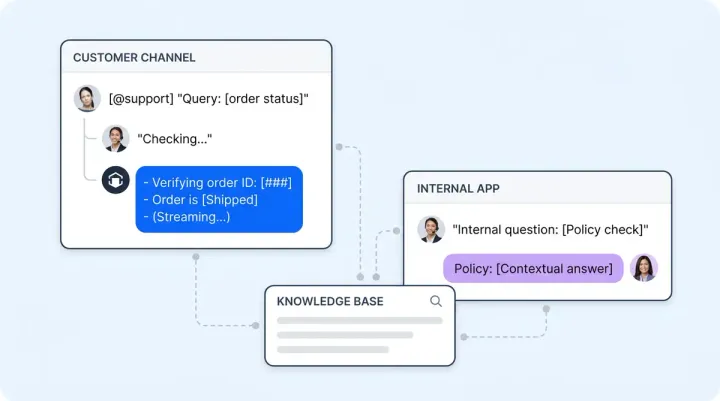
Alhena's Brand Voice and Personality voice settings turn this framework into a working configuration. Identity and Tone are set globally and apply to every conversation across every channel. Guidelines layer on top for situational overrides scoped by channel, business hours, or scenario type.
The AI app's Playground lets you test brand voice changes against sample conversations before going live. You can edit your voice settings, generate sample responses, and review how brand voice holds up across different scenarios. This separation of global personality from contextual rules is what makes brand voice consistent across web chat, email, Instagram, WhatsApp, Facebook, social channels like Slack, and Discord while still adapting naturally to each channel's communication norms and communication expectations.
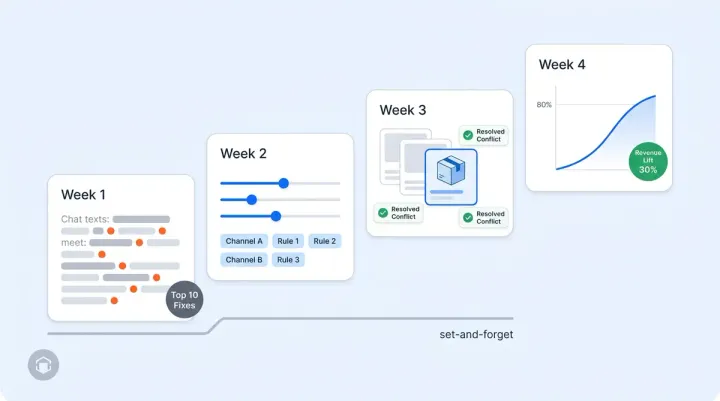
The result: Crocus achieves 84% CSAT at scale. Configure your brand voice once, review it monthly, review conversation logs, and scale with confidence. Puffy reaches 90% CSAT because every AI conversation carries the same approachable, knowledgeable tone. Analyze your conversation logs to capture patterns that tell you where brand voice is working and where it needs tuning. For more on this topic, check our blog and docs. For a structured week-by-week optimization process, see our 30-day AI tuning playbook.
Key Takeaways
- Brand identity defines who your AI is: its role, expertise, and relationship to your audience.
- Tone controls how it communicates: formality, warmth, humor, vocabulary register.
- Situational Guidelines add context-specific overrides without changing the base personality.
- Every vertical needs a different brand voice. Luxury beauty and streetwear can't share the same AI personality.
- Test with real team members before going live. Thirty minutes of testing prevents months of off-brand conversations.
Among AI tools, what separates the one that builds brand loyalty from the one that feels like a utility is voice. When you use AI without brand voice configuration, you're running a tool, not a teammate. The brands whose customers say "I love chatting with your assistant" configured their AI's personality with the same care any marketer puts into their website content, their packaging, and their in-store experience. The brands whose customers say "I was talking to a bot" didn't.
Ready to make your AI sound like your brand? Book a demo with Alhena AI to see Identity, Tone, and Guidelines in action, or start free with 25 conversations and configure your brand voice today.
Frequently Asked Questions (FAQs)
How do I make an AI chatbot sound like my brand instead of a generic assistant?
Configure three layers in your AI tools: Identity (who the AI is and its expertise), Tone (how it communicates, from formal to casual), and Situational Guidelines (context-specific overrides for complaints, returns, and upselling). Alhena AI's Brand Voice and Personality voice settings let you define all three in one panel, and the AI Playground lets you test conversations before going live. Your audience will notice the difference immediately.
What's the difference between AI identity and AI tone in brand voice configuration?
Brand identity defines the AI's role and expertise, like 'skincare consultant' versus 'sneaker expert.' Tone controls how that identity expresses itself: warmth, humor, formality, and vocabulary register. In Alhena AI, both voice settings are set globally under AI Settings and apply to every conversation across all channels. You can edit either one at any time without disrupting live conversations.
Can the same AI sound different on Instagram versus email intentionally?
Yes. Alhena AI's Guidelines system lets you scope tone overrides by channel, so your AI tools can be more casual on Instagram DMs and more polished in email while keeping the same core brand identity and Tone. Ad traffic from any paid ad on Instagram gets a different register than email subscribers. This is deliberate channel adaptation, not inconsistency.
How do I test AI brand voice before going live with customers?
Use Alhena AI's Playground to run 10 to 15 test conversations covering product FAQs, complaints, returns, and upselling. Have three teammates from your marketing teams chat independently and rate whether the AI 'sounds like us.' As a marketer, trust your instinct. If two out of three say no, edit your voice settings and adjust before launching.
What happens to brand voice when the AI handles complaints or escalations?
Situational Guidelines in Alhena AI automatically shift the AI's register when specific triggers match, like a customer mentioning a damaged product. The base personality stays intact, but the tone adapts to be more empathetic and serious. The AI learns these patterns over time. Once the conversation moves past the sensitive topic, the AI returns to its normal brand voice. This prevents the toxic tonal dissonance that erodes trust. Toxic mismatches between brand voice and situation are the fastest way to lose a customer.