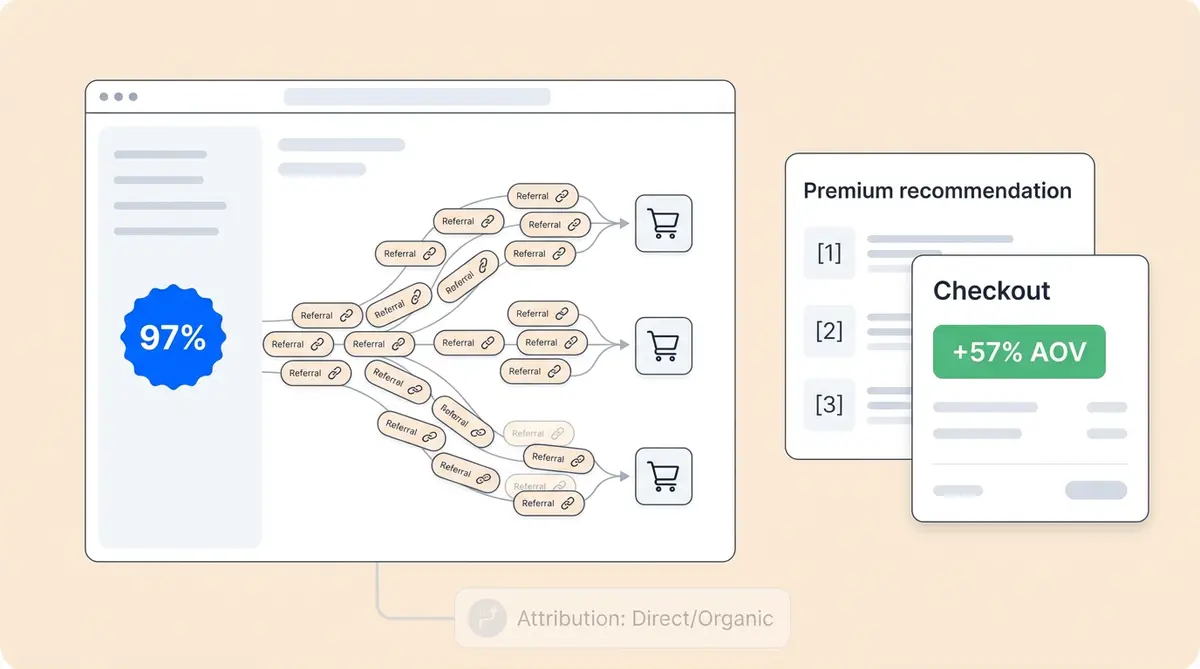
One platform sends you 97% of all LLM referral traffic. The other delivers 57% higher average order value per visit. If you're treating AI-driven traffic as a single channel, you're leaving money on the table.
The gap between volume and value in Perplexity ChatGPT ecommerce traffic is widening fast. AI-sourced visits to retail sites surged 527% year over year through mid-2025, growing faster than Google organic, and during Black Friday alone, AI-influenced purchases topped $14.2 billion globally. But not all of that traffic behaves the same. The largest conversational AI platform dominates referral volume with broad, casual browsing behavior. Smaller, citation-first platforms like Perplexity and Gemini attract fewer visitors who spend more each order. This Perplexity ChatGPT comparison breaks down why the split exists, what it means for your store, and how to build a business strategy that captures both volume and value.
The Volume Leader: Broad Reach, Lower Cart Sizes
The dominant ChatGPT shopping platform accounts for roughly 97% of all LLM-referred ecommerce sessions. Across 94 seven- and eight-figure ecommerce brands tracked throughout 2025, these referrals converted at 1.81%, compared to 1.39% for non-branded organic search. That's a 31% lift in conversion rate.
But average order value tells a different story. Those same referrals produced an AOV of $204 versus $238 for organic search, a 14.3% discount. Session revenue still came out ahead at $3.65 versus $3.30, outperforming both paid social and display, meaning higher conversion rates compensated for smaller carts. The pattern is clear: high volume, decent conversion, but lower-value transactions.
Why? Most users on this platform ask broad, exploratory questions. "Best running shoes under $150" or "gift ideas for a 30-year-old." The AI returns product cards, image carousels, and shopping features that encourage quick clicks, not deep research. The result is instant, impulse-adjacent buying behavior: more conversions, but simpler, lower-ticket ones.
An academic study of 973 websites with $20 billion in combined revenue confirmed the trend. AOV from the dominant LLM actually declined over a 12-month period even as conversion rates improved. The platform is getting better at turning browsers into buyers, but the buyers aren't filling bigger carts.
The Value Leader: Research-Driven Shoppers With Bigger Carts
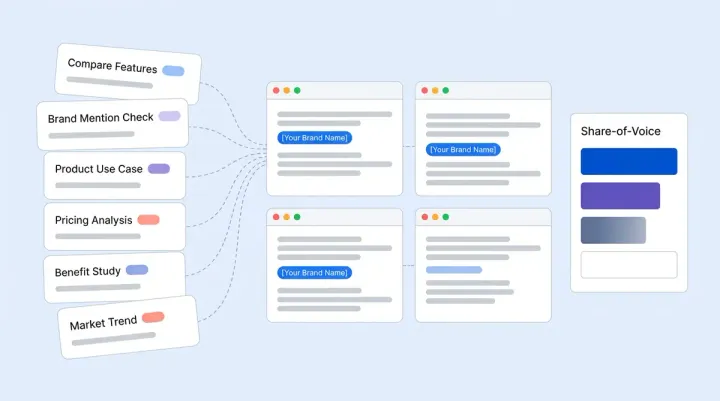
Citation-first AI platforms capture just 3-4% of LLM referral traffic to ecommerce sites. But the visitors they send behave differently. These platforms surface inline citations, link to original sources, and offer features that encourage users to verify claims before clicking through. The result is a self-selecting audience of research-driven shoppers.
Industry reports and demographic data support this. On the leading citation-first platform, 80% of users hold college degrees and 65% are high-income earners. These aren't casual browsers. They're comparing specifications, reading sourced reviews, and arriving at their decisions with high confidence. When they do click through to a product page, they already know what they want, why, and they move to checkout faster.
Academic research confirms that LLM financial outcomes are strongest in complex product categories, exactly where research-heavy users concentrate. Electronics, home furnishing, skincare with active ingredients, and performance gear all benefit disproportionately from citation-driven discovery. For brands in these verticals, the smaller platform's traffic punches well above its weight.
Why the Split Exists: Intent, Citations, and User Profiles
Three key differences drive the volume-versus-value gap in the ChatGPT vs Perplexity ecommerce equation.
Citation behavior shapes trust and cart size. When an AI response includes inline sources, users spend more time evaluating the recommendation. They click through with higher buying intent because they've already validated the product. Platforms without inline citations produce faster clicks but lower conviction.
User demographics diverge sharply. The dominant LLM has 800 million weekly active users spanning every demographic. Citation-first platforms skew toward educated, high-income professionals who research purchases before committing. Higher household income correlates directly with larger carts.
Query complexity differs by platform. Broad conversational AI attracts "what should I buy?" questions. Citation-focused platforms attract "which of these three options has the best long-term value?" questions. The second query type signals a buying decision closer to checkout, with less price sensitivity and bigger carts.
How to Optimize Perplexity ChatGPT Visibility for Each Platform
Treating LLM traffic as one bucket is the most common mistake ecommerce merchants, DTC operators, and teams make right now. Here's how to split your approach.
For the High-Volume Platform
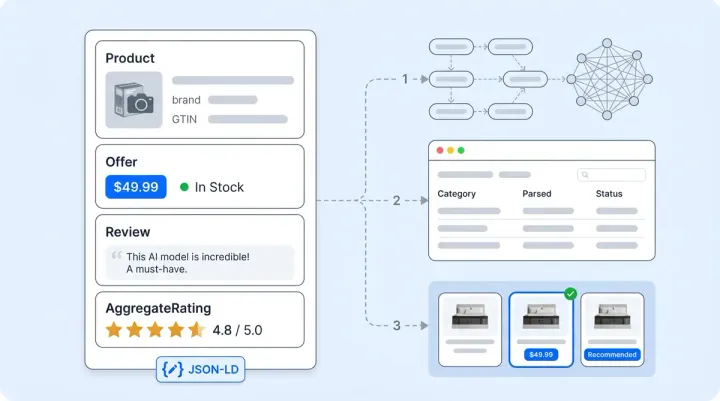
- Prioritize structured product data. Clean, real-time product feeds with accurate pricing, availability, and key features increase your chances of appearing in AI-generated product cards. Tools like Alhena AI's Shopping Assistant help ensure your catalog data is always current and AI-readable across the web.
- Optimize for speed and simplicity. Both paid and free users, whether from Google or the AI app, want fast answers. Make sure your product pages load quickly, include high-quality image assets, feature clear CTAs, and don't bury key details below the fold.
- Focus on high-volume, lower-consideration products. Impulse-friendly items, bundles under $200, and seasonal picks perform best here.
For the High-Value Platform
- Build citation-worthy content. Detailed product guides, specification comparisons, and expert reviews are what citation-first AI surfaces. If your brand publishes in-depth content that helps shoppers learn, it gets cited, and cited brands get clicked.
- Target complex product categories. Higher-consideration items with key features and multiple decision factors (materials, certifications, performance metrics) thrive in research-driven environments.
- Invest in AI visibility, SEO, and GEO strategy to make sure your products appear in AI-generated citations and recommendations, not just search results. Brands using AI-powered product review tools can generate the kind of structured, trustworthy content that citation platforms prioritize.
Revenue Attribution Across LLM Channels
One of the key challenges in this Perplexity ChatGPT comparison is attribution. Much AI-assisted shopping happens inside the AI interface itself. A user gets a recommendation, then navigates directly to the retailer’s site. The retailer sees it as organic traffic. That visit shows up as "direct" traffic in your analytics, not as an LLM referral.
The true influence of AI on ecommerce is significantly larger than referral data suggests. During Cyber Week 2025, AI and agents influenced 20% of all online purchases globally, totaling $67 billion. But most Google Analytics reports only tracked a fraction of that through proper LLM referral attribution.
Alhena AI solves this with built-in revenue attribution analytics that track the full AI-influenced purchase journey. Whether a shopper interacts through social commerce channels, web chat, or voice, Alhena ties every touchpoint back to revenue so your business knows which AI channels are actually driving sales.
The Takeaway: Volume Without Value Is a Vanity Metric
In the Perplexity ChatGPT debate, chasing the platform with 97% of LLM traffic makes sense on paper. But if your average order is 14% lower and your AOV keeps declining, you're optimizing for a dashboard number, not your bottom line.
Smart ecommerce business leaders are splitting their AI strategy. They use high-volume LLM traffic for top-of-funnel awareness and fast conversions on simple products. They use citation-first platforms for high-consideration purchases where research-driven shoppers convert at higher cart values.
Whether you're comparing Perplexity ChatGPT traffic or building for both, the brands that win in the era of AI shopping agents won't be the ones getting the most clicks from any single platform. They'll be the ones matching product strategy to platform behavior, and capturing both the volume and the value to improve every customer experience.
Ready to make your products visible across every AI shopping channel? Book a demo with Alhena AI or start for free with 25 free conversations.
Frequently Asked Questions
How should ecommerce brands measure LLM referral traffic differently from organic search?
LLM referral traffic converts differently depending on the platform. Track AOV, revenue per session, and cart composition separately for each AI source. Alhena AI provides built-in revenue attribution that ties AI-influenced sessions back to actual purchases across all channels.
Why do citation-based AI platforms send higher-value ecommerce traffic?
Citation-first platforms attract research-driven users who compare products before buying. These shoppers arrive with stronger intent and less price sensitivity. Alhena AI helps brands create the structured, trustworthy product content that citation platforms prioritize in their responses.
What's the best way to optimize product pages for AI shopping agents?
Focus on clean, structured product data: accurate specs, real-time pricing, and detailed descriptions. AI shopping agents read structured data, not marketing copy. Alhena AI's Product Expert Agent keeps your catalog data current and formatted for both conversational AI and agentic commerce platforms.
Can AI shopping assistants help increase average order value beyond what LLM referrals deliver?
Yes. On-site AI assistants can upsell and cross-sell during the shopping session, lifting AOV regardless of how the visitor arrived. Alhena AI's Shopping Assistant has driven 38% AOV uplift for brands like Tatcha by recommending complementary products in real time during chat.
How do I track which AI platform is driving the most revenue, not just the most traffic?
Standard analytics often misattribute AI-influenced visits as direct or organic traffic. You need platform-level revenue attribution. Alhena AI tracks the full purchase journey across web chat, social commerce, email, Gemini, and voice to show exactly which AI touchpoints contribute to each sale.
Is it worth investing in GEO and AEO if LLM traffic is still under 2% of total sessions?
LLM traffic grew 527% year over year and converts at up to 18% in some studies. Early movers capture disproportionate share as AI shopping scales. Alhena AI's GEO and AI visibility tools help you get cited by AI platforms now, before your competitors catch up.
What types of ecommerce products benefit most from citation-first AI platforms?
Complex, high-consideration products perform best: electronics, skincare with active ingredients, home furnishing, and performance gear. These categories match the research-heavy behavior of citation platform users. Alhena AI's vertical AI agents are purpose-built for these product categories.
How does Alhena AI help brands appear in AI-generated product recommendations?
Alhena AI improves your AI visibility through structured product data, hallucination-free responses grounded in verified catalog info, and content that citation-based platforms trust. Brands using Alhena see higher placement in AI shopping results across multiple LLM platforms.